
Vision frameworks help leaders articulate a compelling future state that guides strategy, culture, and product direction. They translate ambition into a shared narrative that teams can align behind. These frameworks are essential when organizations need focus and motivation through change. Use them to anchor priorities and inspire consistent decision-making.
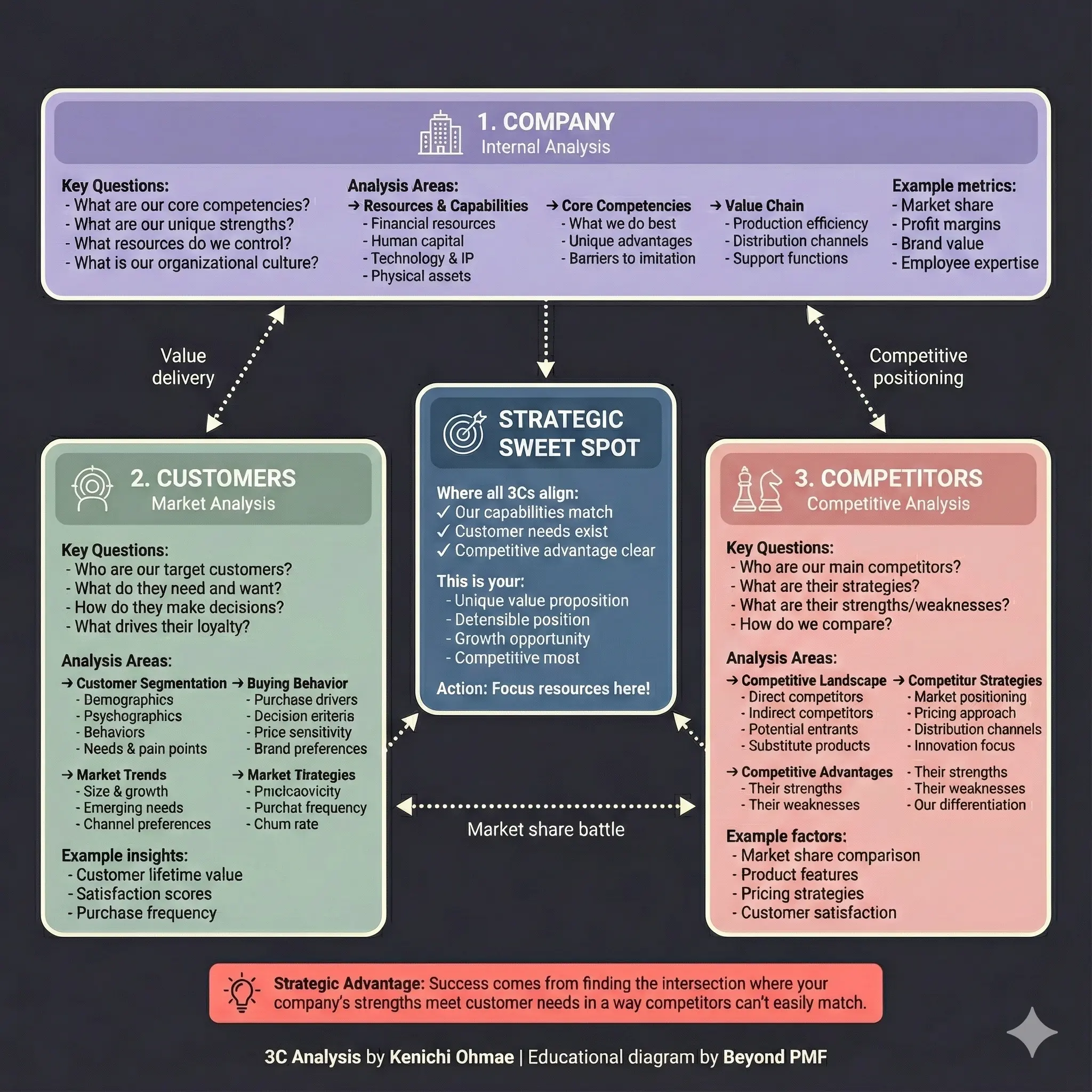
The 3C Analysis framework is centered around three key components: Company, Customers, and Competitors. It helps businesses to evaluate their internal and external environments to develop a robust business strategy. By analyzing these three areas, companies can identify their strengths, weaknesses, opportunities, and threats, enabling them to make informed decisions and optimize their market position.
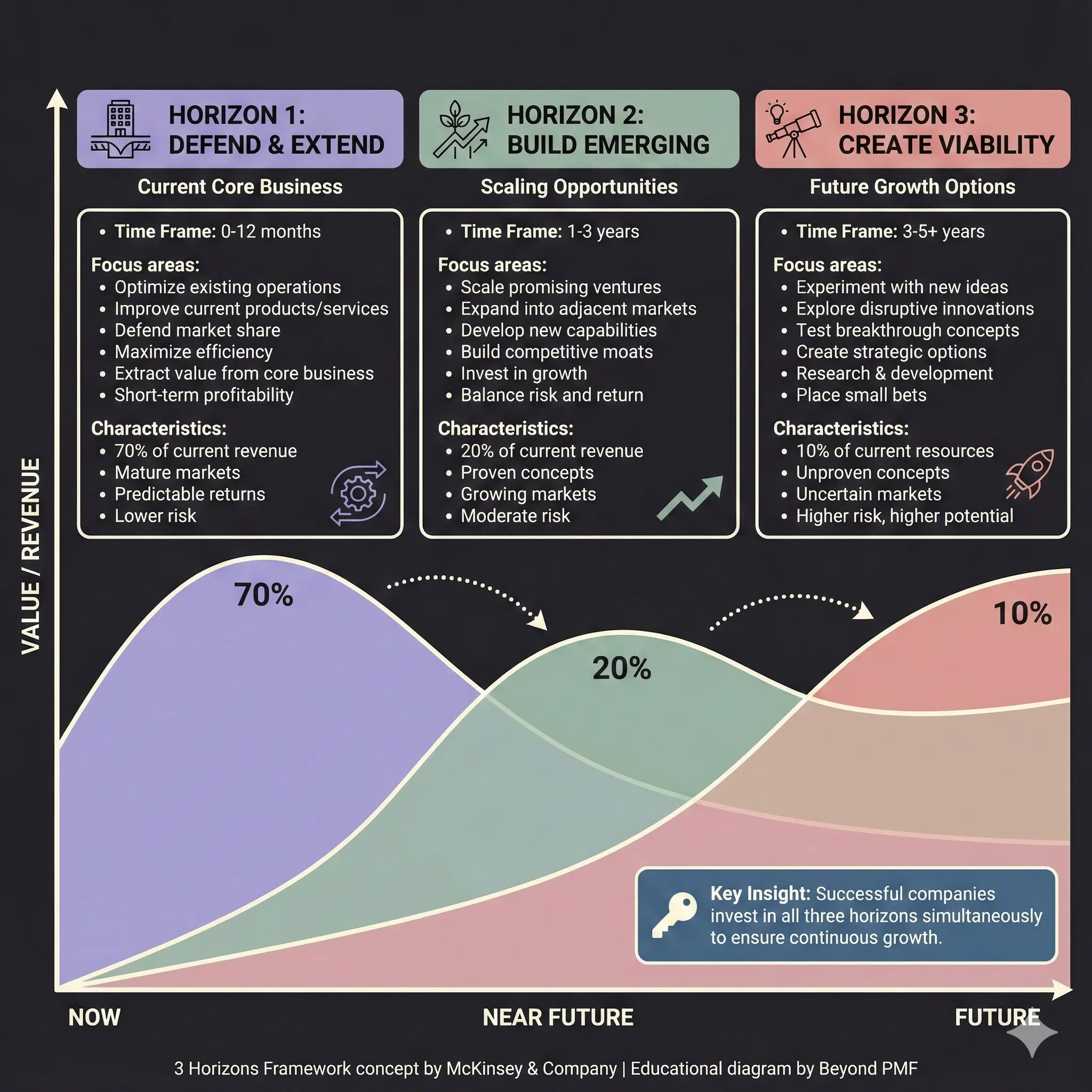
The 3 Horizons Framework is a strategic tool used by businesses to ensure continuous growth by managing different levels of business initiatives. Horizon 1 focuses on improving current operations, Horizon 2 on emerging opportunities, and Horizon 3 on creating future options. This framework aids in prioritizing investments and resources, ensuring that companies are not only maintaining their current market position but also investing in future growth.

The 4Cs Framework is a modern marketing model that emphasizes understanding consumer wants and needs, providing convenience to buy, offering competitive pricing, and communicating effectively with target audiences. It shifts the focus from the traditional 4Ps (Product, Price, Place, Promotion) to a more consumer-centric approach, helping businesses better align their marketing strategies with the expectations and behaviors of their customers. This framework is beneficial for enhancing customer satisfaction and building long-term business success.
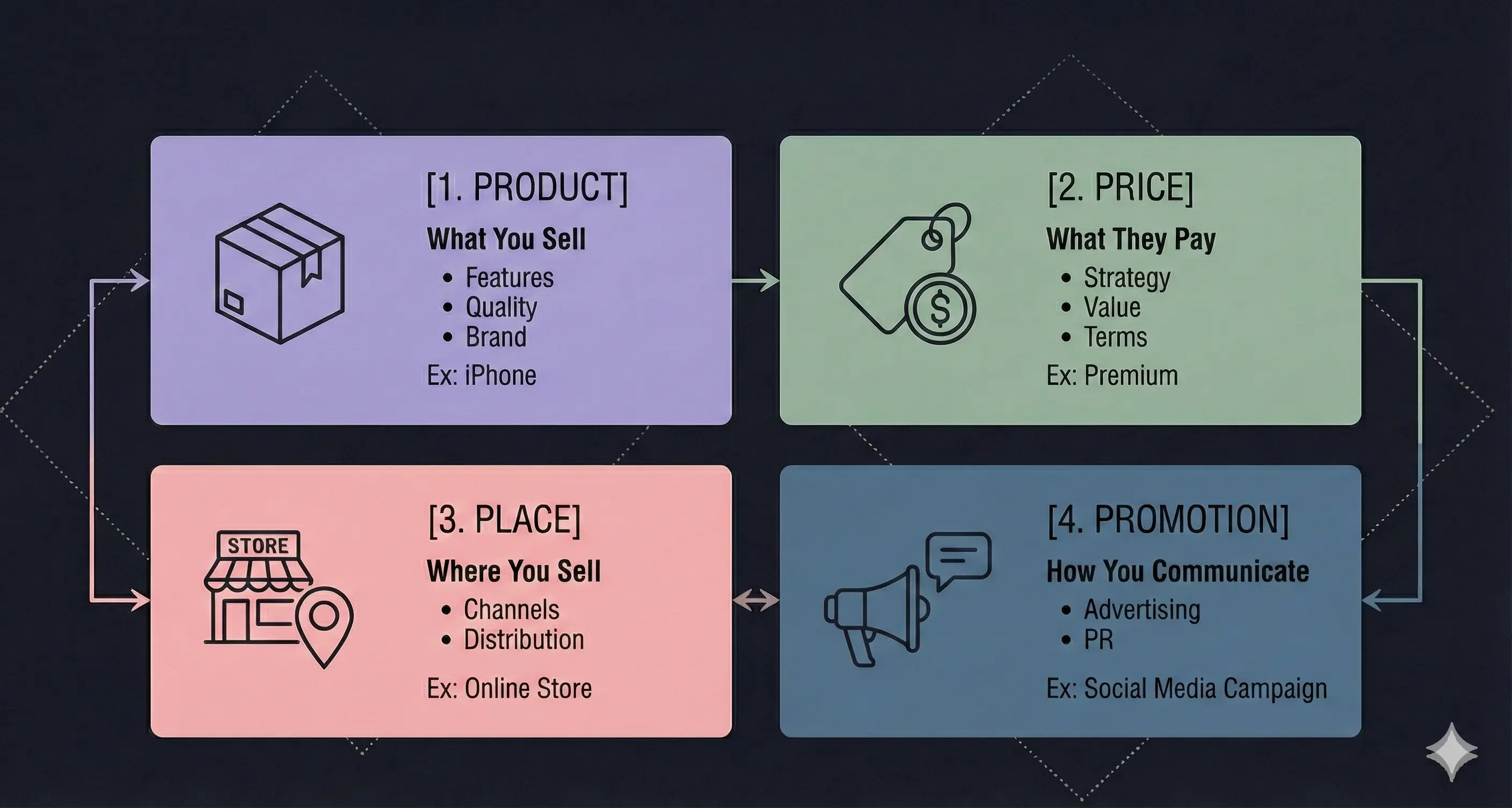
The 4Ps Marketing Mix is a foundational framework in marketing that helps businesses strategize their product offerings effectively. It involves analyzing and optimizing four key aspects: Product (what to sell), Price (at what price), Place (where to sell), and Promotion (how to promote it). This framework assists in aligning marketing strategies with business objectives, ensuring that products meet market demands while maximizing profitability.
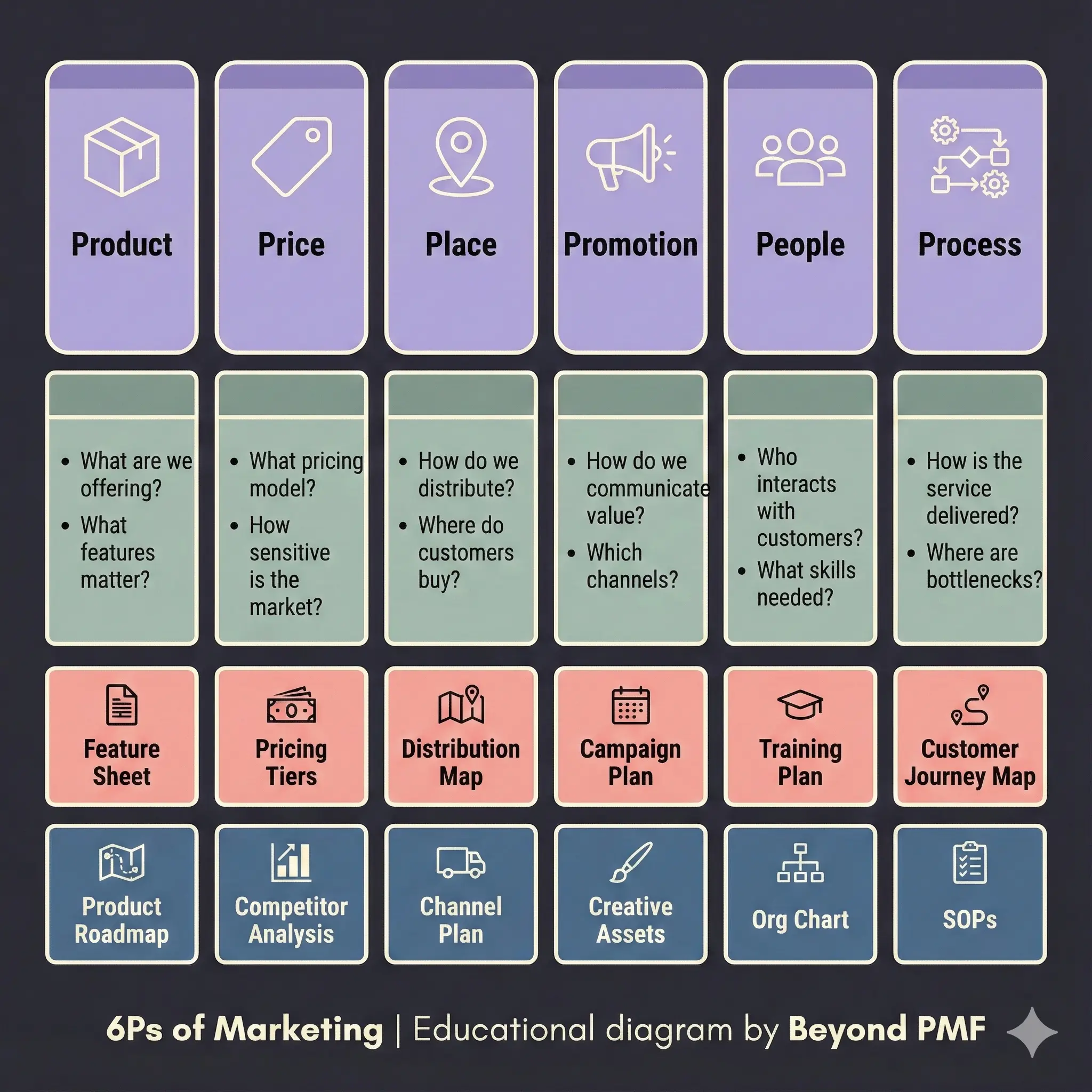
The 6Ps of Marketing framework expands upon the classic 4Ps by adding People and Process to the mix, providing a more holistic view of the marketing landscape. This framework helps businesses to not only focus on the product, pricing strategies, and promotional tactics but also emphasizes the importance of the people involved and the processes used in delivering the marketing strategy. It is used to ensure a comprehensive approach to market analysis and strategy development, aiming to enhance customer satisfaction and business performance.
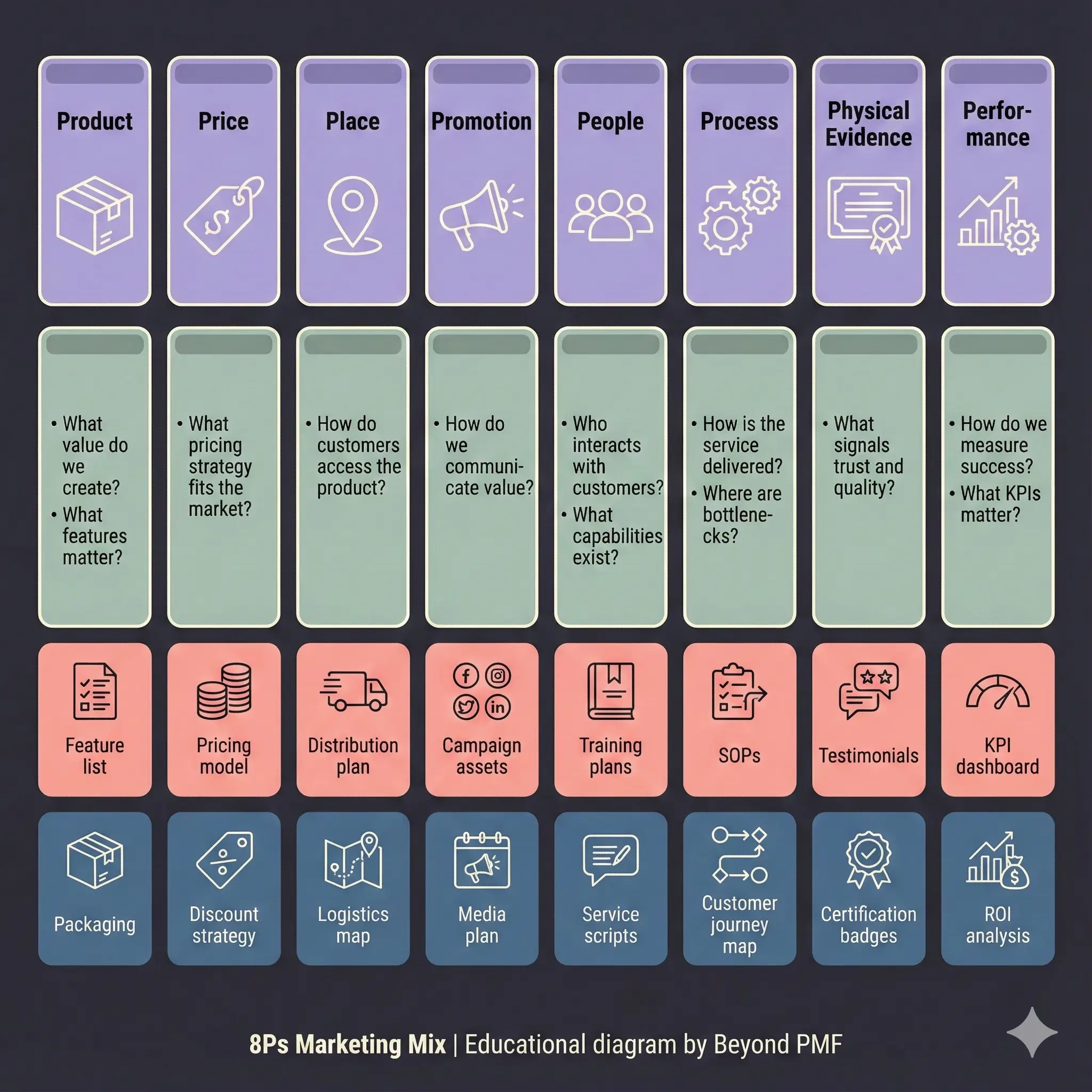
The 8Ps Marketing Mix is a comprehensive tool used by marketers to analyze and optimize various aspects of their marketing strategies. It extends the classic 4Ps (Product, Price, Place, Promotion) by adding four more Ps: People, Process, Physical evidence, and Performance. This framework helps businesses to better understand their operations and market environment, enabling them to tailor their strategies to meet customer needs more effectively and enhance their competitive advantage.
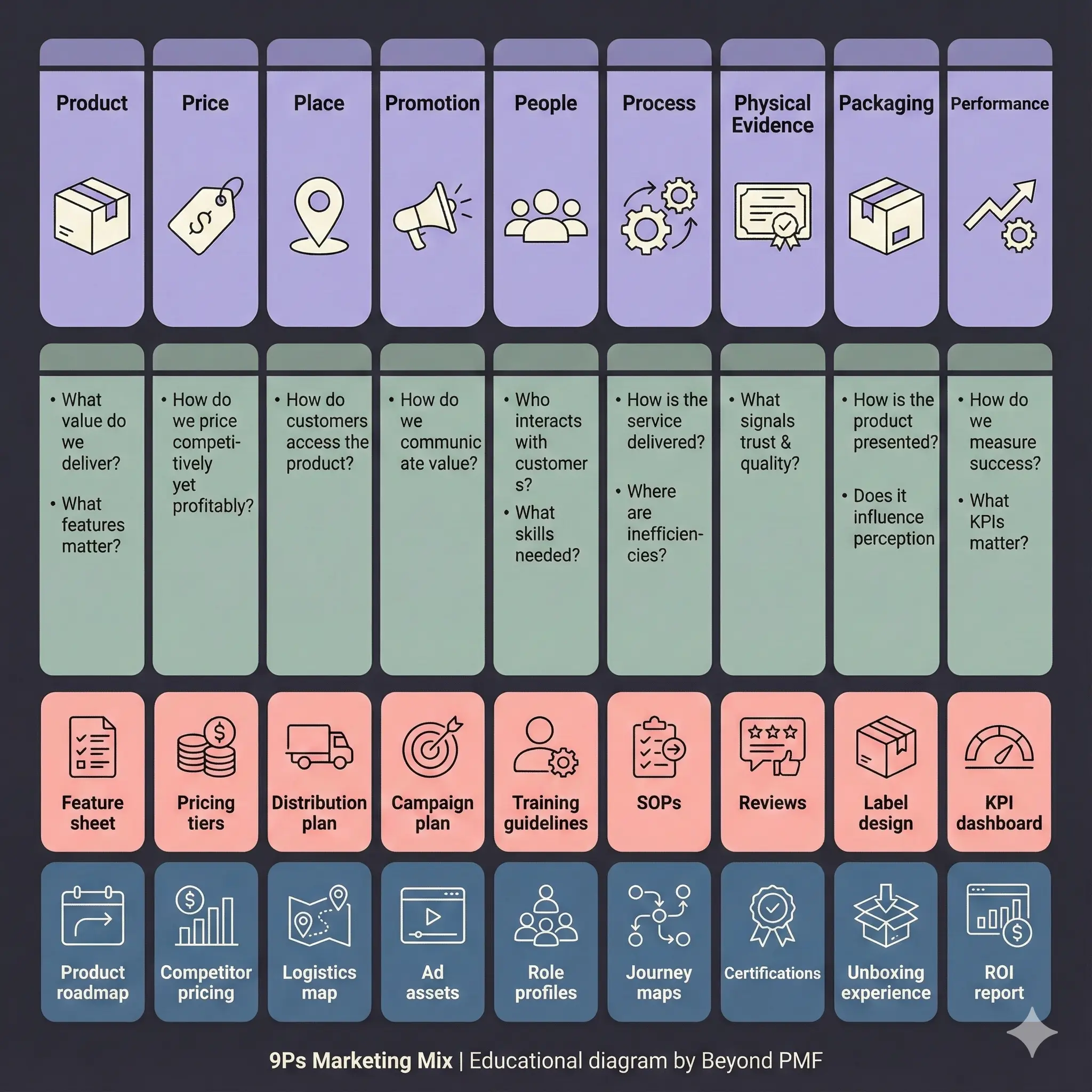
The 9Ps Marketing Mix is an extension of the classic 4Ps model, designed to provide a more comprehensive framework for marketing decision-making. This model includes Product, Price, Place, Promotion, People, Process, Physical Evidence, Packaging, and Performance. It helps businesses to develop a more detailed and holistic marketing strategy, considering various facets of the business environment and customer interaction that are crucial in today's competitive landscape.

The Adopt Trial Assess Hold Framework is a methodical approach that helps organizations systematically evaluate new technologies or processes before full-scale implementation. It involves experimenting with new solutions on a small scale, assessing their impact, and deciding whether to adopt them fully or hold off. This framework is designed to minimize risks associated with new implementations and ensure that only beneficial innovations are adopted, enhancing overall efficiency and competitiveness.
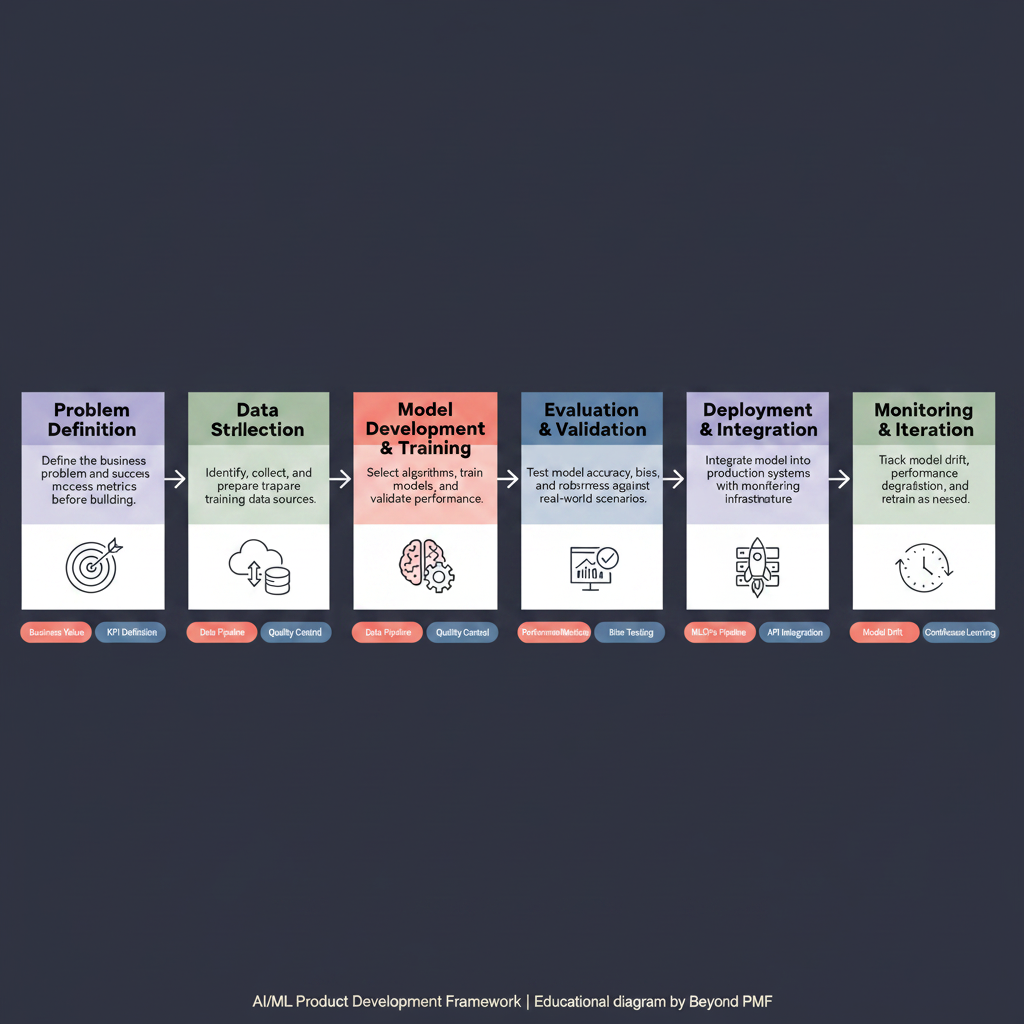
The AI/ML Product Development Framework is a comprehensive guide used by organizations to streamline the development of artificial intelligence and machine learning products. It encompasses all phases of product development, from initial data collection and analysis to model training, validation, and deployment. This framework is crucial for ensuring that AI/ML solutions are not only technically viable but also align with business objectives and user needs, thereby maximizing the return on investment.

Amazon's Working Backwards framework is a strategic approach used primarily for product development. It begins by focusing on the desired customer experience and then develops the product or service to match that vision. This method encourages teams to think from the customer's perspective, ensuring that the final product genuinely addresses their needs. The framework is used to enhance customer satisfaction, streamline product development, and ensure alignment with business goals.

The Ansoff Matrix, developed by Igor Ansoff in 1957, is a business framework that helps organizations map strategic product market growth. The matrix presents four strategies for growth: market penetration, market development, product development, and diversification. Businesses use the Ansoff Matrix to assess the potential risks of growth initiatives and to make decisions that align with their overall strategy and resources.

The API-First Framework is an approach where the development of APIs takes precedence over other components of software development. This methodology ensures that APIs are treated as first-class citizens in the software development lifecycle, promoting better scalability, interoperability, and flexibility in applications. It is used to create robust and easy-to-integrate software systems that can evolve without breaking existing functionalities.

The Backward Planning Framework is a methodical approach used in project management and strategic planning where the final objectives are defined first, followed by the determination of necessary steps to reach those objectives. This reverse engineering of goals helps in aligning resources and actions from the outset, ensuring that every step contributes directly towards the end goal. It is particularly beneficial for complex projects where forward-thinking planning might miss critical dependencies or outcomes.

The Balanced Innovation Portfolio framework is designed to help organizations allocate resources effectively across a mix of incremental, adjacent, and transformational innovation projects. It ensures a balanced approach by categorizing projects based on their risk levels and potential returns, which aids in achieving both short-term gains and long-term growth. This framework is crucial for maintaining competitiveness and fostering sustainable innovation within a company.
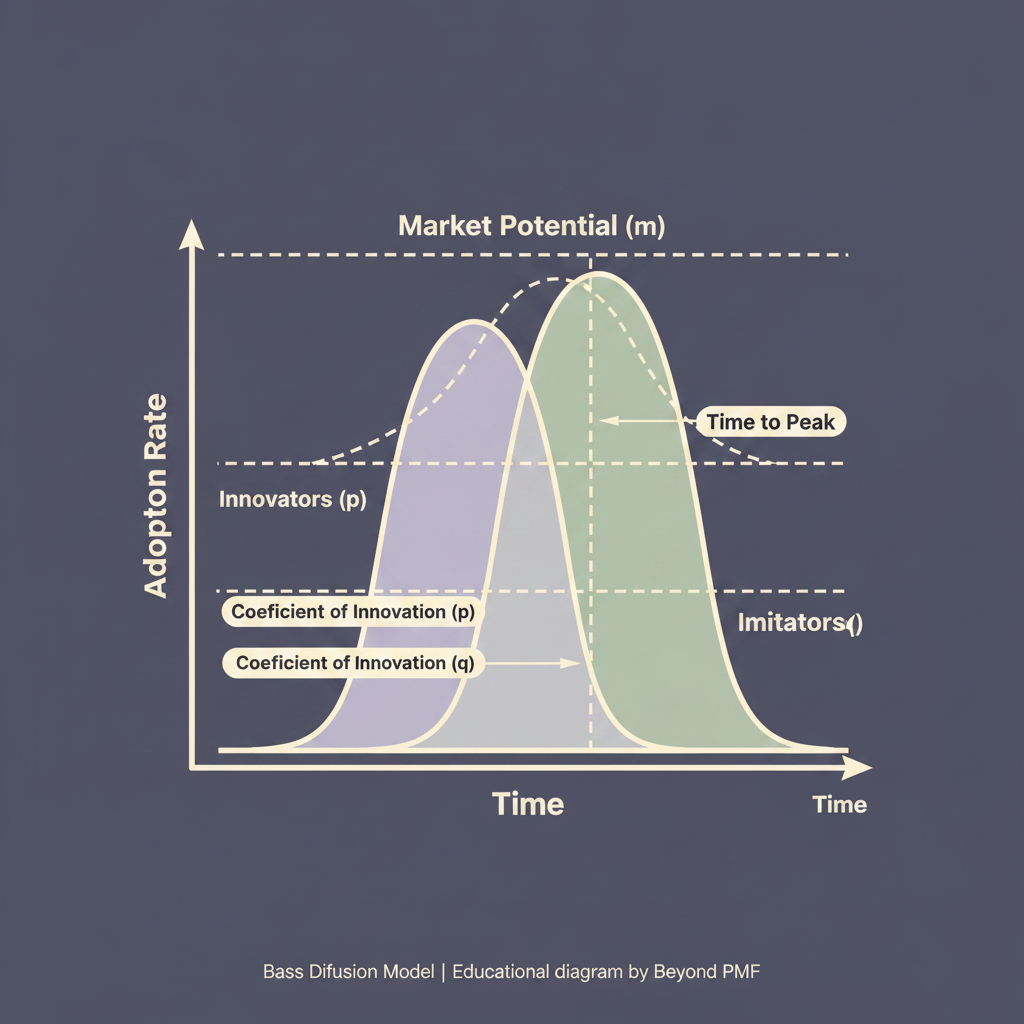
The Bass Diffusion Model, developed by Frank Bass in 1969, is a mathematical model used to forecast the adoption of new products and technologies. It combines factors of innovation and imitation to predict how new offerings will be adopted over time. This model helps companies in planning marketing strategies, managing product life cycles, and estimating market potential. Its application spans various industries, making it a versatile tool for strategic decision-making.

The BCG Matrix, also known as the Growth-Share Matrix, was developed by the Boston Consulting Group as a tool for managing a portfolio of different business units. The matrix helps companies allocate resources and is used as an analytical tool in brand marketing, product management, strategic management, and portfolio analysis. It categorizes business units or products into four categories: Stars, Cash Cows, Question Marks, and Dogs, based on their market growth rate and relative market share. This framework assists companies in prioritizing investments among different business units.
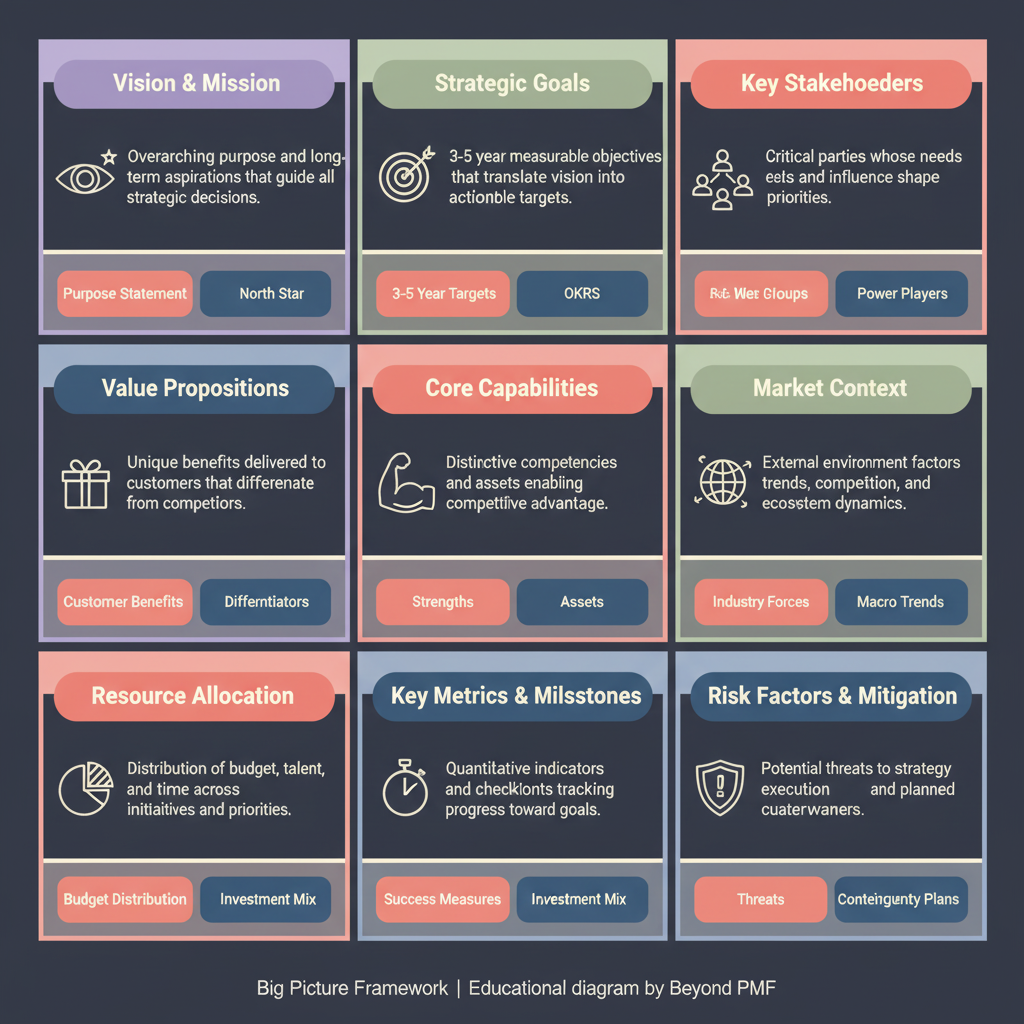
The Big Picture Framework is designed to help organizations visualize and align their short-term actions with their overarching strategic objectives. It encourages holistic thinking and planning, ensuring that all parts of the business are working towards the same goals. This framework is particularly beneficial for ensuring that operational decisions support strategic growth and adaptation in rapidly changing environments.

The Blue-Green-Brown Innovation Portfolio framework categorizes innovation projects into three distinct types based on their environmental implications and sustainability goals. 'Blue' innovations focus on water-related improvements, 'Green' on reducing carbon footprints and enhancing eco-friendliness, and 'Brown' on transforming waste management and pollution control. This framework helps organizations prioritize and allocate resources effectively, ensuring that their innovation efforts align with broader environmental and sustainability objectives.
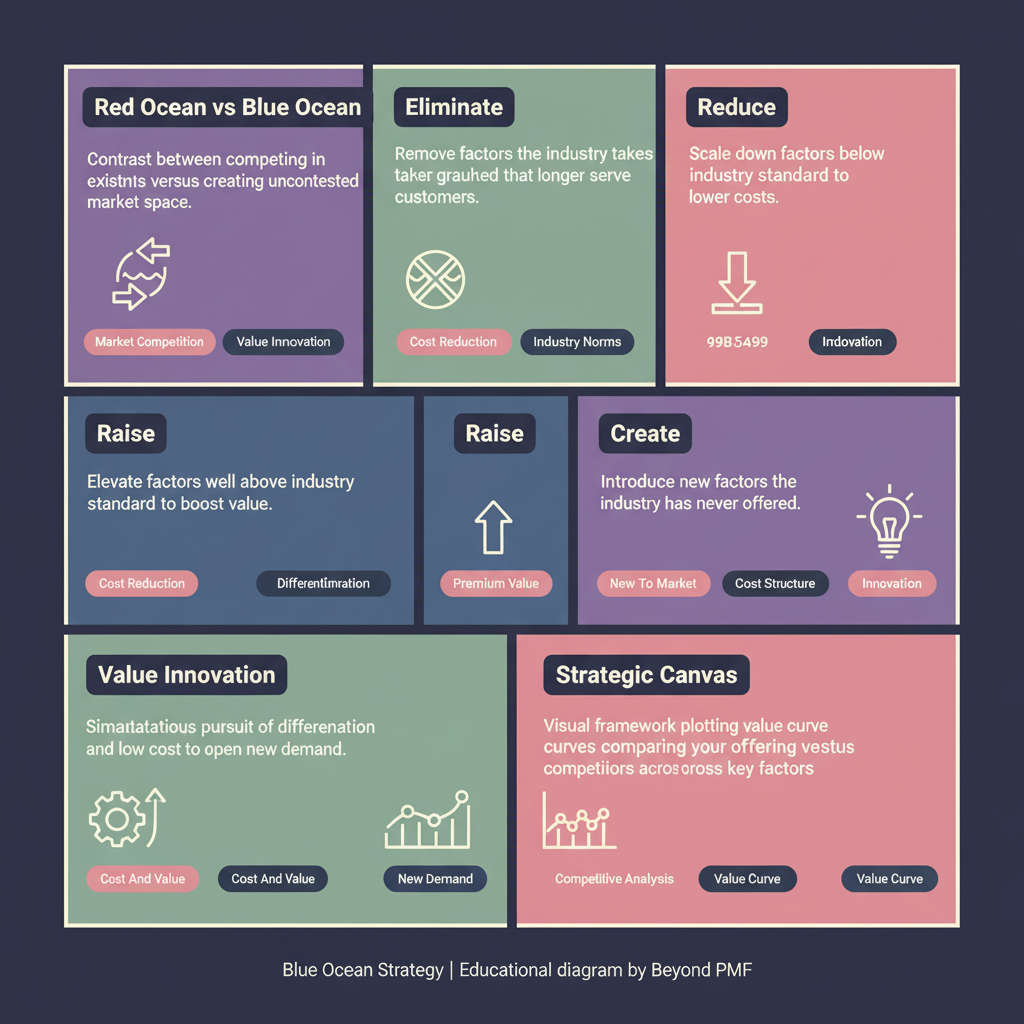
The Blue Ocean Strategy is a strategic planning model that posits that companies can succeed not by battling competitors, but rather by systematically creating new markets and demand in uncontested market spaces, thereby making the competition irrelevant. This approach encourages companies to innovate and create value in ways that render rivals obsolete, leading to higher profits and growth. The framework emphasizes the simultaneous pursuit of differentiation and low cost to open up a new market space and create new demand.
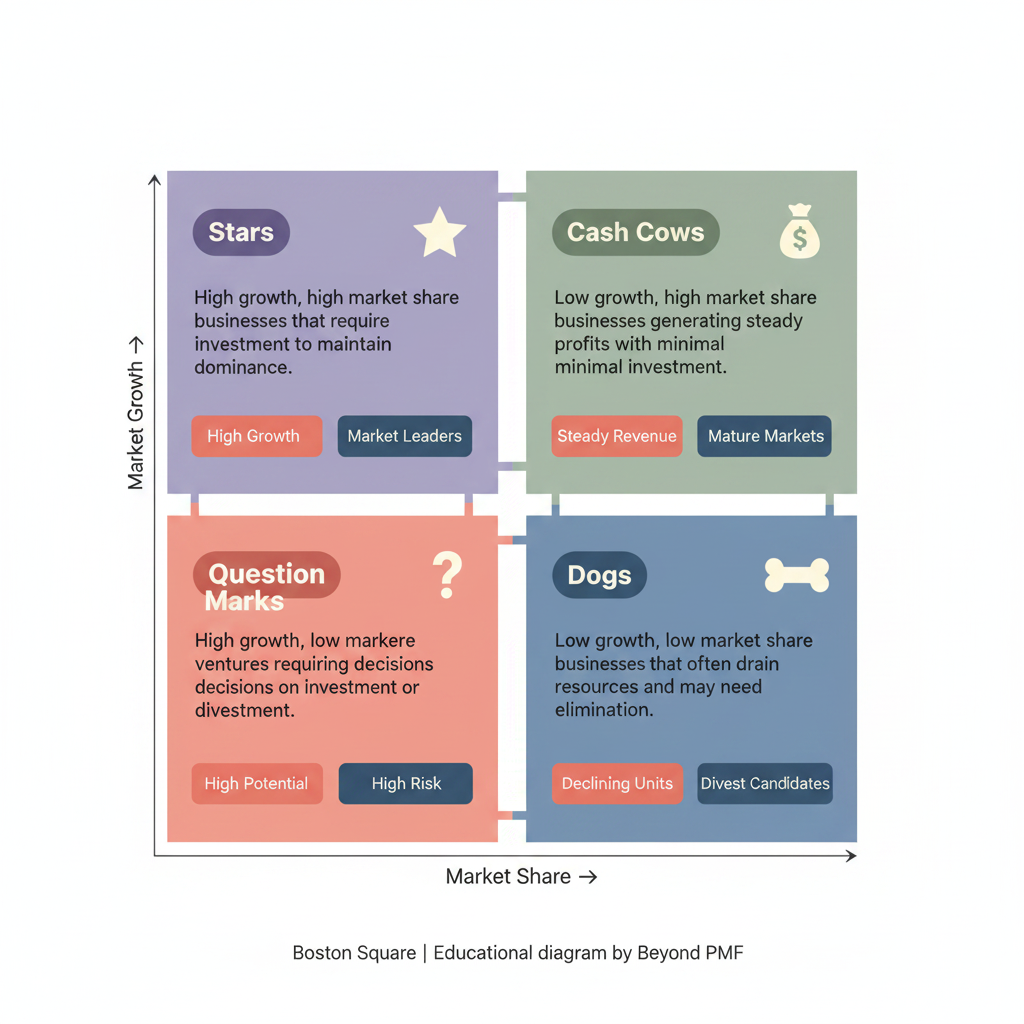
The Boston Square is a strategic framework used primarily for evaluating positions or strategic options within business units. It is similar to but distinct from the more popular BCG Matrix. This framework helps organizations to categorize and prioritize different strategies based on two axes, usually involving factors like market growth and market share. The main benefit of using the Boston Square is its simplicity in visually categorizing complex strategic choices into manageable quadrants.
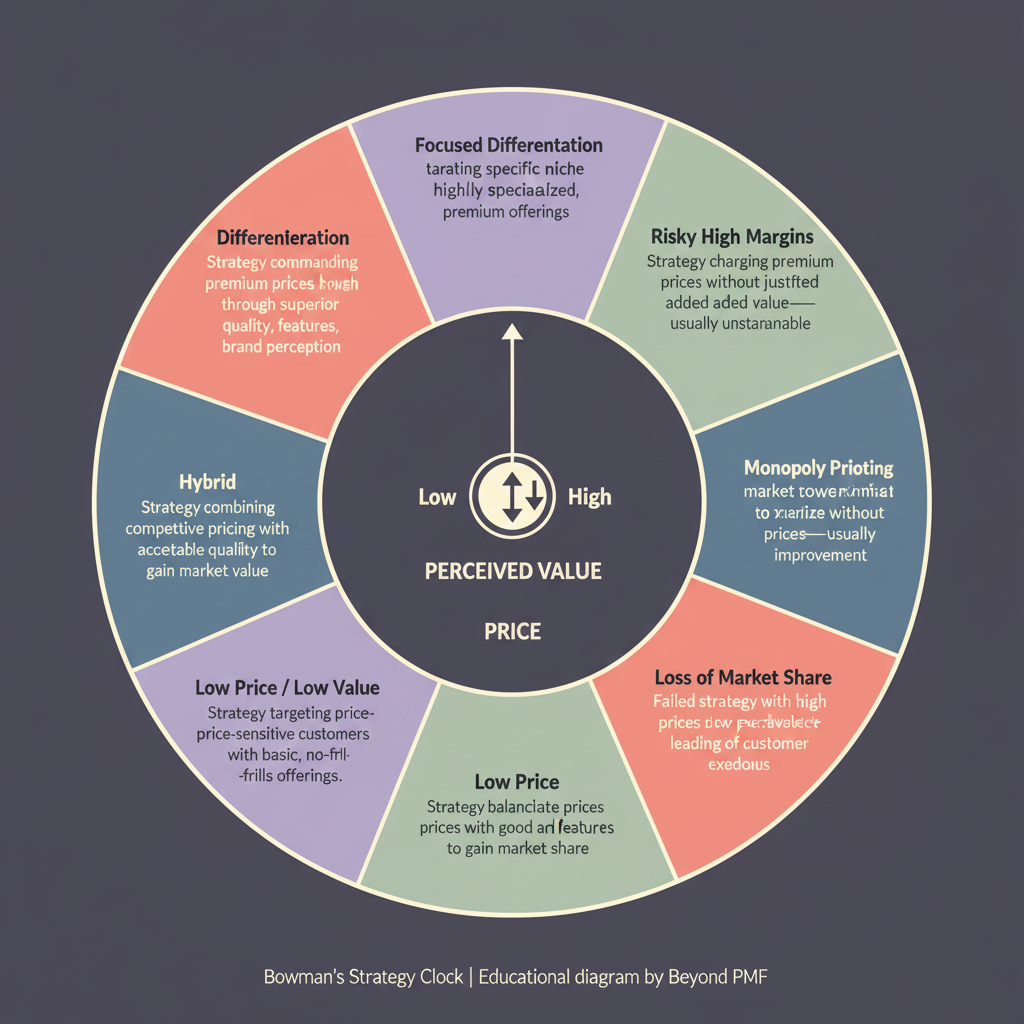
Bowman's Strategy Clock is a framework used in strategic management and marketing to analyze and determine a business's competitive positioning against its competitors. It extends Porter's Generic Strategies and involves eight different positions that a company can occupy on a clock-shaped diagram based on the dimensions of price and perceived value. This framework helps businesses understand how they can effectively position their products or services in a competitive market to maximize their potential.
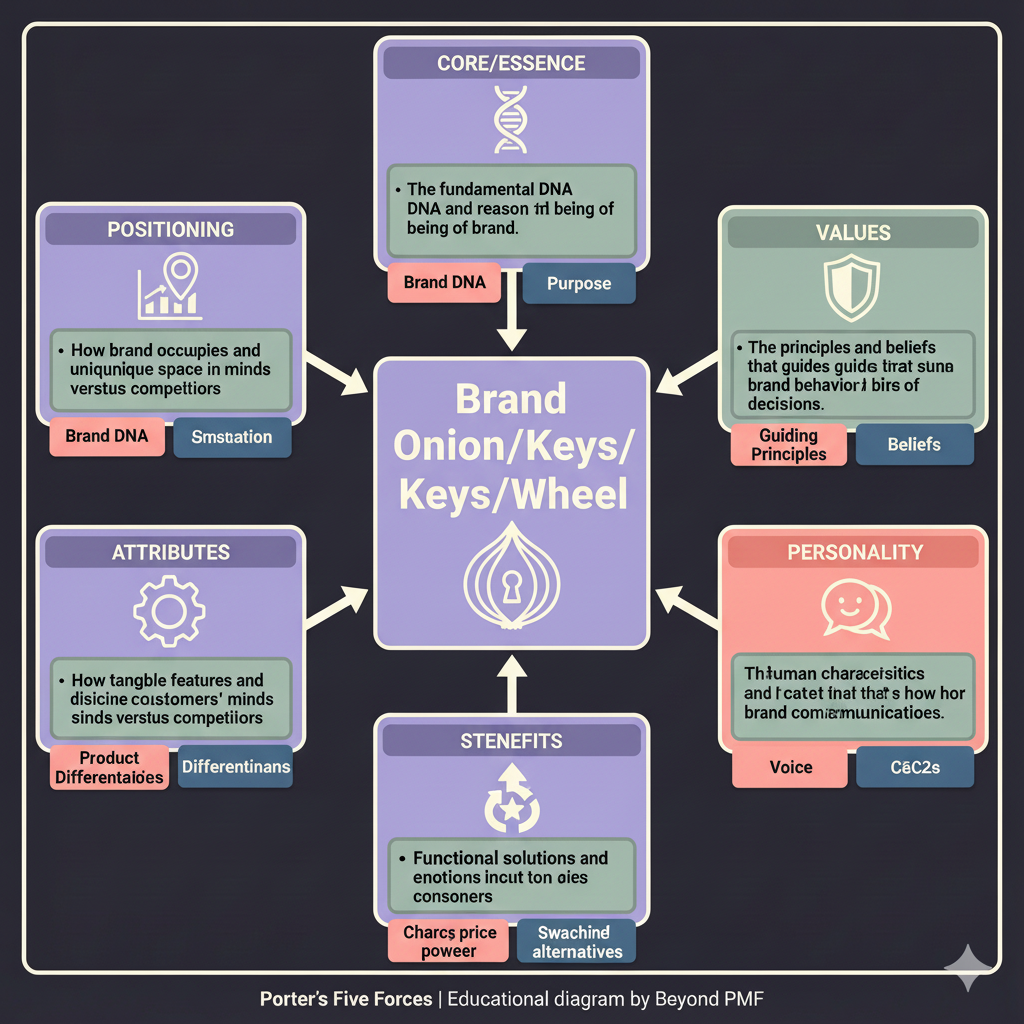
The Brand Onion/Keys/Wheel framework is a visual model used to explore and document the different layers that make up a brand's identity, from core values and personality to customer perceptions and experiences. It helps marketers and brand managers ensure consistency across all marketing and operational strategies, enhancing brand coherence and recognition. The framework is particularly beneficial for aligning team understanding and guiding brand strategy development.

Brand Portfolio Strategy is a framework used by companies to manage and structure their diverse brands in a way that maximizes market coverage and minimizes brand overlap. This strategic approach helps in allocating resources efficiently, targeting different customer segments, and leveraging synergies among brands. It is crucial for companies with multiple brands to maintain clarity, relevance, and distinctiveness in each brand to effectively support the overall business objectives.
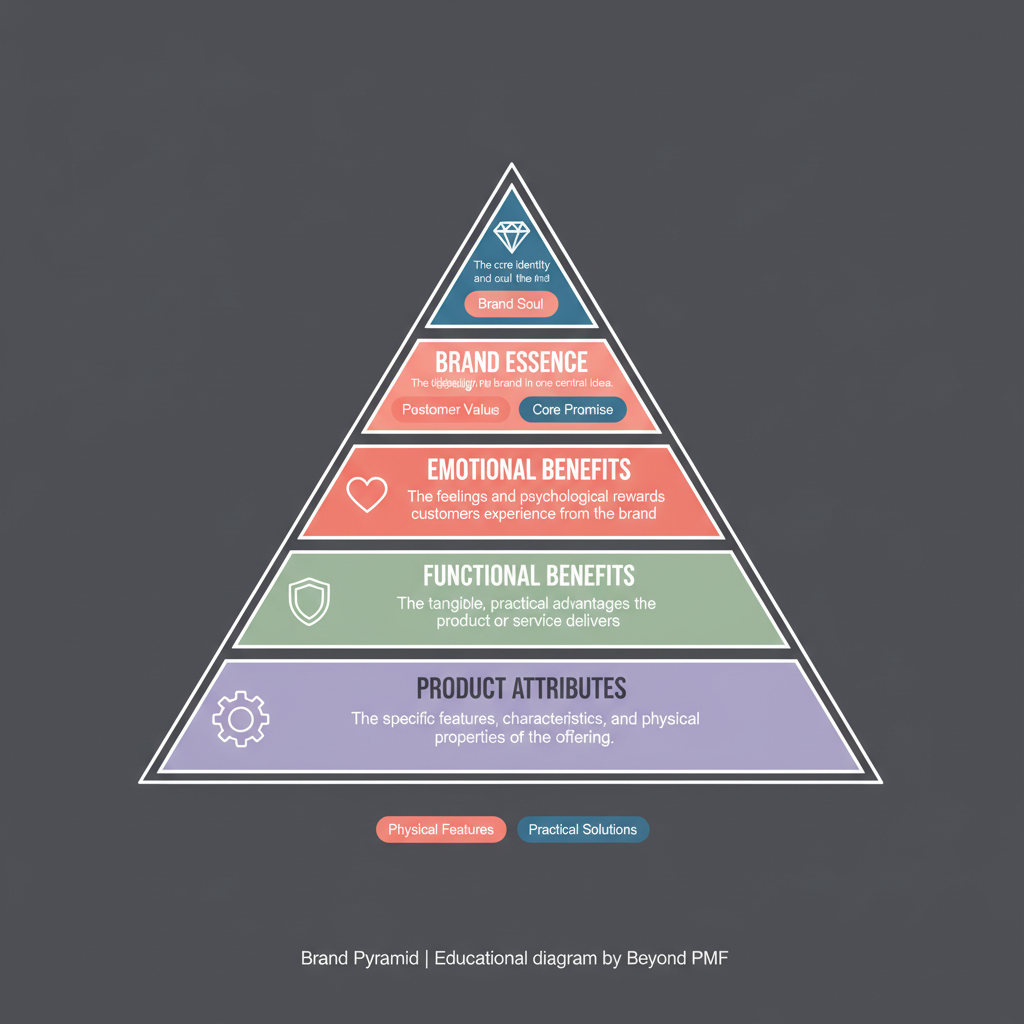
The Brand Pyramid is a framework that helps marketers and brand managers visualize the building blocks of a brand's identity, starting from basic attributes and moving up to emotional benefits and brand personality. It is used to ensure a consistent brand message and to deepen the brand's connection with its customers. The pyramid structure helps in prioritizing marketing efforts and aligning them with the brand's core values and customer expectations, ultimately enhancing brand loyalty and recognition.
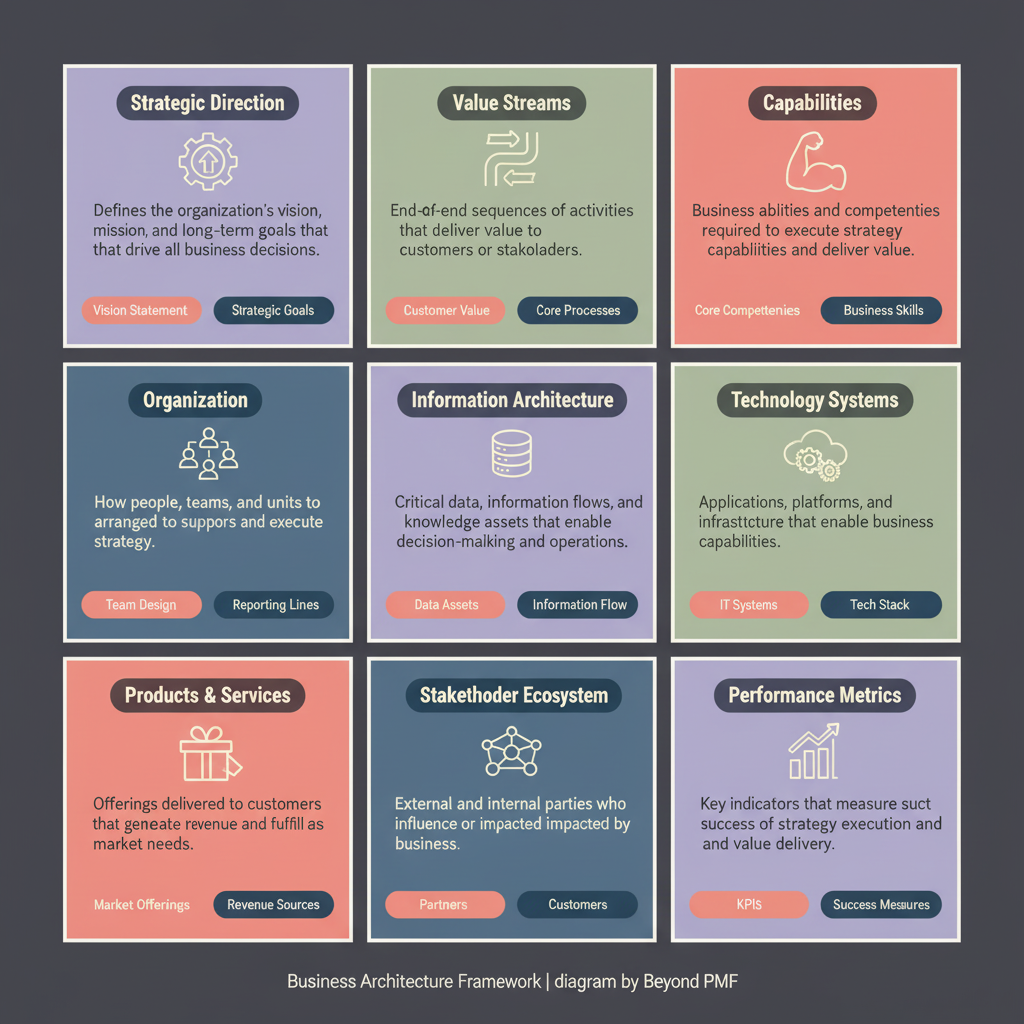
The Business Architecture Framework provides a comprehensive view of an organization's structure, processes, and business models. It is used to align strategic objectives with tactical demands, ensuring that all aspects of the business are optimized and interrelated. This framework helps in identifying opportunities for improvement, facilitating change management, and driving business outcomes effectively.
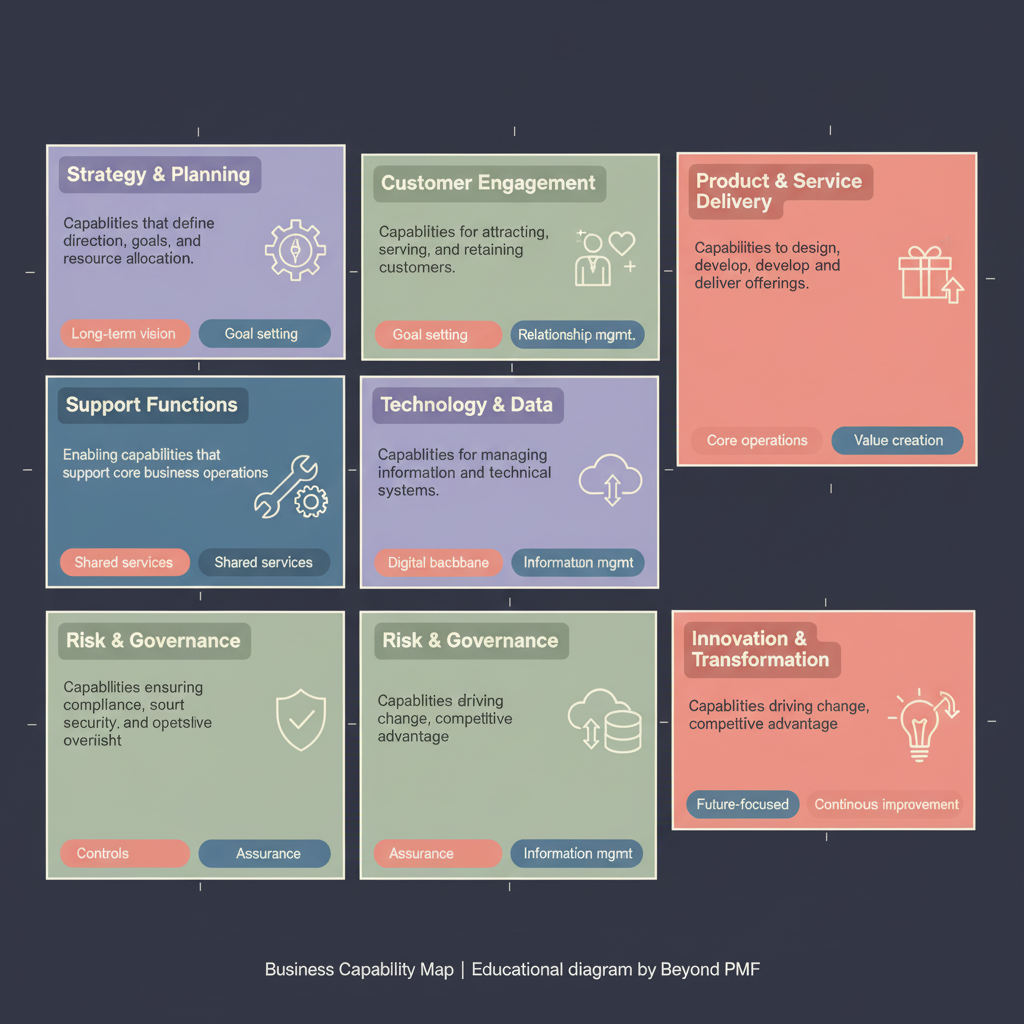
A Business Capability Map is a comprehensive framework that outlines the essential capabilities of a business, aligning them with strategic goals and objectives. It serves as a tool to visualize and understand the core functions and processes of an organization, facilitating better decision-making and resource allocation. By mapping out capabilities, businesses can identify redundancies, streamline operations, and prioritize investments, ultimately leading to enhanced operational efficiency and competitive advantage.
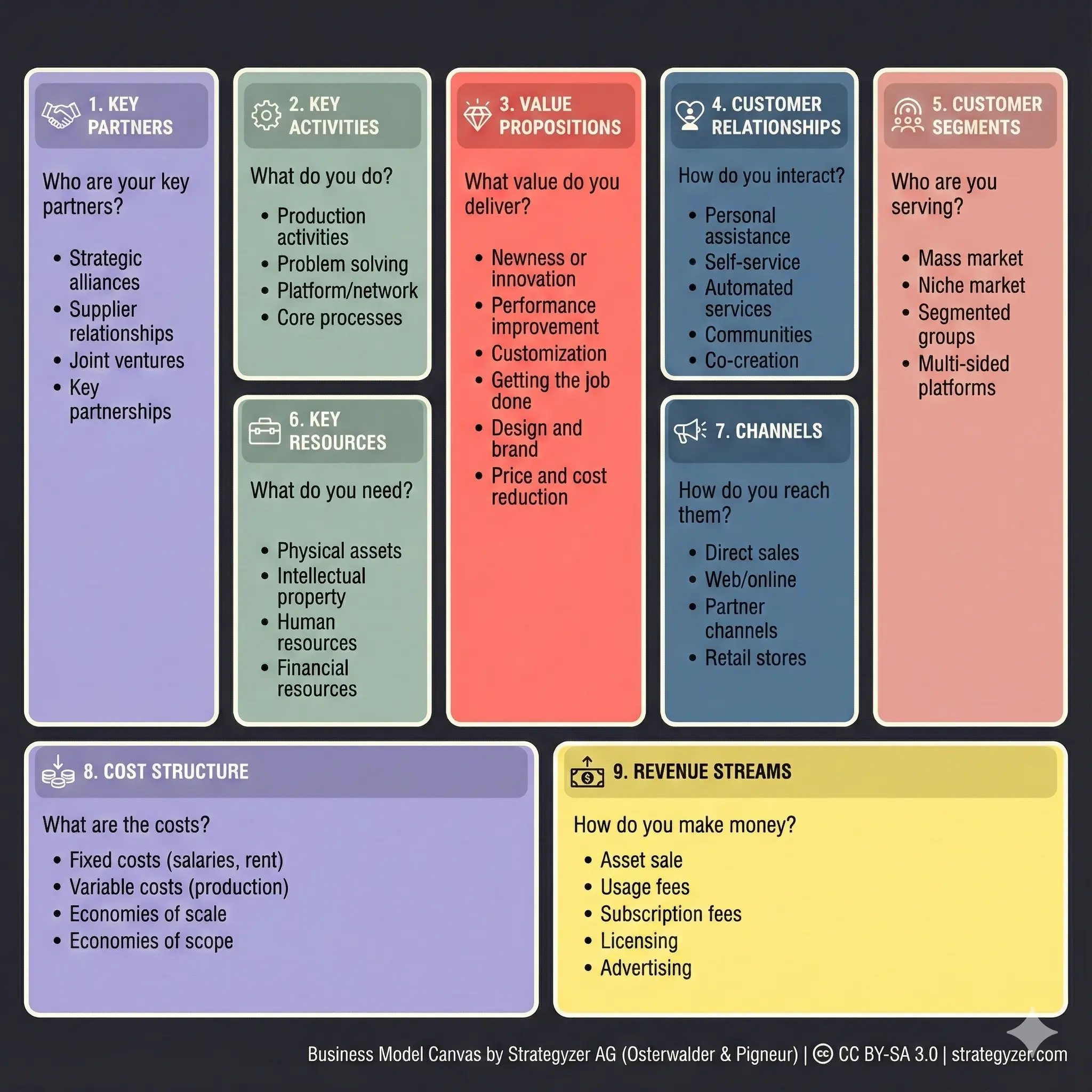
The Business Model Canvas is a visual chart with elements describing a firm's value proposition, infrastructure, customers, and finances. It assists firms in aligning their activities by illustrating potential trade-offs. The framework's flexibility allows it to be used by startups and established businesses alike, providing a clear method to communicate business ideas and strategies.
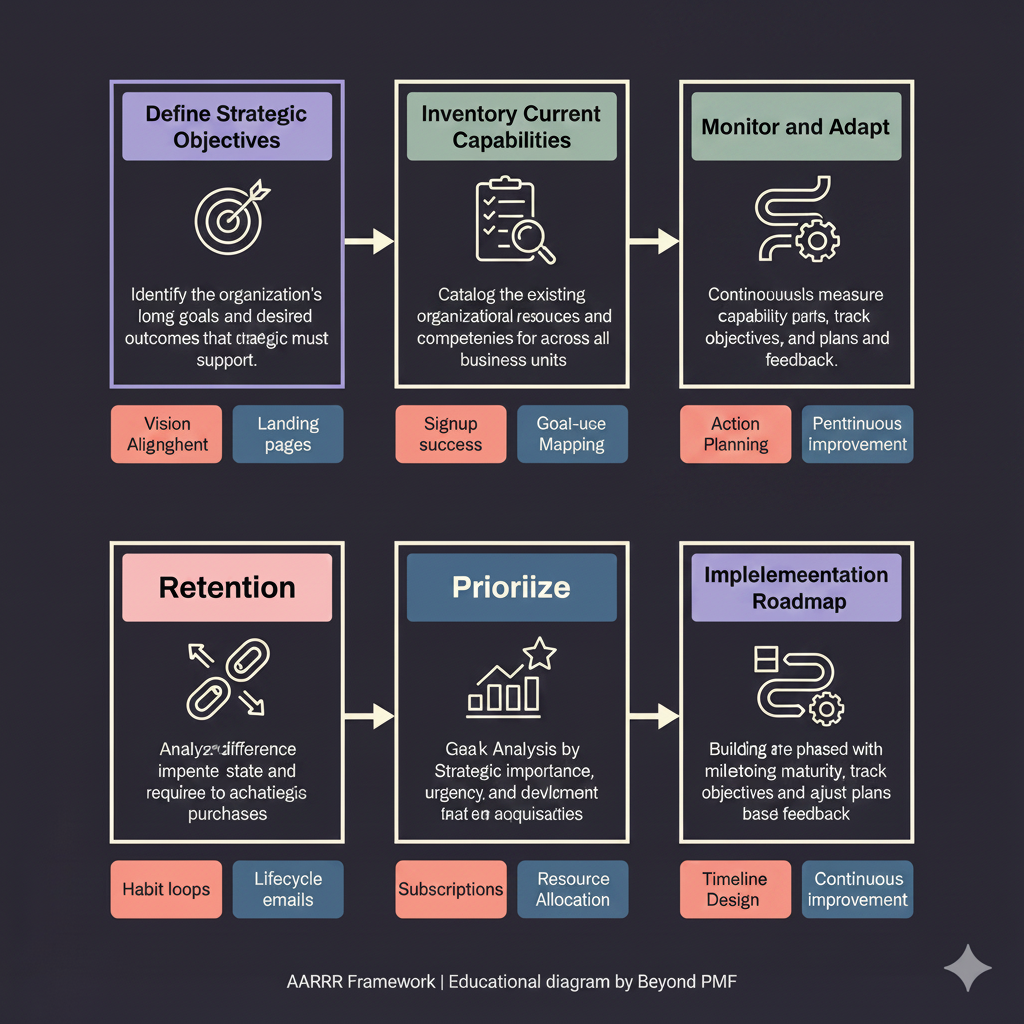
Capability-Based Planning is a framework that helps organizations focus on developing capabilities that are aligned with their strategic objectives and customer demands. It involves identifying the necessary capabilities, assessing current capabilities, and planning for the development of new capabilities to close any gaps. This approach ensures that investments are made strategically to enhance the organization's overall effectiveness and competitiveness.
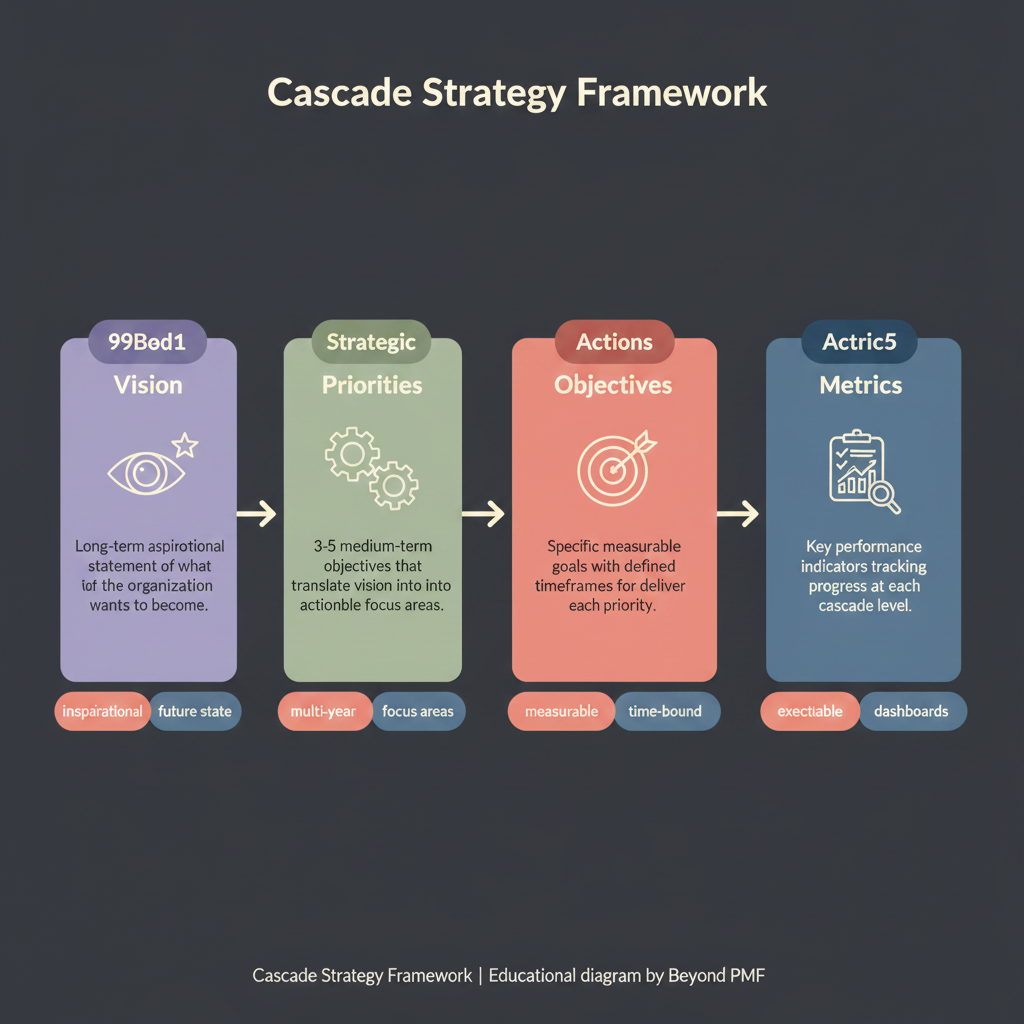
The Cascade Strategy Framework is designed to help organizations effectively translate high-level strategic goals into actionable and specific objectives at various organizational levels. By ensuring that the strategic vision is understood and implemented across all departments, the framework facilitates a unified approach to achieving business goals. This alignment enhances accountability, improves performance tracking, and boosts overall organizational coherence and efficiency.
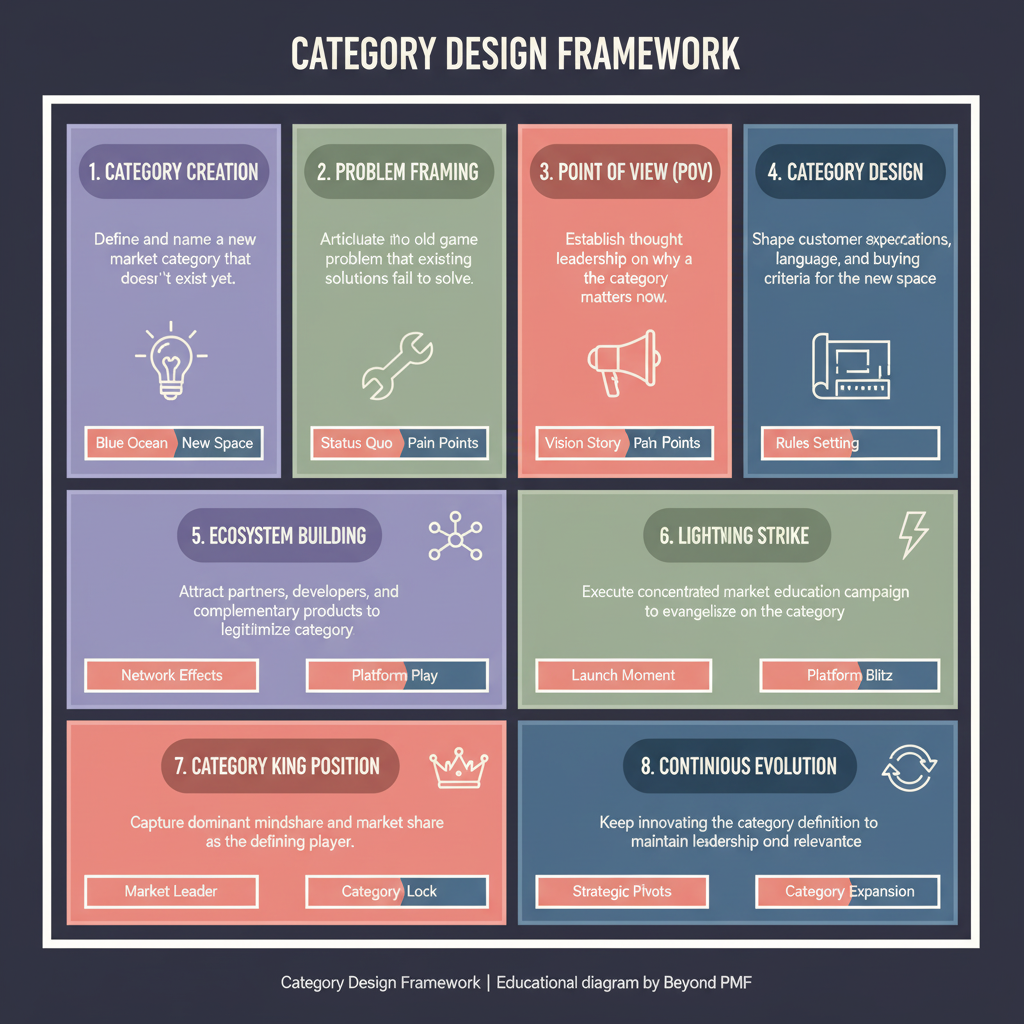
The Category Design Framework involves identifying a market need that is not currently being met and developing a new category within that space to address it. This approach not only involves product innovation but also focuses on creating demand and establishing market leadership. The framework is used to help companies become category kings, capturing the majority of the market share and defining the terms on which competition occurs.
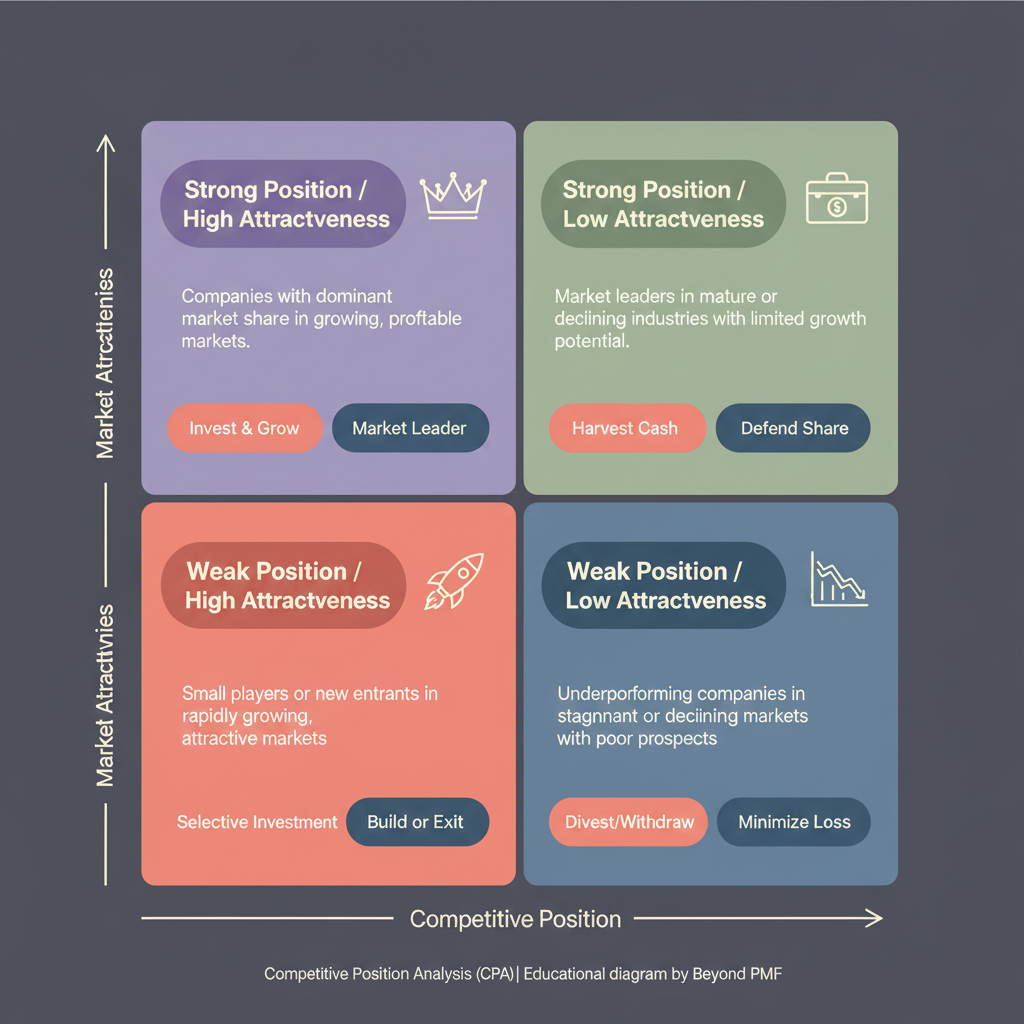
Competitive Position Analysis (CPA) is a framework designed to assess a company's position relative to its competitors. It involves analyzing various factors such as market share, product differentiation, and customer loyalty to understand the company's strengths and weaknesses. This analysis helps businesses strategize effectively, capitalize on their competitive advantages, and identify areas for improvement.
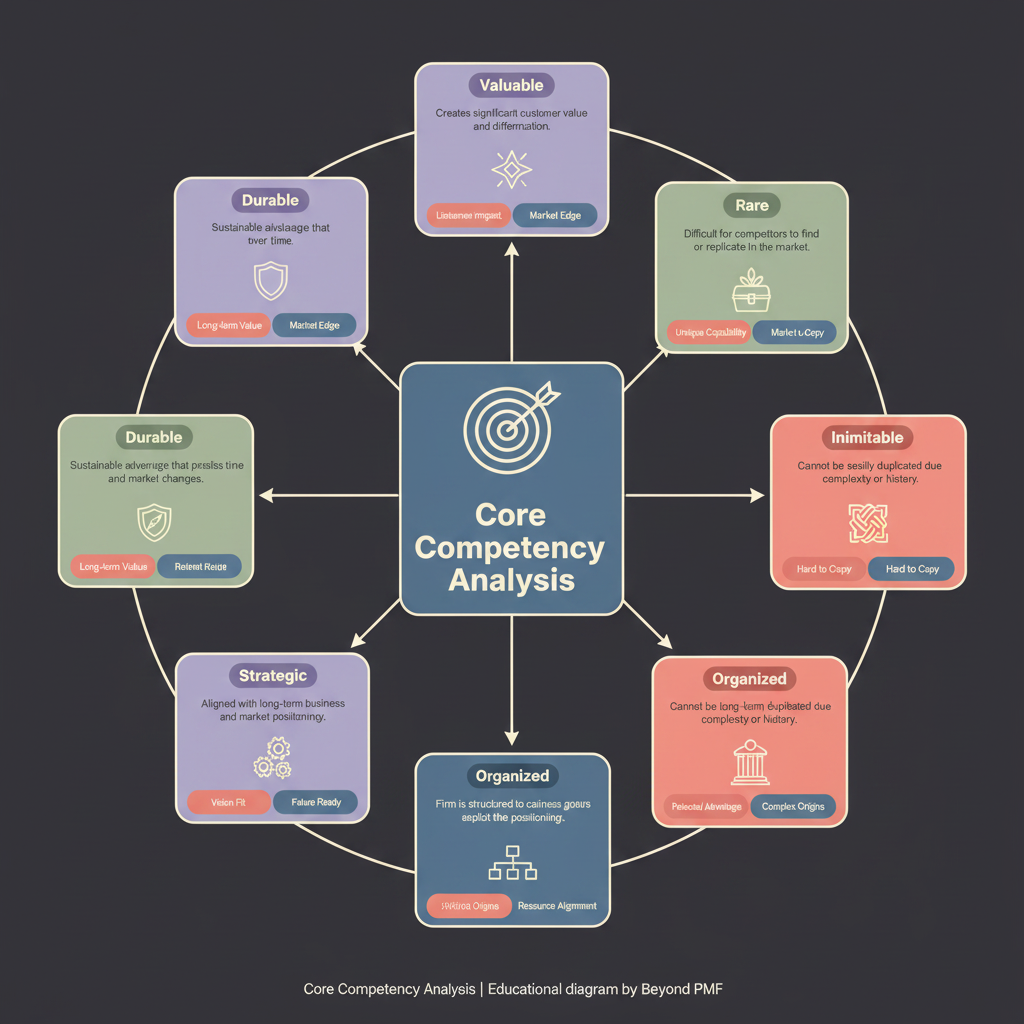
Core Competency Analysis is a framework that helps organizations identify their unique capabilities that provide competitive advantages. The analysis focuses on strengths that are not only central to a company's performance but also unique in comparison to its competitors. This approach is used to guide strategic planning, resource allocation, and can influence decision-making processes. The benefits of conducting a Core Competency Analysis include improved strategic alignment, enhanced market positioning, and better focus on long-term goals.
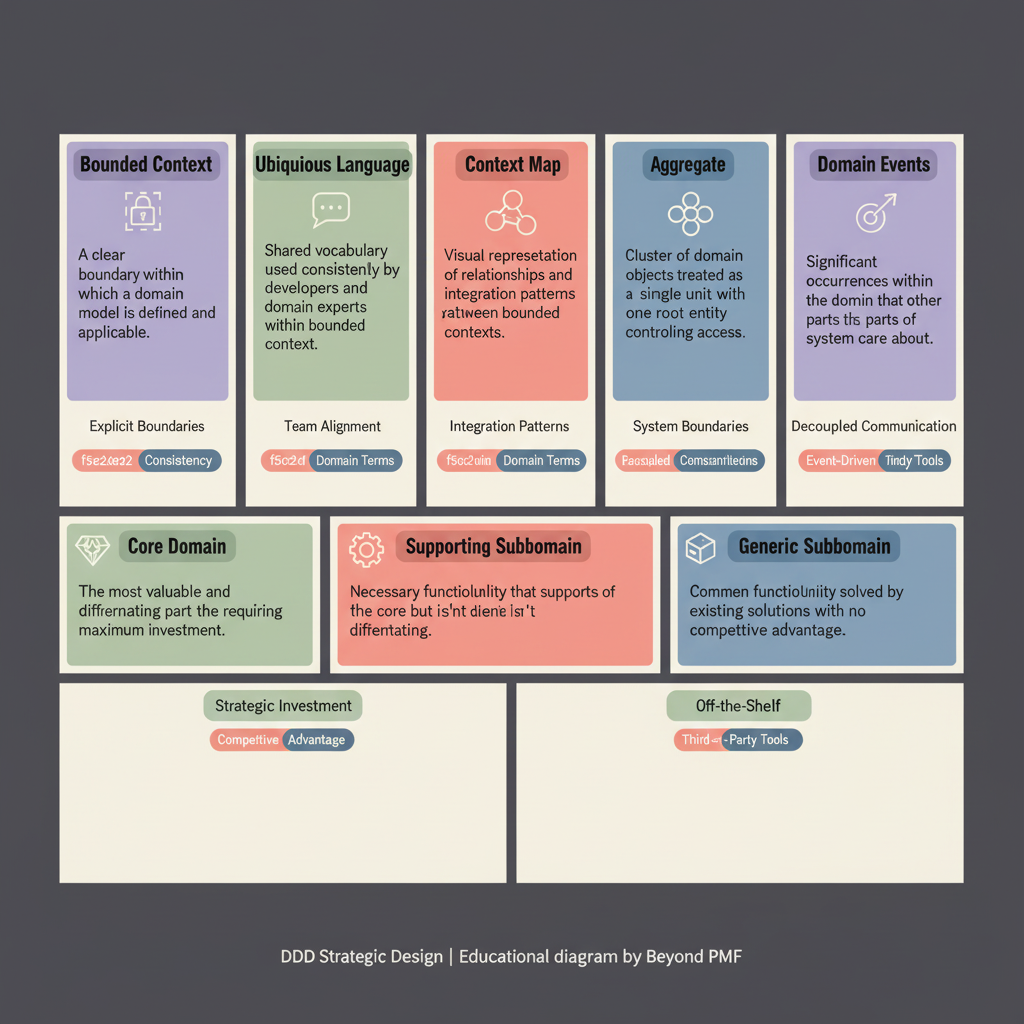
Domain-Driven Design (DDD) Strategic Design is a methodology used in software development to align complex software designs with business needs. It emphasizes collaboration between technical and domain experts to identify distinct areas within the domain, known as bounded contexts, and ensures that these contexts are reflected in the software architecture. This approach helps in managing large-scale systems by isolating domain-specific logic and reducing dependencies.
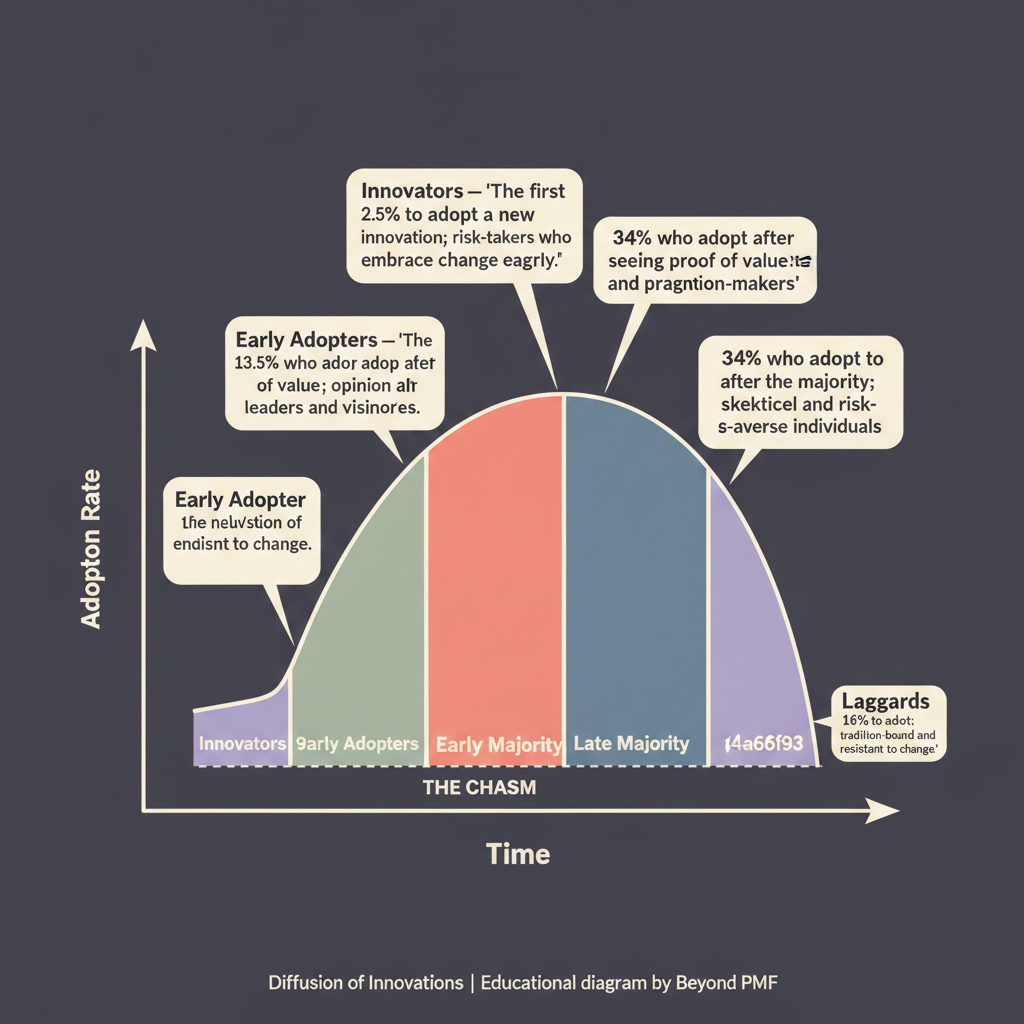
The Diffusion of Innovations framework, developed by Everett Rogers in 1962, describes the process by which an innovation is communicated through certain channels over time among the members of a social system. It is used to understand how new ideas and technologies spread and are adopted by groups and cultures. The framework helps businesses and policymakers to strategize the introduction and adoption of new technologies or ideas, maximizing reach and acceptance while minimizing resistance.
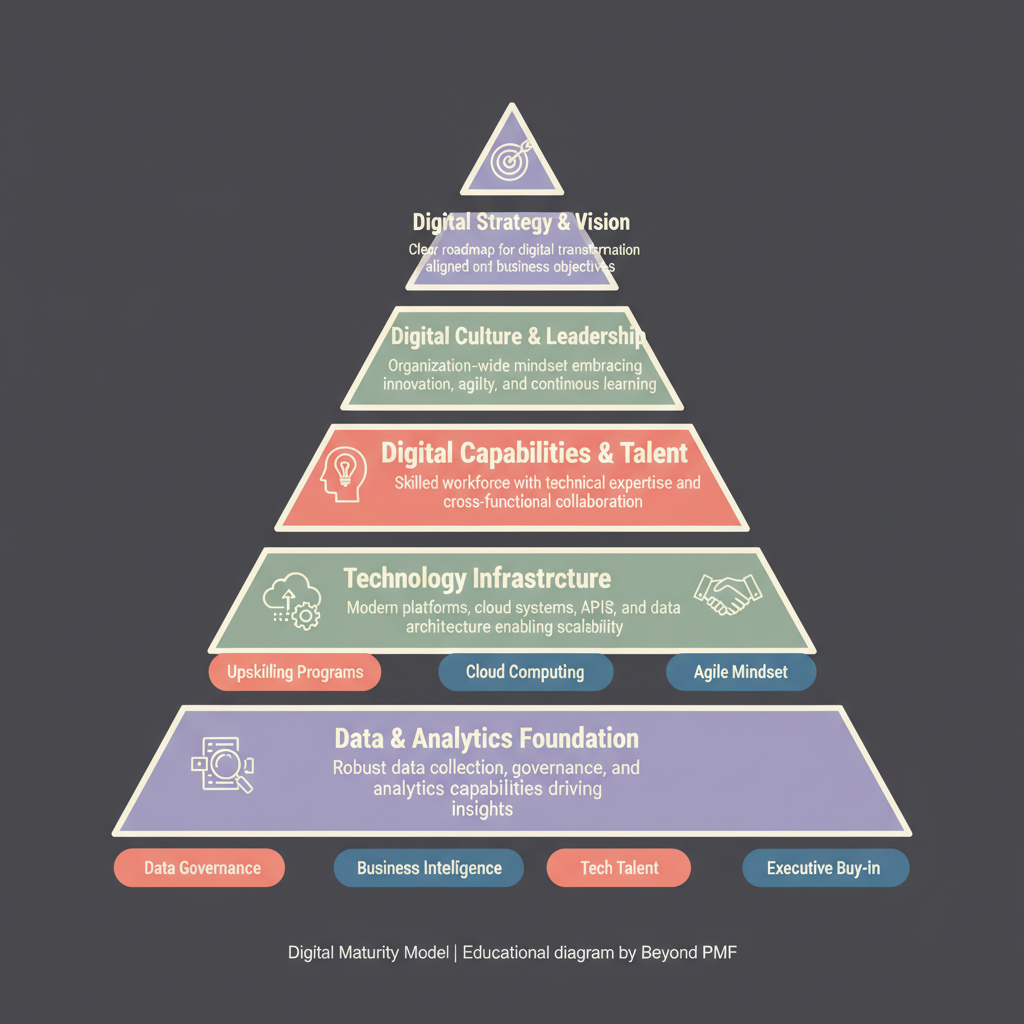
The Digital Maturity Model is a framework designed to evaluate the current level of digital capabilities within an organization and to provide a structured pathway for digital transformation. It helps businesses identify gaps in their digital strategy, align digital initiatives with business objectives, and prioritize investments in technology. By using this model, organizations can systematically improve their digital operations, enhance customer experience, and gain competitive advantages in their industry.
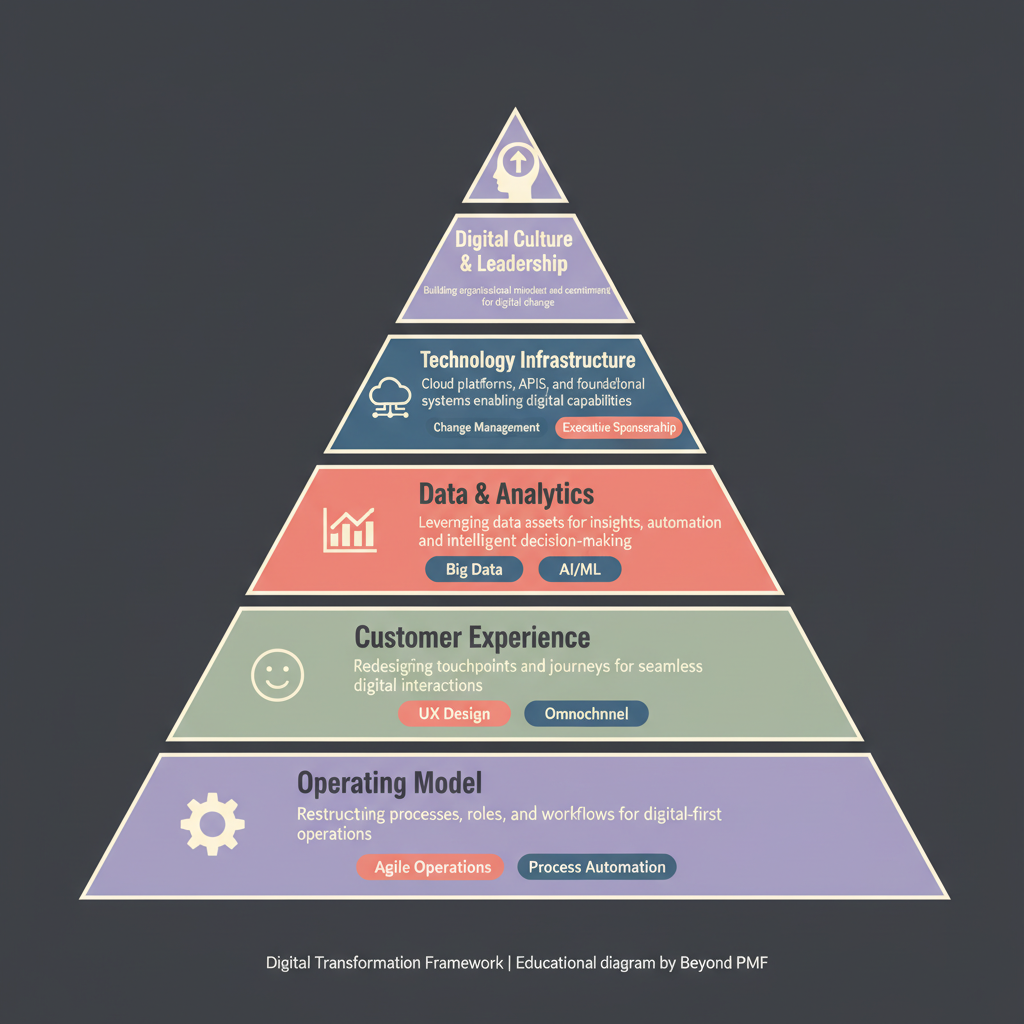
The Digital Transformation Framework is a strategic blueprint used by organizations to reimagine their business processes through the use of digital technology. It involves the integration of digital solutions into every aspect of business operations to enhance efficiency, improve customer engagement, and foster innovation. This framework is crucial for businesses aiming to stay competitive in a rapidly evolving digital landscape, as it helps in aligning technology and business strategies to achieve digital maturity.
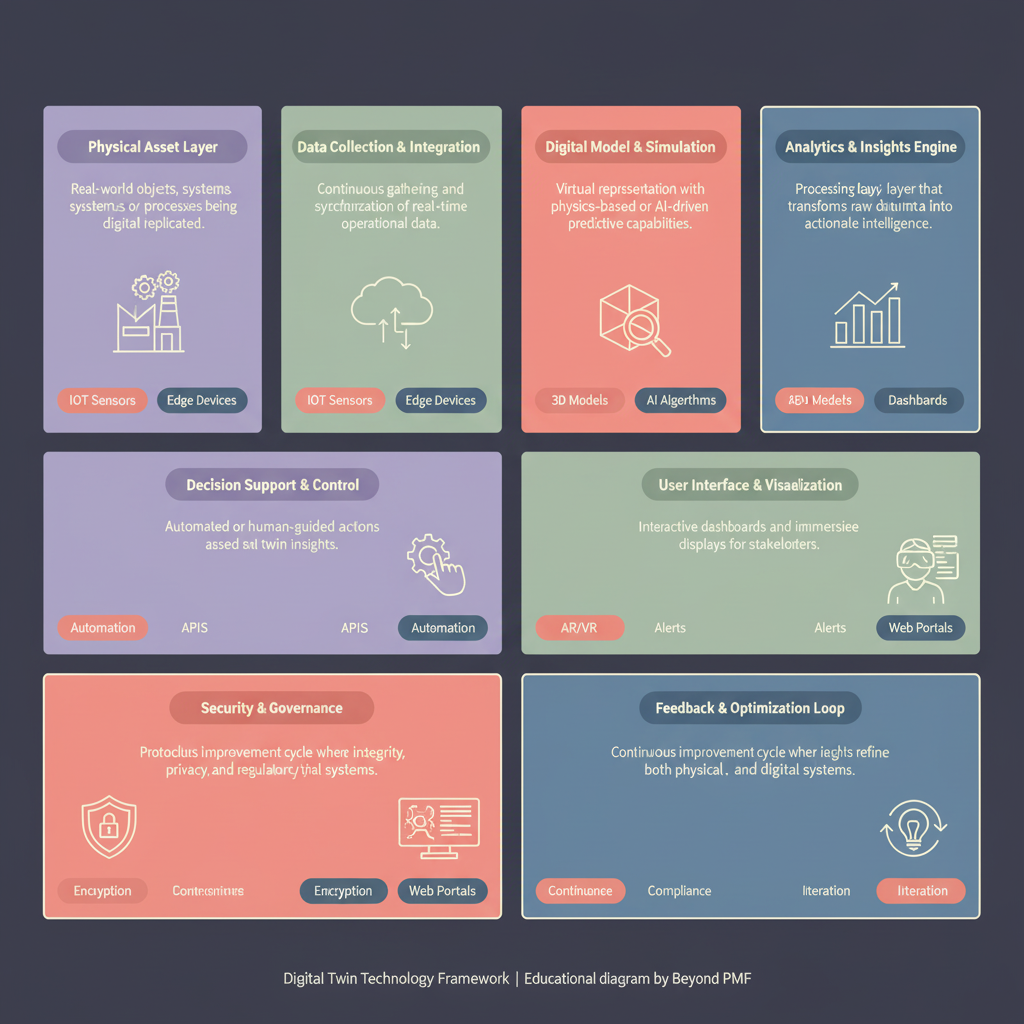
The Digital Twin Technology Framework involves the creation of a digital twin, a virtual model of a physical object or system, to simulate, analyze, and predict performance under various conditions. This framework is used to enhance decision-making in industries such as manufacturing, healthcare, and urban planning by providing deep insights into the lifecycle of assets. It helps in optimizing operations, reducing downtime, and improving overall efficiency.

Discovery-Driven Planning (DDP) is a framework used to approach business ventures and projects characterized by high uncertainty. It allows companies to systematically uncover and test assumptions, adapting plans as new learnings emerge. This method is particularly beneficial for new market entries, product launches, or innovative initiatives, where traditional planning methods based on predictable outcomes are less effective.
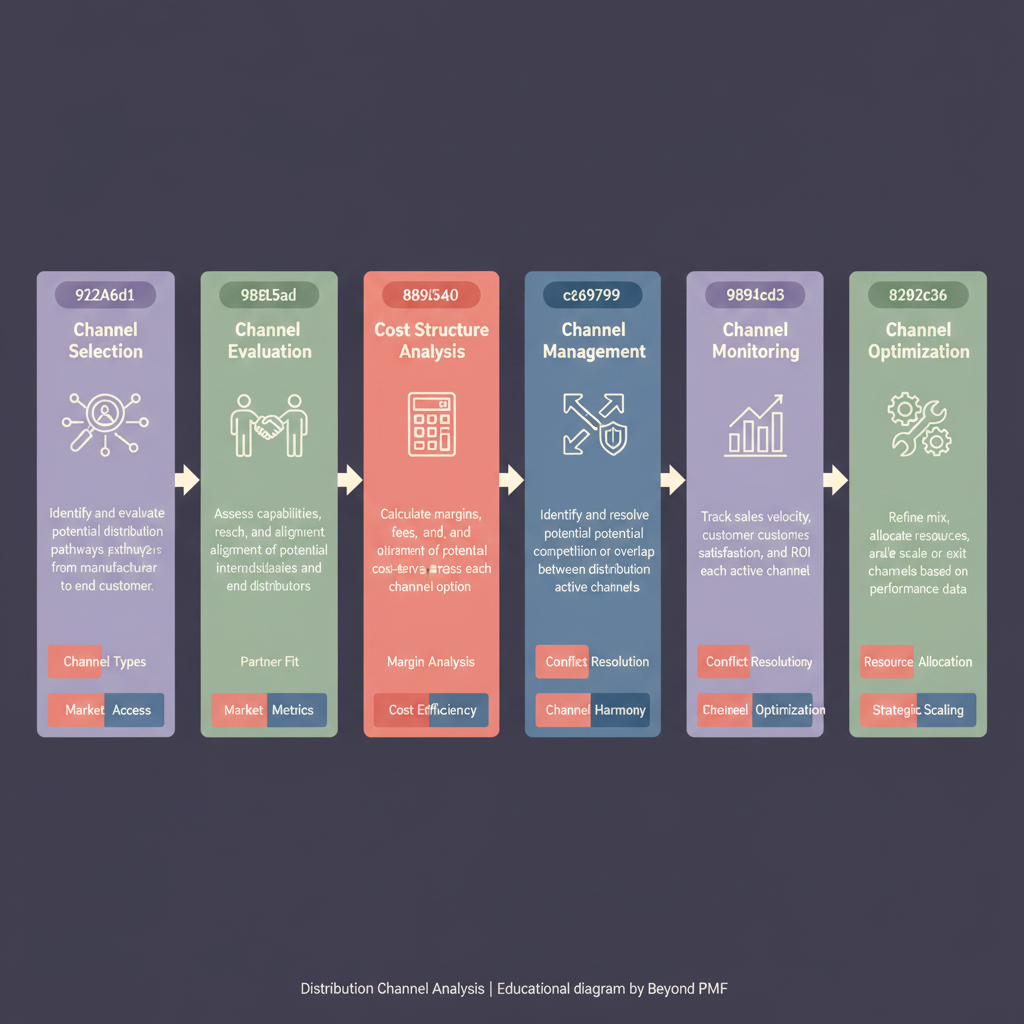
Distribution Channel Analysis is a framework used by businesses to assess and optimize the various channels through which their products are distributed to end users. This analysis helps companies understand the efficiency, effectiveness, and value of different distribution channels, from direct sales to intermediaries like wholesalers and retailers. By examining these channels, businesses can identify opportunities for improvement, reduce costs, enhance customer reach, and increase overall sales performance.
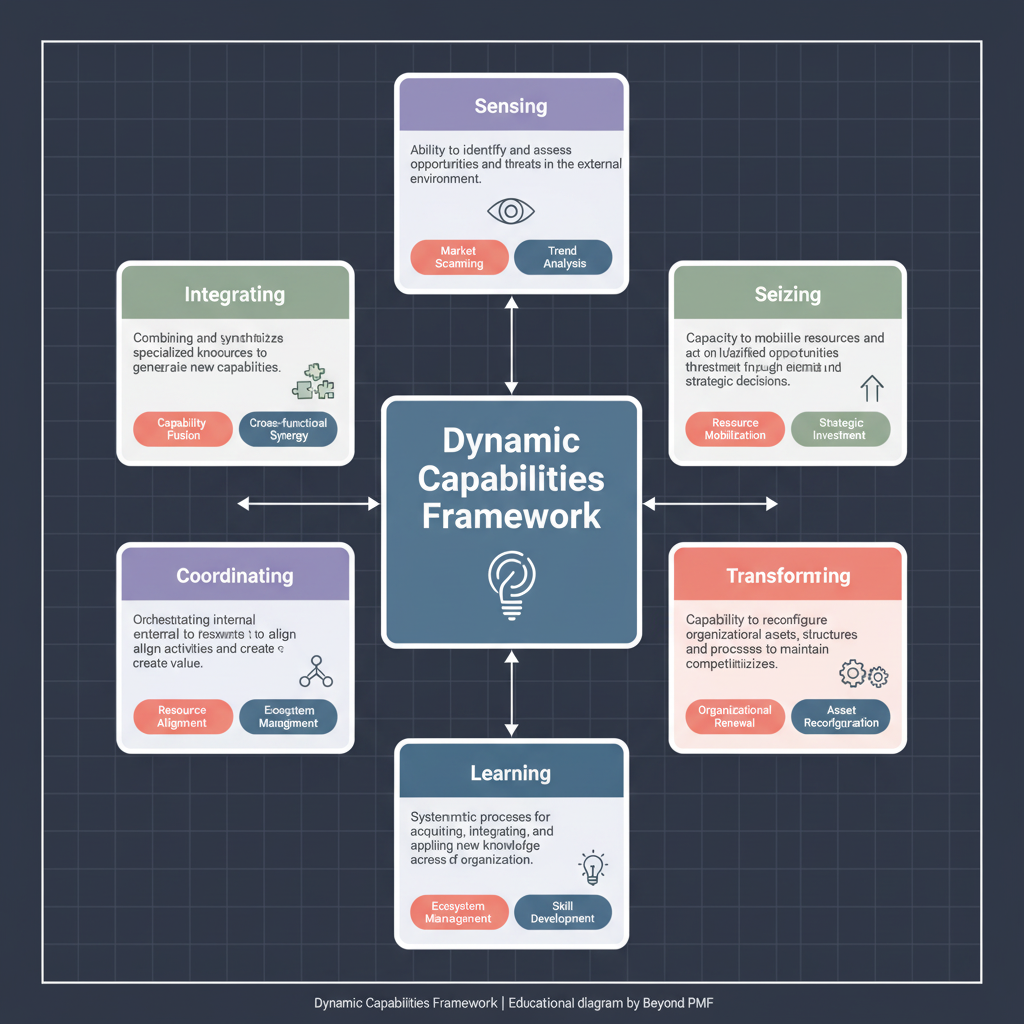
The Dynamic Capabilities Framework is a strategic management approach that emphasizes the role of managerial and organizational processes in leveraging a firm's capabilities to match and even create market change. It is used to understand how companies can sustain competitive advantage in markets characterized by rapid technological change and intense competition. The framework helps firms to innovate, adapt, and capture new opportunities, thereby achieving and sustaining competitive advantage.

Emergent Strategy is a concept in management which posits that effective strategies arise from the day-to-day experiences and decisions of employees, rather than through a top-down strategic mandate. This approach allows organizations to be more flexible and responsive to changes in the market or environment. It is used to capitalize on unexpected opportunities and to adapt quickly to unforeseen challenges, making it highly beneficial in dynamic and unpredictable industries.
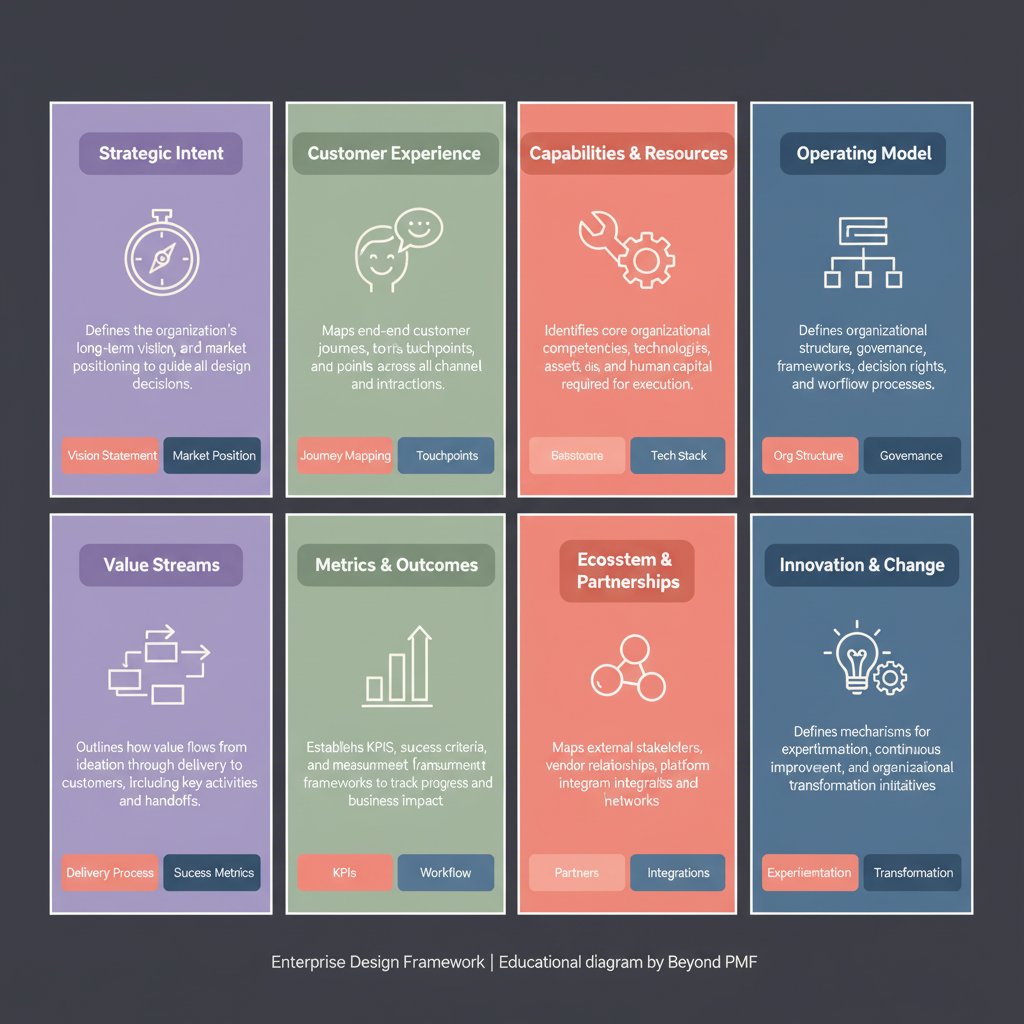
The Enterprise Design Framework integrates various aspects of business strategy, user experience, and technology to create cohesive and effective enterprise solutions. It is used to strategically align all facets of an organization's operations with its long-term goals, ensuring that every design decision supports the overarching business objectives. This framework is beneficial for improving communication across departments, enhancing user satisfaction, and driving business innovation.
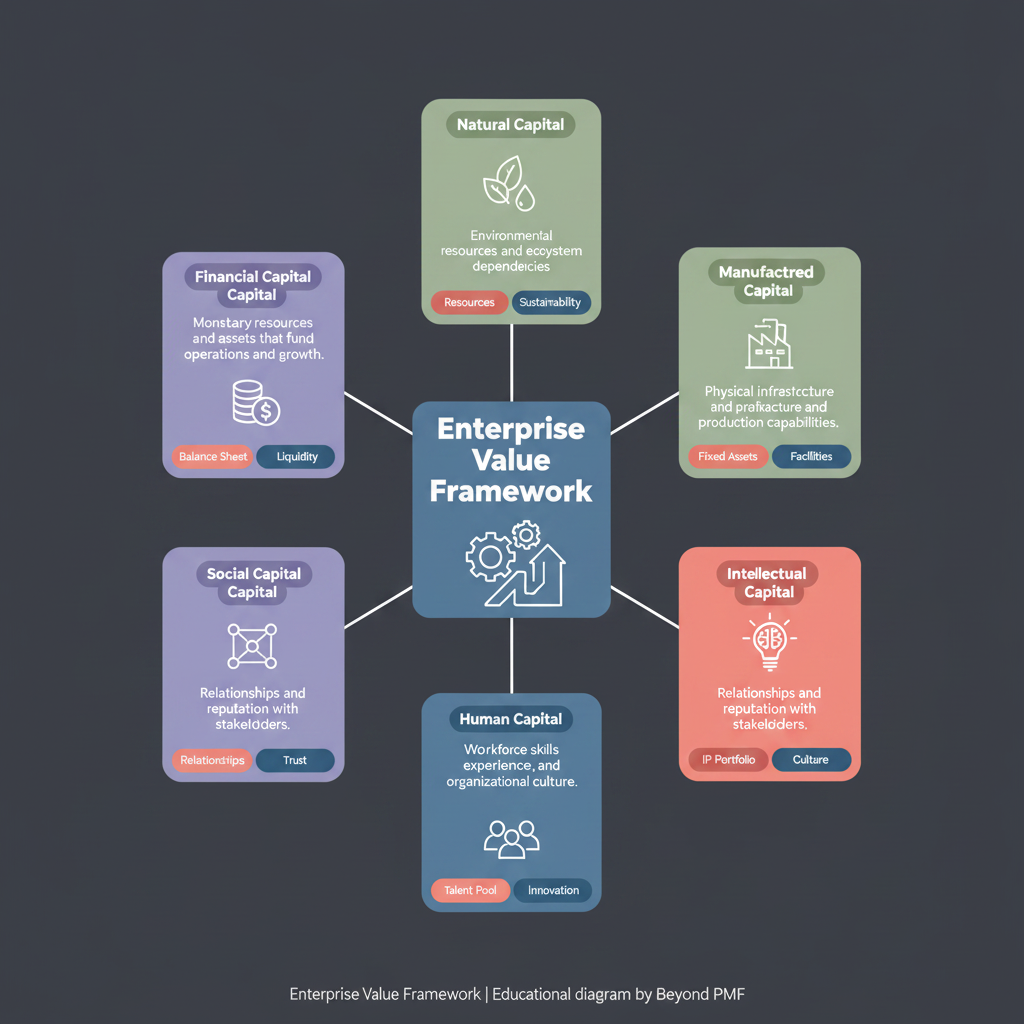
The Enterprise Value Framework is designed to help organizations evaluate and optimize their overall value creation capabilities. It focuses on aligning business strategies with operational processes and market opportunities to maximize enterprise value. The framework is beneficial for guiding strategic decisions, improving financial performance, and enhancing stakeholder value.
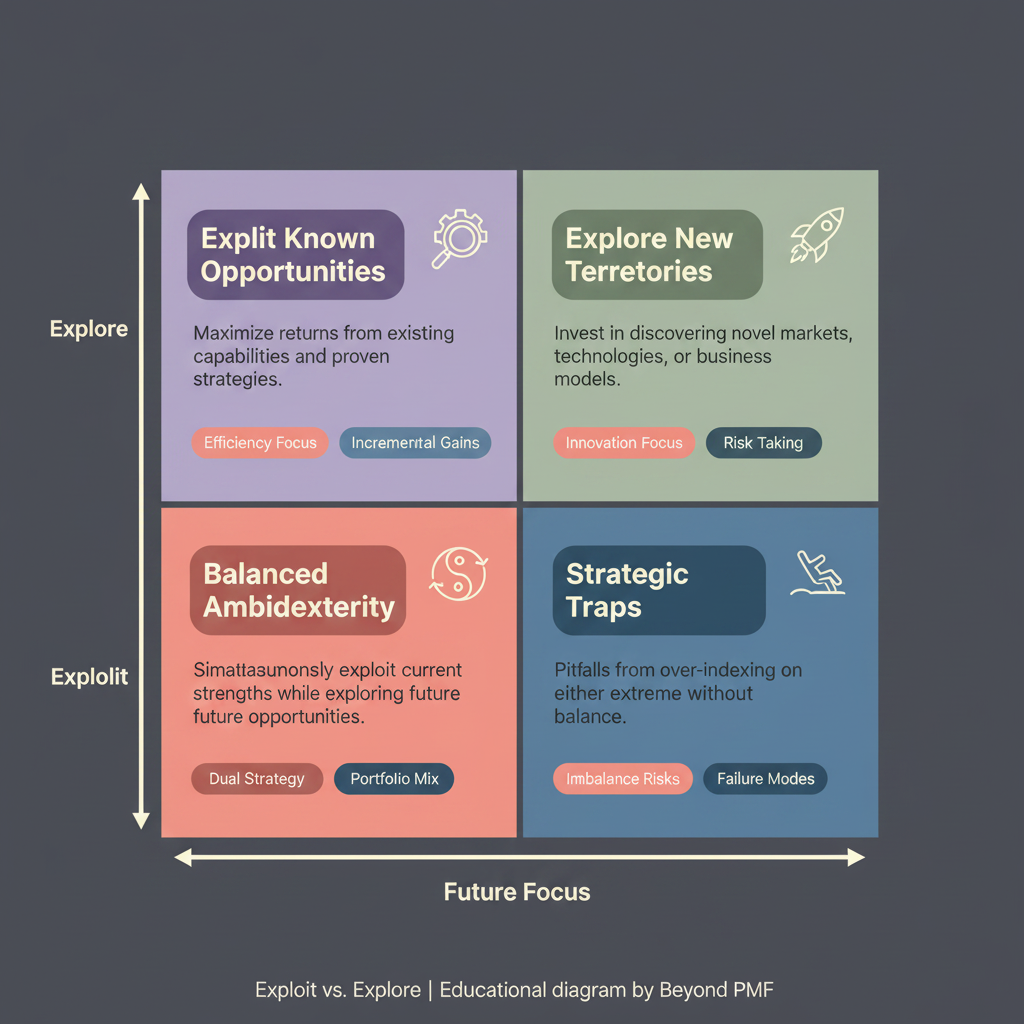
The Exploit vs. Explore framework is a strategic tool used by businesses to manage and balance their focus between exploiting existing capabilities and exploring new opportunities. This framework is crucial for sustaining growth and adapting to changing market conditions. It encourages organizations to allocate resources efficiently to optimize current operations while also investing in innovation and future growth.
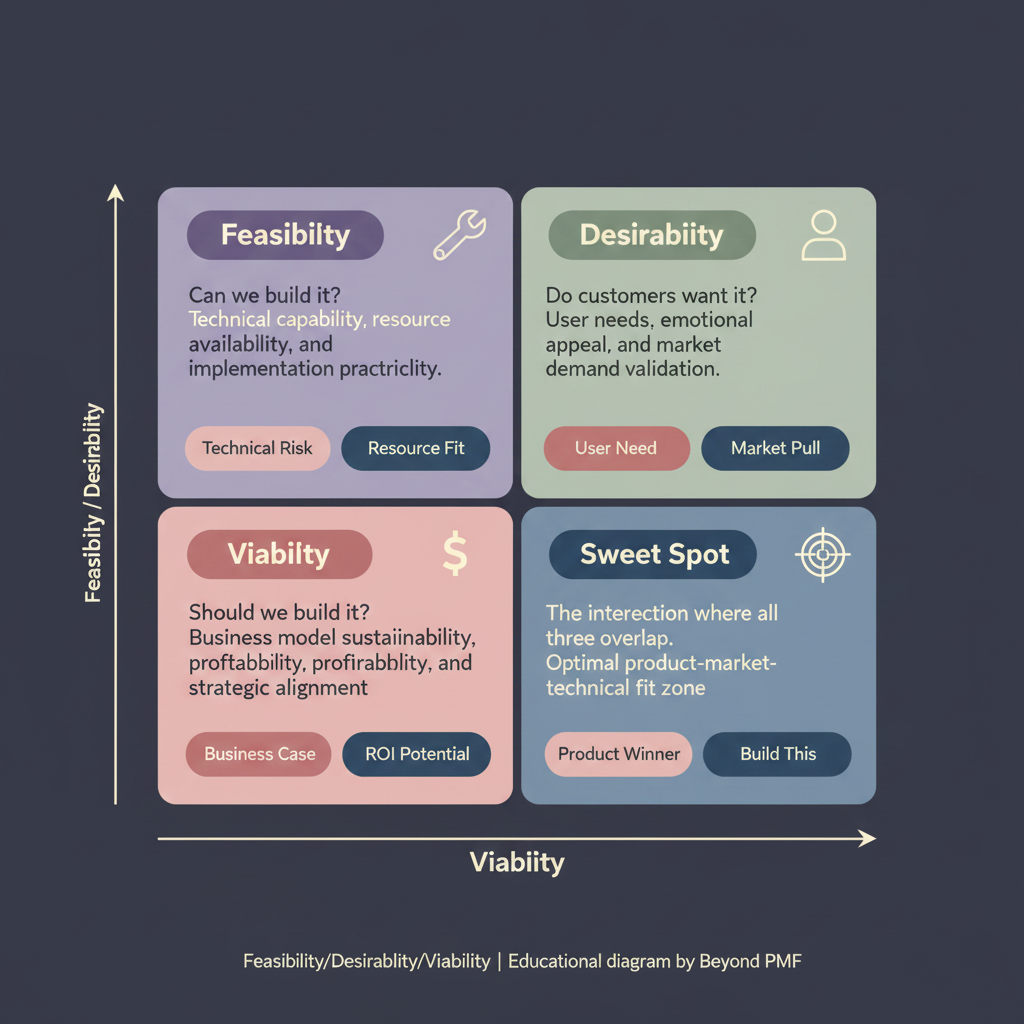
The Feasibility/Desirability/Viability framework helps organizations assess whether a product or service is technically feasible, desired by the market, and financially viable. It is used to ensure that new initiatives align with both market demands and organizational capabilities, reducing risks and focusing resources effectively. This framework is particularly beneficial in the early stages of product development, providing a holistic view of potential challenges and opportunities.
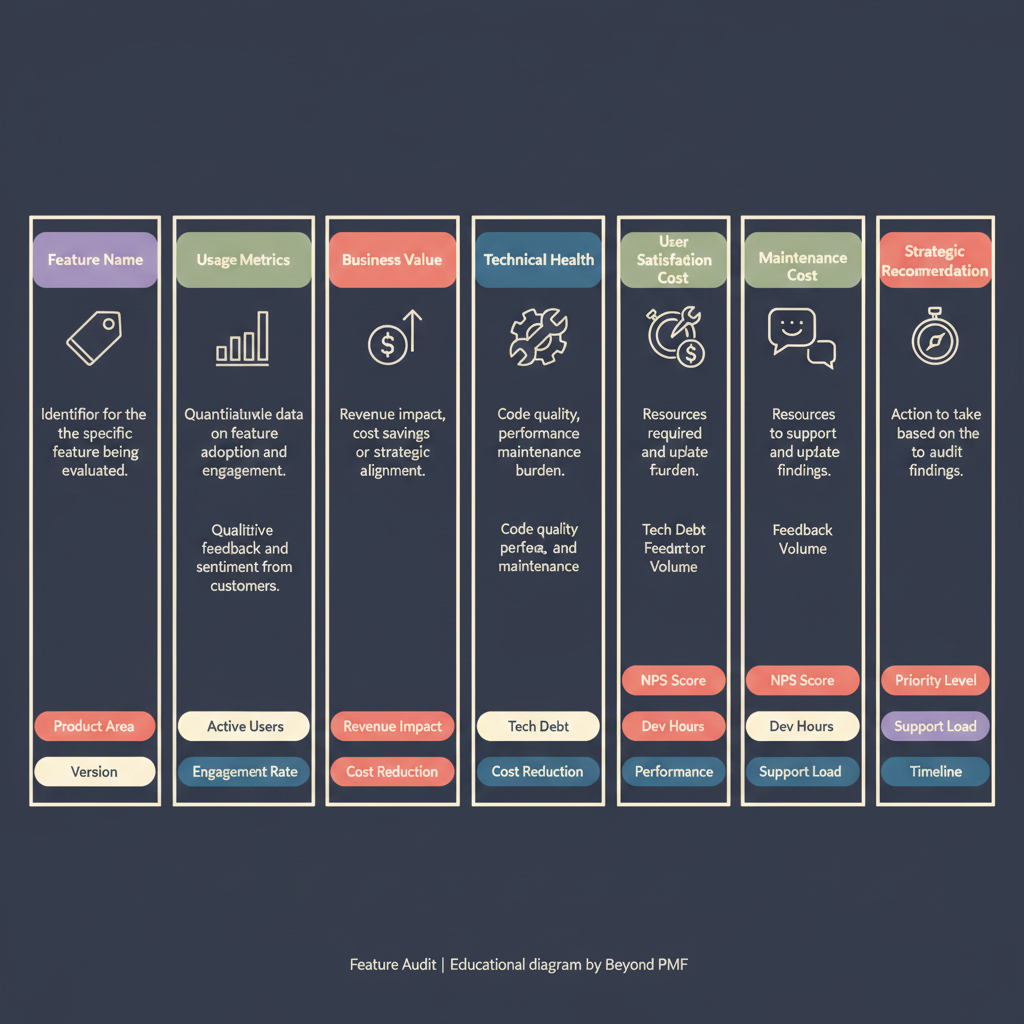
A Feature Audit is a comprehensive framework used by businesses to evaluate the effectiveness and relevance of the features within their products or services. This process involves analyzing each feature to determine its usage, value to the customer, and impact on the overall business goals. The audit helps in identifying features that are underperforming, redundant, or outdated, thereby enabling companies to make informed decisions about feature enhancements, redesigns, or removal.
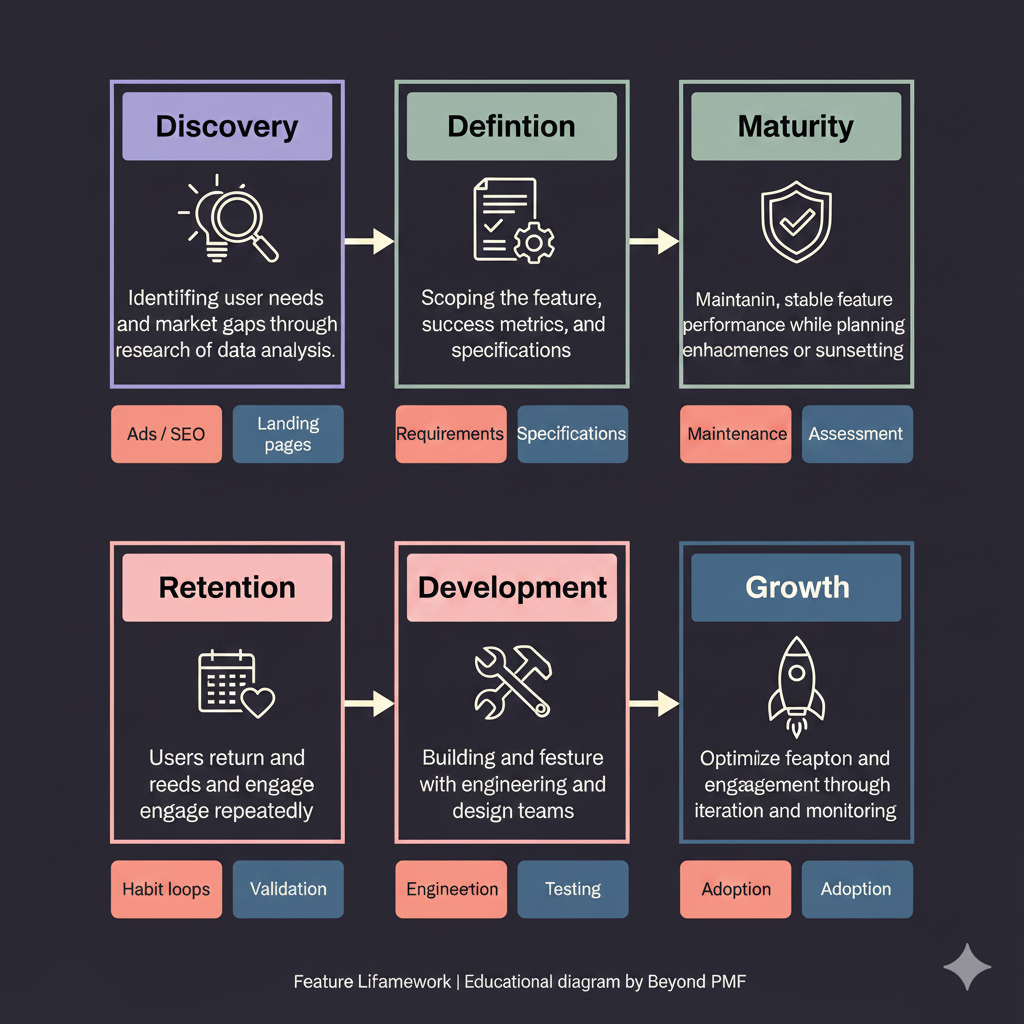
The Feature Lifecycle Framework provides a structured methodology for overseeing the entire lifecycle of a product feature. It helps organizations to systematically develop, launch, evaluate, and enhance or retire product features based on performance and market feedback. This framework is crucial for ensuring that features remain relevant and valuable to users, and it supports continuous improvement in product offerings.
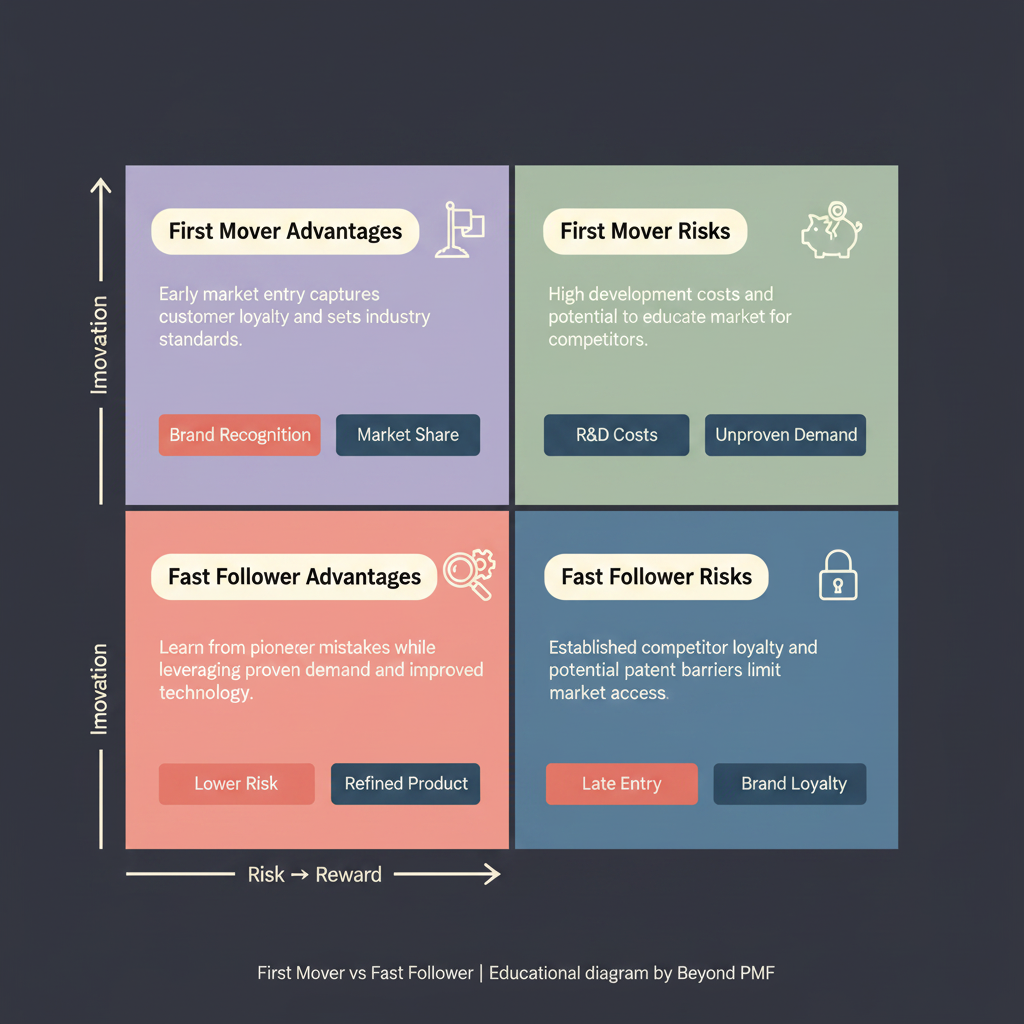
The First Mover vs Fast Follower framework is used to assess the advantages and disadvantages of being the first company to introduce a product or service to the market versus entering the market after competitors. This strategic decision impacts market share, brand loyalty, and the ability to shape customer preferences. Companies use this framework to determine the most advantageous timing and approach for launching new products or entering new markets.
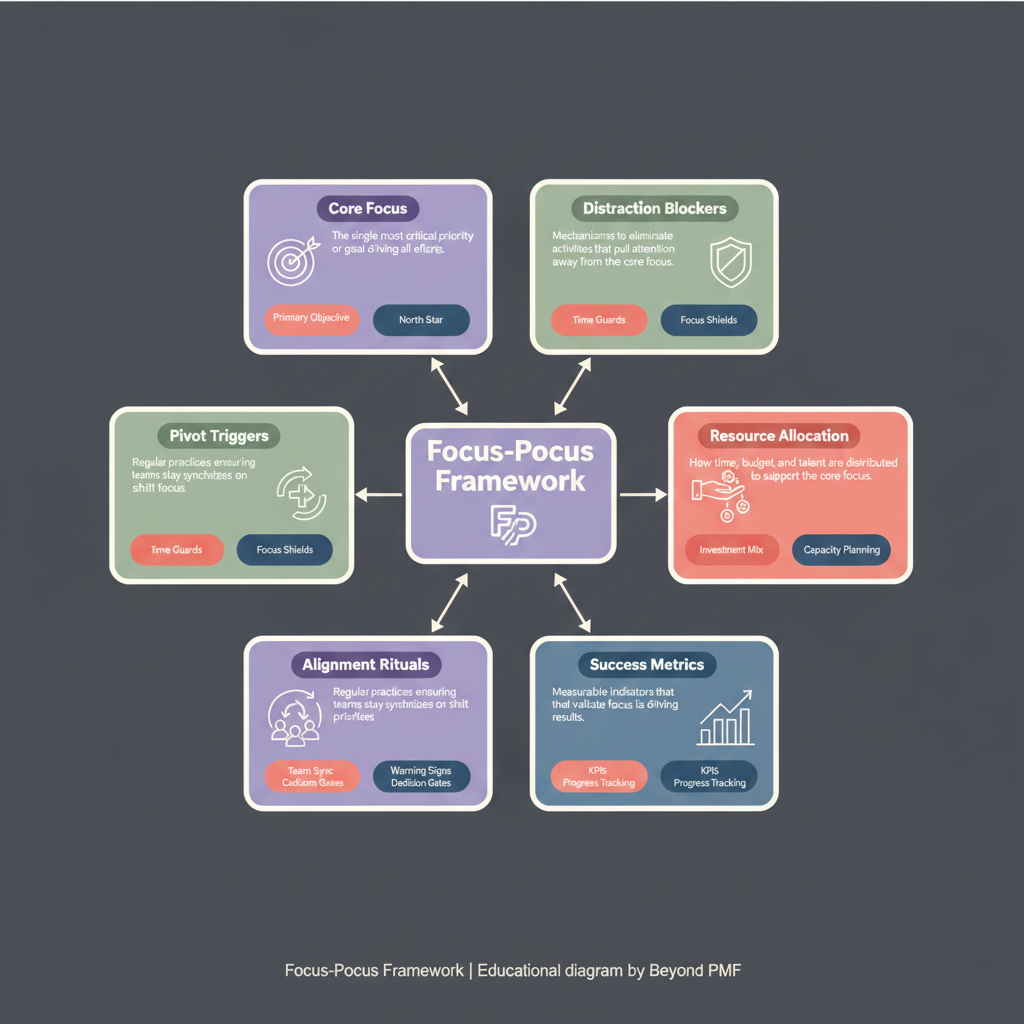
The Focus-Pocus Framework is a comprehensive approach to improving concentration and effectiveness in workplace settings. It integrates mindfulness with strategic planning to help teams and individuals prioritize tasks, manage distractions, and achieve their objectives more efficiently. By applying this framework, organizations can expect to see improved employee engagement, higher productivity, and better overall performance.
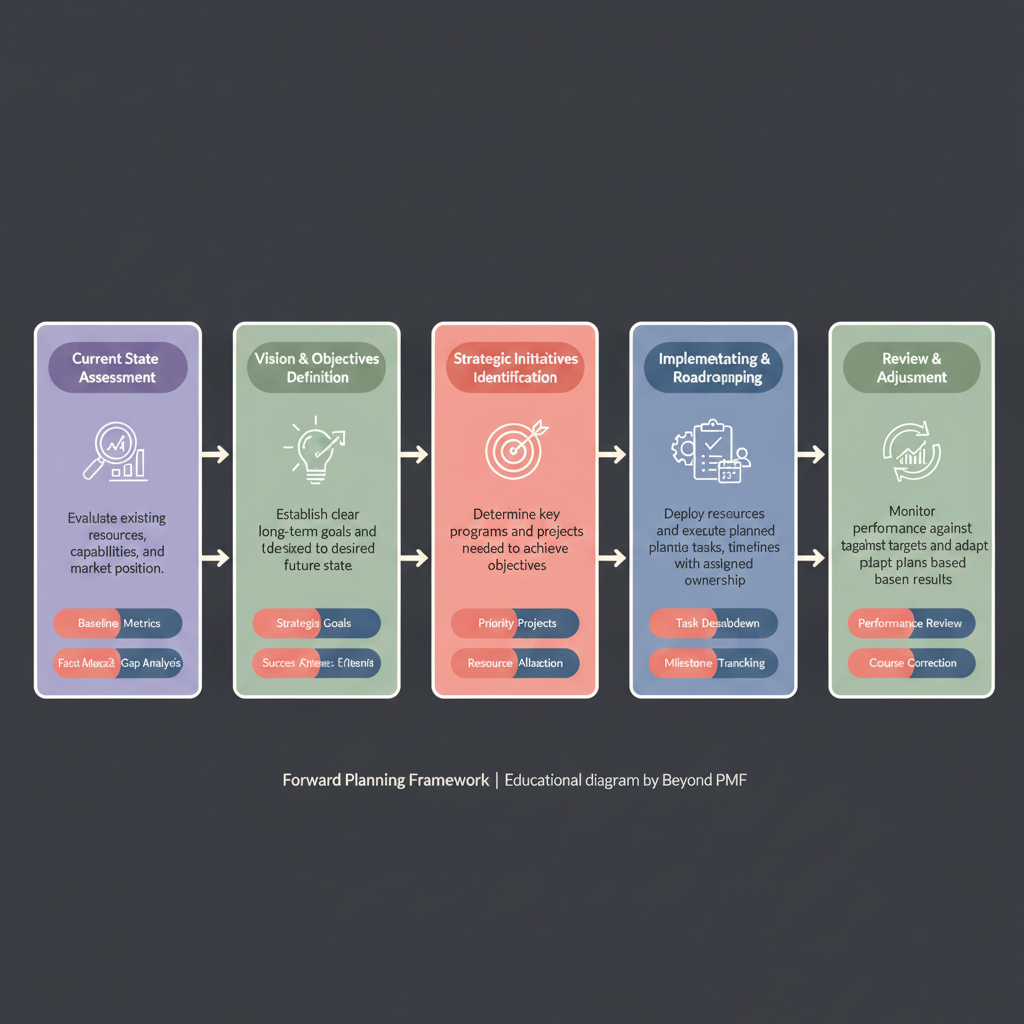
The Forward Planning Framework is a strategic management tool designed to help organizations anticipate future challenges and opportunities, aligning their resources and efforts to meet long-term objectives. It involves a systematic process of setting goals, analyzing current trends, and developing actionable strategies to ensure sustained growth and competitiveness. This framework is particularly beneficial for its proactive approach to planning, which helps organizations mitigate risks and capitalize on future market trends.
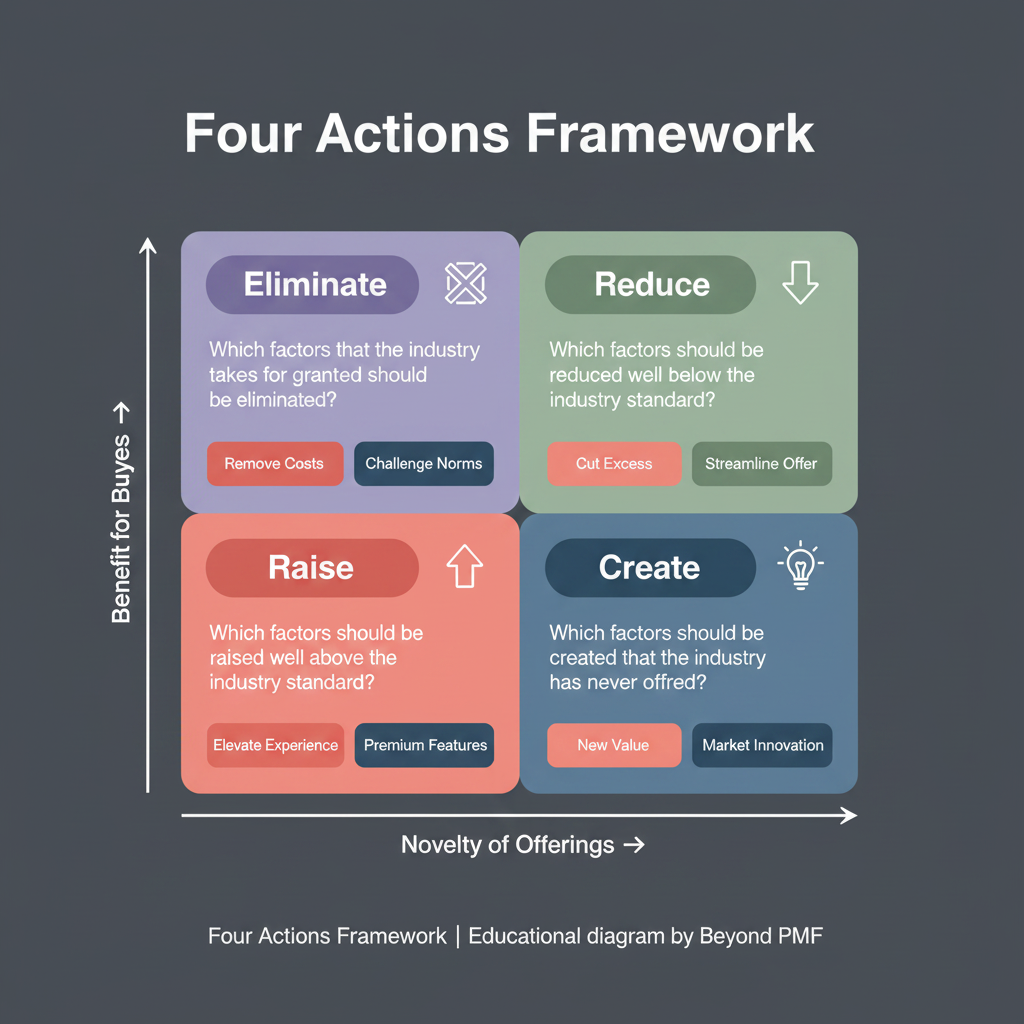
The Four Actions Framework is a strategic management tool designed to help businesses innovate and differentiate themselves from competitors. It encourages organizations to simultaneously pursue differentiation and low cost by asking four key questions that challenge industry norms and drive companies to reevaluate their product offerings. This framework is part of the Blue Ocean Strategy, which aims to create new market spaces, making the competition irrelevant.
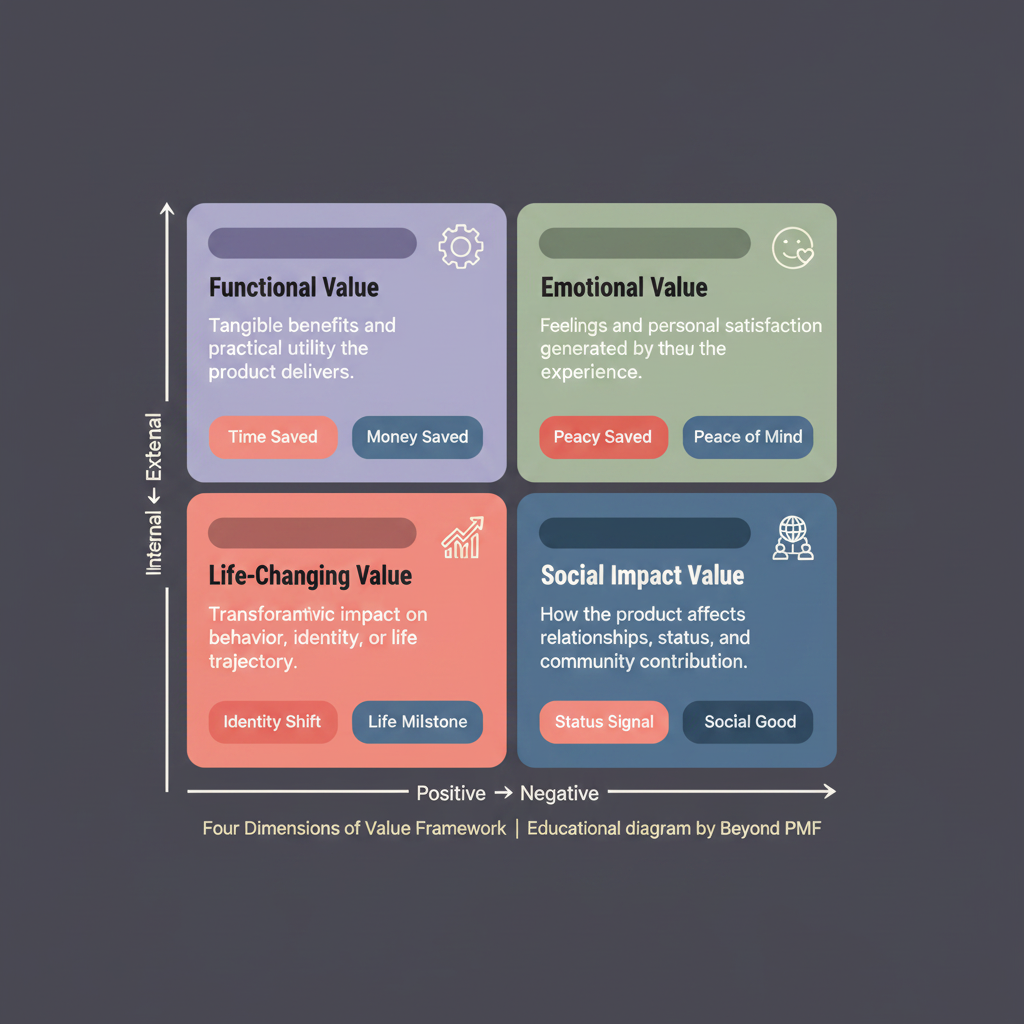
The Four Dimensions of Value Framework is designed to help organizations evaluate and optimize their value proposition by examining four critical aspects: financial, customer, internal process, and learning and growth. By systematically assessing each dimension, companies can identify areas of strength and opportunity, align their operations more closely with their strategic goals, and foster sustainable growth. This holistic approach ensures a balanced focus on both short-term performance and long-term capability development.
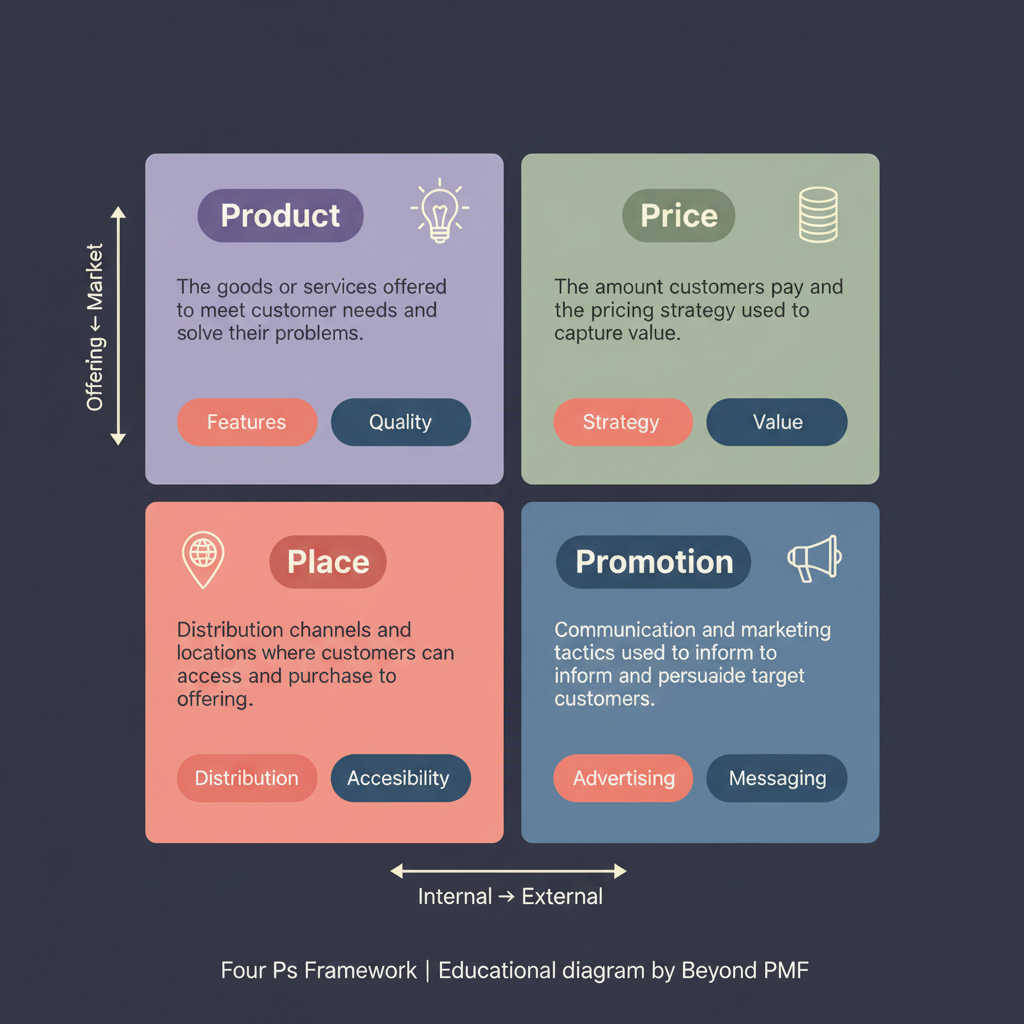
The Four Ps Framework is a foundational concept in marketing that outlines four key components of marketing strategies: Product, Price, Place, and Promotion. These elements are used to look at a business's offerings from multiple angles to ensure a comprehensive approach to market strategy. The framework helps companies to define marketing options in terms of product development, pricing strategies, distribution channels, and promotional tactics. It is widely used due to its simplicity and effectiveness in structuring marketing decisions.
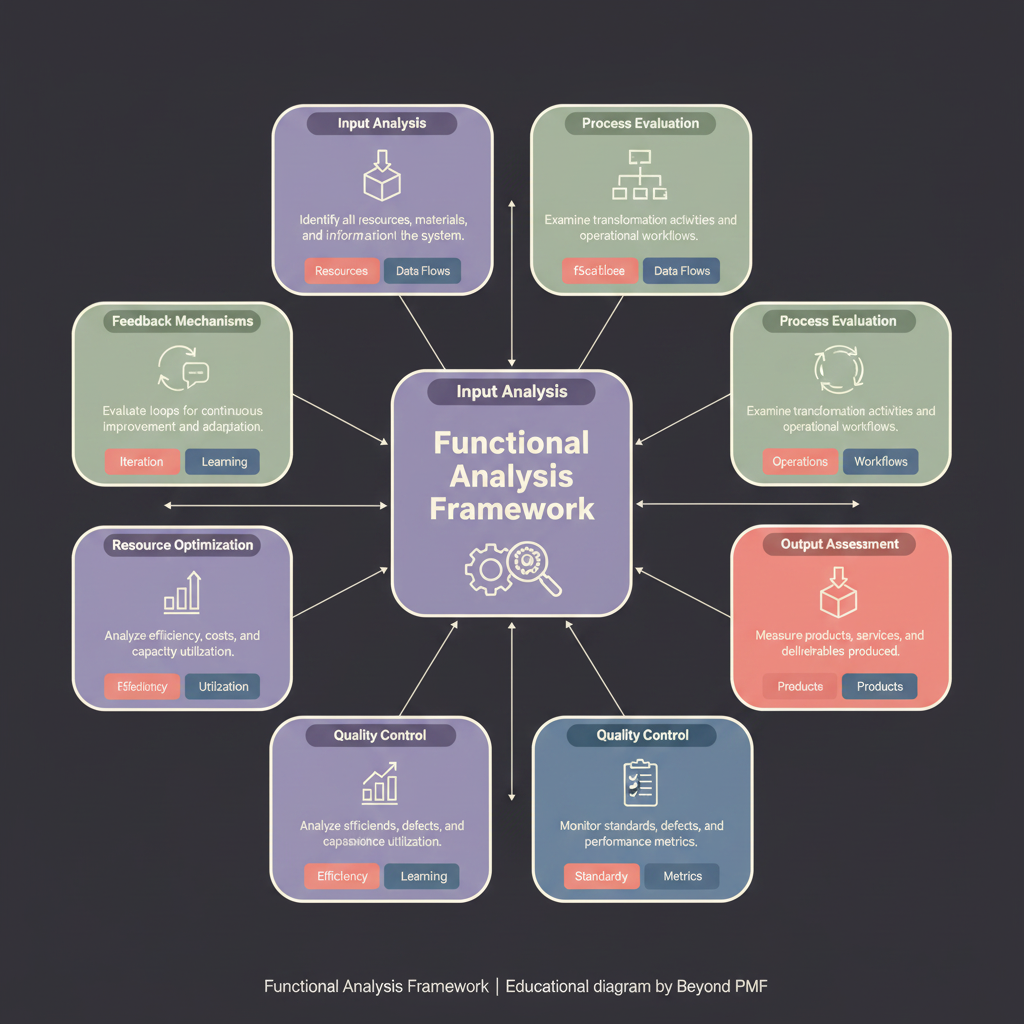
The Functional Analysis Framework is a systematic approach that focuses on identifying and understanding the functions of a system or product, rather than its physical attributes or components. This framework helps in breaking down complex systems into manageable functions, which can then be analyzed for efficiency and effectiveness. It is widely used in engineering, product development, and process improvement to ensure that all functions are necessary, cost-effective, and add value to the end user.
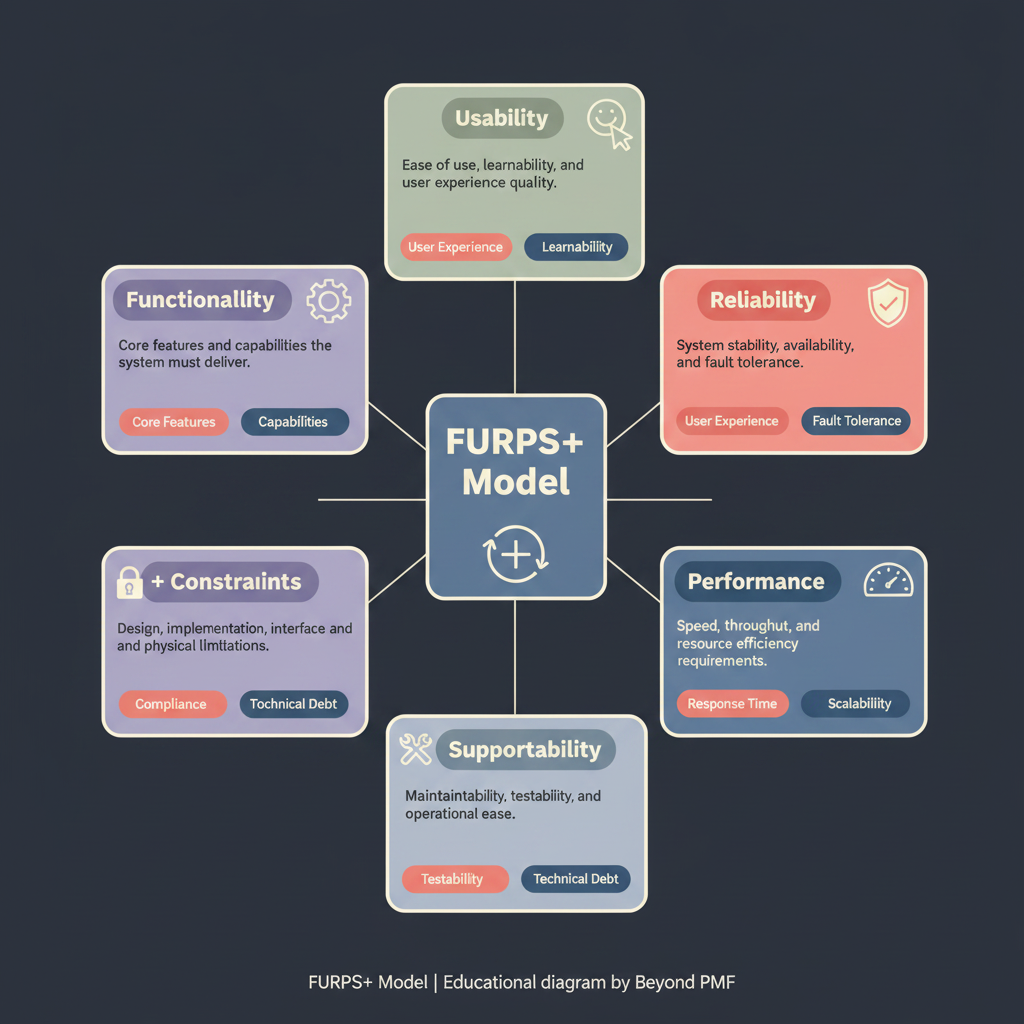
The FURPS+ Model, developed by Robert Grady at Hewlett-Packard, is a comprehensive classification system for software quality attributes. It stands for Functionality, Usability, Reliability, Performance, and Supportability, with the '+' signifying additional considerations like design constraints, implementation requirements, interface requirements, and physical requirements. This framework helps in setting clear expectations and benchmarks for software development projects, ensuring all critical aspects of system performance and maintenance are addressed.

The Generic Competitive Strategies framework, developed by Michael Porter, categorizes strategies into cost leadership, differentiation, and focus strategies. It helps companies determine a clear strategic direction to outperform competitors by either reducing costs, offering unique products, or targeting specific market segments. This framework is beneficial for aligning company resources and capabilities with its competitive environment to achieve sustainable profitability.
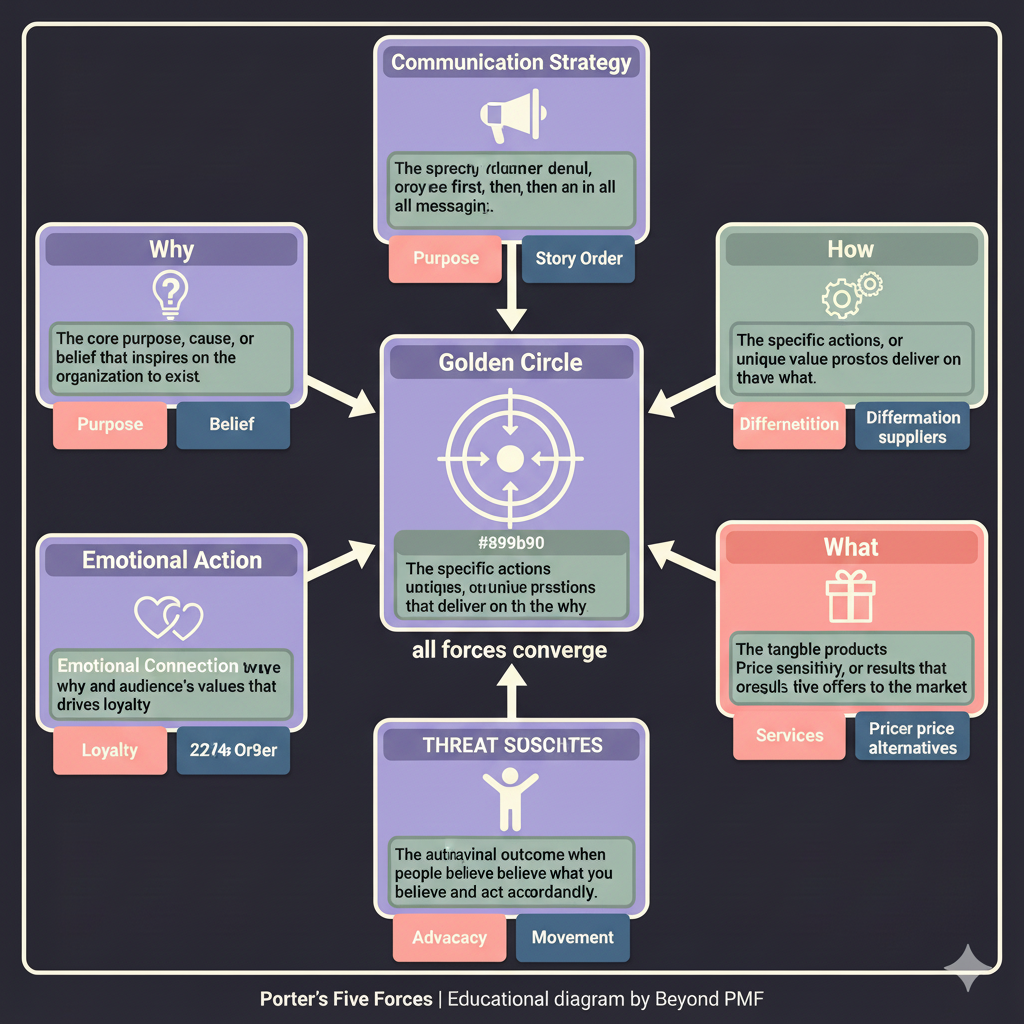
The Golden Circle framework emphasizes the importance of starting with 'why'—an organization's purpose, cause, or belief—before addressing 'how' (the process or strategy) and 'what' (the product or service). This approach is used to inspire and lead by articulating why the organization exists and how it stands out, thereby fostering a strong connection with stakeholders and guiding internal decision-making. The framework is beneficial for enhancing motivation, clarity, and alignment within an organization.
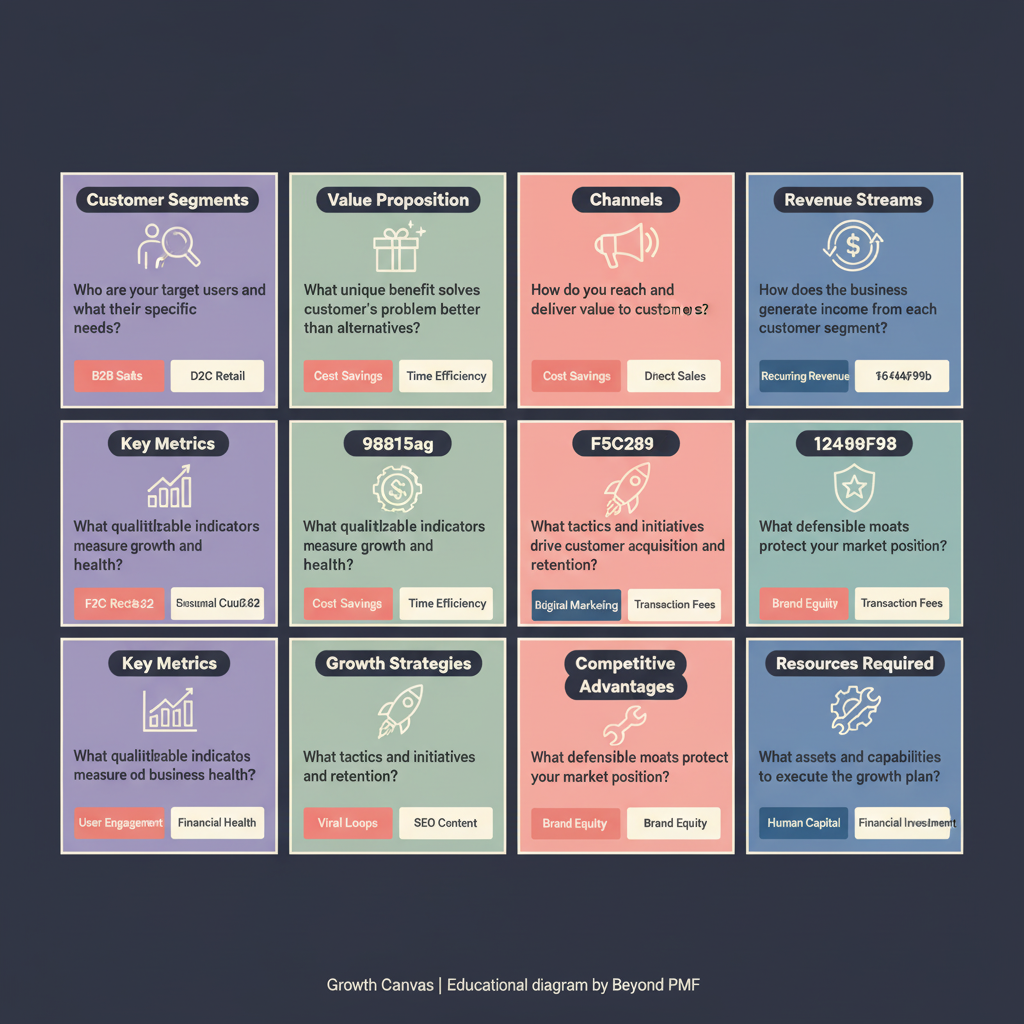
The Growth Canvas is a framework designed to help businesses identify and leverage opportunities for growth and innovation. It provides a structured approach to brainstorming, strategizing, and visualizing the potential avenues for business expansion. This framework is particularly beneficial for aligning team goals, focusing on customer needs, and optimizing resources to maximize growth potential.
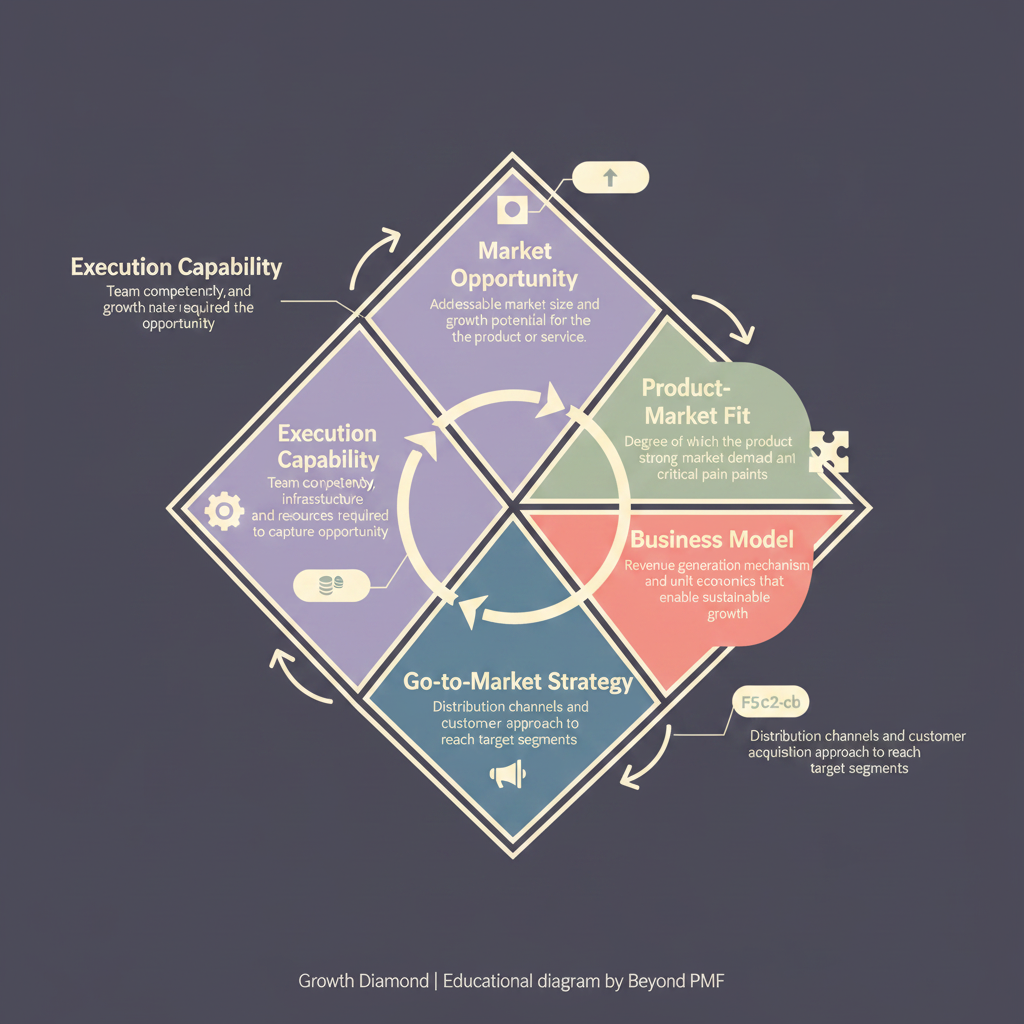
The Growth Diamond framework is a comprehensive model used by businesses to identify and leverage multiple growth avenues simultaneously. It emphasizes the importance of balancing market expansion, product innovation, customer engagement, and operational efficiency. This framework helps organizations to systematically evaluate their growth strategies and optimize their resources for maximum impact.

The Growth Engine Framework is a comprehensive method that focuses on optimizing and scaling business operations to achieve sustainable growth. It integrates various elements such as market analysis, customer engagement, product innovation, and continuous improvement. This framework is used to identify growth opportunities, streamline processes, and effectively allocate resources, making it invaluable for businesses aiming to expand their market reach and increase profitability.
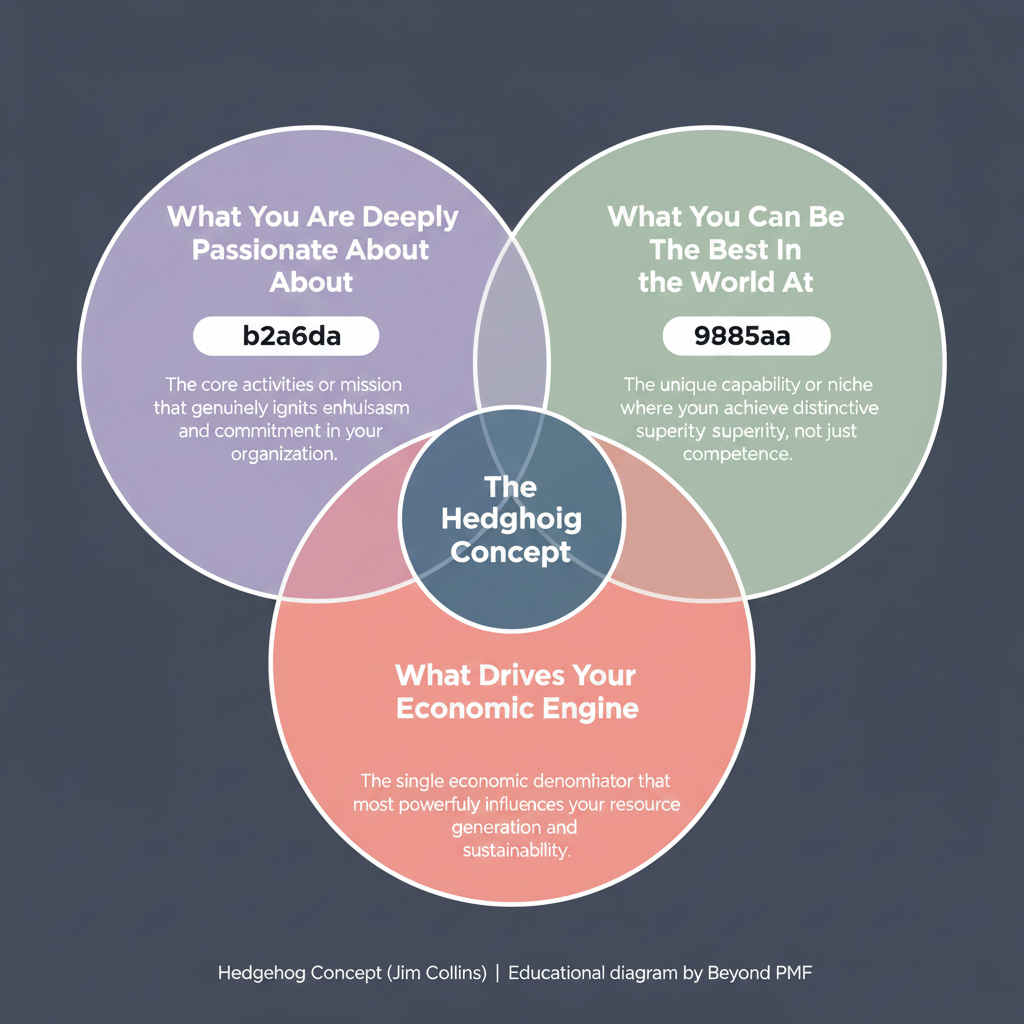
Developed by Jim Collins in his book 'Good to Great,' the Hedgehog Concept is a framework used by organizations to determine where they can excel. It involves a deep understanding of three intersecting circles: what you are deeply passionate about, what you can be the best in the world at, and what drives your economic engine. By focusing on the intersection of these three elements, organizations can simplify their strategy and concentrate on what they do best, leading to superior performance and sustainability.
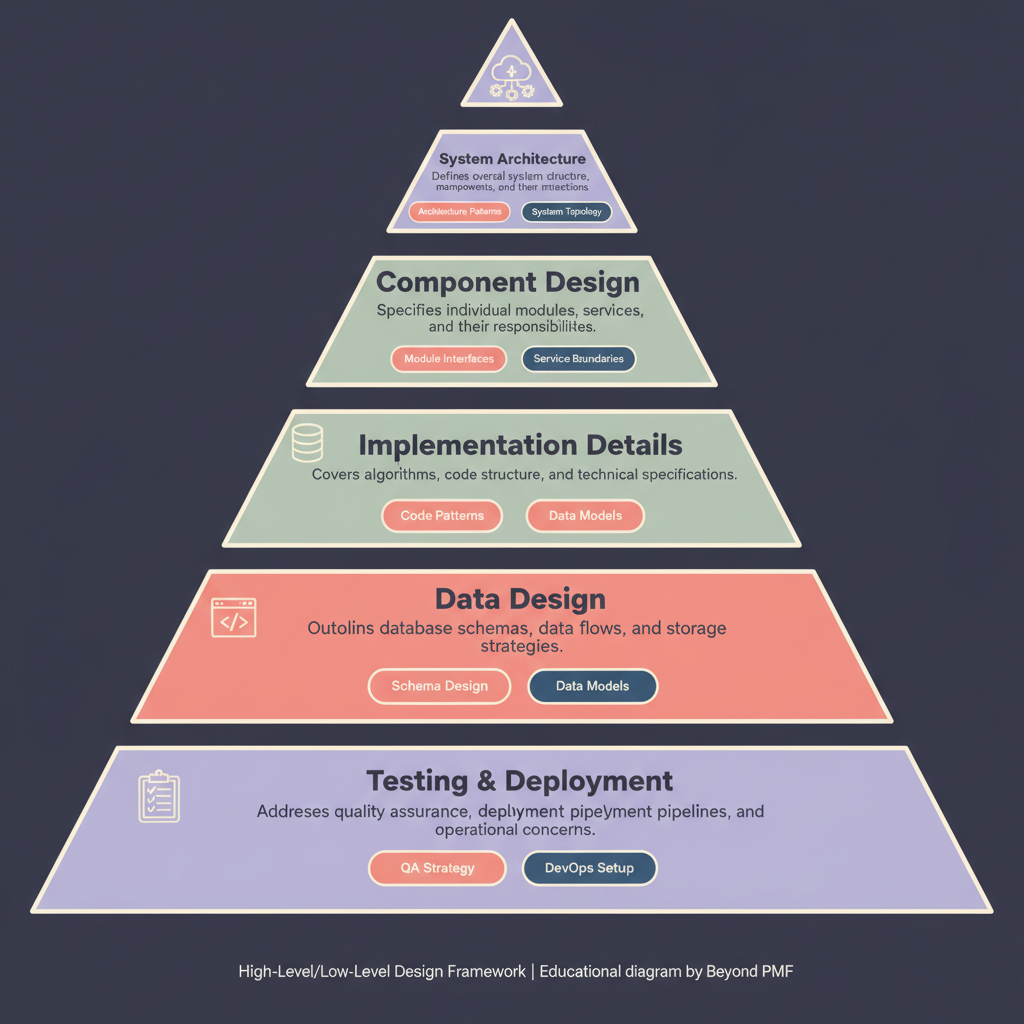
The High-Level/Low-Level Design Framework is a strategic approach used in software development to structure the planning process into two distinct phases: High-Level Design (HLD) and Low-Level Design (LLD). HLD focuses on system architecture and design elements that relate to the overall system, such as modules and their interactions, while LLD details the actual implementation specifics, such as algorithms and detailed logic. This bifurcation helps in managing complexity by allowing designers to focus on broad system architecture before delving into detailed implementation, ensuring a thorough approach to software development.
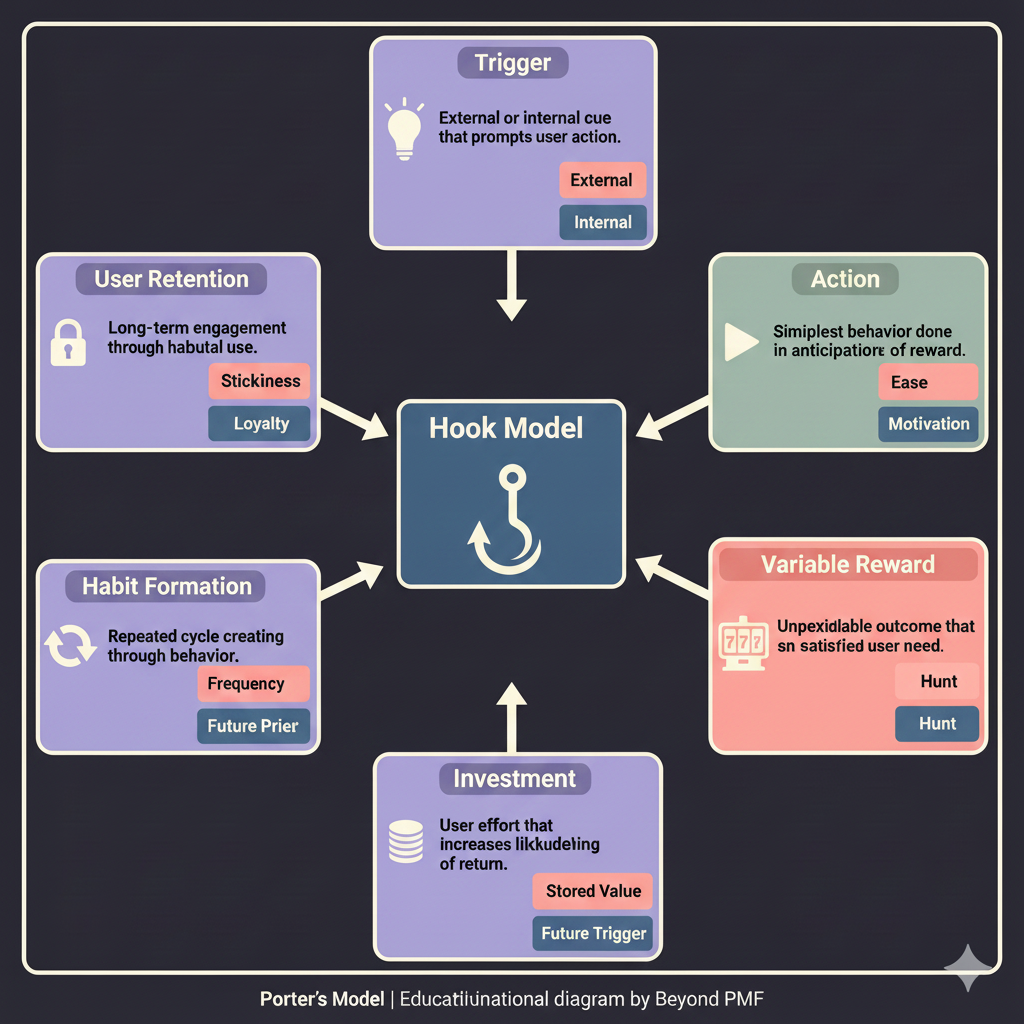
The Hook Model is a behavioral design framework developed by Nir Eyal. It focuses on creating products that keep users coming back by forming habits. The model outlines a four-step process that hooks users by triggering their behavior, leading to actions that are rewarded and ultimately invested in. This cyclical process not only increases user engagement but also fosters customer loyalty and increases the product's intrinsic value.
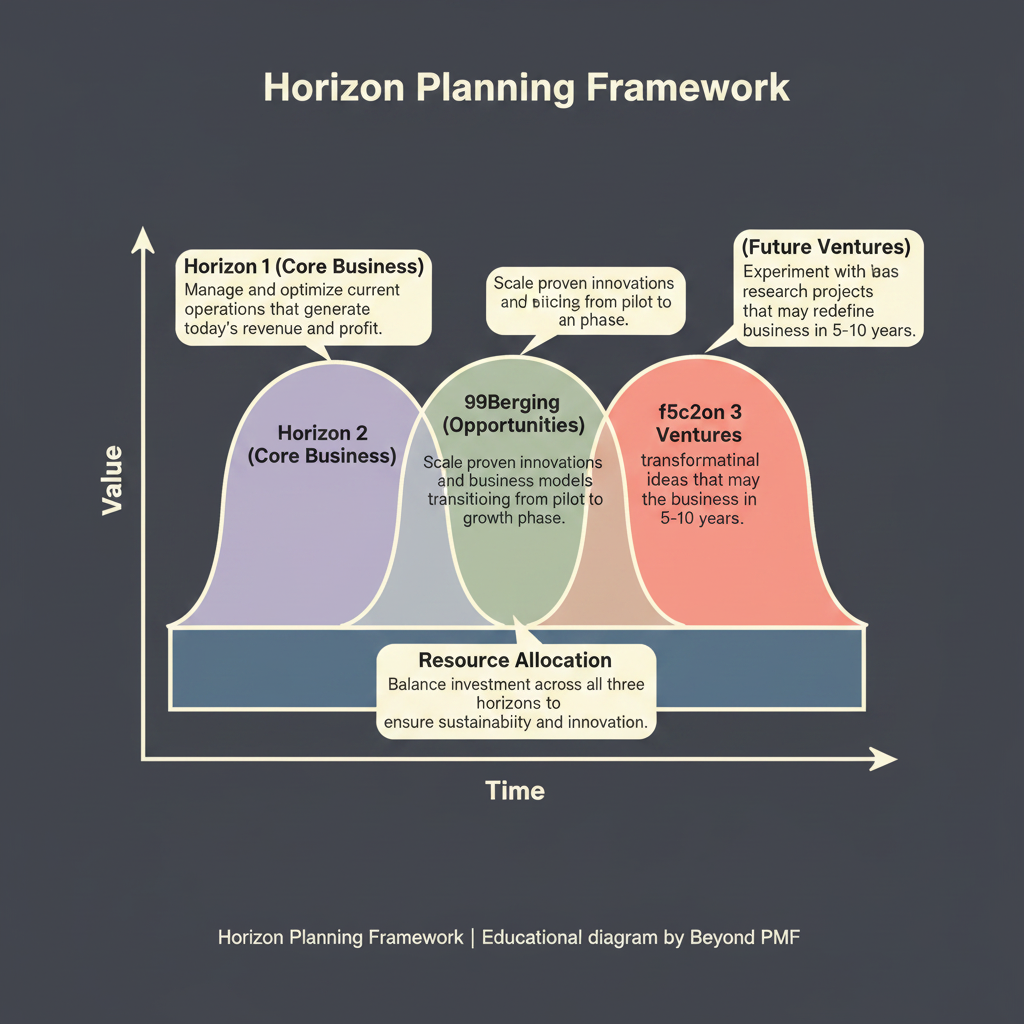
The Horizon Planning Framework, often referred to as the Three Horizons Framework, helps organizations balance their focus between current operations and future opportunities. It segments initiatives into three horizons: Horizon 1 focuses on improving current products and processes, Horizon 2 explores emerging opportunities, and Horizon 3 involves creating future-oriented innovations. This framework aids in ensuring that companies invest appropriately across these different stages, thus securing current performance while fostering future growth.
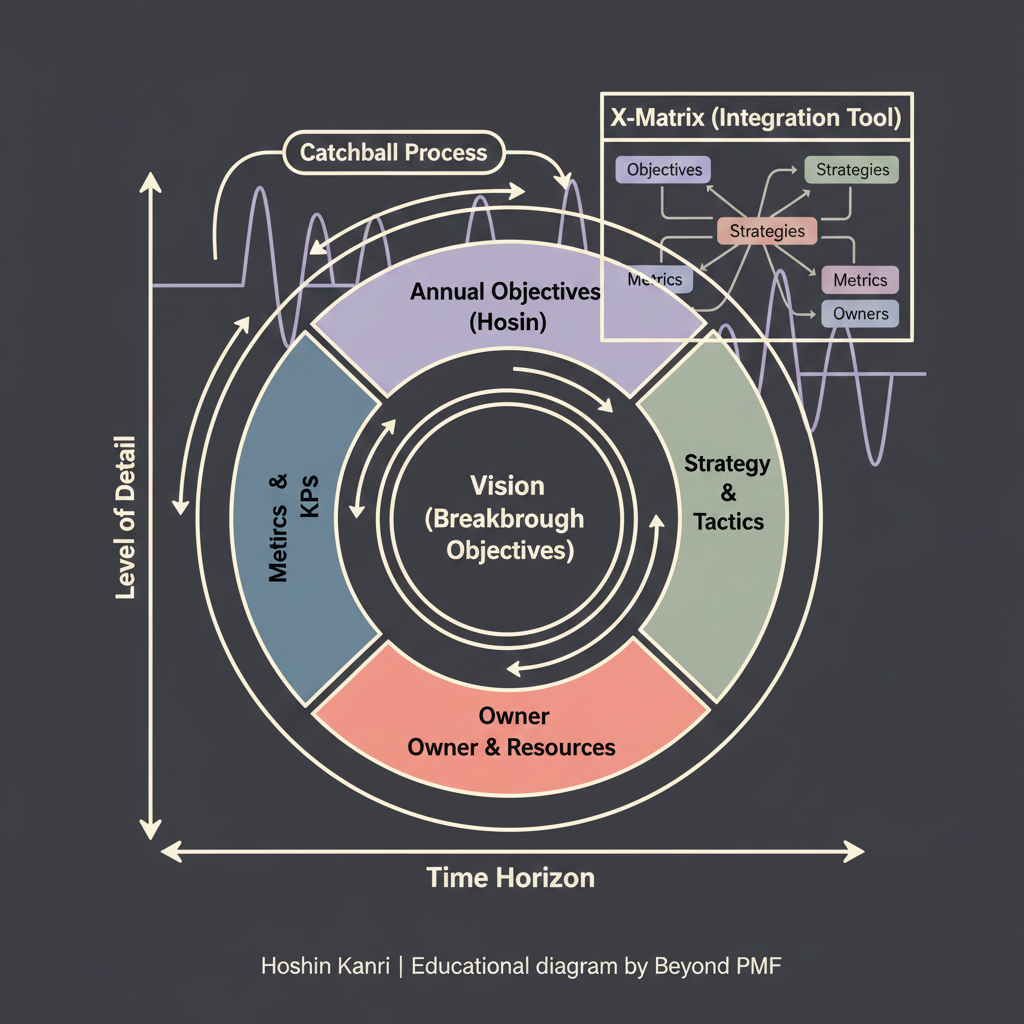
Hoshin Kanri, also known as policy deployment, is a comprehensive approach used by businesses to ensure that strategic goals are effectively communicated throughout the organization and then implemented. The framework emphasizes alignment of goals and continuous improvement, drawing from principles of the Toyota Production System. It involves all levels of an organization in identifying and focusing on key business objectives, which enhances both individual and collective commitment to these goals.
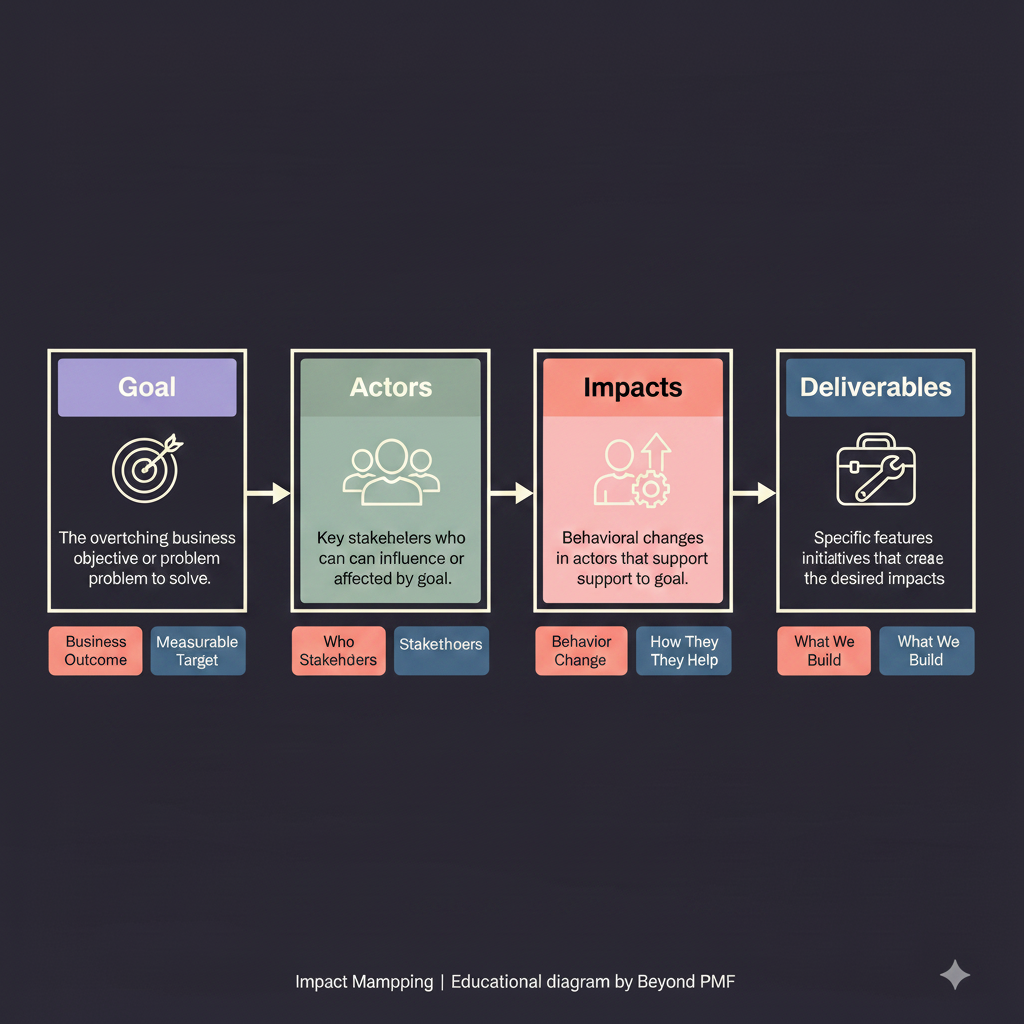
Impact Mapping is a collaborative strategic planning tool that focuses on aligning team activities with the overall business objectives. It is used to clearly identify and communicate assumptions, helping teams prioritize features, activities, and projects based on their potential impact on business goals. This framework is beneficial as it promotes iterative development, ensures all stakeholders are aligned, and helps in decision-making by visualizing the connections between deliverables and business outcomes.

The Implementation Pattern Framework is designed to streamline and optimize the process of implementing new systems, technologies, or methodologies within a company. It provides a structured approach to manage change and ensure that new implementations are successful and align with organizational goals. The framework helps in identifying the best practices, potential pitfalls, and customizing the implementation process to fit the unique needs of the organization.
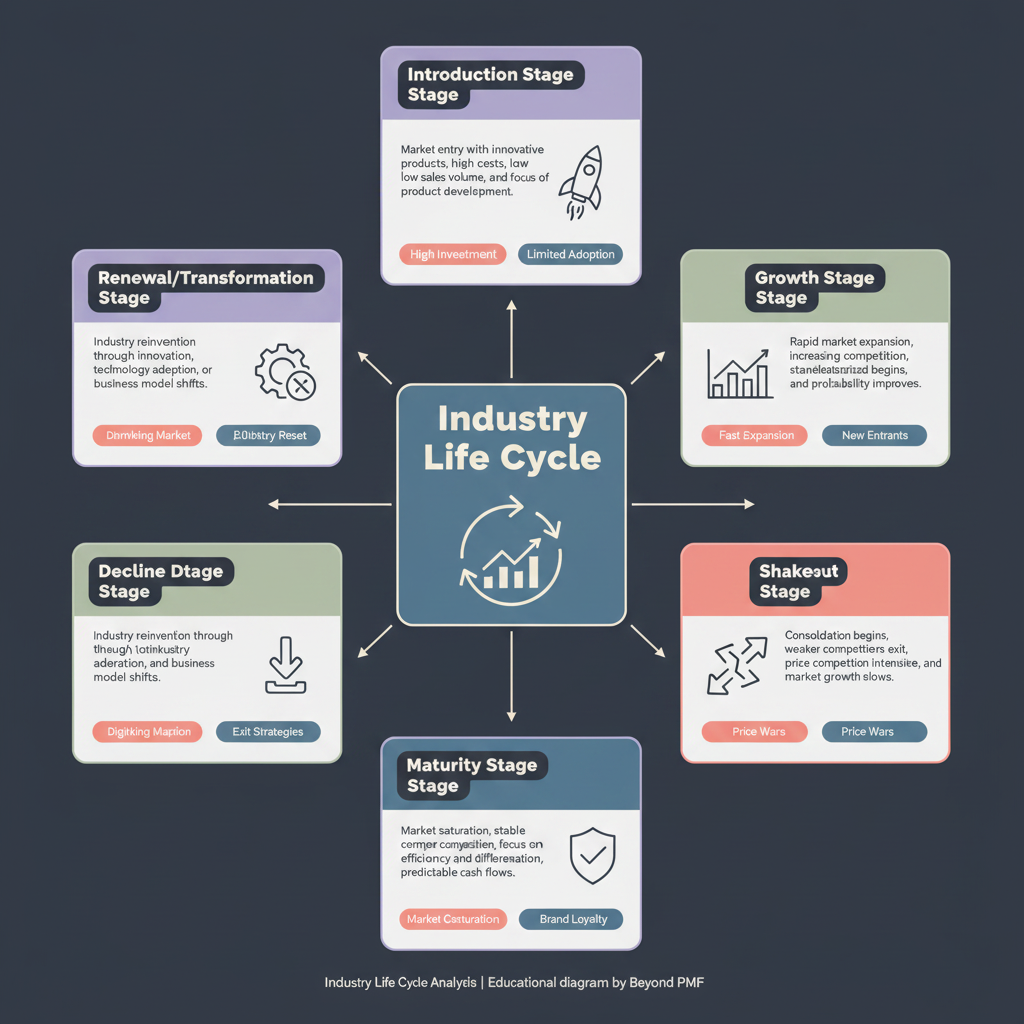
Industry Life Cycle Analysis examines the different stages an industry goes through, from inception to decline. This framework is crucial for businesses to understand market dynamics, anticipate future trends, and align their strategies accordingly. It aids in decision-making by providing insights into when to invest, innovate, or exit, and highlights the competitive landscape throughout the lifecycle of an industry.
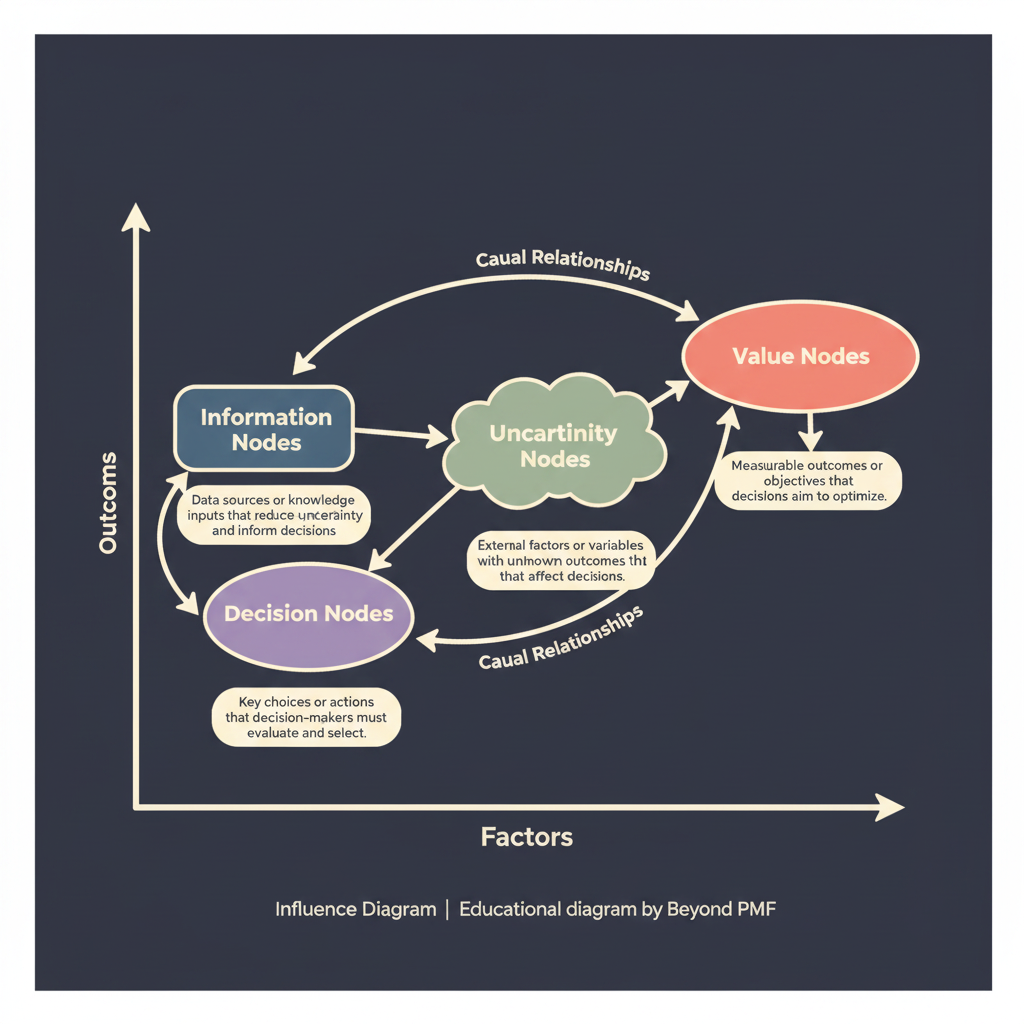
The Influence Diagram Framework is a graphical representation used to simplify and visualize the decision-making process in complex scenarios. It helps identify the different elements involved, such as decisions, uncertainties, outcomes, and objectives, and illustrates the causal relationships between them. This framework is particularly beneficial for clarifying and communicating the structure of decision problems, facilitating more informed and effective decision-making.

The Innovation Adoption Curve, often referred to as the technology adoption lifecycle, is a sociological model that describes the adoption or acceptance of a new product or innovation, according to the demographic and psychological characteristics of defined adopter groups. The model helps businesses predict how new products will be adopted by identifying different categories of adopters, thus enabling more effective product launches and marketing strategies. It is widely used to optimize marketing and sales tactics according to the characteristics of each group.
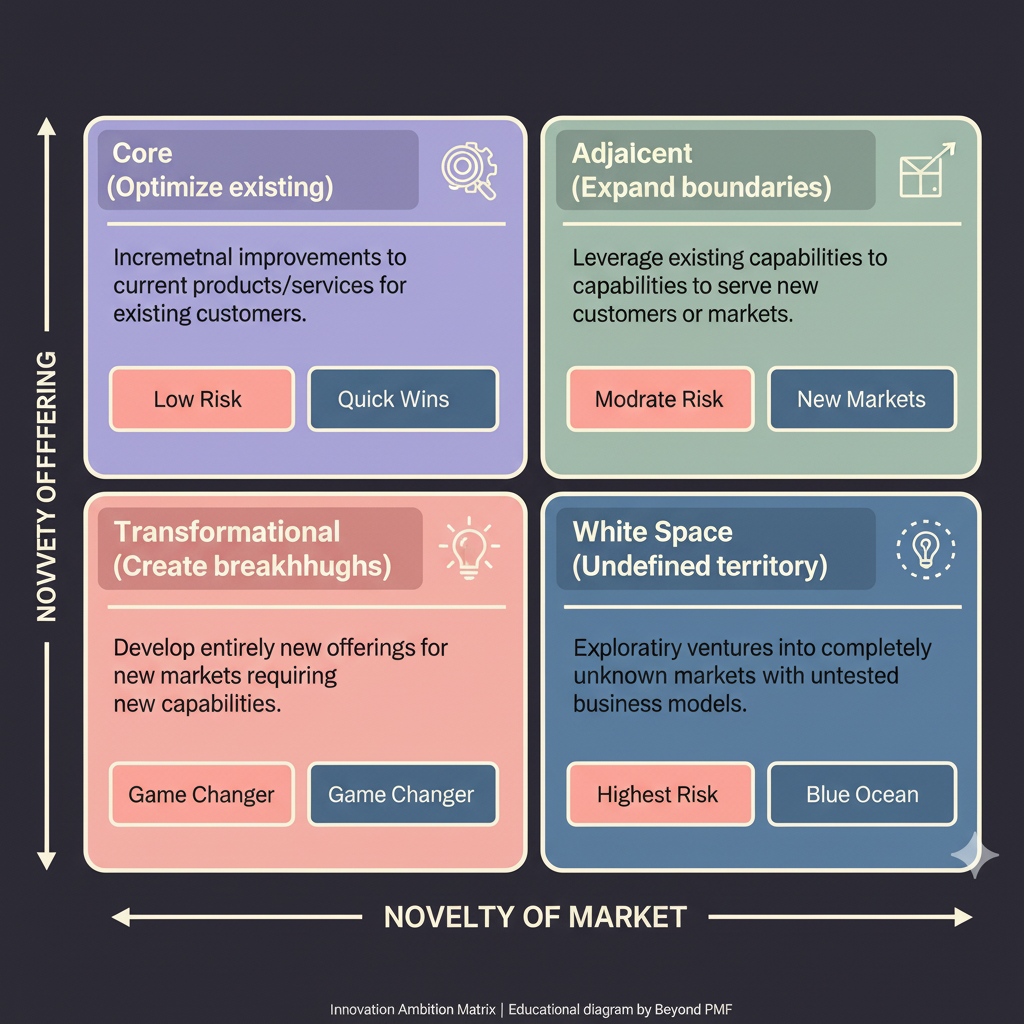
The Innovation Ambition Matrix helps organizations classify their innovation activities into three categories: core innovations, adjacent innovations, and transformational innovations. This framework is used to balance the innovation portfolio, ensuring a mix of short-term and long-term goals with varying degrees of risk and reward. It aids in aligning innovation strategies with business objectives and maximizing resource allocation efficiency.
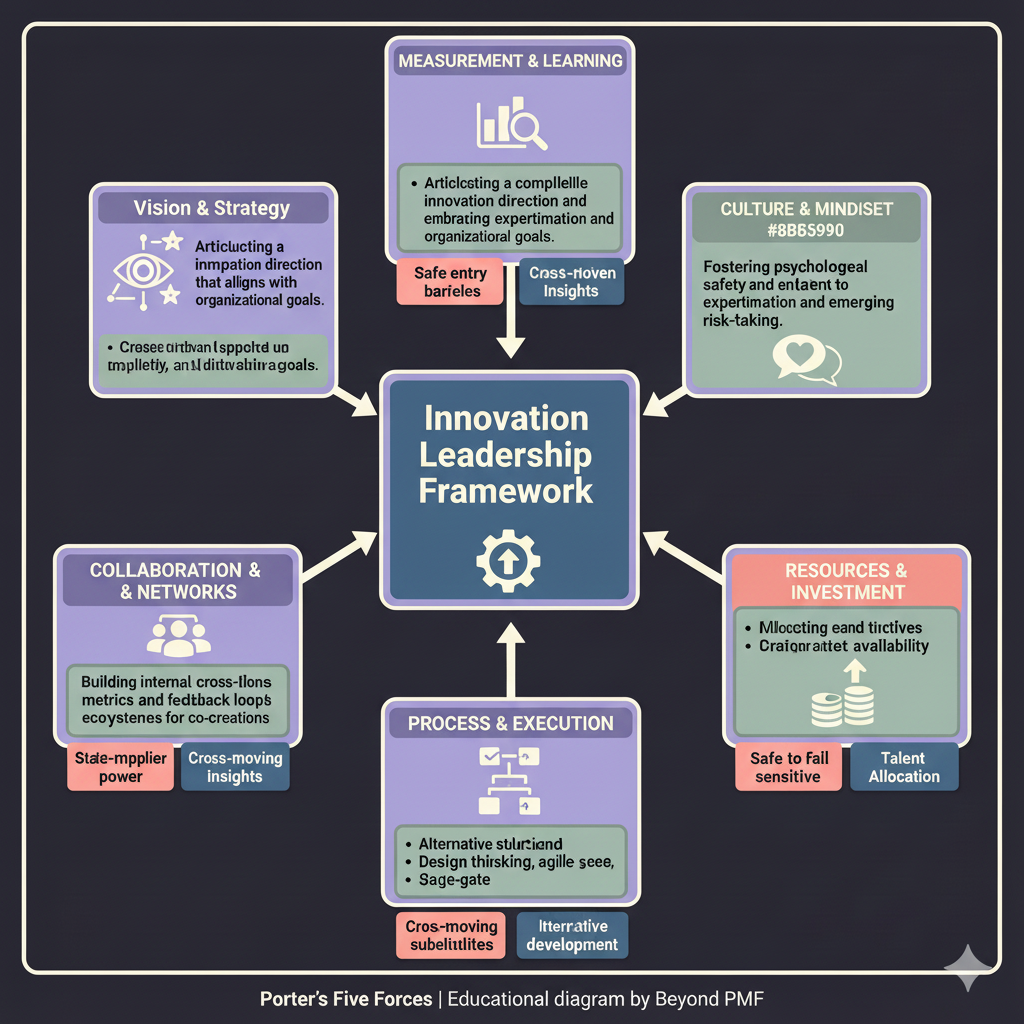
The Innovation Leadership Framework is designed to help leaders cultivate a culture of innovation and creativity in their organizations. It provides a structured approach to nurturing innovative thinking, encouraging risk-taking, and implementing new ideas effectively. The framework emphasizes the role of leadership in setting the vision, inspiring the team, and creating an environment that promotes experimentation and learning. By using this framework, organizations can enhance their adaptability and competitiveness in rapidly changing markets.

Innovation Portfolio Management is a framework used by organizations to systematically manage and optimize their innovation efforts. It involves categorizing and prioritizing various innovation projects based on strategic alignment, potential return on investment, and risk. The goal is to balance the portfolio between incremental innovations and radical breakthroughs to ensure sustainable growth and competitiveness. This approach helps companies allocate resources effectively, make informed decisions, and adapt to changing market conditions.
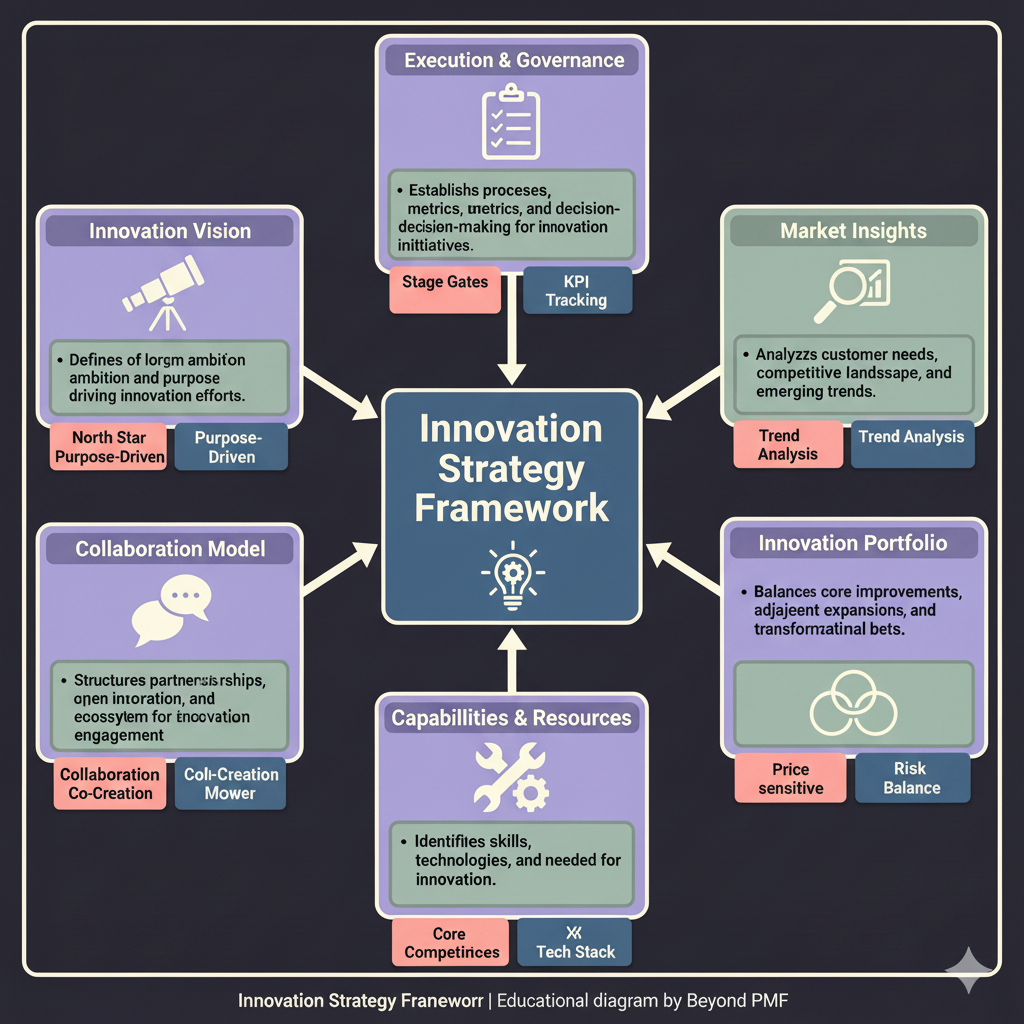
The Innovation Strategy Framework is a comprehensive approach that helps organizations align their innovation activities with their overall business strategy. It involves identifying areas for innovation, setting clear objectives, and deploying resources effectively to achieve these goals. The framework aids in creating a structured environment that encourages creative thinking and sustainable growth, making it crucial for businesses aiming to maintain competitive advantage in rapidly changing markets.
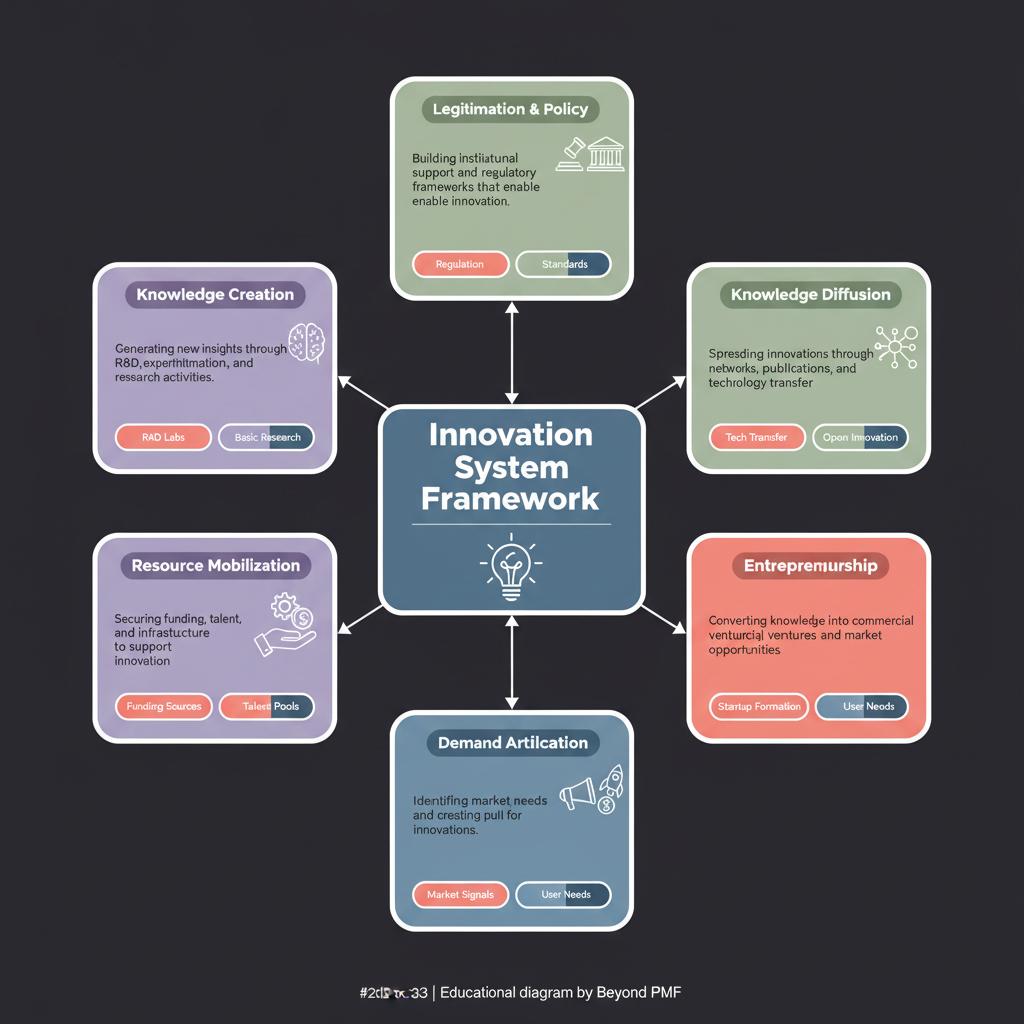
The Innovation System Framework is a comprehensive model used to understand and enhance the innovation capabilities of an organization or a regional economy. It emphasizes the interaction between various actors such as universities, firms, and government institutions. The framework helps in identifying the roles and relationships that contribute to a thriving innovation ecosystem, thereby facilitating targeted interventions that can lead to sustainable economic development and competitive advantage.

Integrated Product Development is a comprehensive framework that coordinates the efforts of different departments including engineering, marketing, and operations to develop new products. It emphasizes collaboration and communication from the initial idea through to market launch. The framework is used to streamline processes, reduce time-to-market, and ensure that all aspects of the product are aligned with customer needs and business objectives. The integrated approach helps in making informed decisions and optimizing resource allocation.
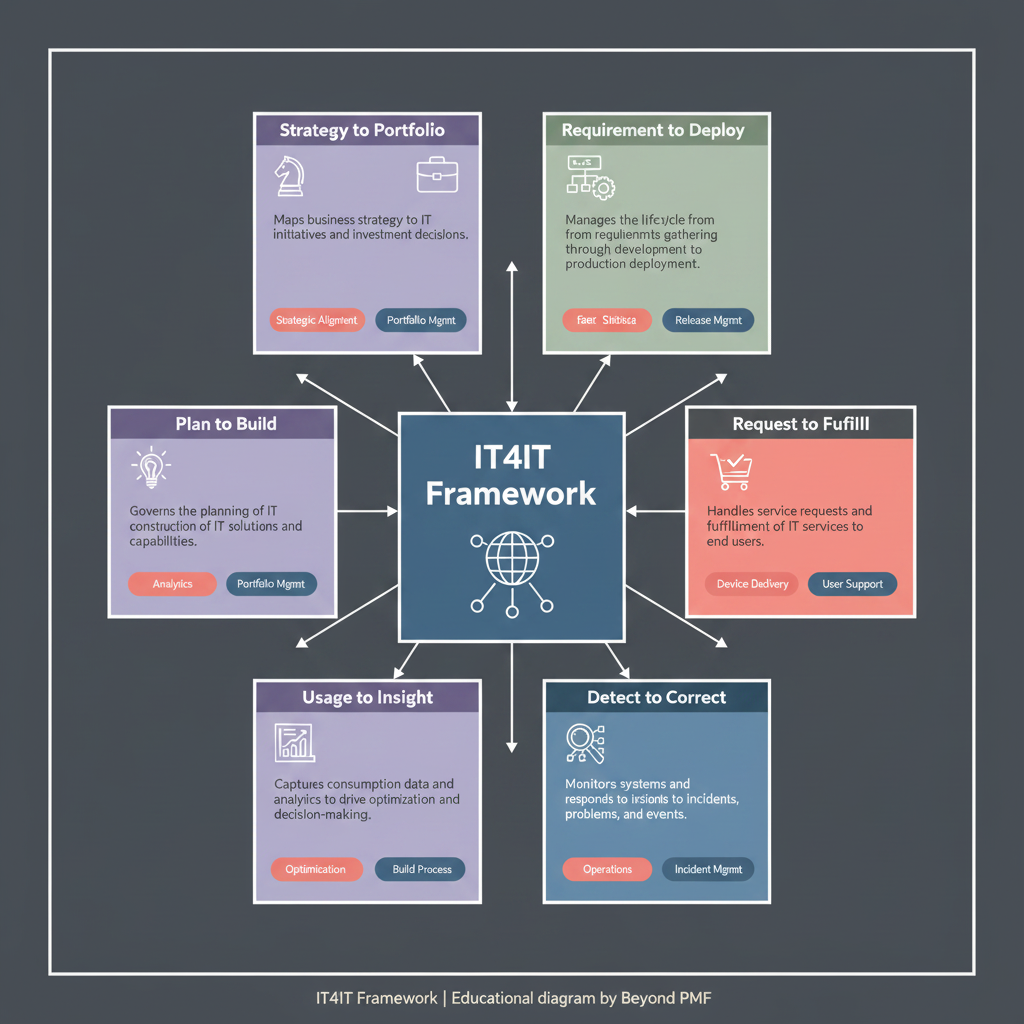
The IT4IT Framework, developed by The Open Group, is a reference architecture designed to help organizations manage their IT operations more effectively. It is structured around a value chain-based approach that emphasizes managing IT as a business. The framework aids in the standardization of IT management practices, offering a holistic view of the entire IT lifecycle. This approach helps organizations optimize their IT resources, improve service management, and align IT processes with overall business goals, thereby enhancing efficiency and reducing costs.
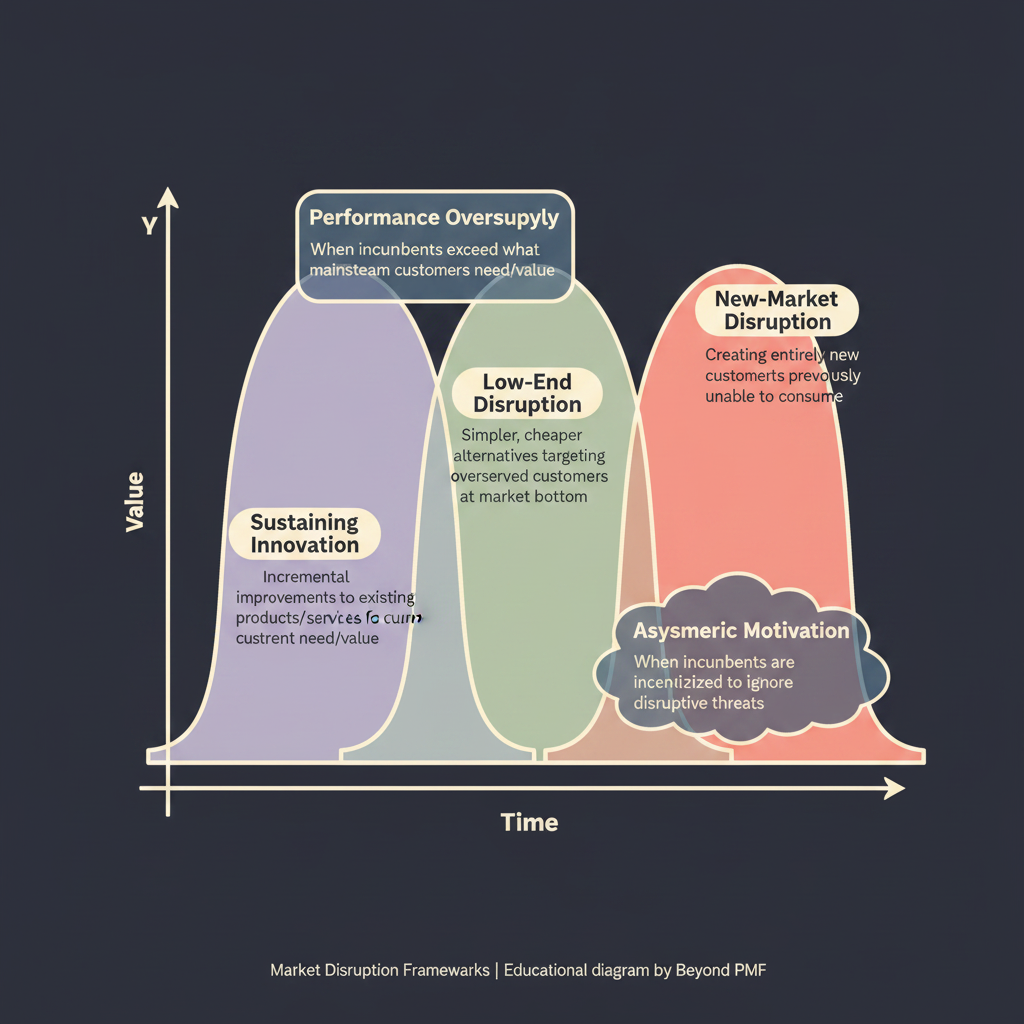
Market Disruption Frameworks guide organizations in identifying and exploiting opportunities to disrupt established markets. These frameworks focus on understanding market dynamics, customer needs, and technological advancements to introduce groundbreaking products or services. They are used to strategically position companies in a way that challenges and alters the status quo, often leading to significant market share gains and long-term profitability.
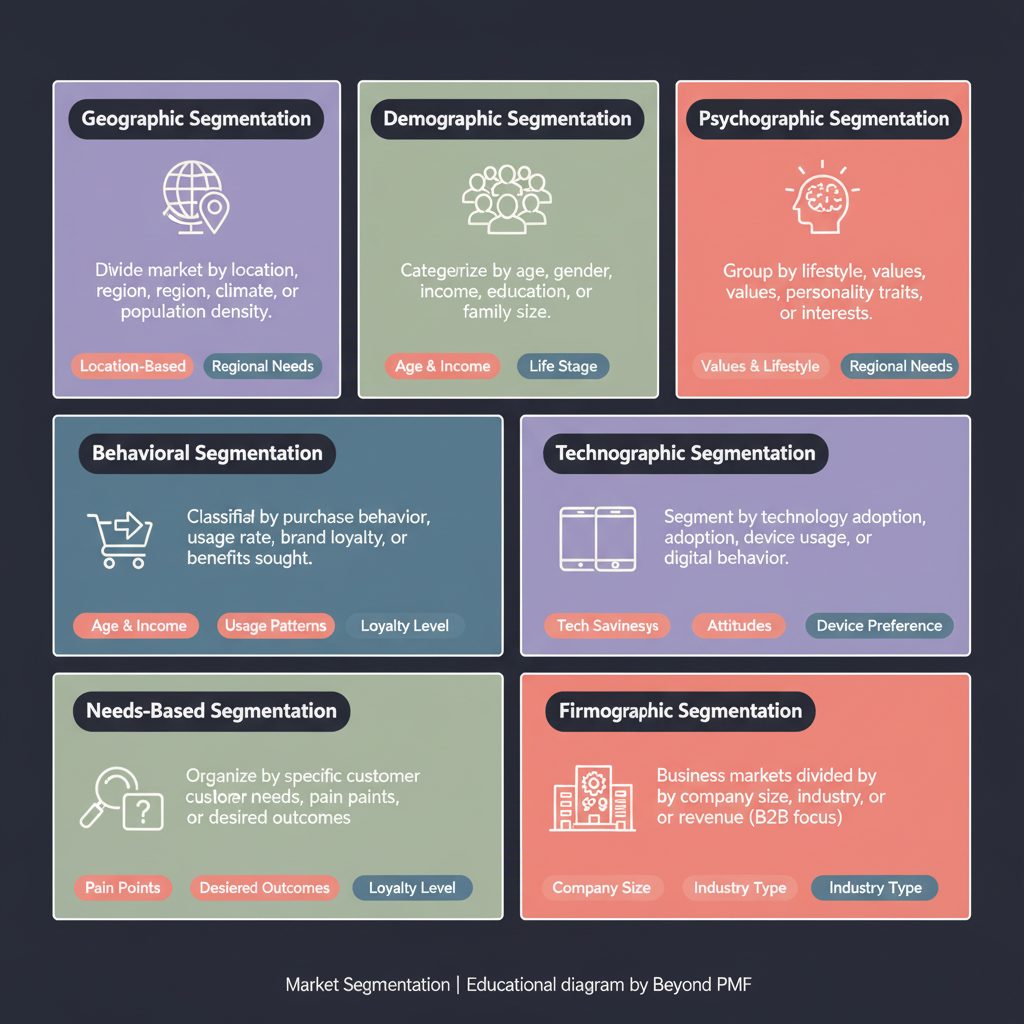
Market Segmentation is a fundamental marketing strategy that involves dividing a broad target market into subsets of consumers, businesses, or countries that have, or are perceived to have, common needs, interests, and priorities. This approach helps companies tailor their marketing efforts and products to meet the specific needs of each segment more effectively. The benefits of market segmentation include enhanced competitiveness, increased market share, and improved customer retention.
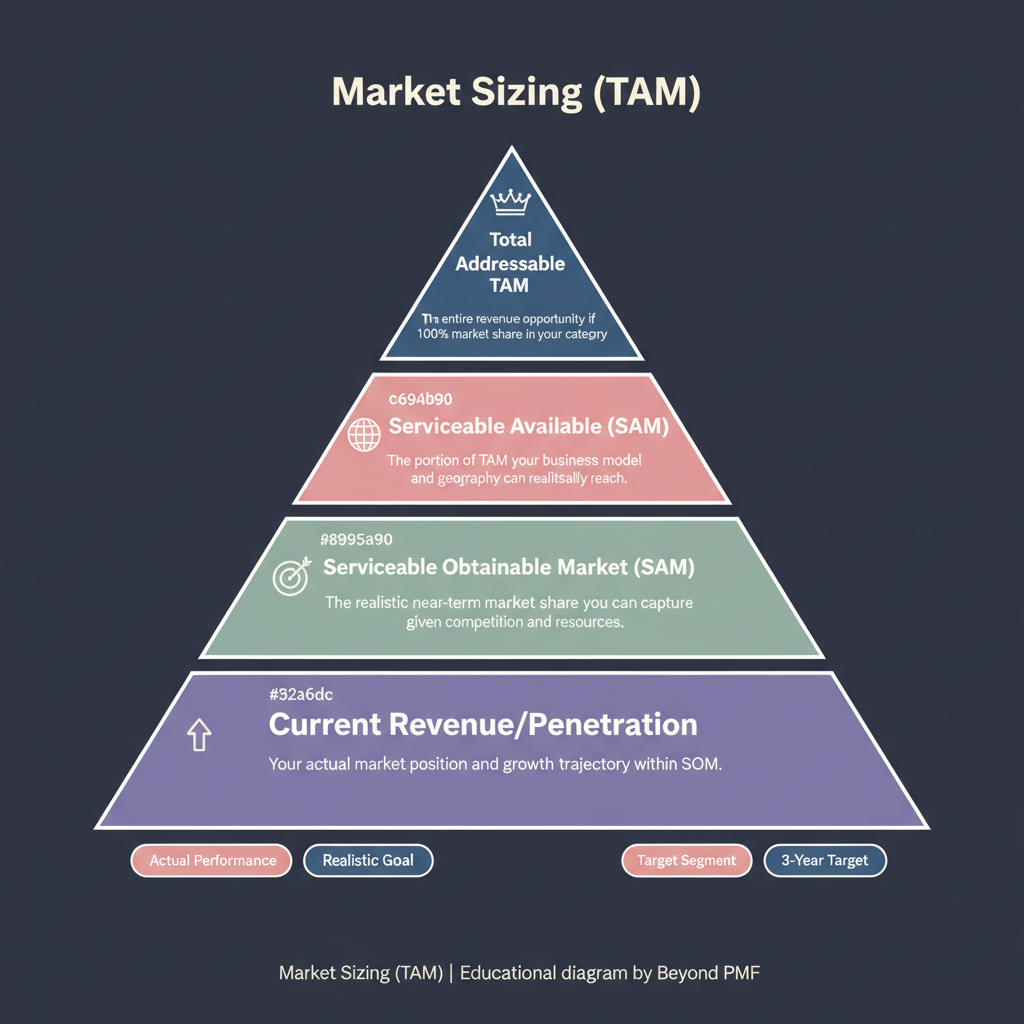
Market Sizing, specifically Total Addressable Market (TAM), is a framework used to quantify the revenue opportunity available for a product or service if 100% market share was achieved. It helps businesses understand the maximum potential of the market and guides strategic decisions such as entry into new markets, product development, and prioritization of resources. This framework is crucial for startups and established businesses to align their product offerings with market realities.
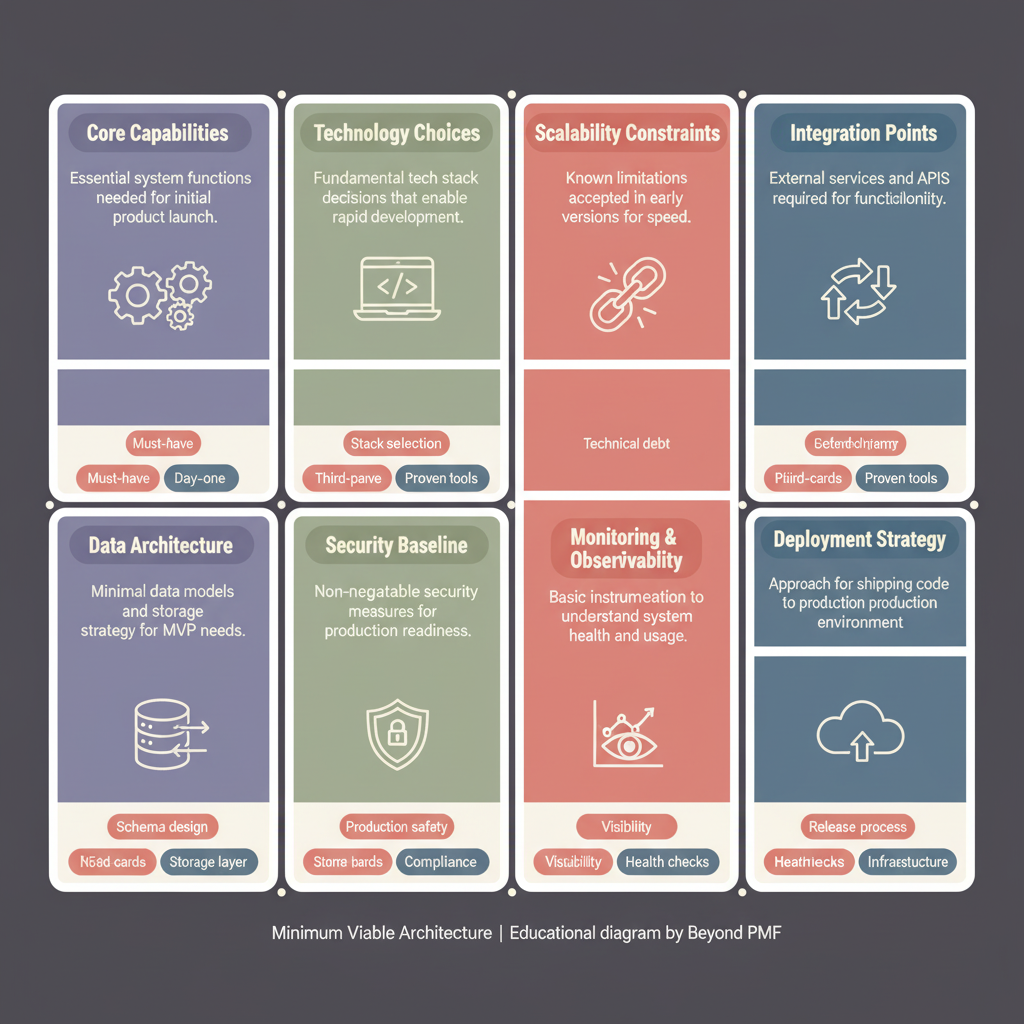
Minimum Viable Architecture is a concept derived from the lean startup methodology, emphasizing the importance of simplicity and minimalism in architectural design. It involves identifying and implementing the least amount of architectural components necessary to satisfy the core business requirements. This approach helps in reducing costs, speeding up development times, and allowing for easier adaptation based on feedback and changing needs.

The Mission Model Canvas is designed to assist mission-driven organizations in aligning their activities with their core mission. Unlike the Business Model Canvas which focuses on the business aspects, this framework emphasizes on the mission, stakeholders, and the impact. It helps organizations to clearly define their goals, understand their stakeholders, and plan effective strategies to achieve their mission. The framework is particularly beneficial in enhancing strategic alignment and ensuring that every part of the organization contributes towards the common goal.
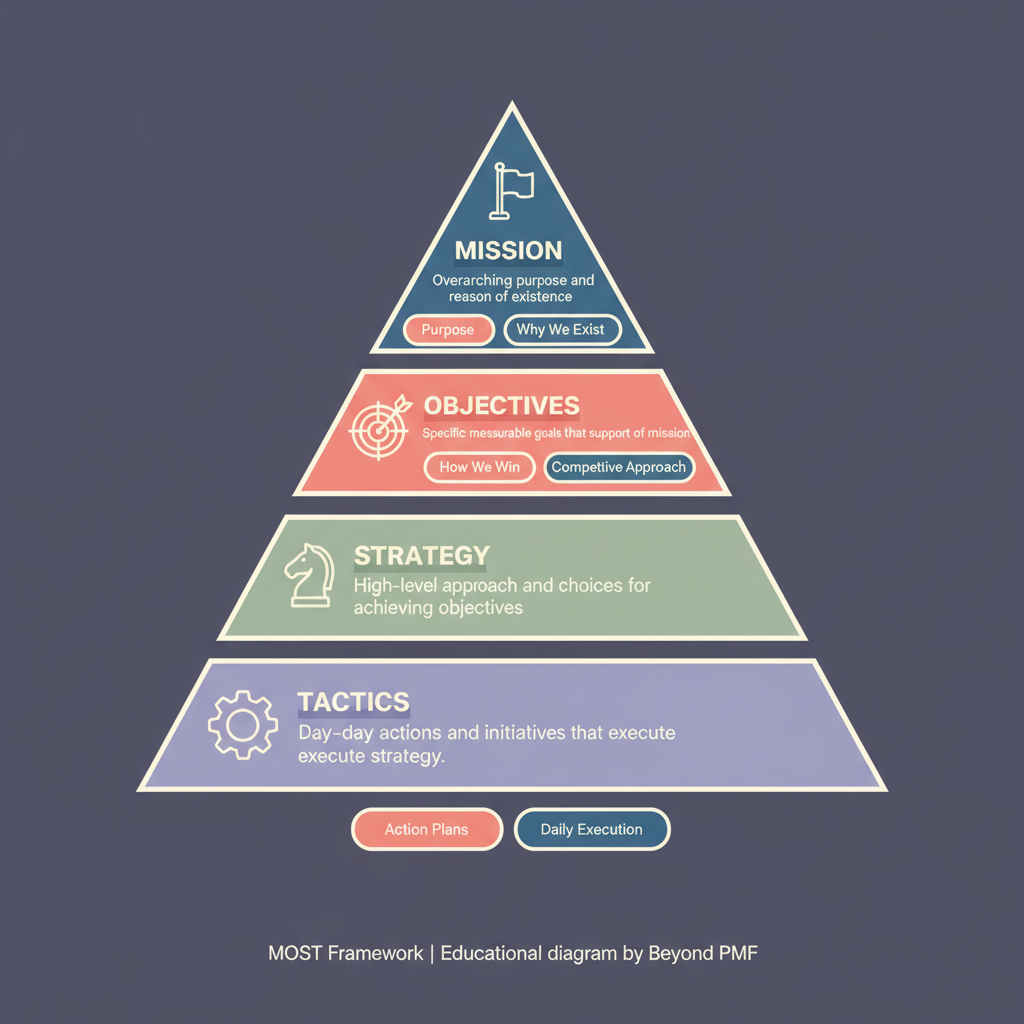
The MOST Framework stands for Mission, Objectives, Strategies, and Tactics. It is a strategic planning tool that helps organizations to align their short-term actions with long-term goals. The framework assists in breaking down the overall mission of the company into specific objectives, strategies to achieve these objectives, and tactics to implement the strategies. This hierarchical approach ensures that every part of the organization works towards common goals, enhancing coherence and efficiency.
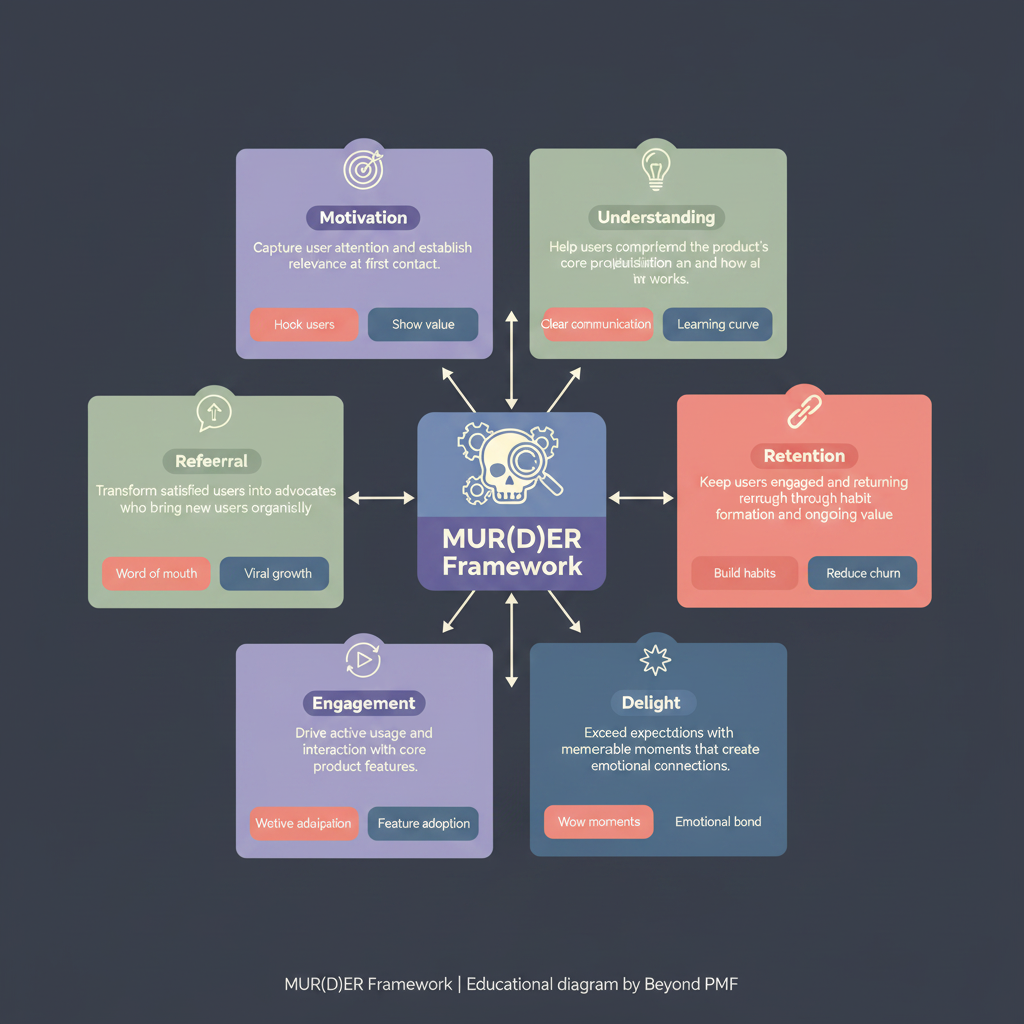
The MUR(D)ER Framework is a structured approach designed to tackle complex problems by breaking them down into manageable components. It emphasizes a systematic examination of each aspect of a problem or decision, ensuring thorough analysis and effective solutions. This framework is particularly beneficial for its ability to provide clear guidance and structure in ambiguous situations, making it a valuable tool for managers and leaders.
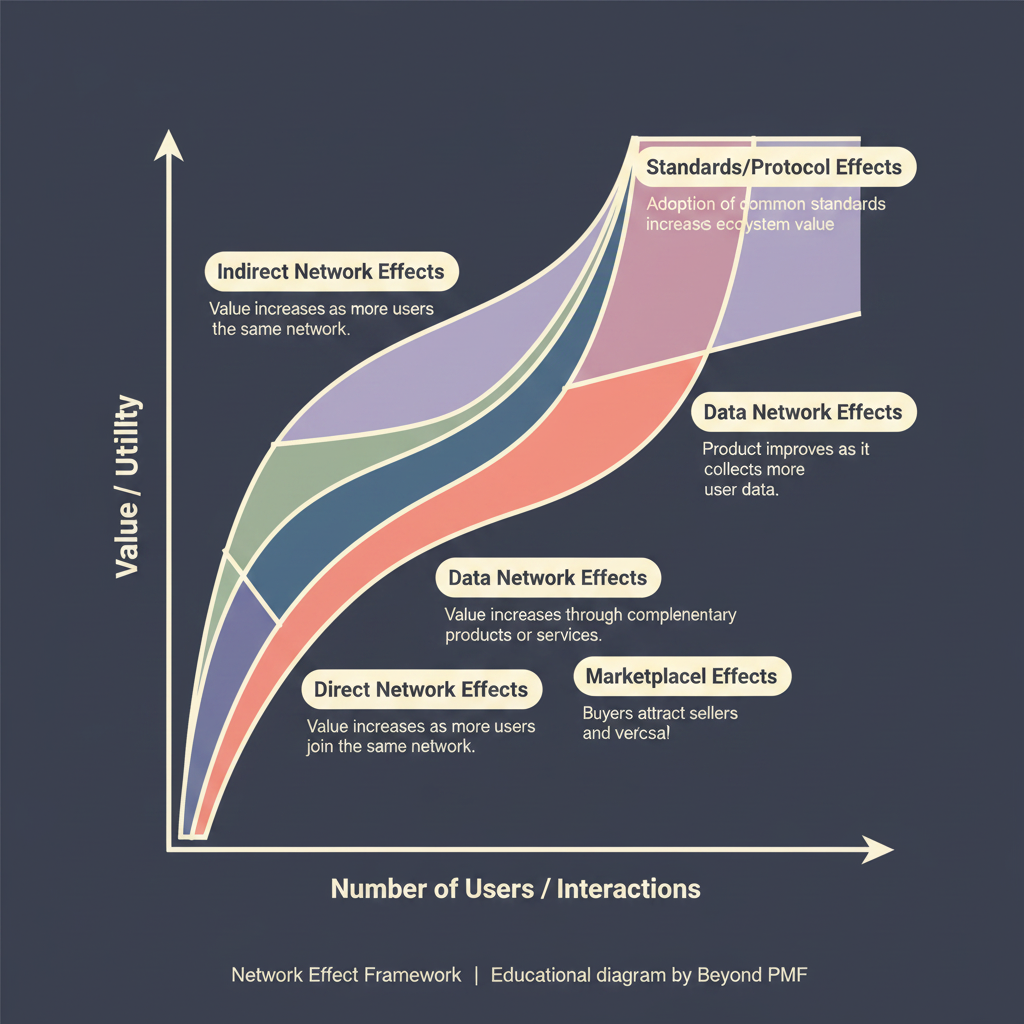
The Network Effect Framework is a strategic tool used to evaluate and enhance the value of a product or service based on its user base. It emphasizes the importance of each additional user increasing the value of a service to others. This framework is crucial for businesses aiming to leverage user growth to create competitive advantages and ensure sustainability.
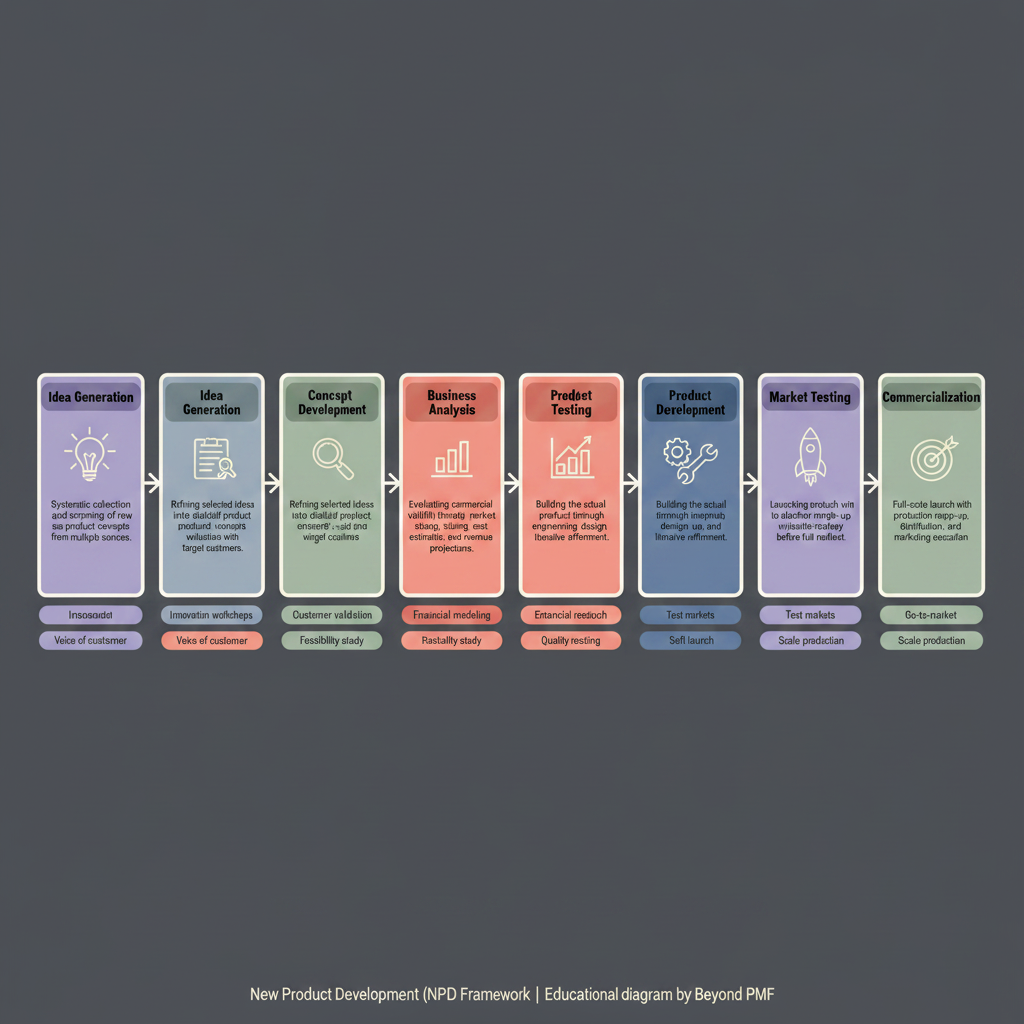
The New Product Development (NPD) Framework is a structured approach that guides organizations through the complex process of bringing a new product to market. It involves a series of steps that help in ideating, designing, developing, and launching new products effectively. The framework is used to align cross-functional teams, manage risks, and ensure that the product meets market needs and company goals. Its benefits include improved product success rates, better alignment with customer expectations, and optimized resource allocation.

The North Star Framework with Input Metrics is a strategic tool used by companies to identify and prioritize a key metric, known as the North Star Metric, that reflects the core value delivered to customers. By focusing on this metric, organizations can align their product development, marketing, and operational efforts towards growth. The framework also incorporates input metrics, which are leading indicators that influence the North Star Metric, allowing for a more nuanced approach to growth and performance measurement.
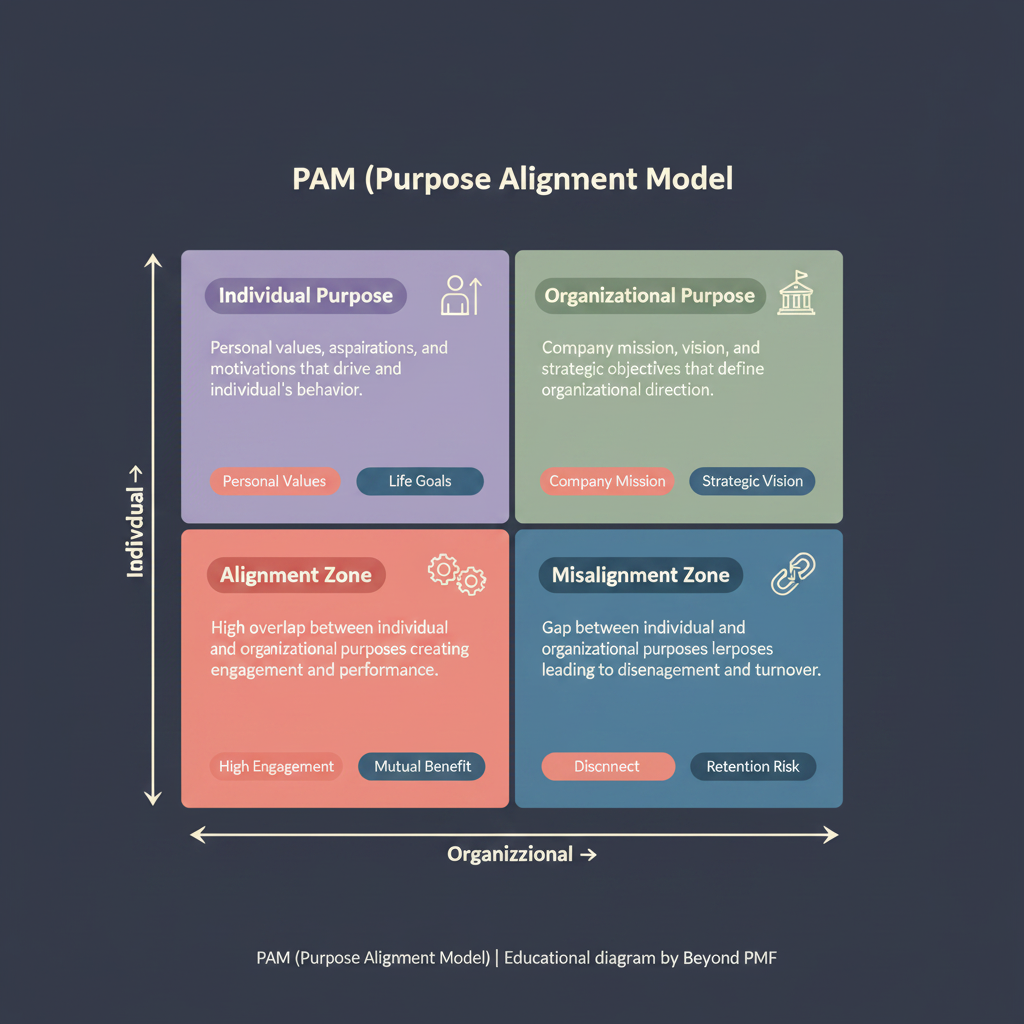
The Purpose Alignment Model (PAM) is a strategic tool designed to help organizations ensure that their initiatives and operational efforts are directly aligned with their core purpose and values. This framework categorizes activities based on their contribution to the business's core mission and market success. It is used to prioritize projects, optimize resource allocation, and enhance decision-making processes. The benefits of using PAM include improved strategic alignment, increased organizational coherence, and enhanced ability to achieve long-term goals.
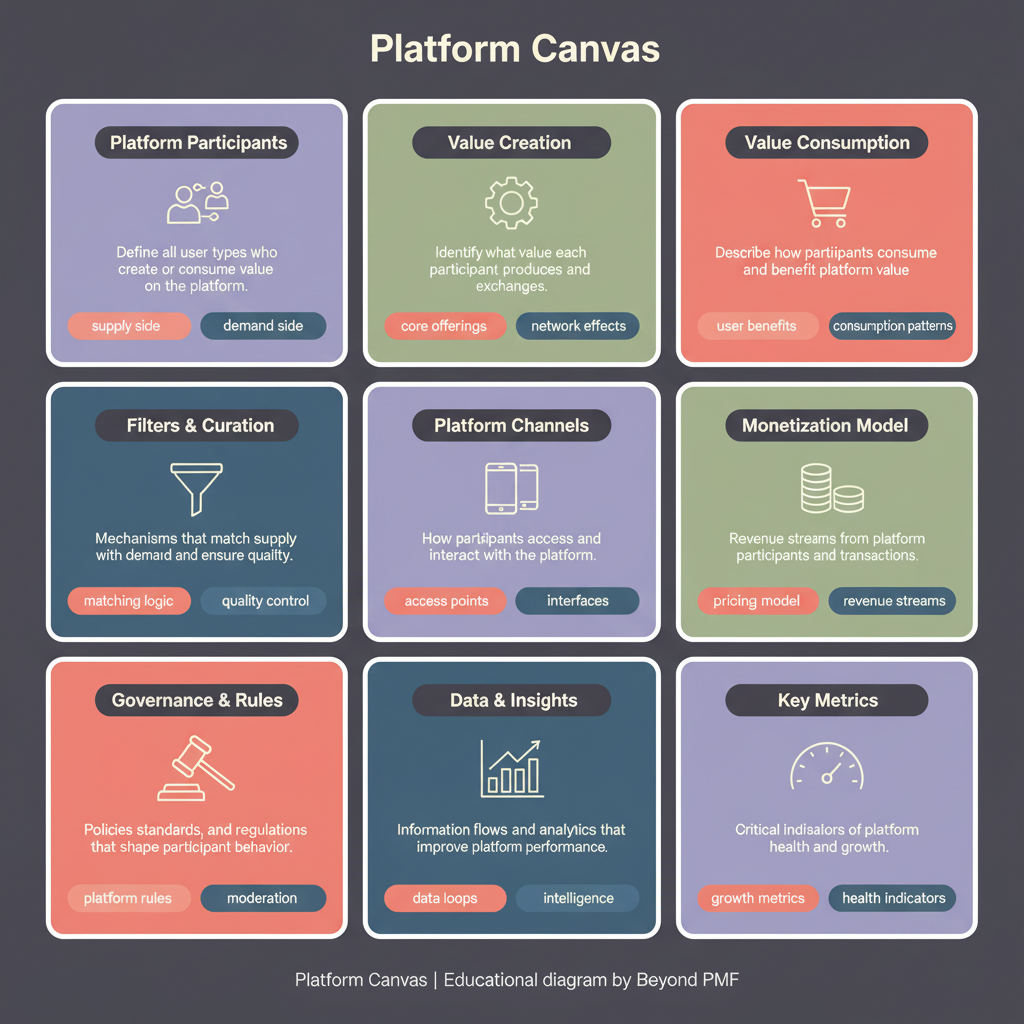
The Platform Canvas is a framework designed to help businesses conceptualize and structure a platform-based business model. It focuses on identifying key stakeholders, their interactions, and the value they create and consume. The framework aids in visualizing the flow of value and information, making it easier to pinpoint opportunities and challenges within the platform ecosystem. It is particularly beneficial for businesses looking to leverage network effects and scale through platform strategies.
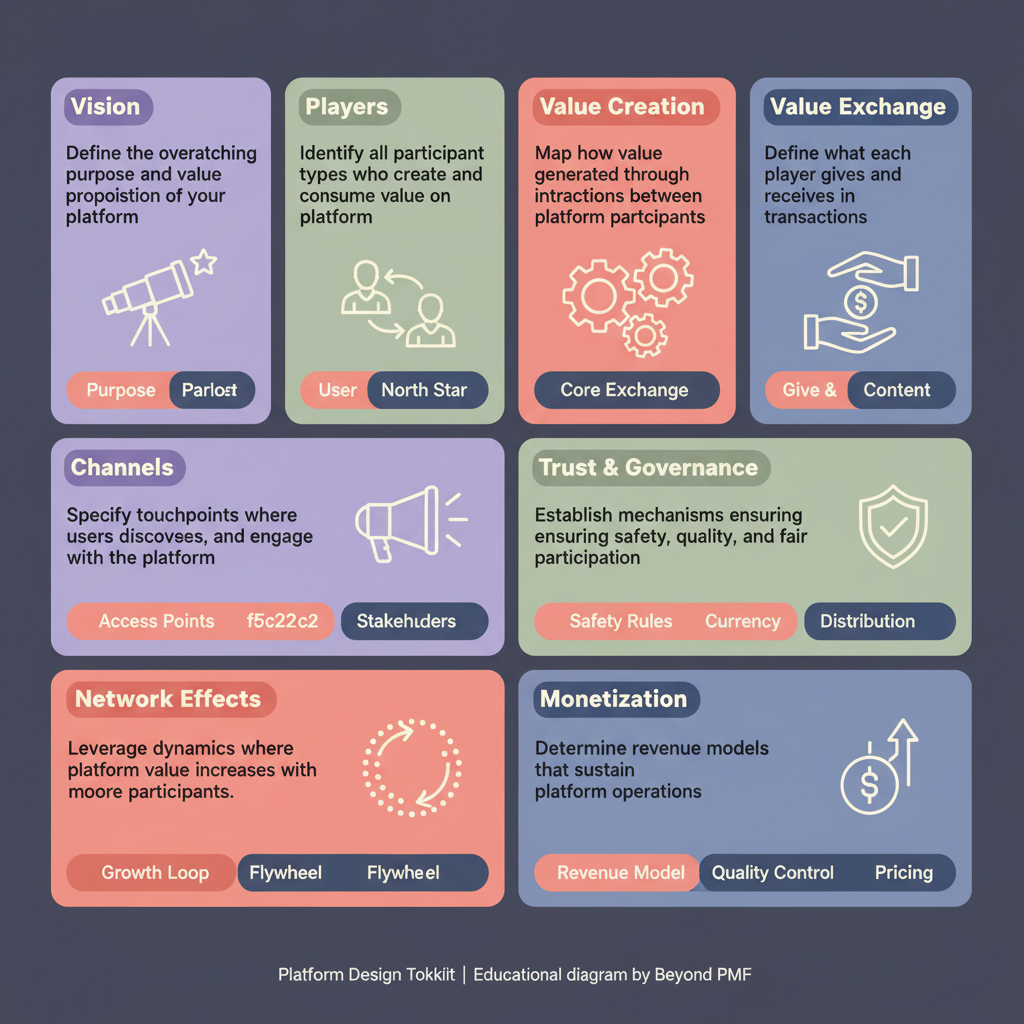
The Platform Design Toolkit is a strategic tool used to create and develop platforms that facilitate exchanges between producers and consumers. It helps organizations transition from traditional, linear business models to platform-based ecosystems. The framework provides methodologies for mapping out potential interactions, defining value propositions, and designing scalable platform architectures. It is particularly beneficial for enhancing user engagement, leveraging network effects, and creating value through interconnected services.
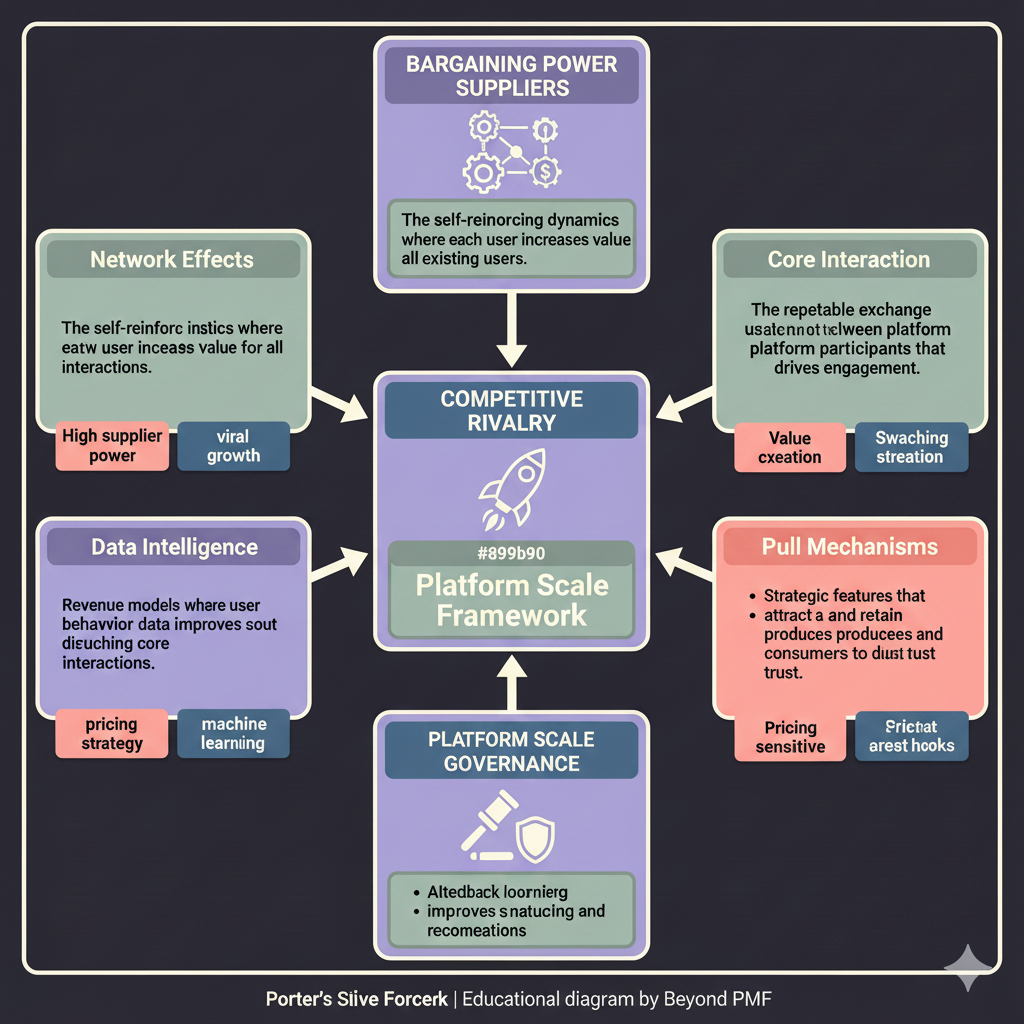
The Platform Scale Framework is a comprehensive approach used by businesses to scale their operations through the creation and management of digital platforms. This framework emphasizes the importance of creating value for a large network of users and partners by facilitating interactions and transactions. It is particularly beneficial for companies looking to expand their market reach and innovate in their service offerings through technology.
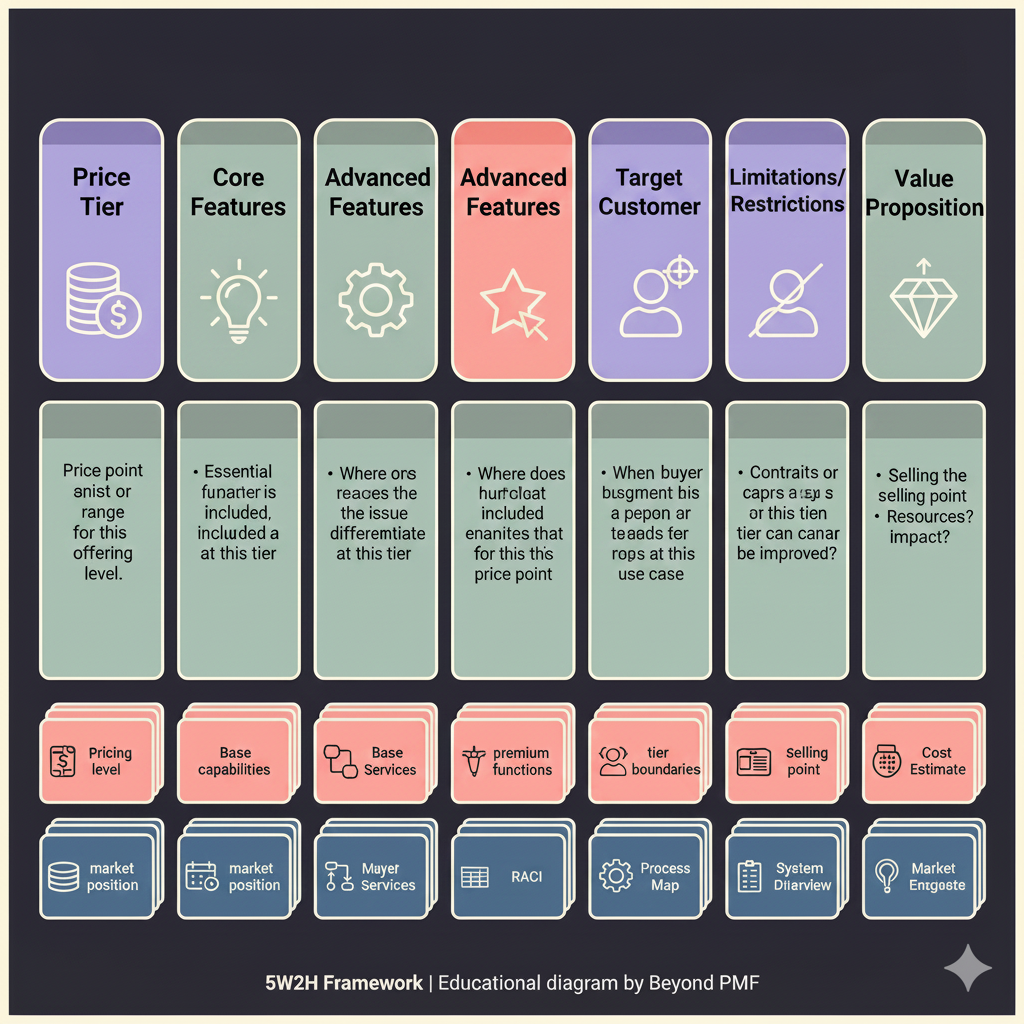
The Price-Feature Ladder framework assists businesses in structuring their pricing strategy by aligning price points with the features offered in their products or services. This method helps in creating multiple product versions that cater to varying customer needs and budgets, thus maximizing market coverage and profitability. The framework is particularly beneficial in competitive markets where product differentiation based on features can significantly impact consumer choice.
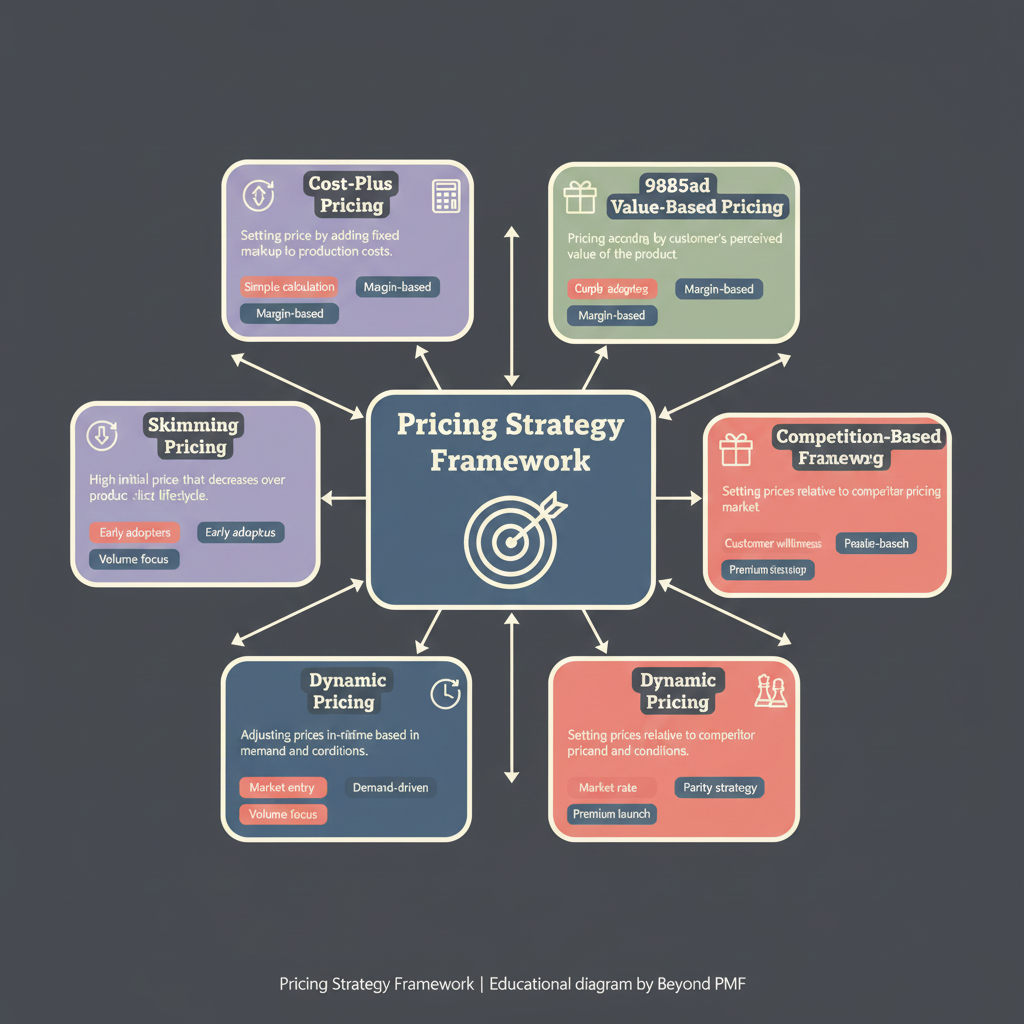
The Pricing Strategy Framework is a comprehensive approach used by businesses to set prices effectively. It involves analyzing various factors such as market demand, competition, cost of production, and customer value perception. This framework aids in maximizing profitability while ensuring competitive pricing. It also helps in aligning pricing strategies with overall business goals, making it a crucial tool for revenue management.
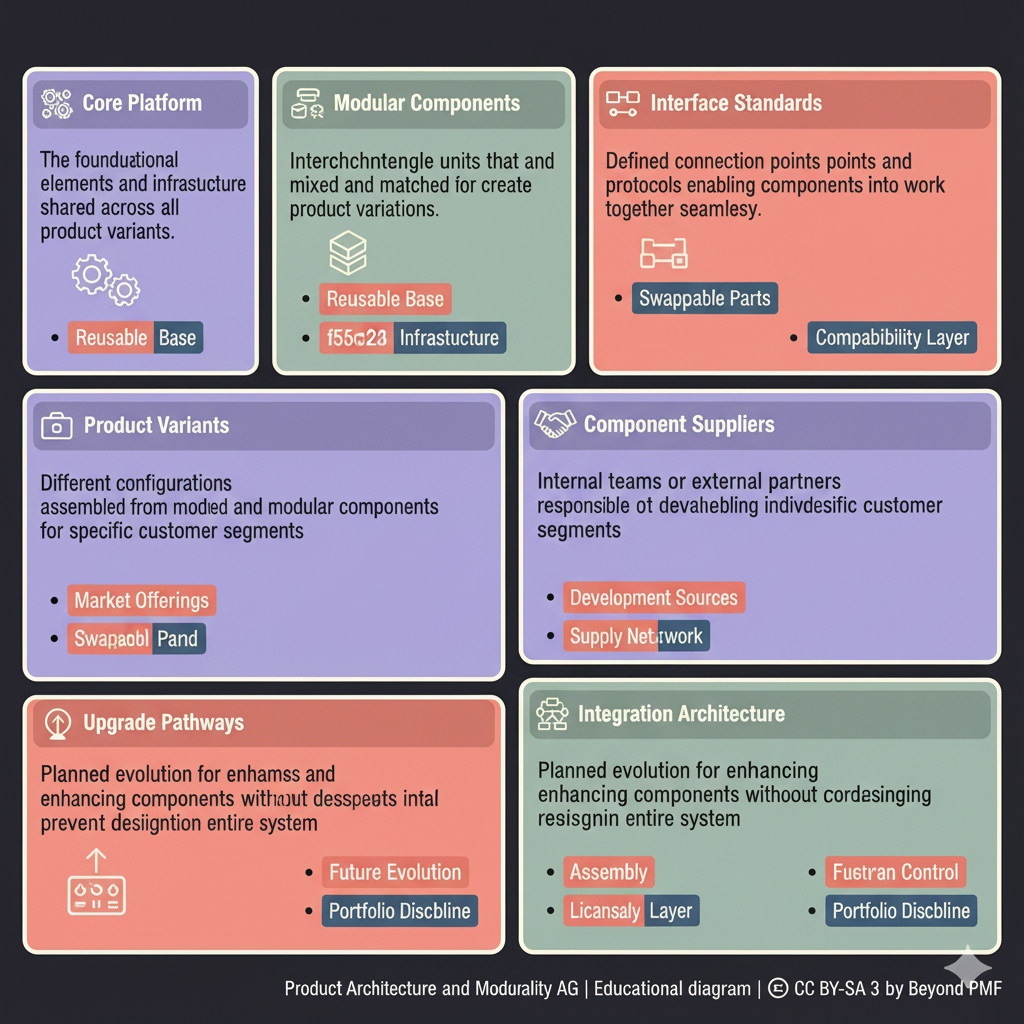
Product Architecture and Modularity refers to the conceptualization and design process of structuring a product as a collection of distinct modules or components. This framework is used to enhance flexibility in design, manufacturing, and maintenance. It allows companies to customize products according to customer needs, streamline production processes, and facilitate easier upgrades and repairs. The modular design also supports rapid product iterations and scalability, adapting to changes in technology and market demands.

The Product Channel Fit framework helps businesses identify and leverage the most suitable channels for marketing and distributing their products. By analyzing the characteristics of both the product and potential channels, companies can optimize their outreach strategies, enhance customer acquisition, and increase overall market effectiveness. This framework is crucial for maximizing product reach and ensuring that marketing efforts resonate with the target audience.
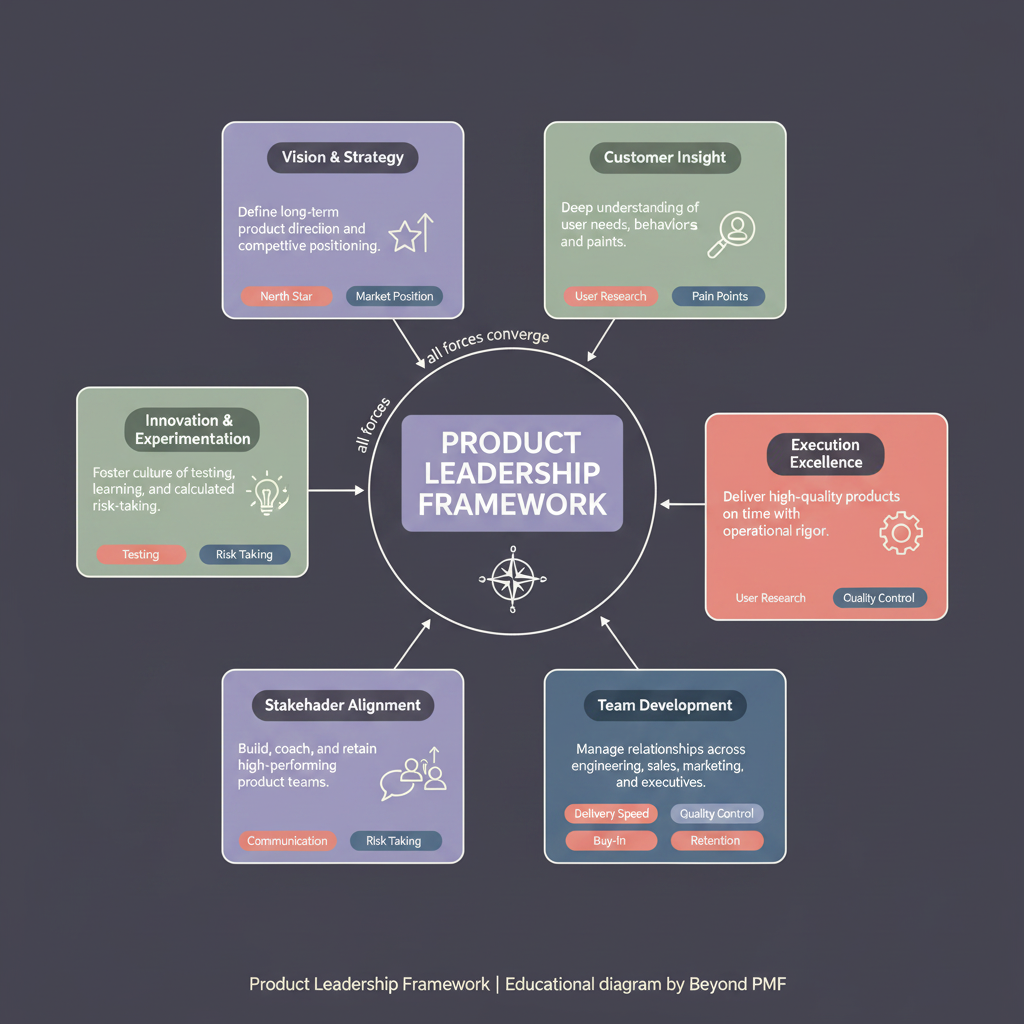
The Product Leadership Framework is a strategic approach used by organizations aiming to lead their market through superior product offerings. It emphasizes innovation, product quality, and customer experience as key differentiators. This framework guides companies in developing products that not only meet but exceed customer expectations, thereby establishing a competitive edge and fostering brand loyalty.
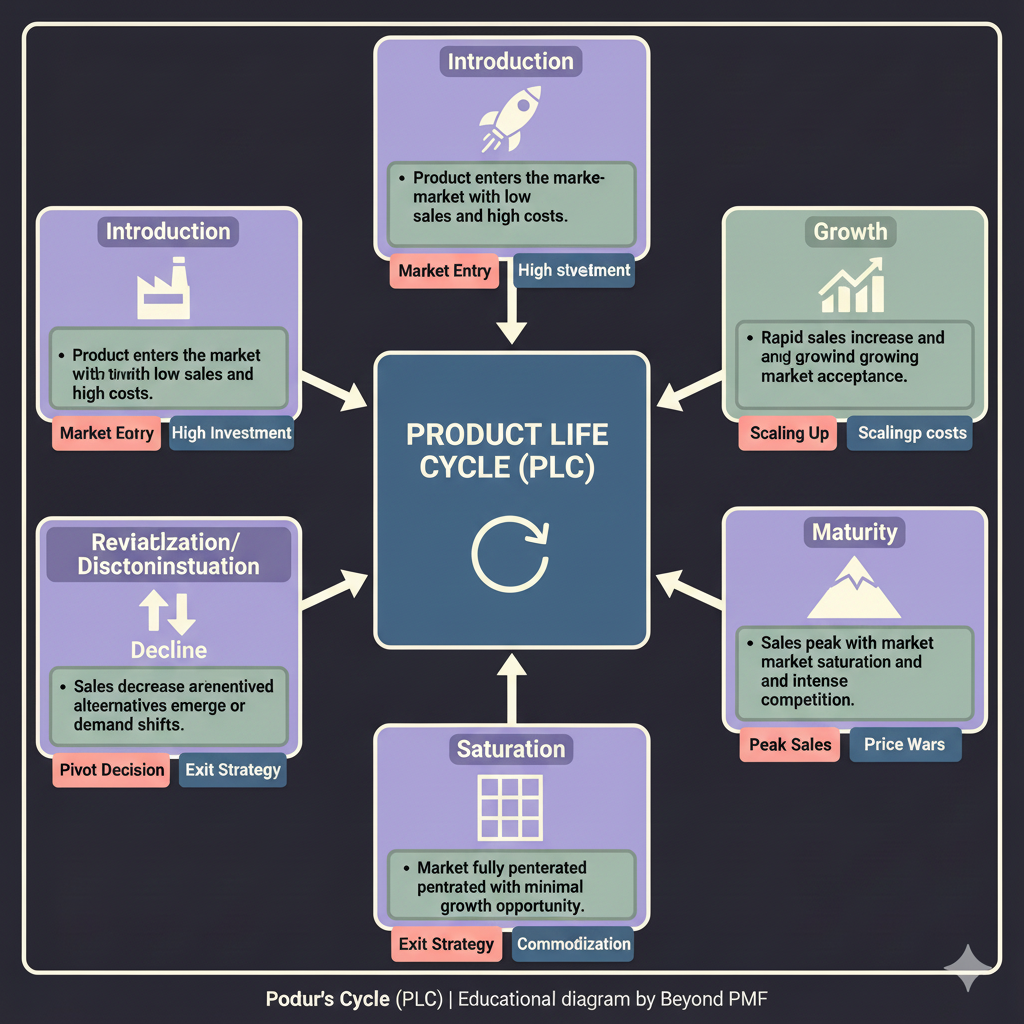
The Product Life Cycle (PLC) is a business framework that outlines the progression of a product through four main stages: introduction, growth, maturity, and decline. This framework helps businesses to understand the changing needs of the market and adjust marketing, production, and financial strategies accordingly. By applying the PLC, companies can better manage product strategies, optimize resource allocation, and extend the profitability of their products.

The Product Market Fit Canvas is a framework designed to help entrepreneurs and startups align their product features with market demands. It guides users through a series of steps to evaluate the target market, customer needs, value propositions, and the competitive landscape. This framework is crucial for ensuring that a product can satisfy market requirements and achieve sustainable growth. Its structured approach aids in identifying potential gaps in product-market alignment and refining product strategies.
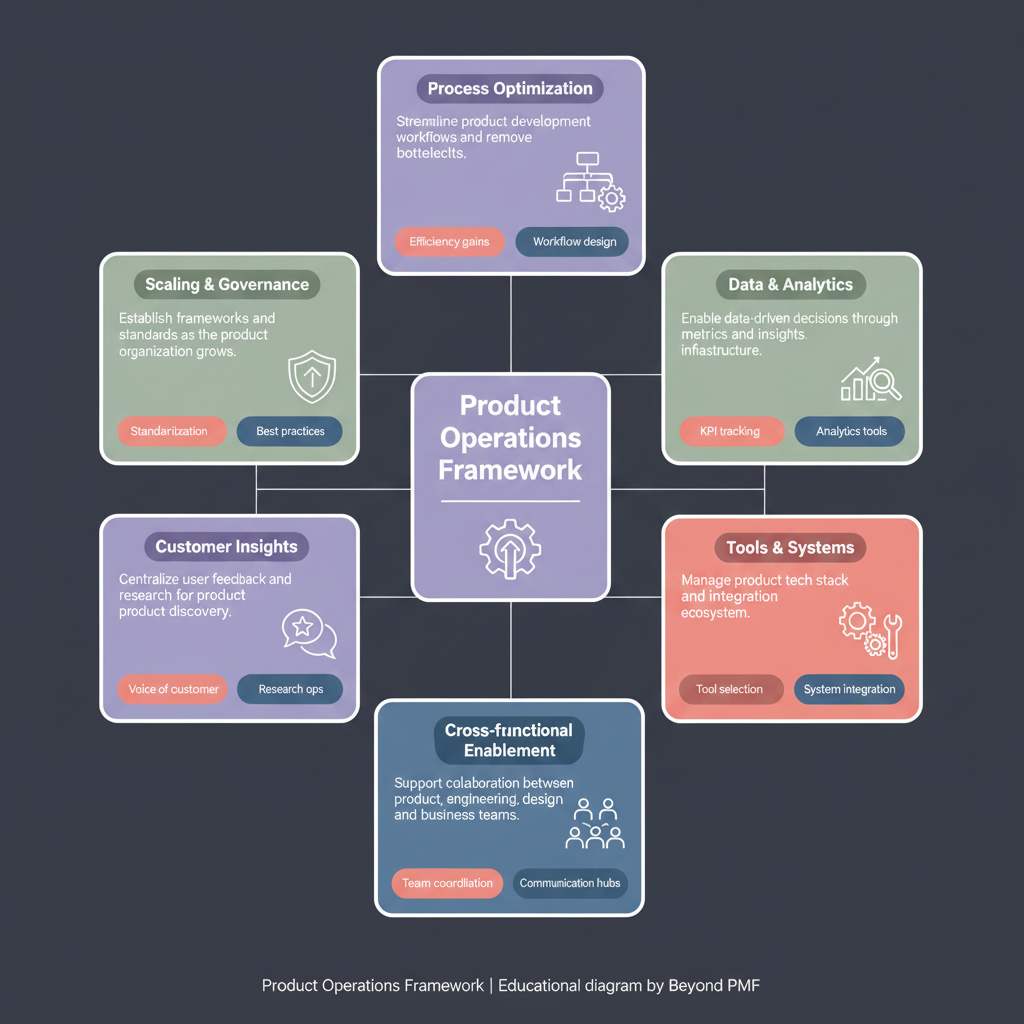
The Product Operations Framework is a comprehensive methodology that focuses on optimizing the product lifecycle processes within an organization. It integrates cross-functional teams and leverages data-driven insights to improve product development, launch, and scaling. This framework is crucial for companies looking to enhance product quality, reduce time-to-market, and increase customer satisfaction through systematic and efficient operational practices.
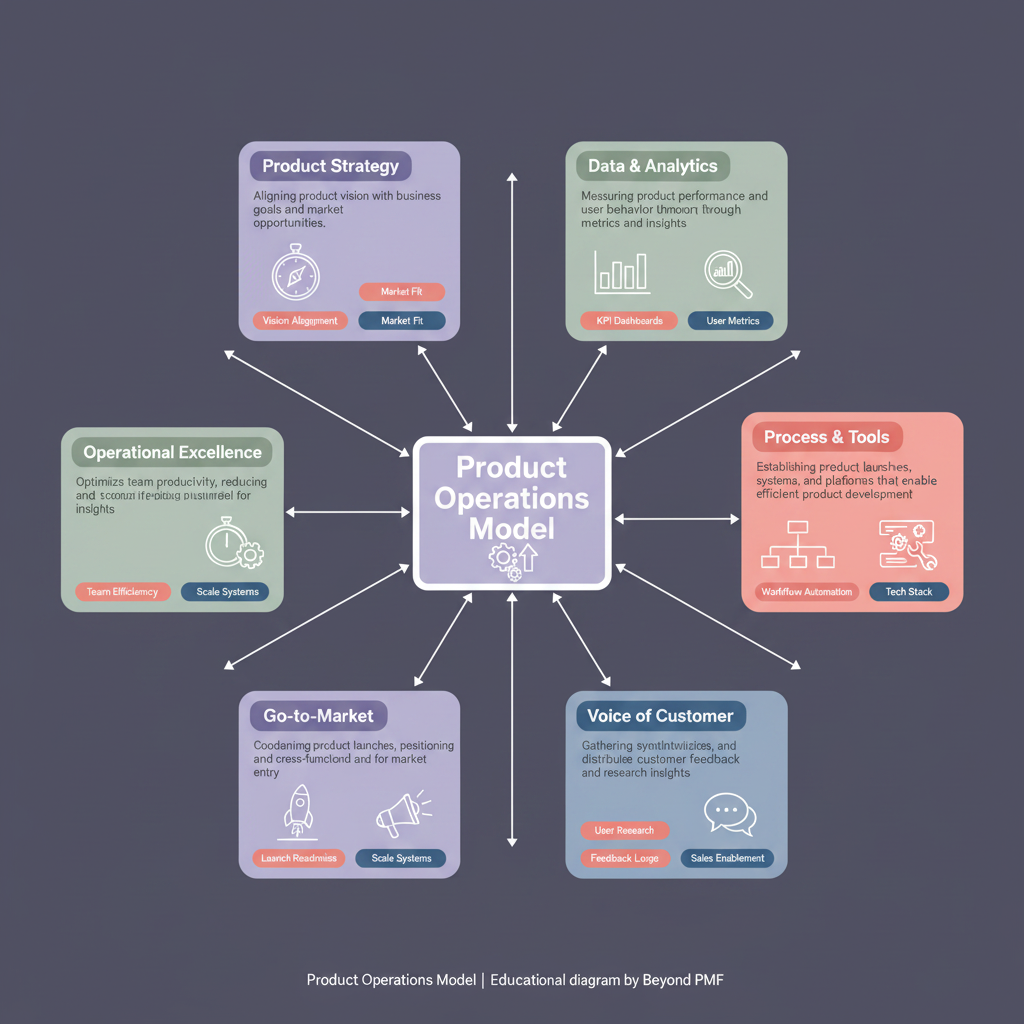
The Product Operations Model is a framework designed to optimize the product management process by aligning product strategy with execution. It focuses on improving collaboration among product teams, enhancing data-driven decision-making, and ensuring that products are developed and managed efficiently. This model is crucial for organizations looking to scale their product offerings while maintaining quality and meeting market demands.