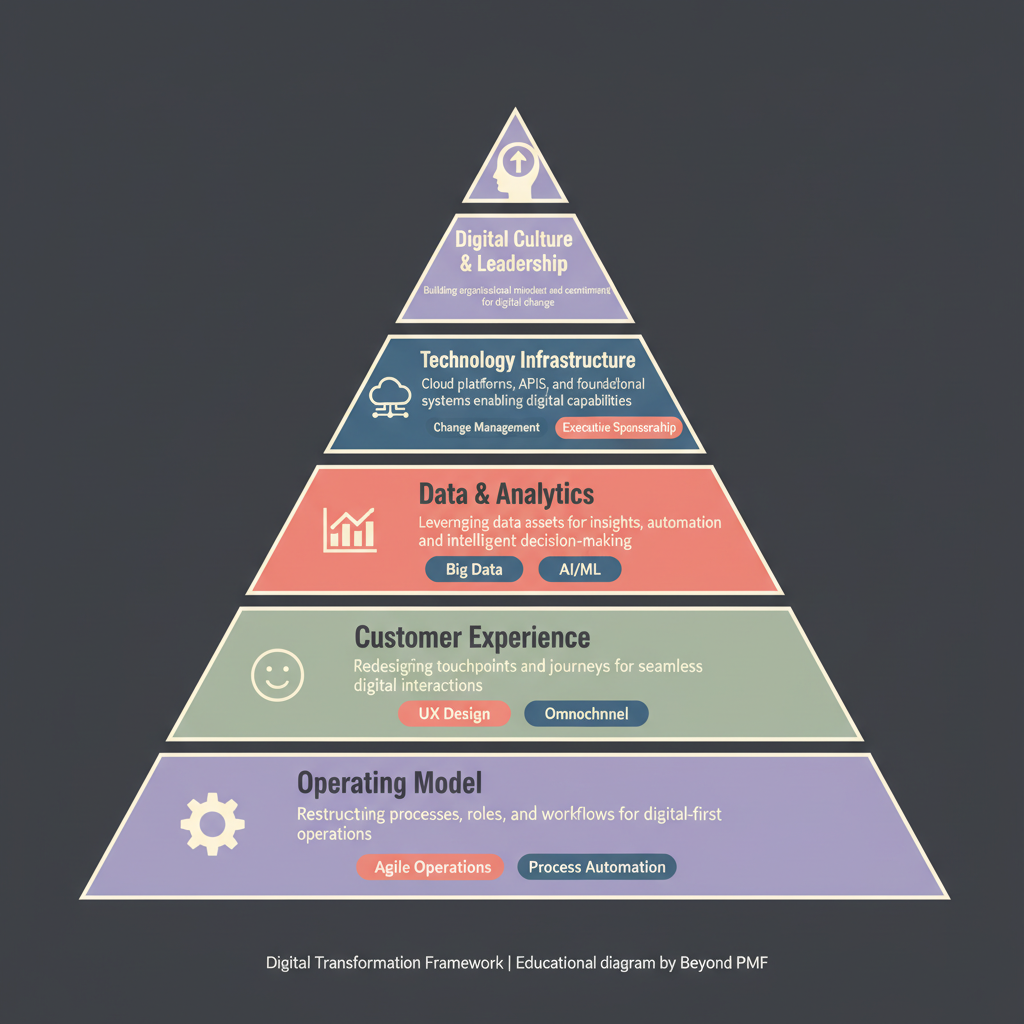
Digital Transformation Framework

https://ik.imagekit.io/beyondpmf/frameworks/digital-transformation-framework.png
The Digital Transformation Framework addresses friction related to unclear direction and strategic alignment when integrating digital technology. It helps organizations define their digital vision, strategy, and business model.

The Digital Transformation Framework is a strategic blueprint used by organizations to reimagine their business processes through the use of digital technology. It involves the integration of digital solutions into every aspect of business operations to enhance efficiency, improve customer engagement, and foster innovation. This framework is crucial for businesses aiming to stay competitive in a rapidly evolving digital landscape, as it helps in aligning technology and business strategies to achieve digital maturity.

Steps / Detailed Description

Assess current digital maturity and identify gaps in technology and processes. | Define a clear digital strategy aligned with business objectives. | Implement digital solutions incrementally, focusing on high-impact areas first. | Foster a digital culture by training and engaging employees. | Continuously monitor, analyze, and iterate on digital initiatives.

Best Practices

Start with a clear vision and leadership commitment. | Engage stakeholders across all levels of the organization. | Ensure continuous learning and adaptation.

Pros

Enhances operational efficiency through automation. | Improves customer experience and engagement. | Encourages continual innovation and adaptation.

Cons

Requires significant upfront investment. | Can lead to disruption in existing processes. | Risk of data security and privacy issues.

When to Use

When aiming to modernize business operations. | When seeking to improve customer experience.

When Not to Use

In organizations with limited resources for initial investment. | When immediate results are required without long-term planning.

Related Frameworks

Lifecycle

Not tied to a specific lifecycle stage

Scope

Scope not defined

Maturity Level

Maturity level not specified

Time to Implement

2–4 Weeks
3–6 Months
1–2 Weeks
3–6 Months
1–2 Months
3–6 Months
1–2 Weeks
Less Than 1 Day
1–2 Weeks
Longer Than 6 Months
1–2 Weeks
Longer Than 6 Months
1–2 Weeks
3–6 Months
1–2 Weeks
1–2 Weeks
1–2 Weeks
1–2 Weeks
1–2 Days
1–2 Weeks
1–2 Weeks
1–2 Weeks
1–2 Weeks
1–2 Weeks
1–2 Weeks
3–6 Months
1–2 Weeks
1–2 Weeks
1–2 Weeks
3–6 Months
1–2 Weeks
1–2 Weeks
2–4 Weeks
1–2 Weeks
1–2 Days
1–2 Weeks
Longer Than 6 Months
3–6 Months
Longer Than 6 Months
1–2 Weeks
Longer Than 6 Months
3–6 Months
Less Than 1 Day
3–6 Months
1–2 Months
3–6 Months
Longer Than 6 Months
3–6 Months
Less Than 1 Day
1–2 Weeks
3–6 Months
3–6 Months
1–2 Weeks
3–6 Months
1–2 Weeks
1–2 Weeks
1–2 Days
1–2 Weeks
1–2 Months
Longer Than 6 Months
1–2 Weeks
Longer Than 6 Months
1–2 Weeks
3–6 Months
1–2 Weeks
Less Than 1 Day
1–2 Weeks
3–6 Months
1–2 Weeks
3–6 Months
1–2 Weeks
1–2 Weeks
Longer Than 6 Months
Less Than 1 Day
3–6 Months
Longer Than 6 Months
1–2 Months
1–2 Weeks
Longer Than 6 Months
1–2 Weeks
3–6 Months
1–2 Weeks
1–2 Weeks
3–6 Months
Less Than 1 Day
1–2 Weeks
1–2 Weeks
3–6 Months
3–6 Months
Less Than 1 Day
1–2 Weeks
Longer Than 6 Months
1–2 Months
1–2 Weeks
1–2 Weeks
1–2 Weeks
Longer Than 6 Months

Copyright Information

Autor:
Unknown
N/A
Publication:
Generic Business Tool