
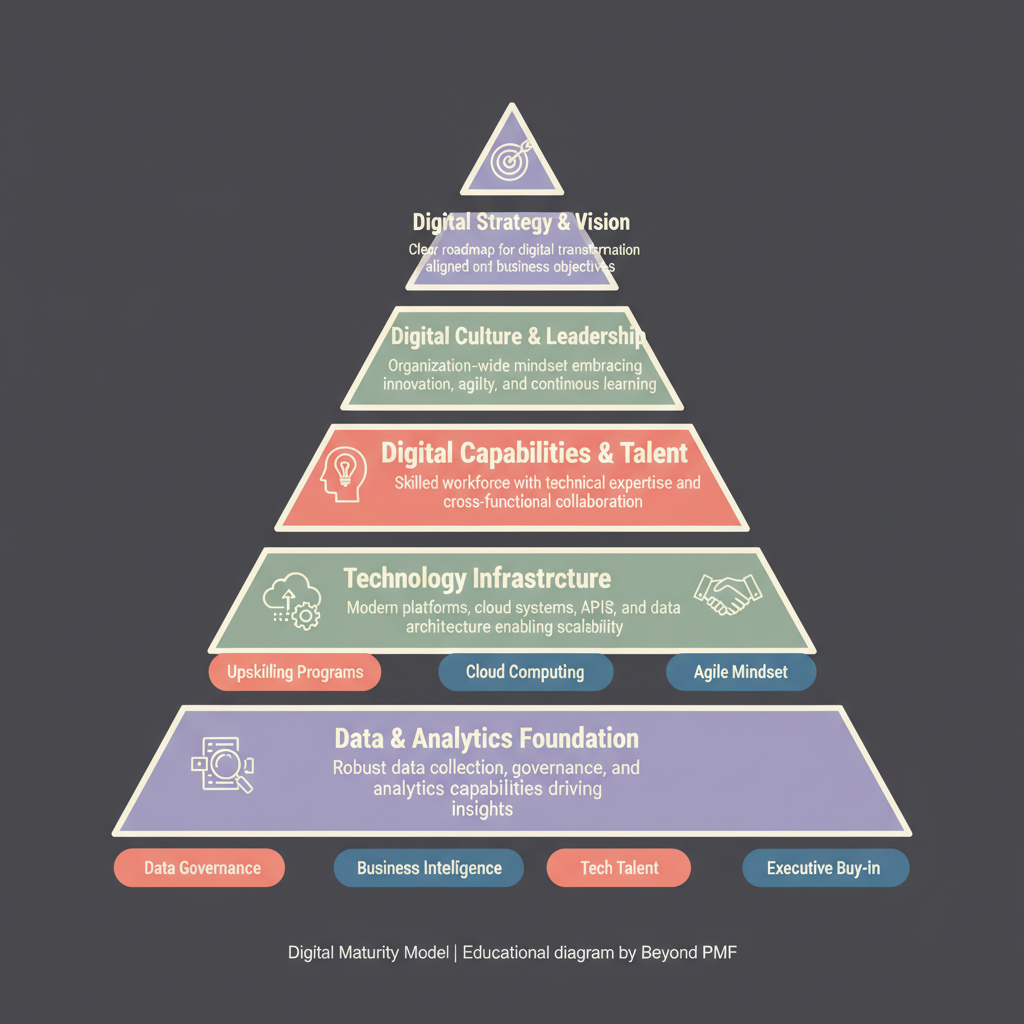
The Digital Maturity Model is a framework designed to evaluate the current level of digital capabilities within an organization and to provide a structured pathway for digital transformation. It helps businesses identify gaps in their digital strategy, align digital initiatives with business objectives, and prioritize investments in technology. By using this model, organizations can systematically improve their digital operations, enhance customer experience, and gain competitive advantages in their industry.
Assessment of current digital capabilities across various dimensions such as technology, processes, and people. | Benchmarking against industry standards and best practices to identify gaps and areas of improvement. | Development of a tailored digital transformation roadmap based on the maturity assessment results. | Implementation of strategic initiatives and technologies to advance through the maturity levels. | Continuous monitoring and refining of digital strategies to adapt to changes in technology and market demands.
Regularly update the maturity model to reflect the latest digital trends and technologies. | Engage stakeholders from various departments to ensure comprehensive assessment and buy-in. | Focus on actionable insights and practical steps in the digital transformation roadmap.
Provides a clear framework for assessing and advancing digital capabilities. | Helps align digital strategies with overall business objectives. | Facilitates targeted investments in technology and resources.
Can be time-consuming and resource-intensive to implement. | May require significant change management and buy-in across the organization. | Risks of oversimplification in assessing complex digital landscapes.
When planning a digital transformation initiative. | When seeking to benchmark digital capabilities against competitors.
In very small organizations where the model's complexity may not justify the investment. | When rapid, ad-hoc digital changes are needed without comprehensive strategic planning.