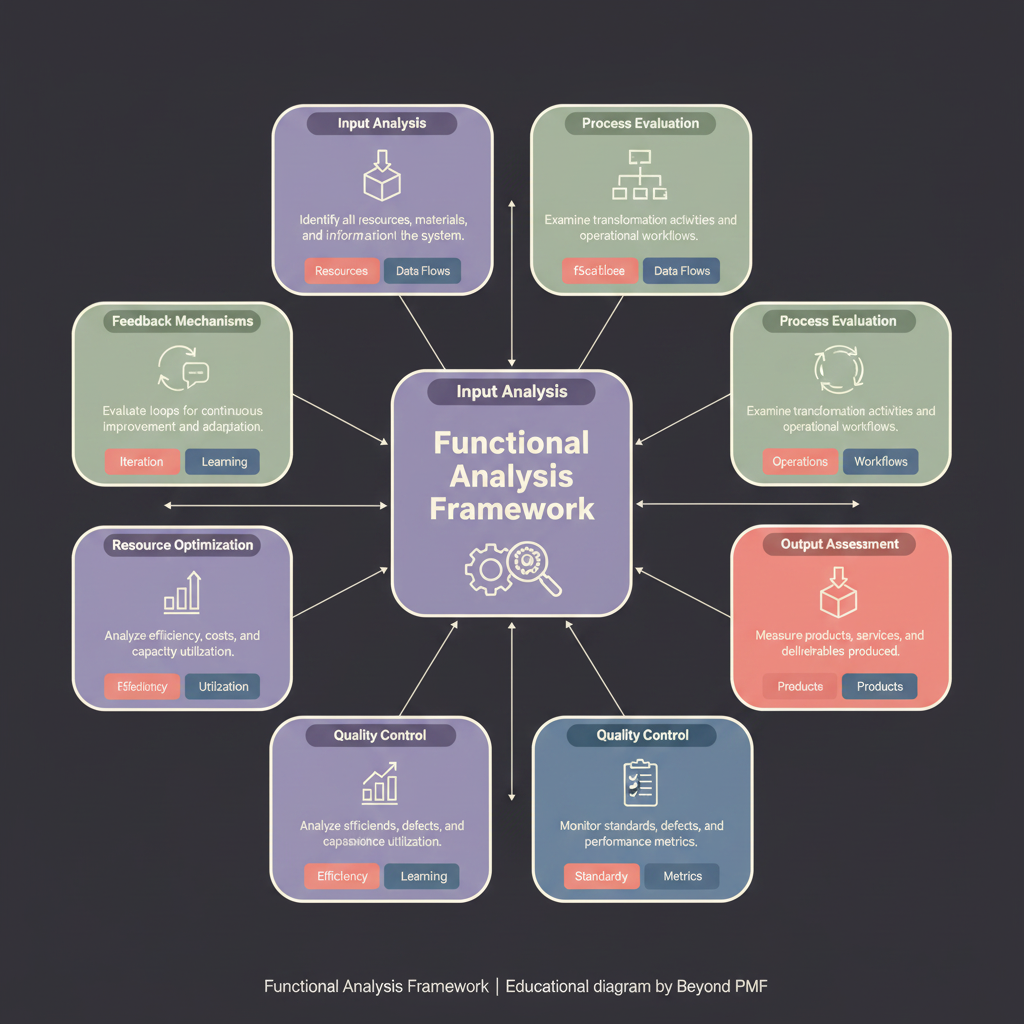
The Functional Analysis Framework is a systematic approach that focuses on identifying and understanding the functions of a system or product, rather than its physical attributes or components. This framework helps in breaking down complex systems into manageable functions, which can then be analyzed for efficiency and effectiveness. It is widely used in engineering, product development, and process improvement to ensure that all functions are necessary, cost-effective, and add value to the end user.
Define the system or product to be analyzed. | Identify all the functions and sub-functions it performs. | Classify these functions into primary, secondary, and tertiary categories. | Evaluate the necessity and efficiency of each function. | Explore ways to improve or optimize identified functions. | Implement changes and monitor the results for effectiveness.
Involve cross-functional teams to gain diverse perspectives. | Use standardized tools and methodologies for function analysis. | Regularly review and update the function analysis as the system or product evolves.
Enhances understanding of the system's or product's purpose and operations. | Facilitates cost reduction by identifying unnecessary functions. | Improves product or system design through focused functional optimization.
Can be time-consuming if the system or product is complex. | May require specialized knowledge to identify and categorize functions accurately. | Risk of overlooking important physical or contextual elements by focusing solely on functions.
In the initial stages of product development to define functional requirements. | When looking to optimize or redesign existing products or systems.
When the primary focus is on the physical attributes rather than functionality. | In fast-paced environments where immediate results are required.