Feature Audit

https://ik.imagekit.io/beyondpmf/frameworks/feature-audit.png
The Feature Audit directly assesses a product's features, impacting user experience and potentially uncovering implementation issues. It helps identify areas where features underperform or misalign with user needs, which is a form of customer-facing delivery friction.

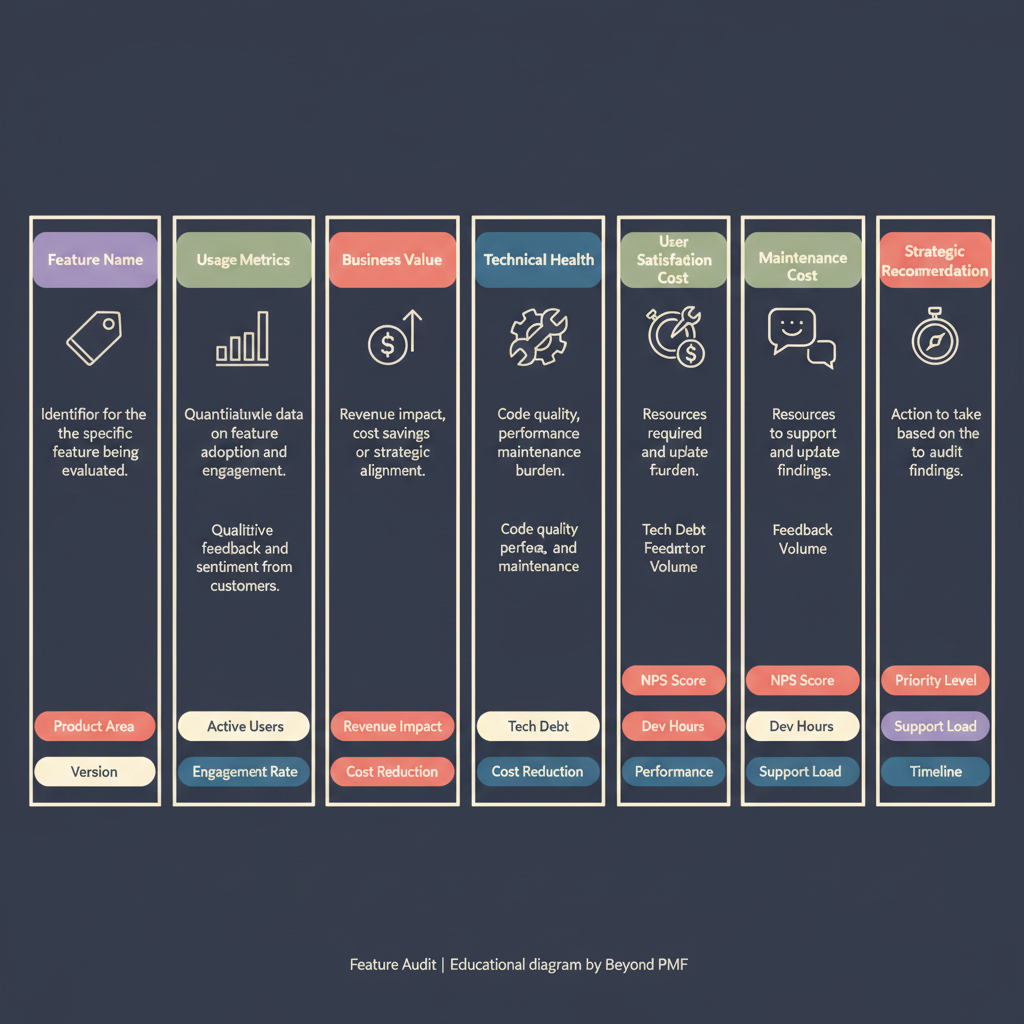
A Feature Audit is a comprehensive framework used by businesses to evaluate the effectiveness and relevance of the features within their products or services. This process involves analyzing each feature to determine its usage, value to the customer, and impact on the overall business goals. The audit helps in identifying features that are underperforming, redundant, or outdated, thereby enabling companies to make informed decisions about feature enhancements, redesigns, or removal.

Steps / Detailed Description

Identify all features of the product or service. | Measure the usage and performance of each feature. | Gather user feedback and satisfaction levels for each feature. | Analyze the alignment of each feature with business objectives. | Decide on enhancements, retention, or removal of features based on the analysis.

Best Practices

Regularly schedule feature audits to keep the product competitive | Involve cross-functional teams to get diverse insights | Use data-driven metrics to assess feature performance

Pros

Improves product relevance and user satisfaction | Helps in prioritizing feature development and resource allocation | Reduces costs by eliminating unnecessary features

Cons

Can be time-consuming | May lead to short-term disruption in product development | Potential resistance from stakeholders attached to existing features

When to Use

When updating or upgrading a product | Before a major product redesign

When Not to Use

In the early stages of product development | When there is insufficient data on feature usage

Related Frameworks

Scope

Scope not defined

Maturity Level

Maturity level not specified

Time to Implement

2–4 Weeks
3–6 Months
1–2 Weeks
3–6 Months
1–2 Months
3–6 Months
1–2 Weeks
Less Than 1 Day
1–2 Weeks
Longer Than 6 Months
1–2 Weeks
Longer Than 6 Months
1–2 Weeks
3–6 Months
1–2 Weeks
1–2 Weeks
1–2 Weeks
1–2 Weeks
1–2 Days
1–2 Weeks
1–2 Weeks
1–2 Weeks
1–2 Weeks
1–2 Weeks
1–2 Weeks
3–6 Months
1–2 Weeks
1–2 Weeks
1–2 Weeks
3–6 Months
1–2 Weeks
1–2 Weeks
2–4 Weeks
1–2 Weeks
1–2 Days
1–2 Weeks
Longer Than 6 Months
3–6 Months
Longer Than 6 Months
1–2 Weeks
Longer Than 6 Months
3–6 Months
Less Than 1 Day
3–6 Months
1–2 Months
3–6 Months
Longer Than 6 Months
3–6 Months
Less Than 1 Day
1–2 Weeks
3–6 Months
3–6 Months
1–2 Weeks
3–6 Months
1–2 Weeks
1–2 Weeks
1–2 Days
1–2 Weeks
1–2 Months
Longer Than 6 Months
1–2 Weeks
Longer Than 6 Months
1–2 Weeks
3–6 Months
1–2 Weeks
Less Than 1 Day
1–2 Weeks
3–6 Months
1–2 Weeks
3–6 Months
1–2 Weeks
1–2 Weeks
Longer Than 6 Months
Less Than 1 Day
3–6 Months
Longer Than 6 Months
1–2 Months
1–2 Weeks
Longer Than 6 Months
1–2 Weeks
3–6 Months
1–2 Weeks
1–2 Weeks
3–6 Months
Less Than 1 Day
1–2 Weeks
1–2 Weeks
3–6 Months
3–6 Months
Less Than 1 Day
1–2 Weeks
Longer Than 6 Months
1–2 Months
1–2 Weeks
1–2 Weeks
1–2 Weeks
Longer Than 6 Months

Copyright Information

Autor:
Public Domain
N/A
Publication:
Generic Business Tool