MOST Framework

https://ik.imagekit.io/beyondpmf/frameworks/most-framework.png
The MOST framework primarily addresses the friction of unclear direction and misaligned priorities. It helps organizations define objectives and strategies, ensuring all activities and decisions support the overarching goals and vision.

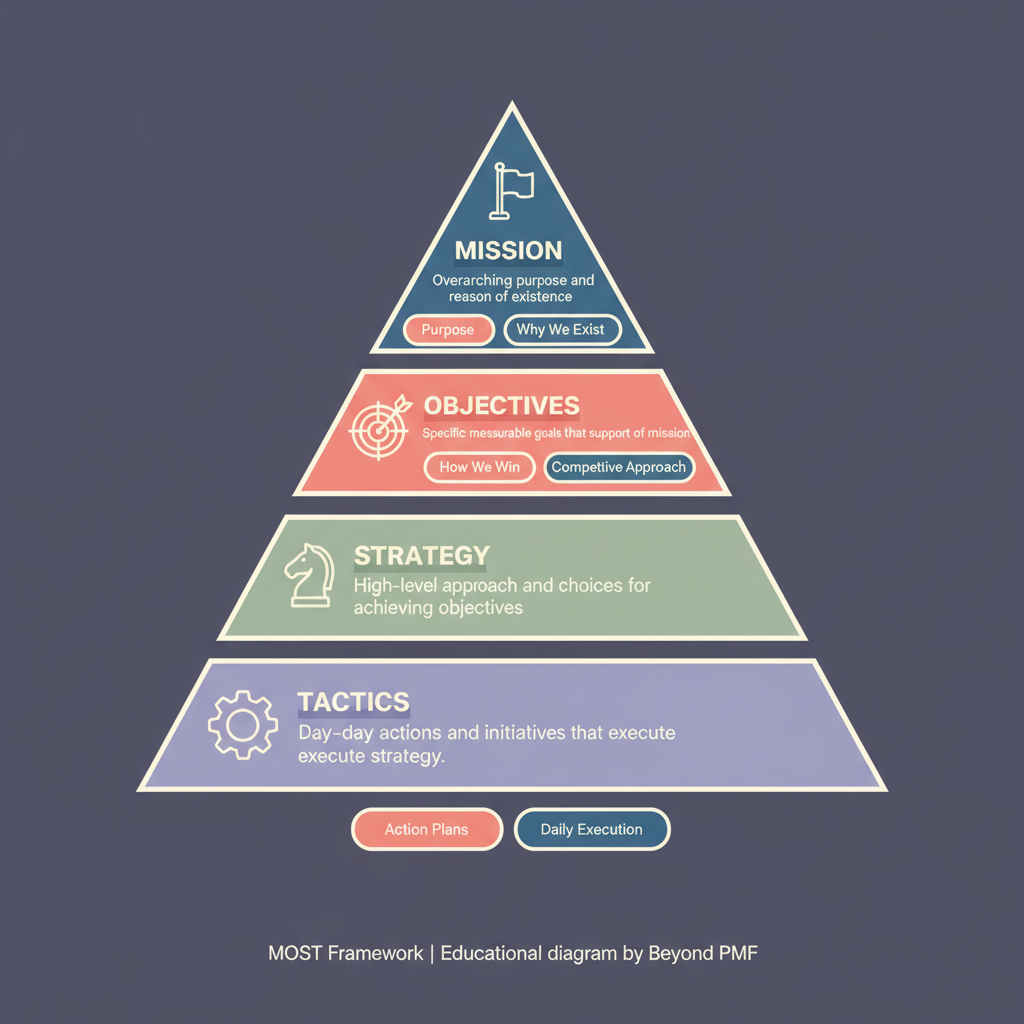
The MOST Framework stands for Mission, Objectives, Strategies, and Tactics. It is a strategic planning tool that helps organizations to align their short-term actions with long-term goals. The framework assists in breaking down the overall mission of the company into specific objectives, strategies to achieve these objectives, and tactics to implement the strategies. This hierarchical approach ensures that every part of the organization works towards common goals, enhancing coherence and efficiency.

Steps / Detailed Description

Define the Mission: Articulate the overarching purpose of the organization. | Set Objectives: Establish clear, measurable goals that need to be achieved to fulfill the mission. | Develop Strategies: Outline approaches to achieve the objectives. | Implement Tactics: Detail the specific actions required to execute the strategies.

Best Practices

Regularly review and update the components to reflect changes in the business environment | Ensure wide participation from different levels of the organization during the planning process | Align the framework with real-time data and feedback for better accuracy

Pros

Provides clear direction and alignment within the organization | Facilitates measurable and achievable goal setting | Enhances strategic thinking and planning

Cons

Can be overly rigid if not updated regularly | May not adapt well to rapid changes in external environments | Requires significant time and effort to implement effectively

When to Use

During the strategic planning phase of an organization | When re-aligning the organization’s goals and operations

When Not to Use

In highly volatile industries where long-term planning is impractical | When the organization requires immediate, reactive strategies rather than planned, strategic approaches

Related Frameworks

Scope

Scope not defined

Maturity Level

Maturity level not specified

Time to Implement

2–4 Weeks
3–6 Months
1–2 Weeks
3–6 Months
1–2 Months
3–6 Months
1–2 Weeks
Less Than 1 Day
1–2 Weeks
Longer Than 6 Months
1–2 Weeks
Longer Than 6 Months
1–2 Weeks
3–6 Months
1–2 Weeks
1–2 Weeks
1–2 Weeks
1–2 Weeks
1–2 Days
1–2 Weeks
1–2 Weeks
1–2 Weeks
1–2 Weeks
1–2 Weeks
1–2 Weeks
3–6 Months
1–2 Weeks
1–2 Weeks
1–2 Weeks
3–6 Months
1–2 Weeks
1–2 Weeks
2–4 Weeks
1–2 Weeks
1–2 Days
1–2 Weeks
Longer Than 6 Months
3–6 Months
Longer Than 6 Months
1–2 Weeks
Longer Than 6 Months
3–6 Months
Less Than 1 Day
3–6 Months
1–2 Months
3–6 Months
Longer Than 6 Months
3–6 Months
Less Than 1 Day
1–2 Weeks
3–6 Months
3–6 Months
1–2 Weeks
3–6 Months
1–2 Weeks
1–2 Weeks
1–2 Days
1–2 Weeks
1–2 Months
Longer Than 6 Months
1–2 Weeks
Longer Than 6 Months
1–2 Weeks
3–6 Months
1–2 Weeks
Less Than 1 Day
1–2 Weeks
3–6 Months
1–2 Weeks
3–6 Months
1–2 Weeks
1–2 Weeks
Longer Than 6 Months
Less Than 1 Day
3–6 Months
Longer Than 6 Months
1–2 Months
1–2 Weeks
Longer Than 6 Months
1–2 Weeks
3–6 Months
1–2 Weeks
1–2 Weeks
3–6 Months
Less Than 1 Day
1–2 Weeks
1–2 Weeks
3–6 Months
3–6 Months
Less Than 1 Day
1–2 Weeks
Longer Than 6 Months
1–2 Months
1–2 Weeks
1–2 Weeks
1–2 Weeks
Longer Than 6 Months

Copyright Information

Autor:
Unknown
N/A
Publication:
Unknown