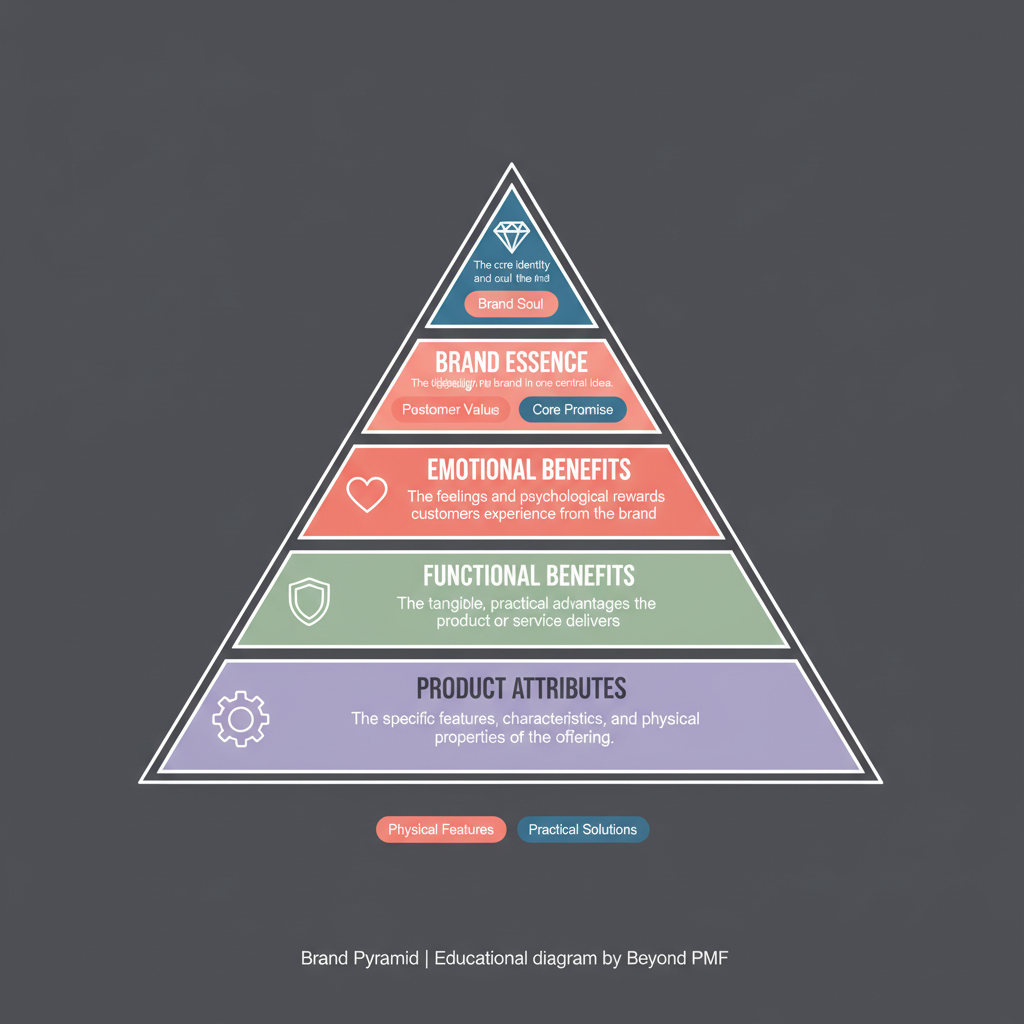
Brand Pyramid

https://ik.imagekit.io/beyondpmf/frameworks/brand-pyramid.png
The Brand Pyramid primarily addresses strategic friction by providing a framework to define a brand's core purpose, values, and positioning, thereby clarifying the brand's direction and market alignment. It helps articulate the brand's identity from functional attributes to emotional connections, reducing ambiguity in brand strategy.

The Brand Pyramid is a framework that helps marketers and brand managers visualize the building blocks of a brand's identity, starting from basic attributes and moving up to emotional benefits and brand personality. It is used to ensure a consistent brand message and to deepen the brand's connection with its customers. The pyramid structure helps in prioritizing marketing efforts and aligning them with the brand's core values and customer expectations, ultimately enhancing brand loyalty and recognition.

Steps / Detailed Description

  • Identify basic features and attributes of the product or service.
  • Define the functional benefits that the features provide to the customer.
  • Determine the emotional benefits that arise from the functional benefits.
  • Articulate the brand personality, which is how the brand expresses itself.
  • Establish the brand essence, the core value that is central to the brand.

Best Practices

  • Regularly update the pyramid to reflect changes in consumer behavior and market conditions.
  • Involve stakeholders from different departments to gain comprehensive insights.
  • Use consumer feedback and market research to validate and refine the pyramid.

Pros

  • Provides a clear structure for understanding brand elements.
  • Helps in aligning marketing strategies with core brand values.
  • Enhances emotional connection with the target audience.

Cons

  • Can be overly simplistic for complex brands.
  • May not capture the dynamic nature of brand perceptions over time.
  • Requires deep market and consumer insights to be effective.

When to Use

  • During the initial branding or rebranding process.
  • When refining marketing strategies to enhance brand alignment.

When Not to Use

  • For brands in highly fluctuating markets where consumer perceptions change rapidly.
  • When the brand's market positioning is already well-established and clear.

Related Frameworks

Maturity Level

Time to Implement

1–2 Weeks

Copyright Information

Autor:
Public Domain
N/A
Publication:
Generic Business Tool