
Translating vision into strategic choices and focus areas.
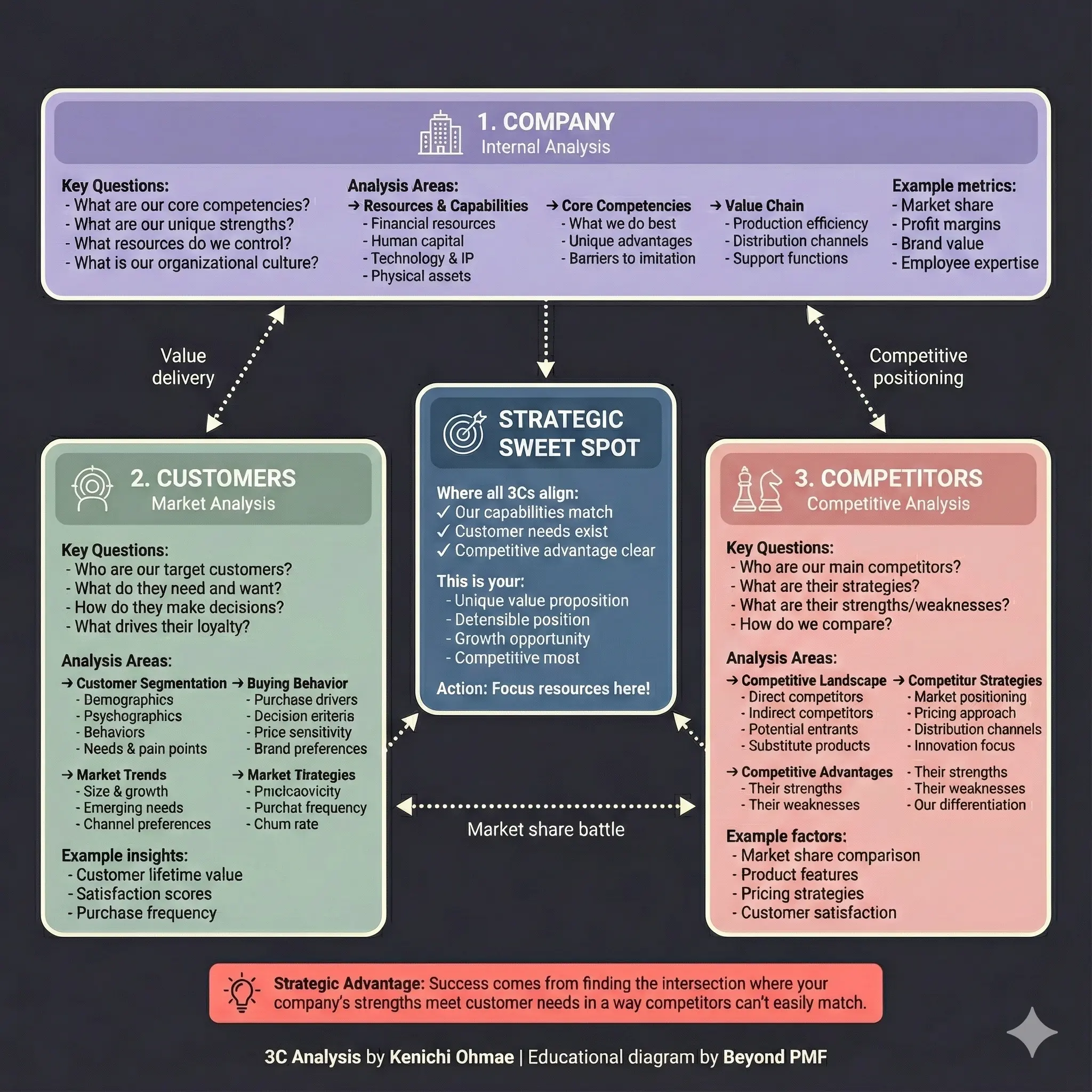
3C Analysis is a business framework that focuses on understanding the core factors influencing a company's strategic positioning.

The 4Cs Framework is a strategic tool used in marketing to focus on the consumer, cost, convenience, and communication.

The Ansoff Matrix is a strategic planning tool used to identify and evaluate opportunities for growth within a business.

Backward Planning Framework is a strategic approach that starts with defining the desired end goal and works backwards to identify the steps needed to achieve it.
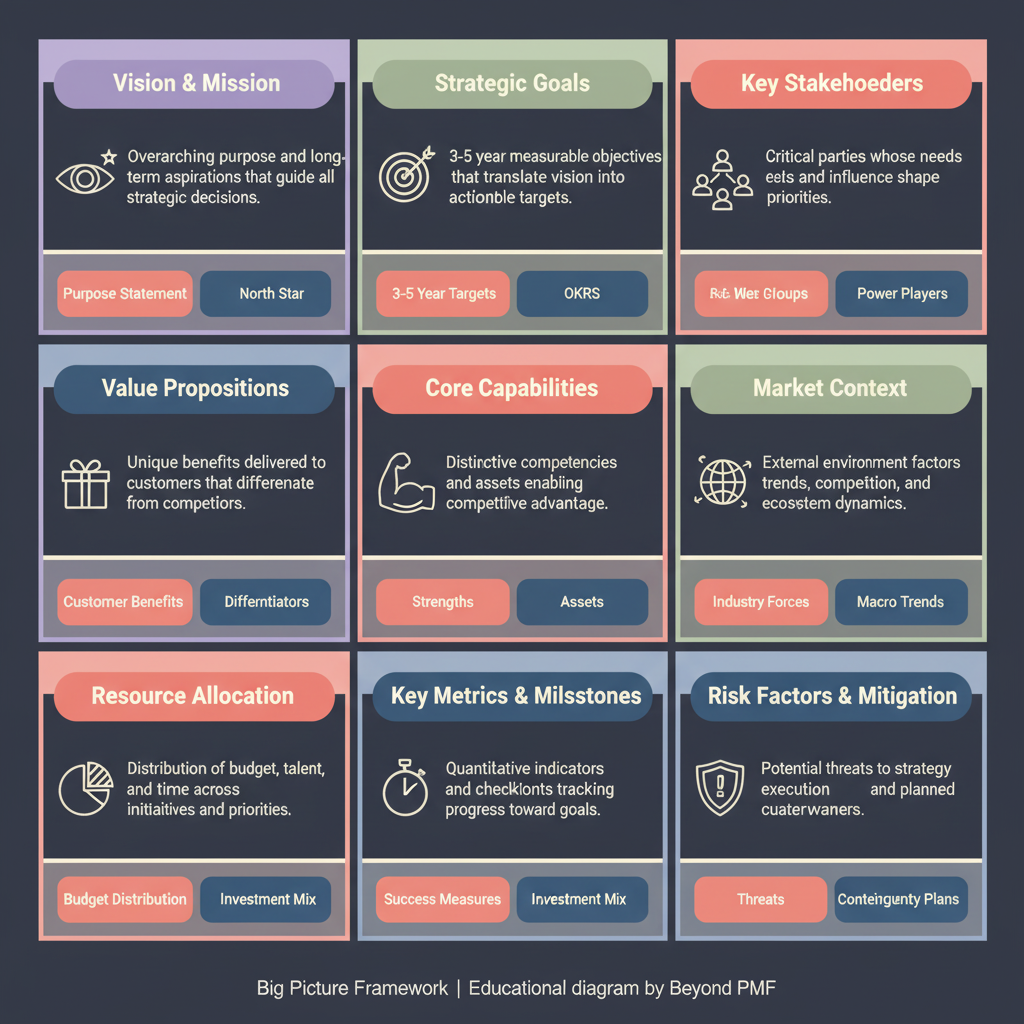
The Big Picture Framework is a strategic tool used to align company operations with long-term goals.
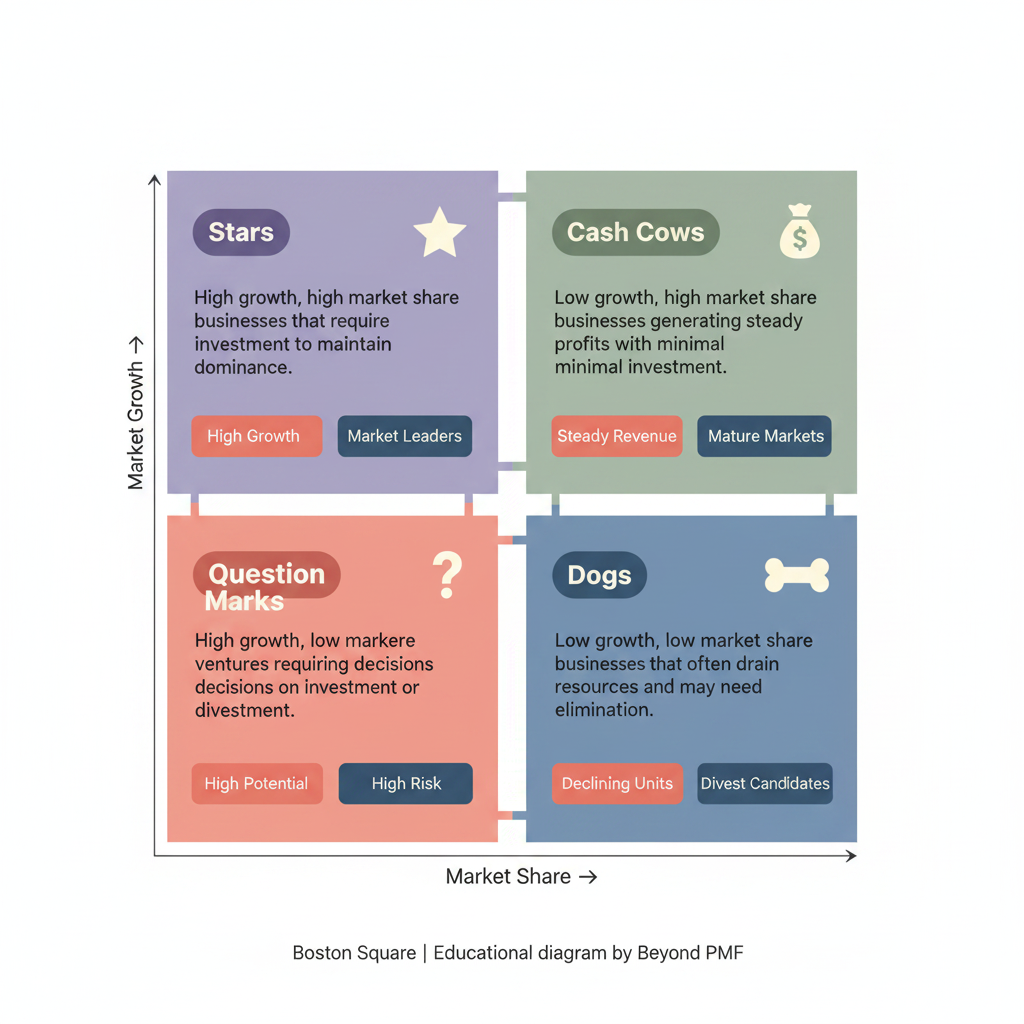
The Boston Square, often confused with the Boston Consulting Group Matrix, is a lesser-known strategic tool used in business analysis.
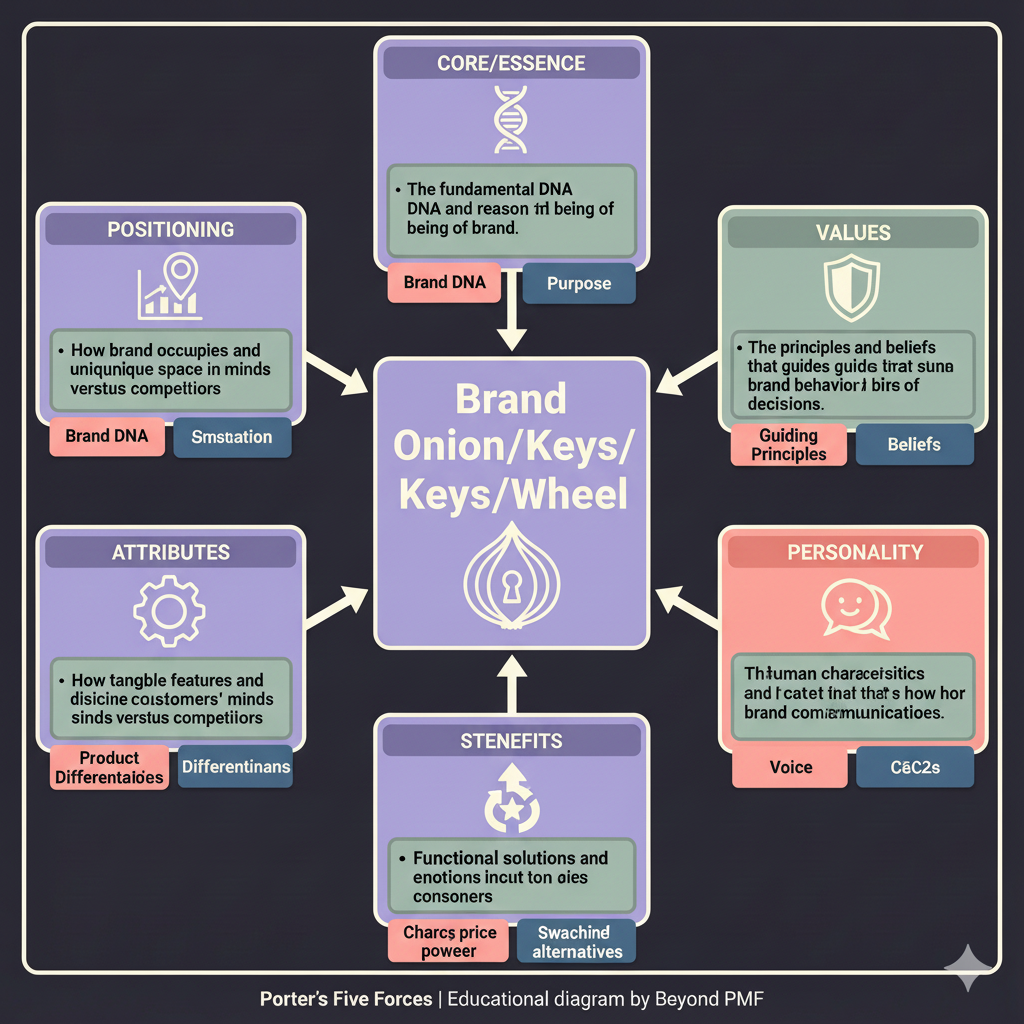
The Brand Onion/Keys/Wheel is a strategic tool used to define and articulate the core elements of a brand's identity.
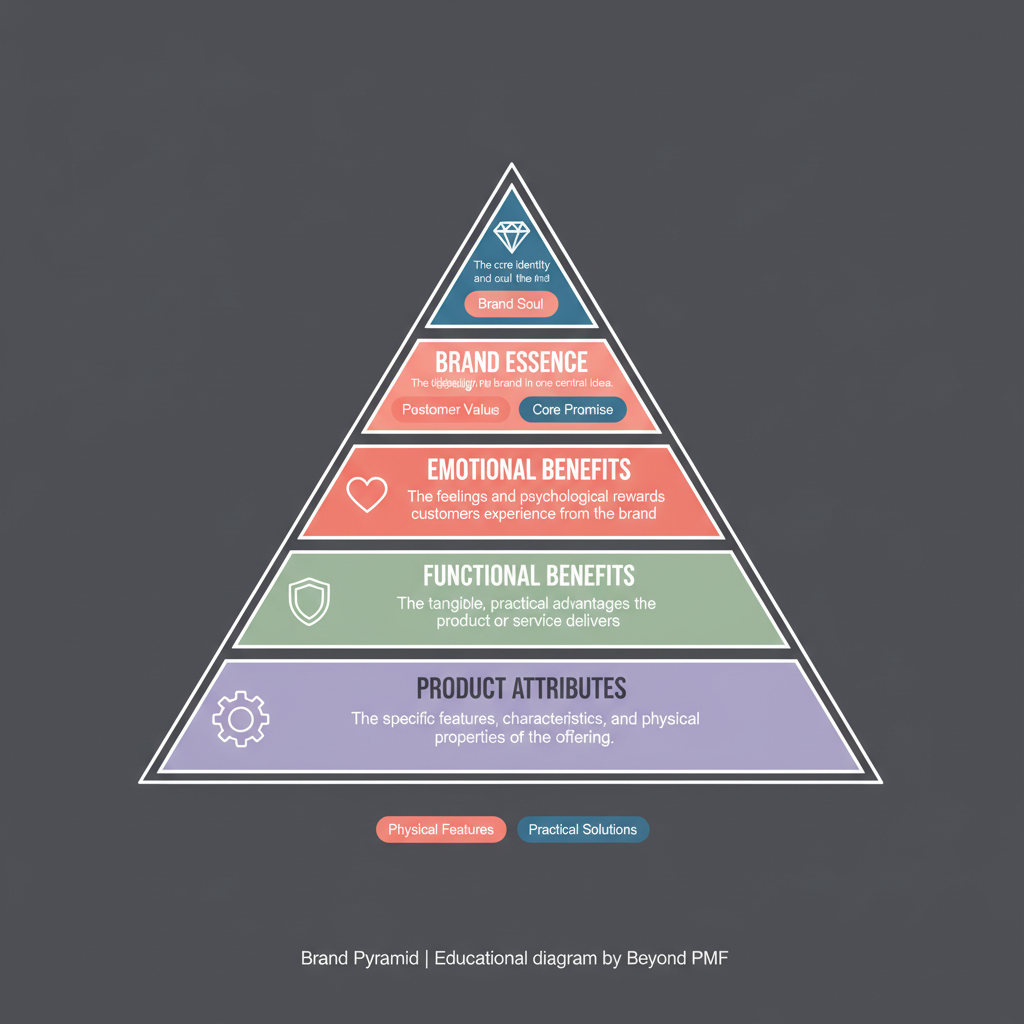
The Brand Pyramid is a strategic tool used to define and articulate a brand's layers from functional attributes to emotional consumer connections.
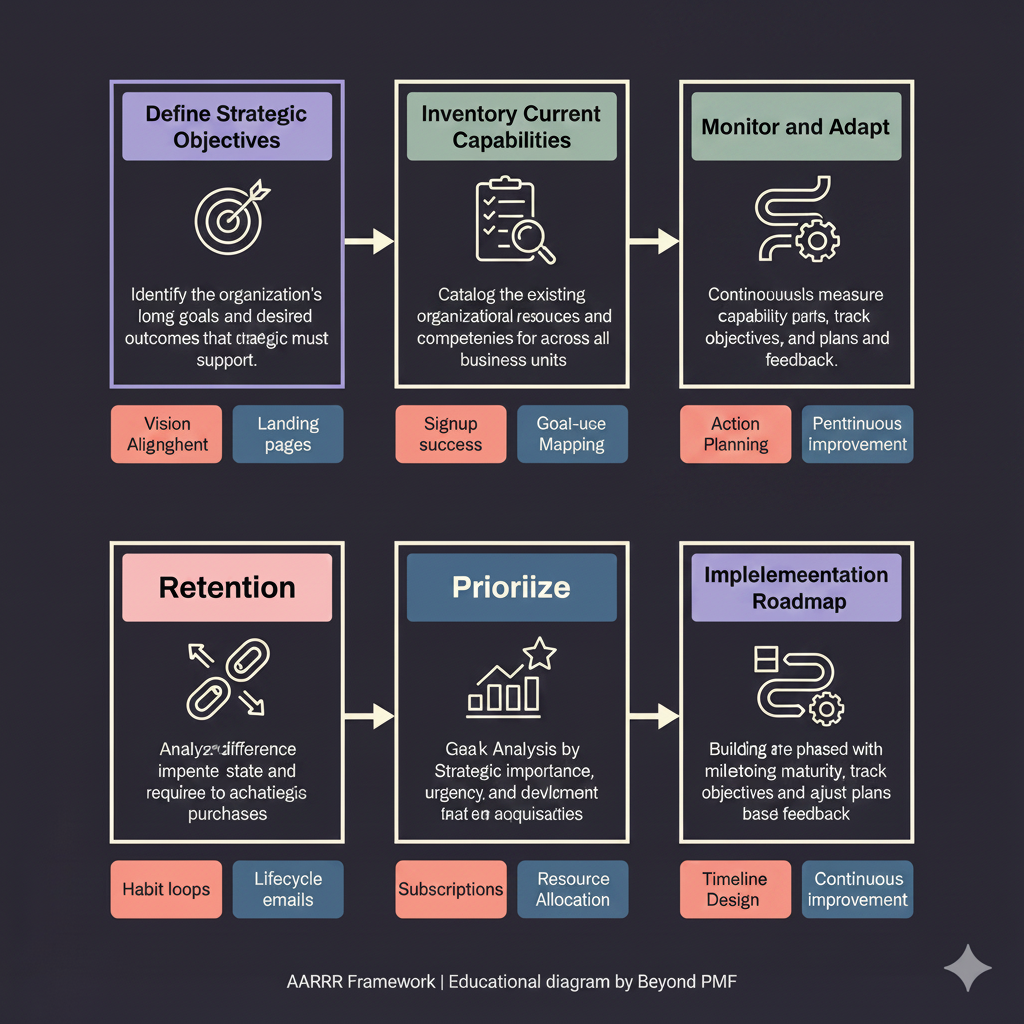
Capability-Based Planning is a strategic approach used to align organizational capabilities with business goals and customer needs.
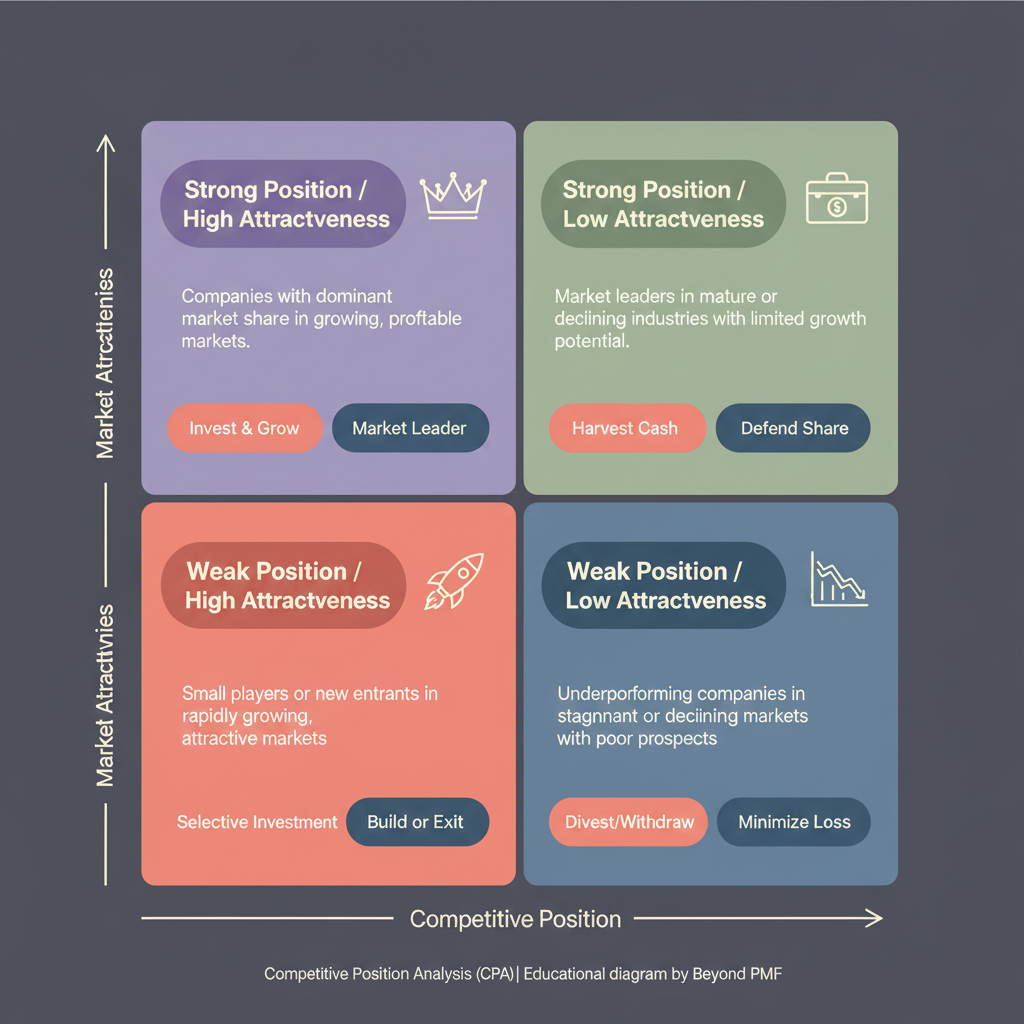
Competitive Position Analysis (CPA) is a strategic tool used to evaluate a company's competitive standing within its industry.
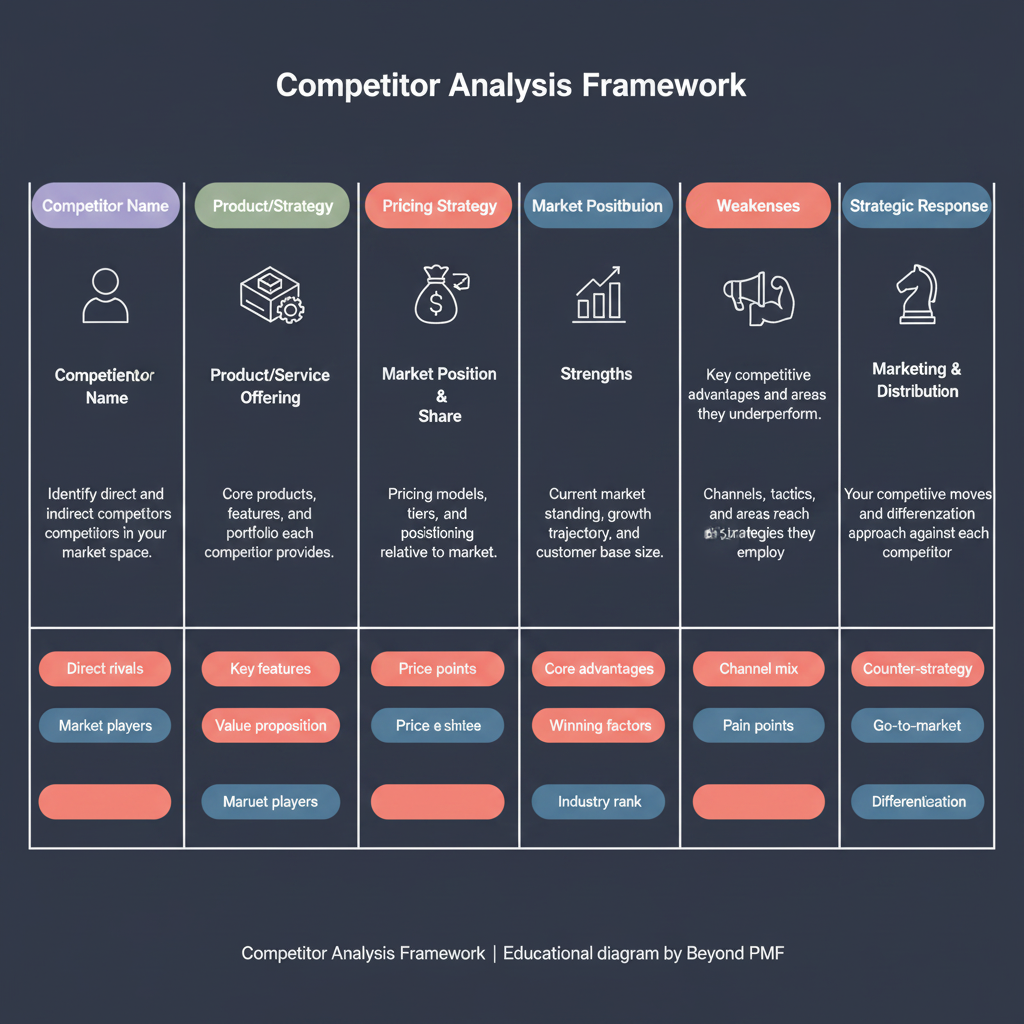
The Competitor Analysis Framework is a strategic tool used to evaluate the competitive landscape in which a business operates.
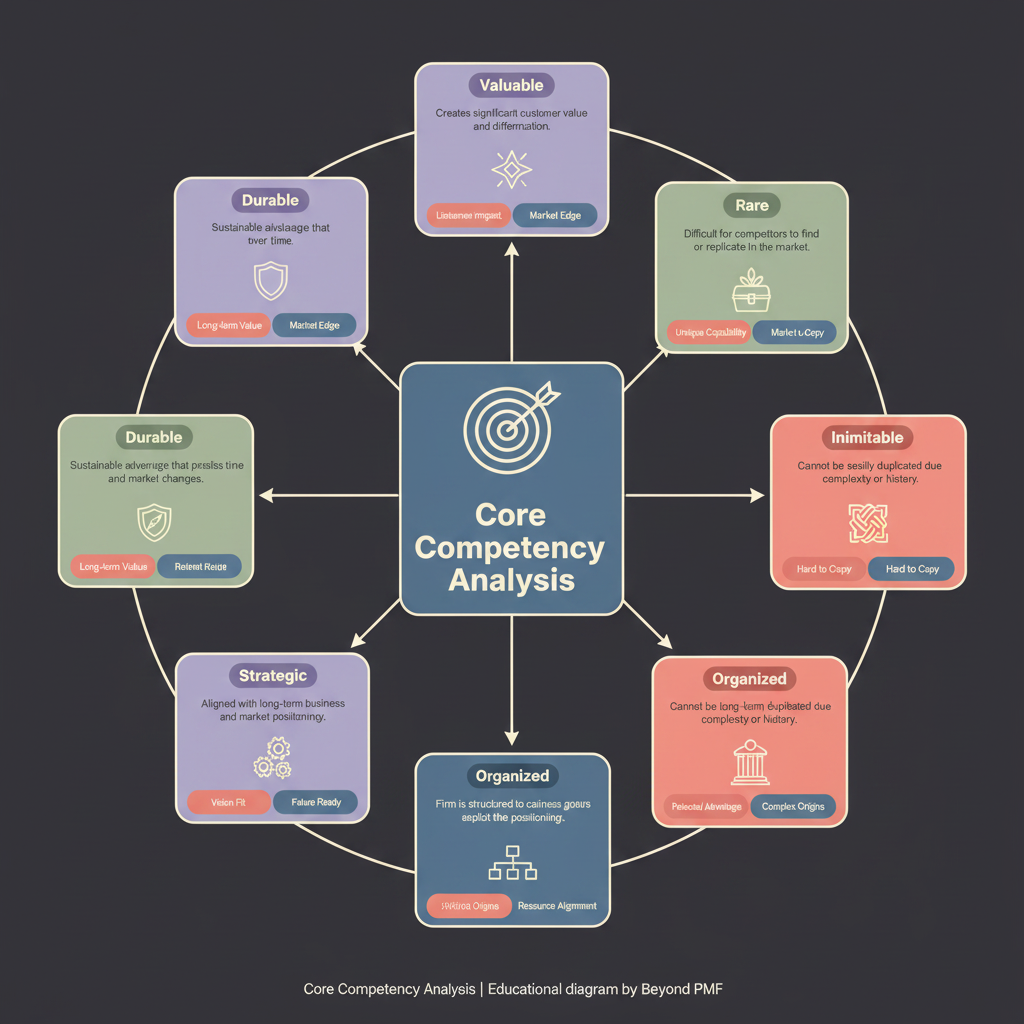
Core Competency Analysis is a strategic tool used to identify and evaluate the unique strengths of a business that competitors cannot easily replicate or imitate.
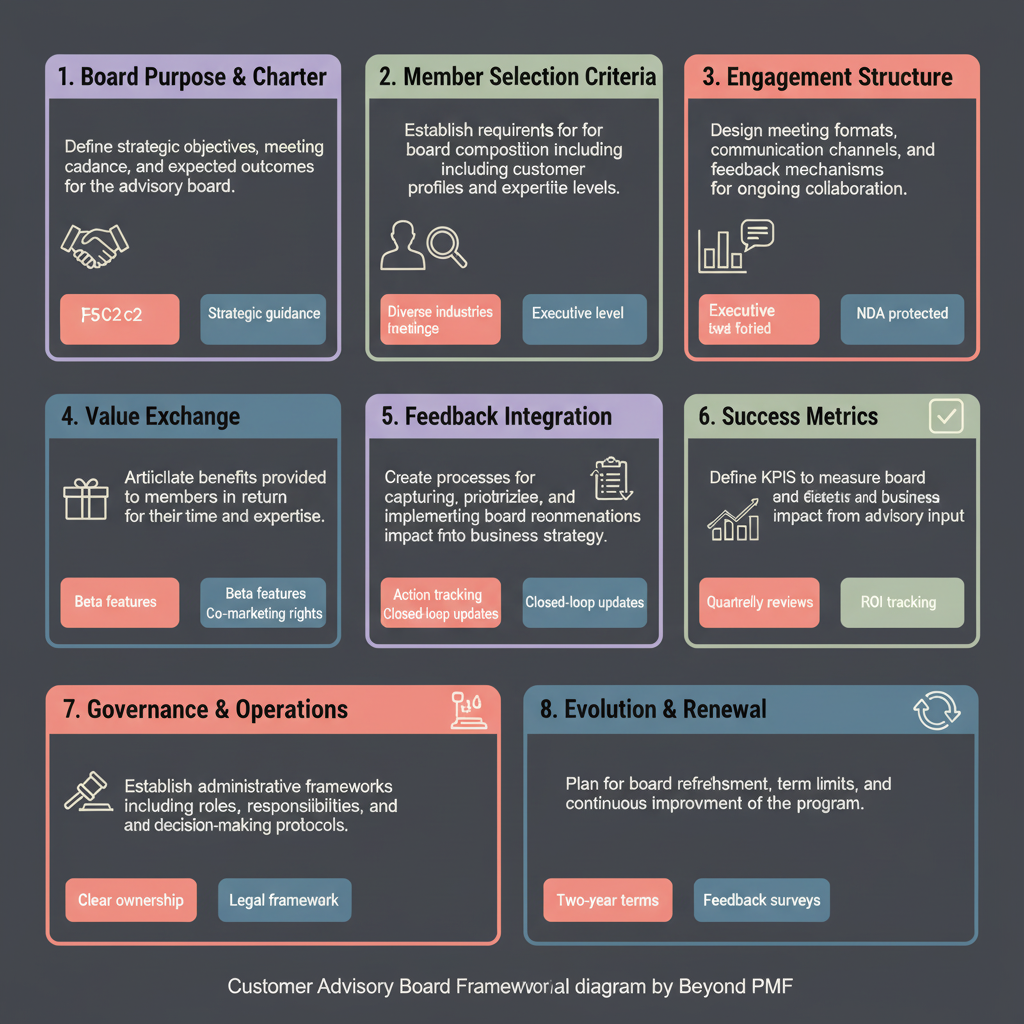
The Customer Advisory Board Framework is a strategic approach for engaging key customers to guide company decisions and product development.
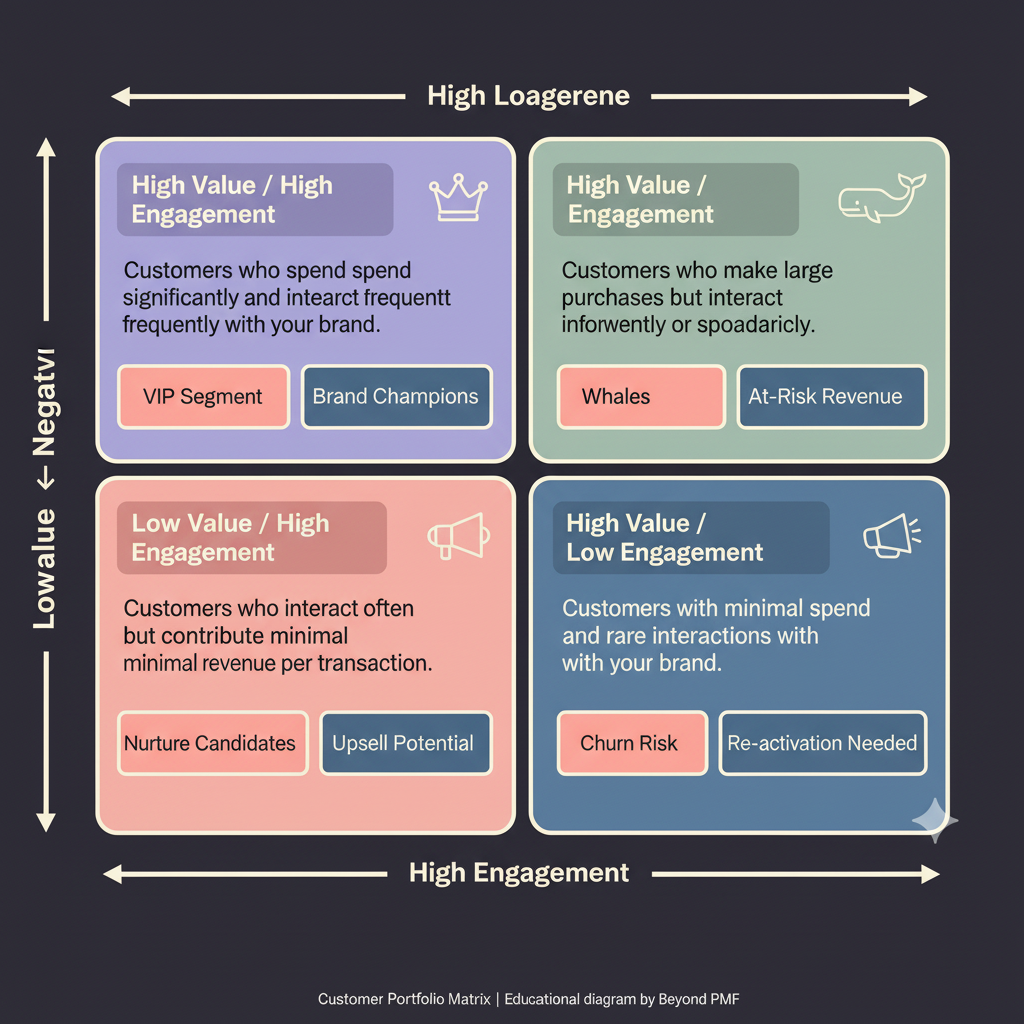
The Customer Portfolio Matrix is a strategic tool used to analyze customer segments and optimize resource allocation.

The Digital Experience Framework is a strategic model used to enhance user interaction across digital platforms.
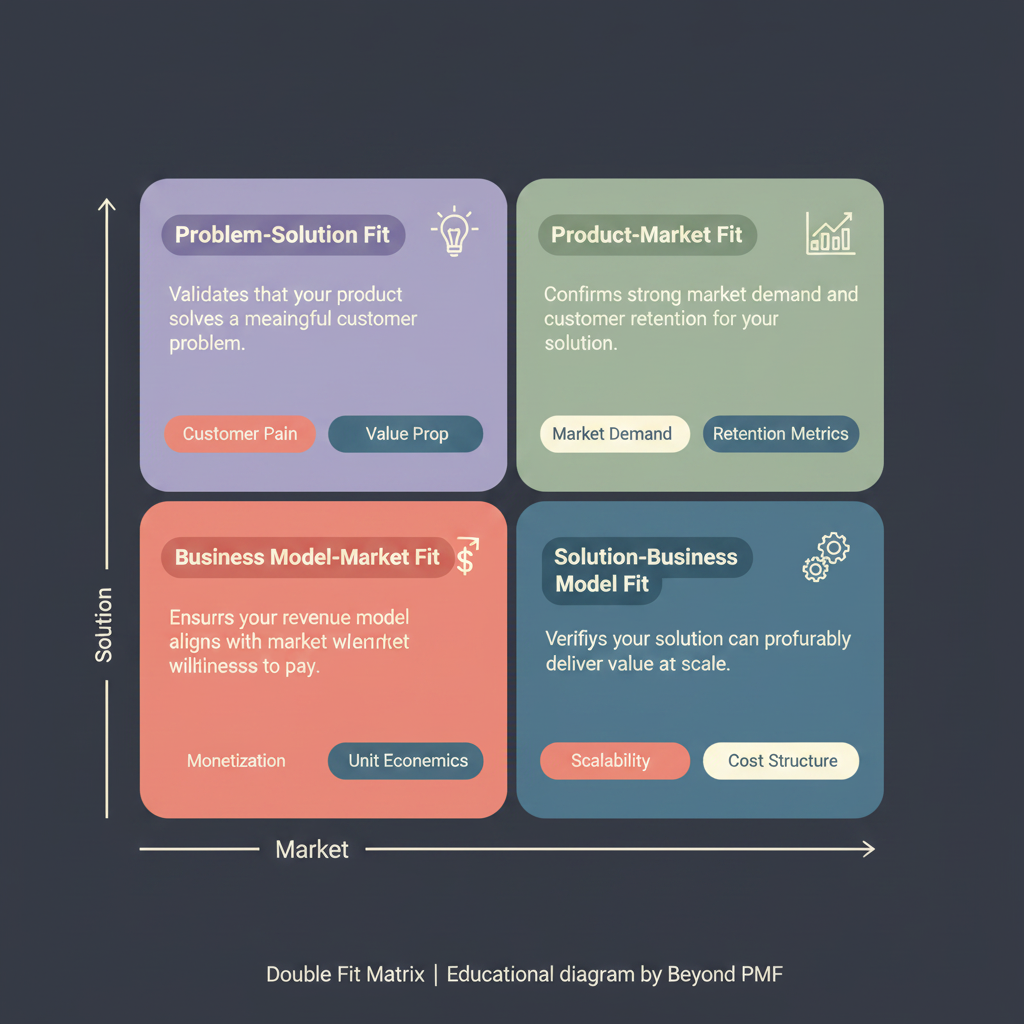
The Double Fit Matrix is a strategic tool used to evaluate the alignment between two sets of variables, typically in business or organizational contexts.
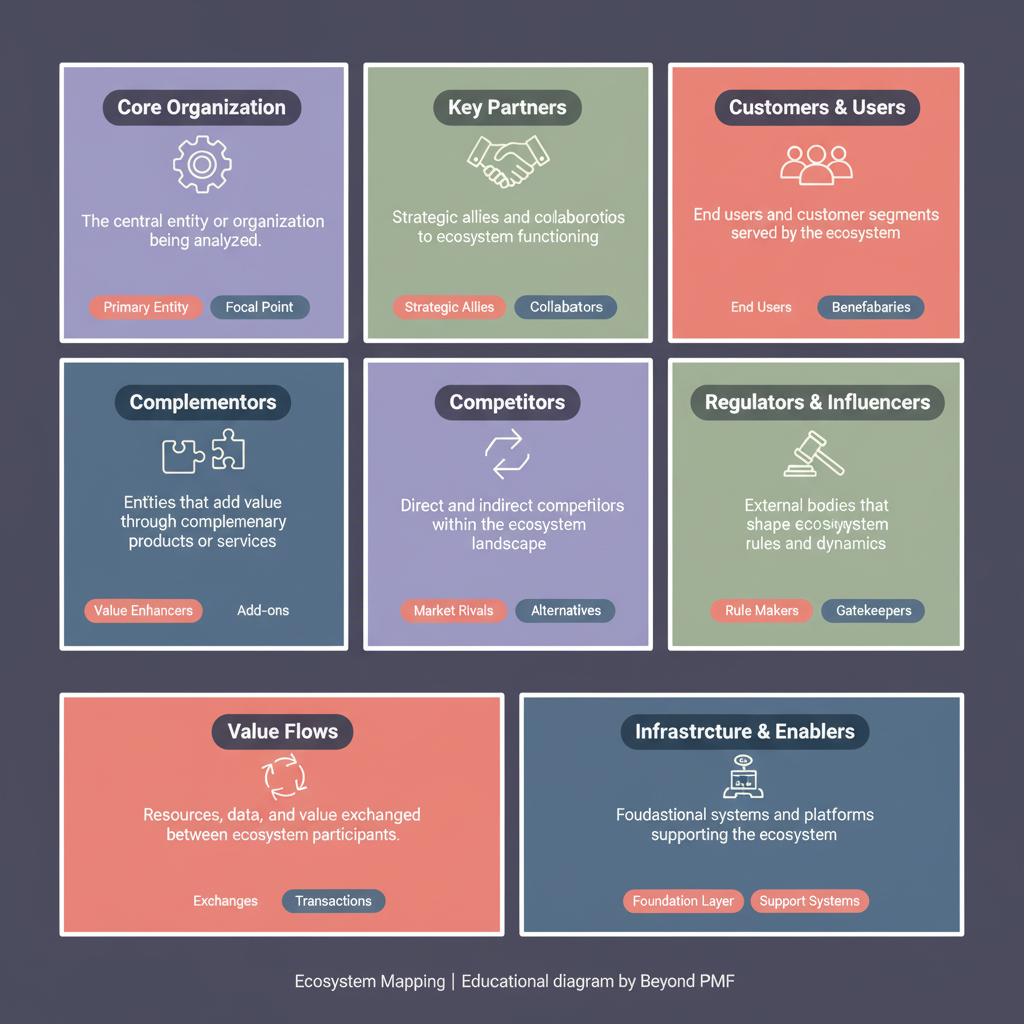
Ecosystem Mapping is a strategic tool used to visualize and analyze the relationships and interactions within a business environment.
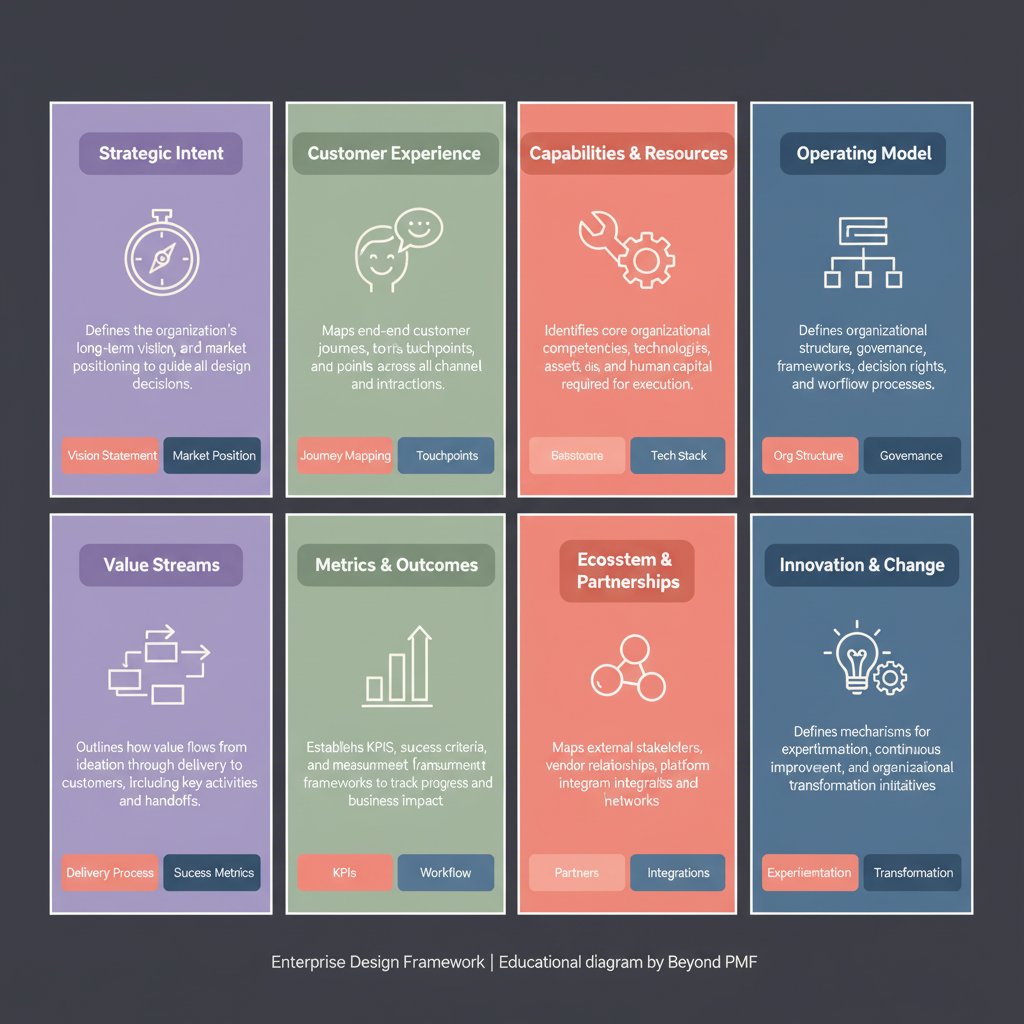
The Enterprise Design Framework is a comprehensive approach to align business strategies with design principles to enhance organizational performance.
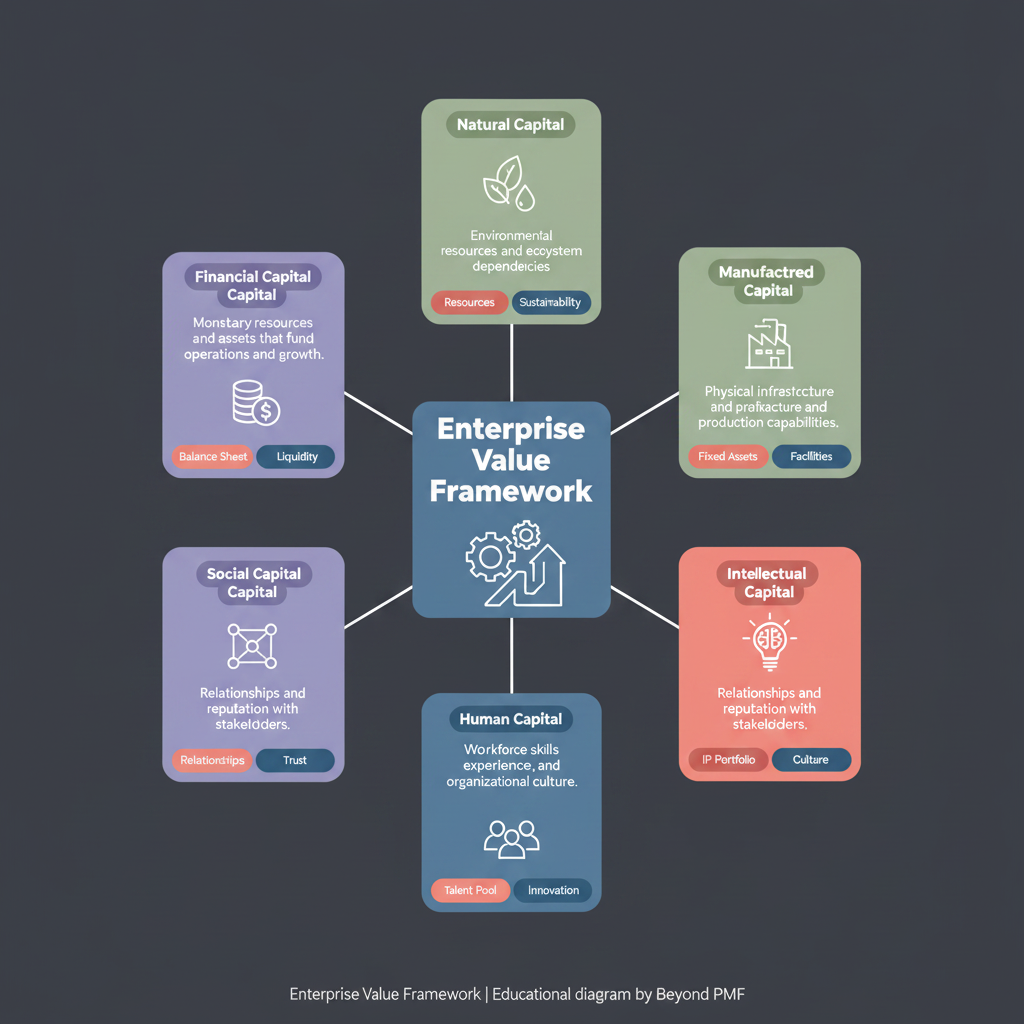
The Enterprise Value Framework is a strategic tool used to assess and enhance the value creation potential of a company.
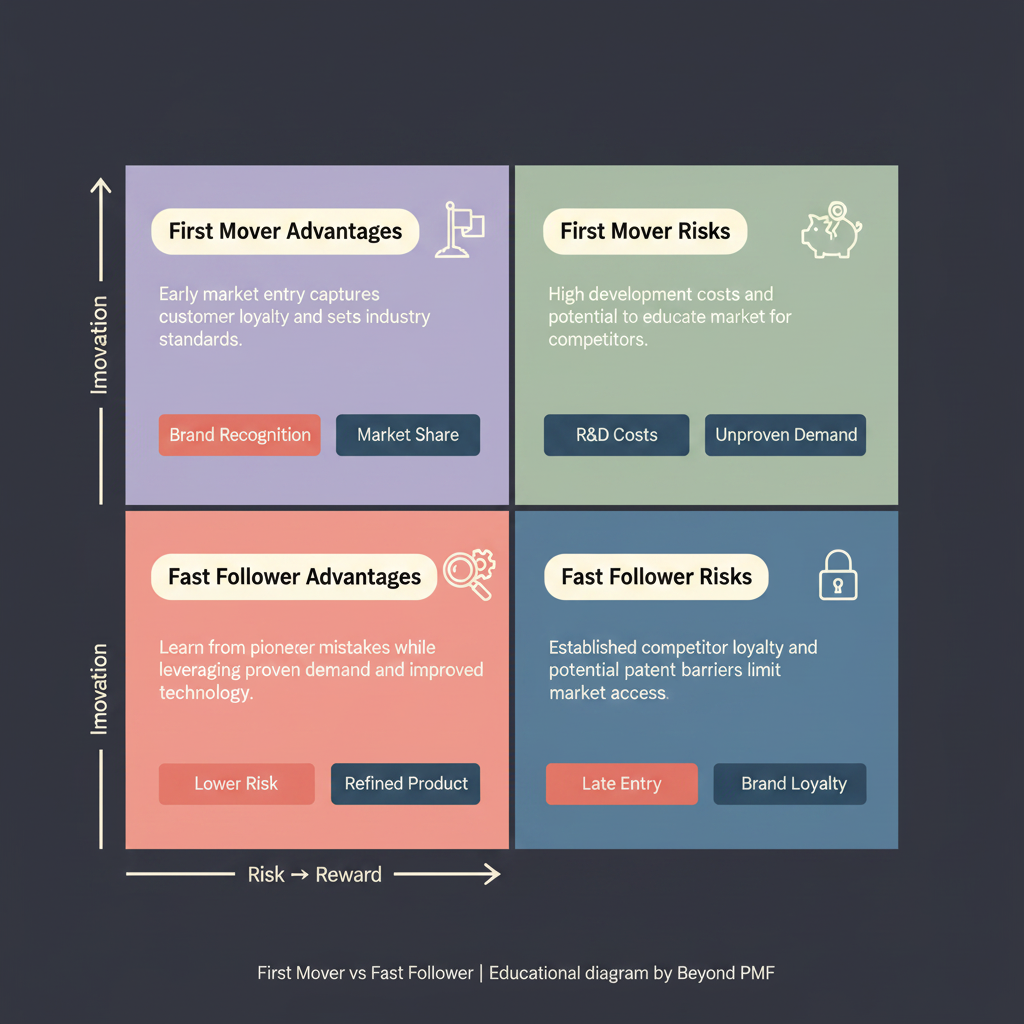
This framework analyzes the strategic positioning between being the first to market (First Mover) and entering the market after competitors have established a presence (Fast Follower).
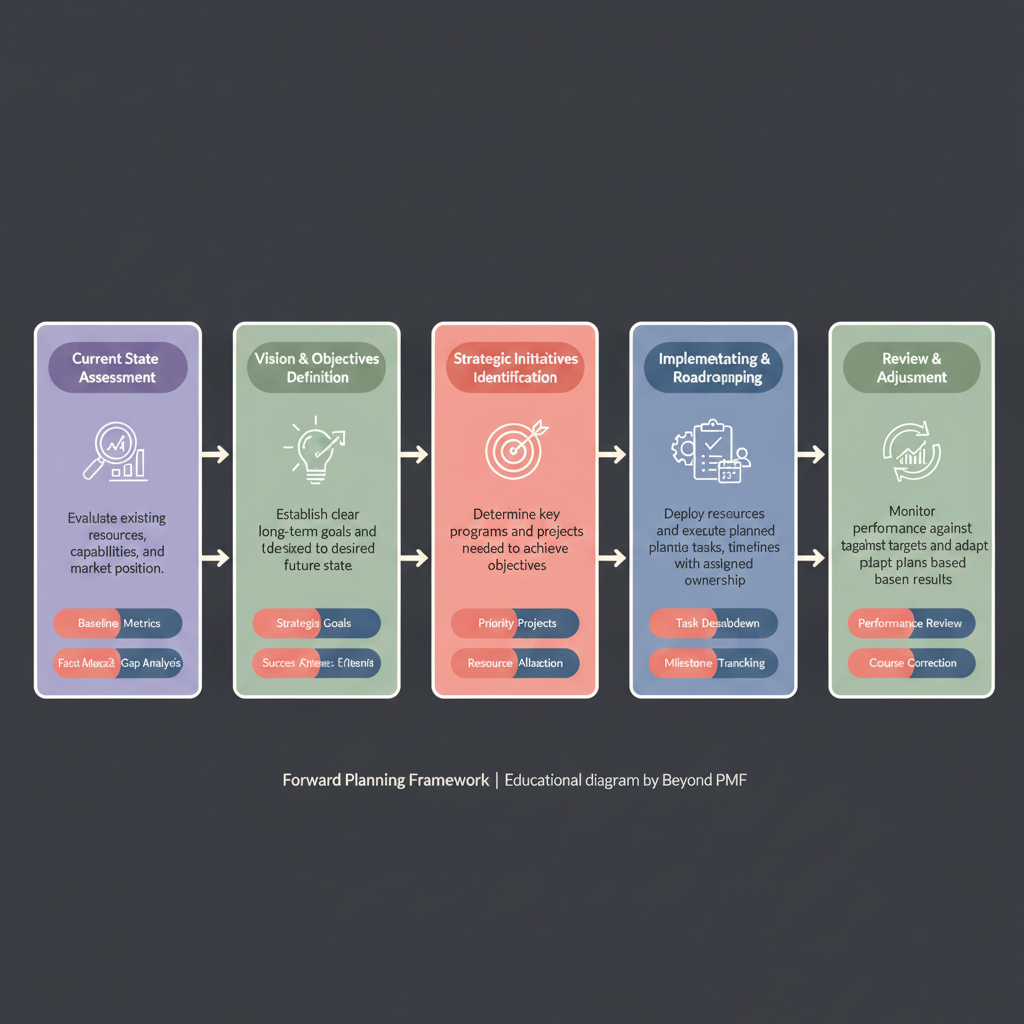
The Forward Planning Framework is a strategic tool used to guide organizations in setting long-term objectives and aligning resources to achieve these goals.
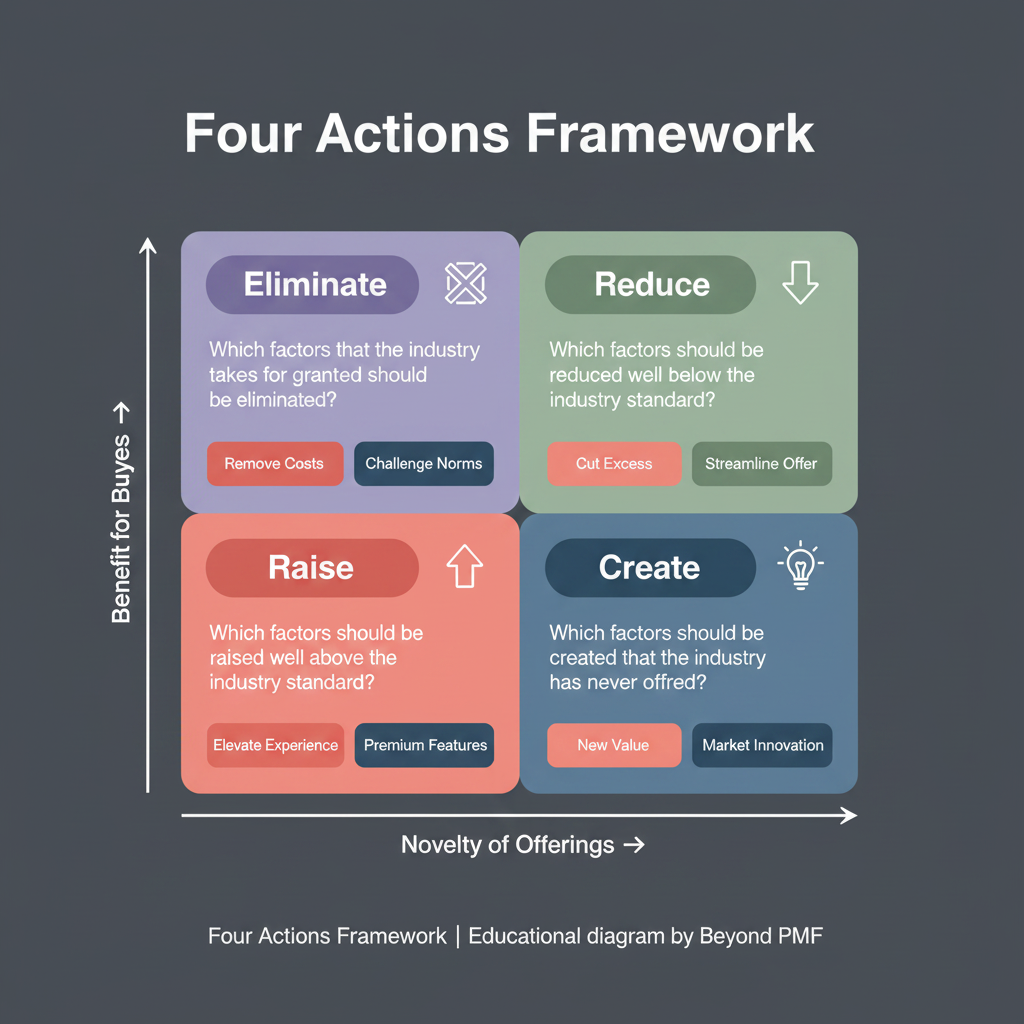
The Four Actions Framework is a strategic tool used to reconstruct market boundaries and create new value propositions.
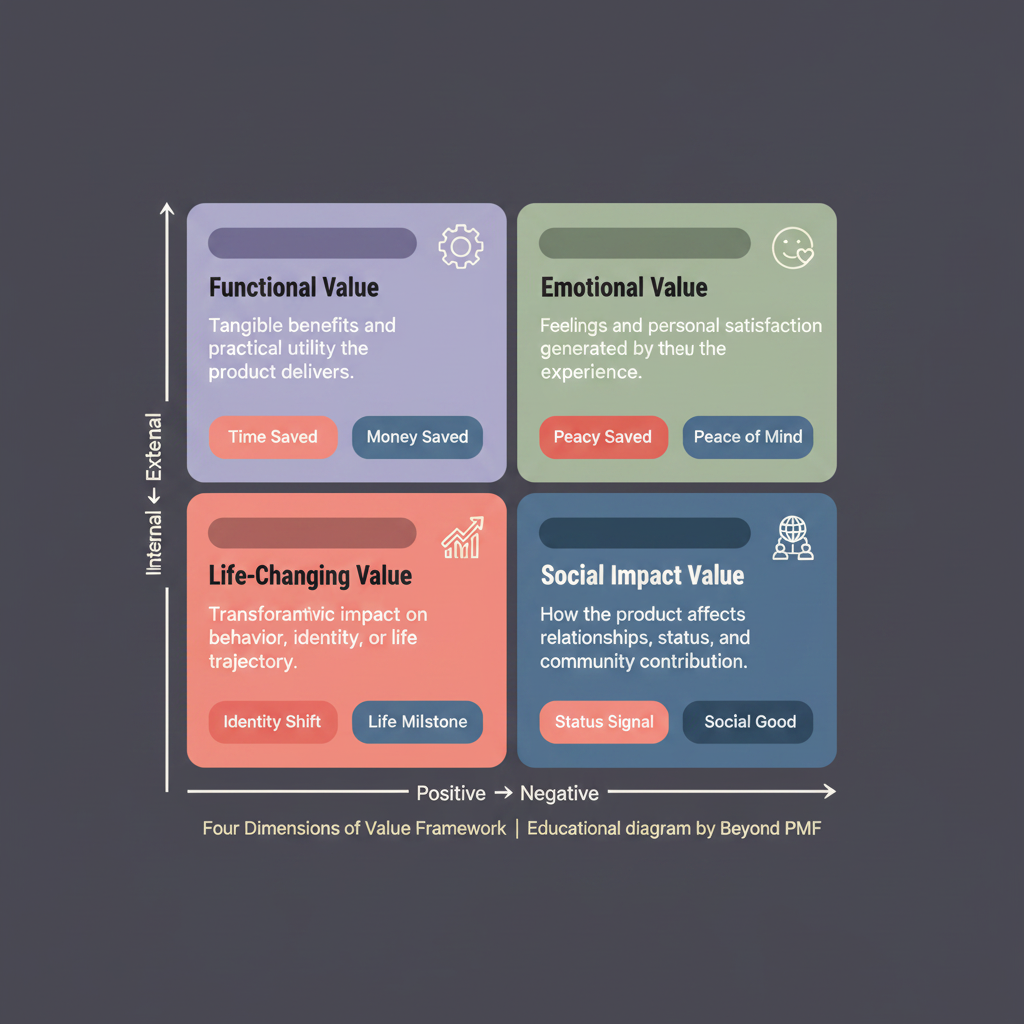
The Four Dimensions of Value Framework is a strategic tool used to assess and enhance value creation across four key dimensions in a business context.
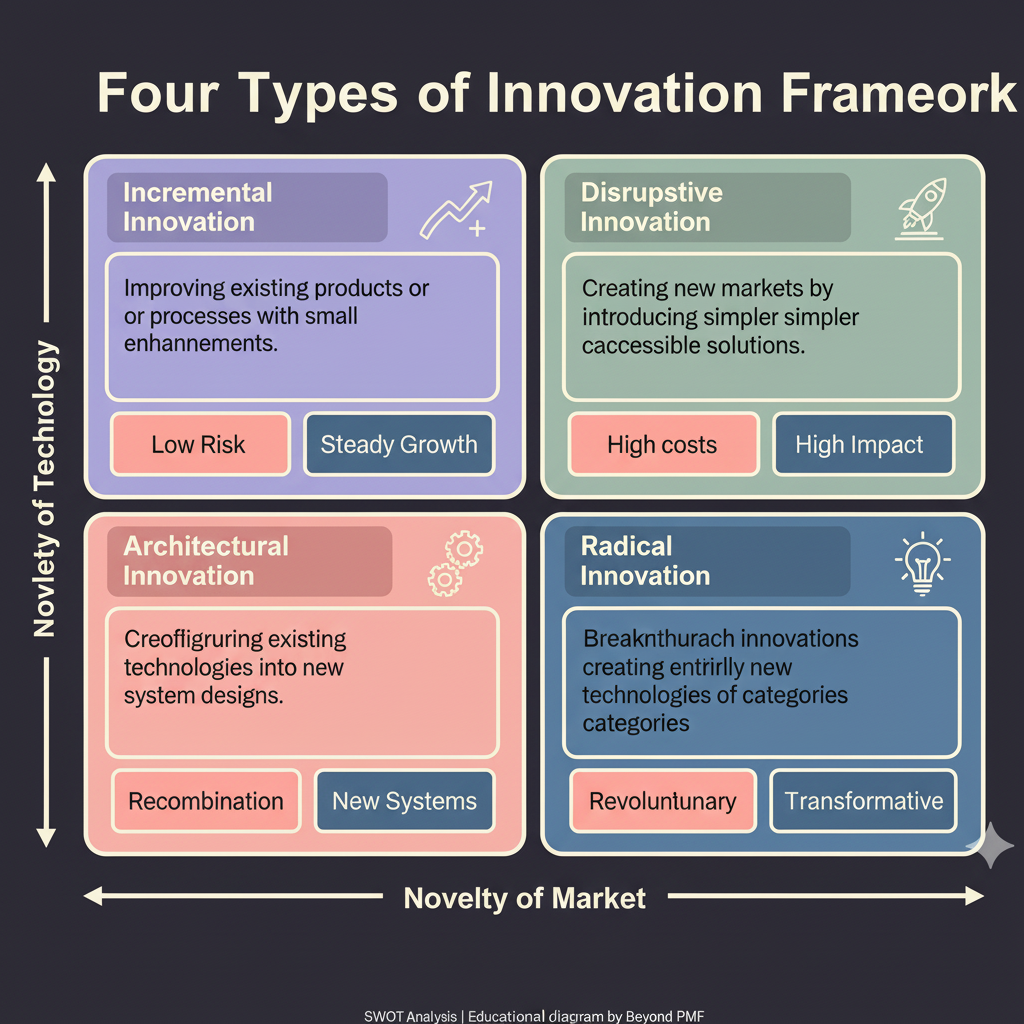
The Four Types of Innovation Framework categorizes innovation into four distinct types, helping organizations to strategically approach product and service development.
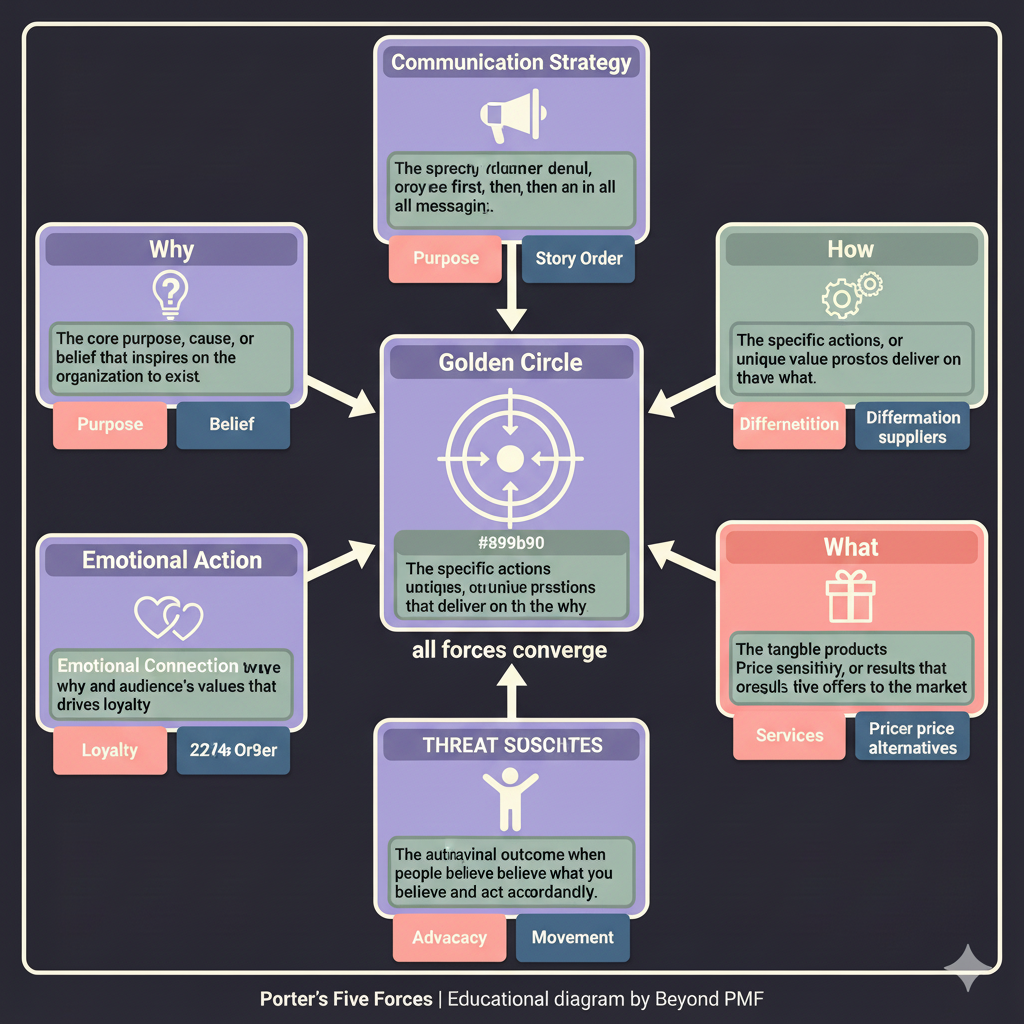
The Golden Circle is a strategic framework developed by Simon Sinek, focusing on organizational purpose and leadership.
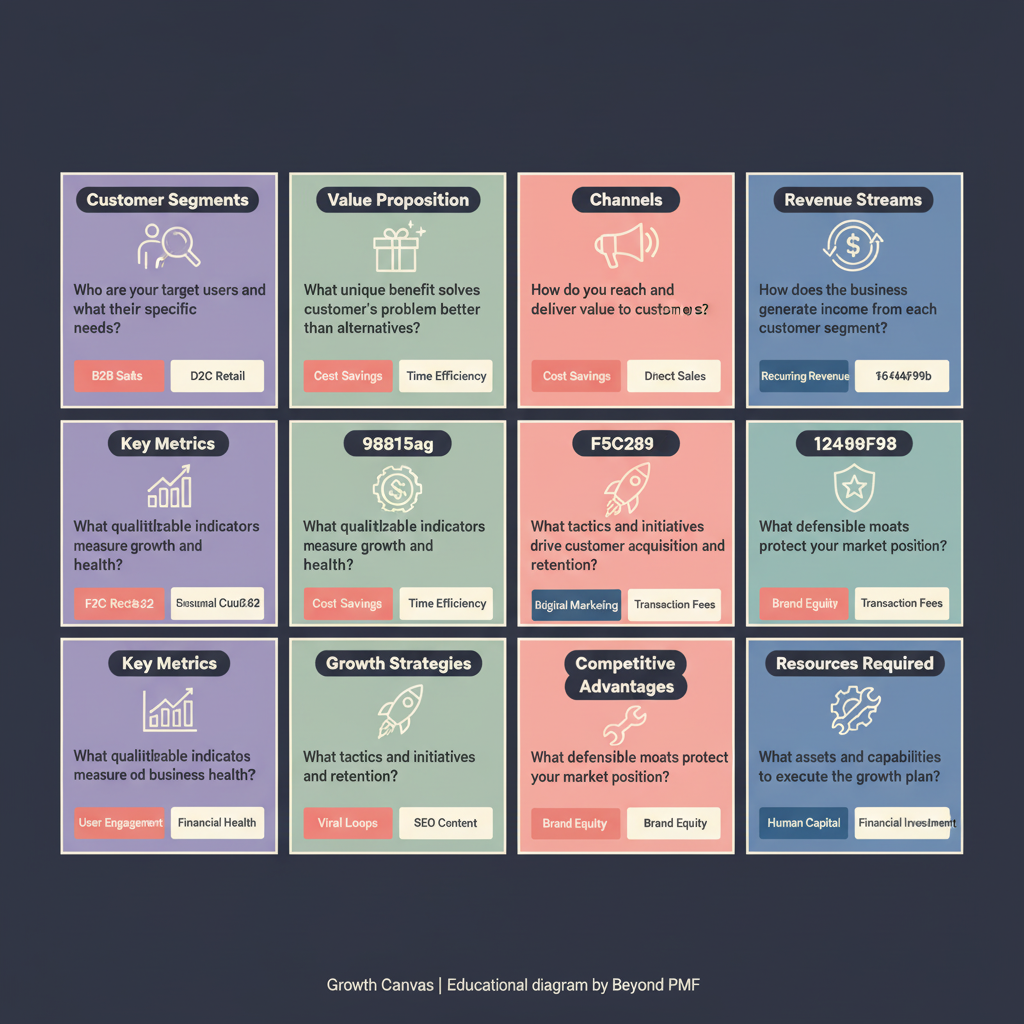
The Growth Canvas is a strategic tool used to map out paths for business growth and innovation.
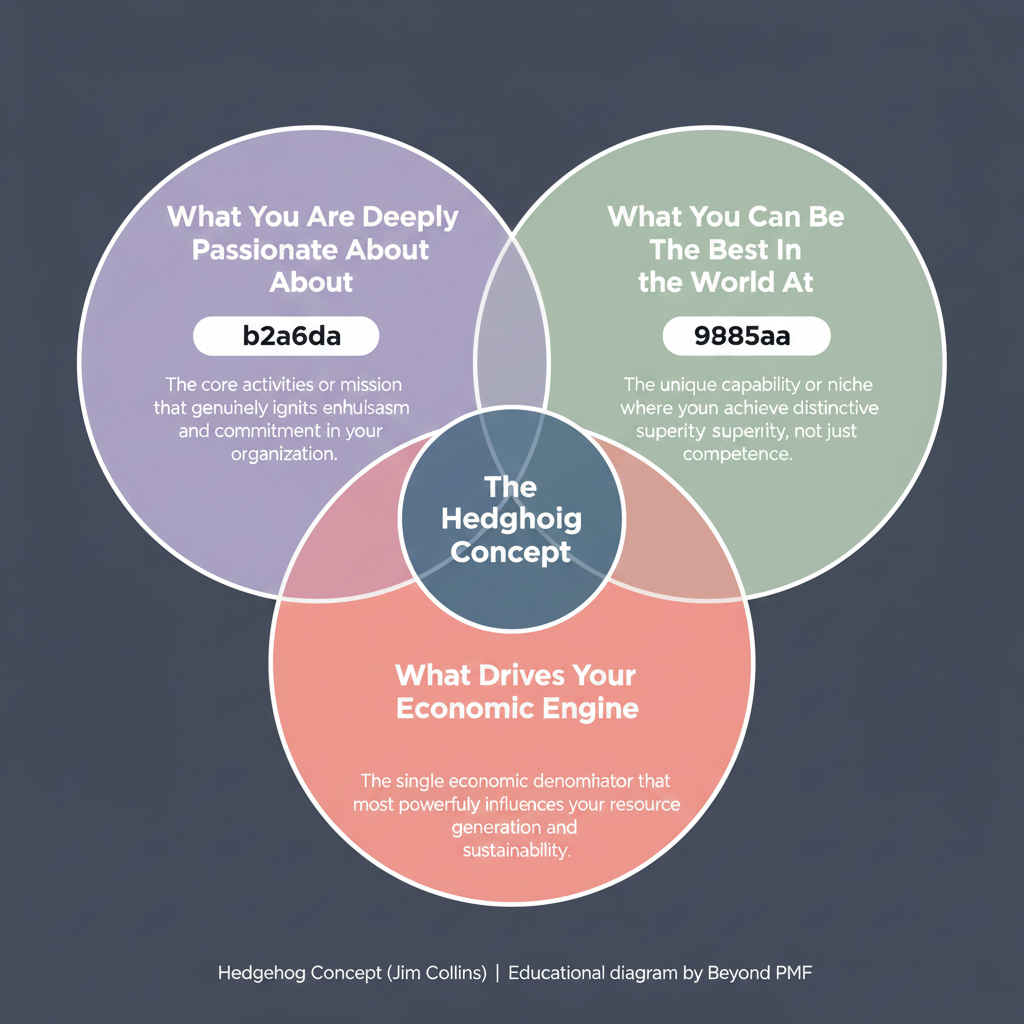
The Hedgehog Concept is a strategic approach that helps organizations identify their core focus to achieve long-term success.
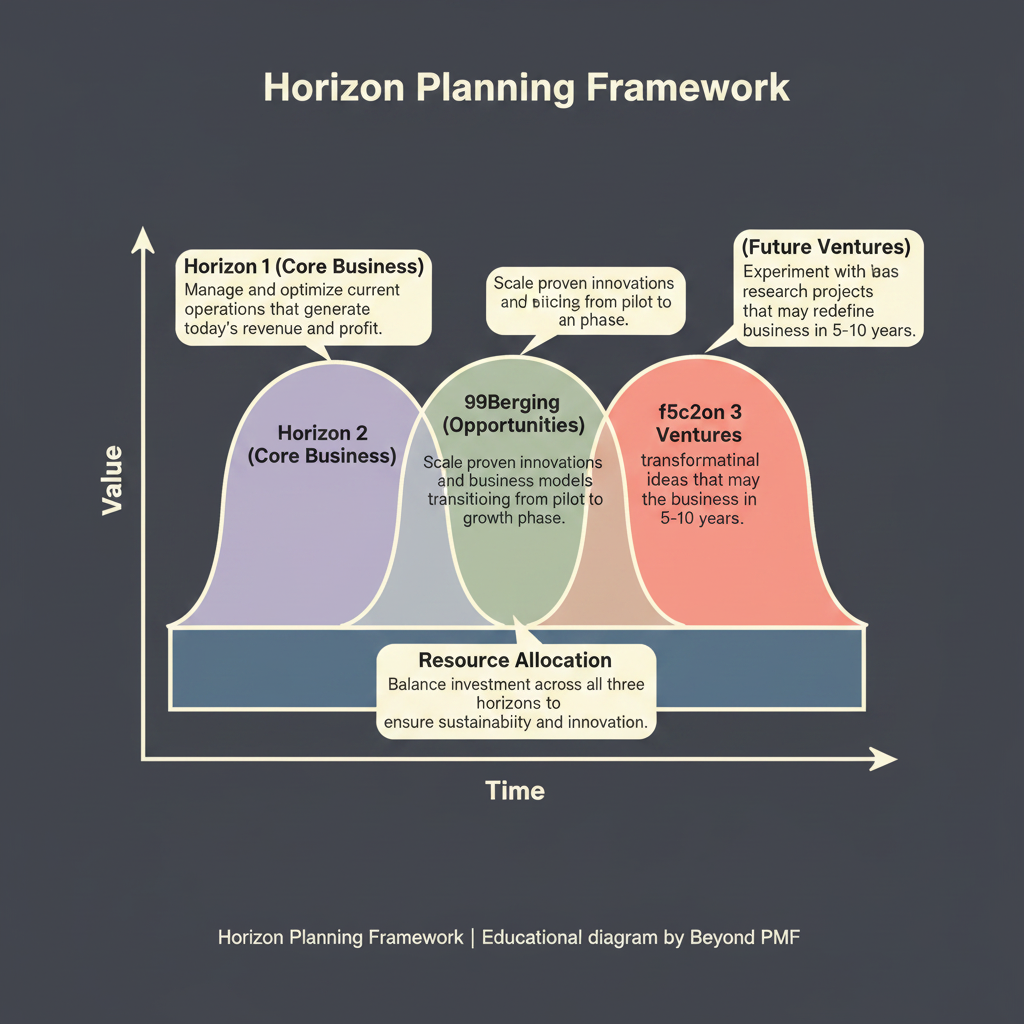
The Horizon Planning Framework is a strategic tool used to manage growth and innovation by categorizing initiatives into different time frames or 'horizons'.
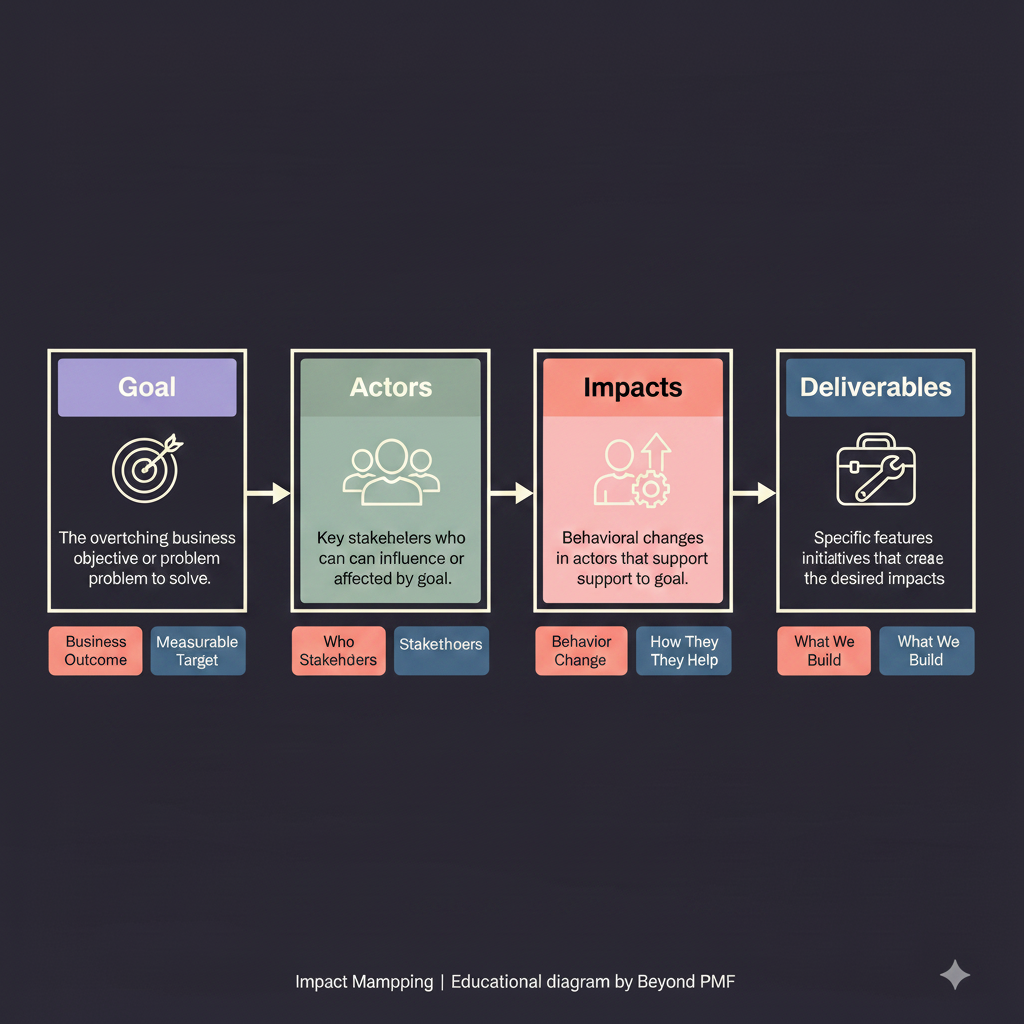
Impact Mapping is a strategic planning technique that helps organizations build better products and deliver projects more effectively by visualizing the impact of their efforts.
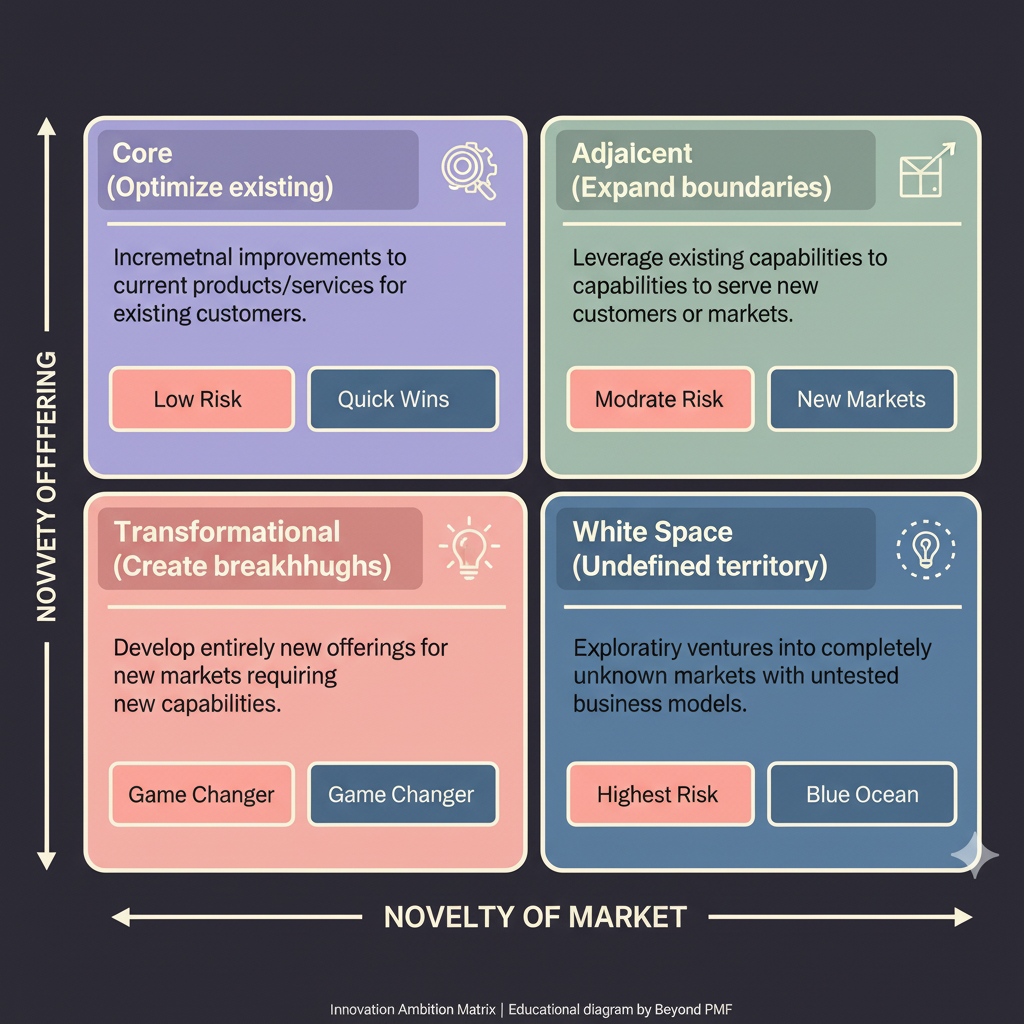
The Innovation Ambition Matrix is a strategic tool used to categorize and prioritize innovation initiatives based on their market impact and technological novelty.
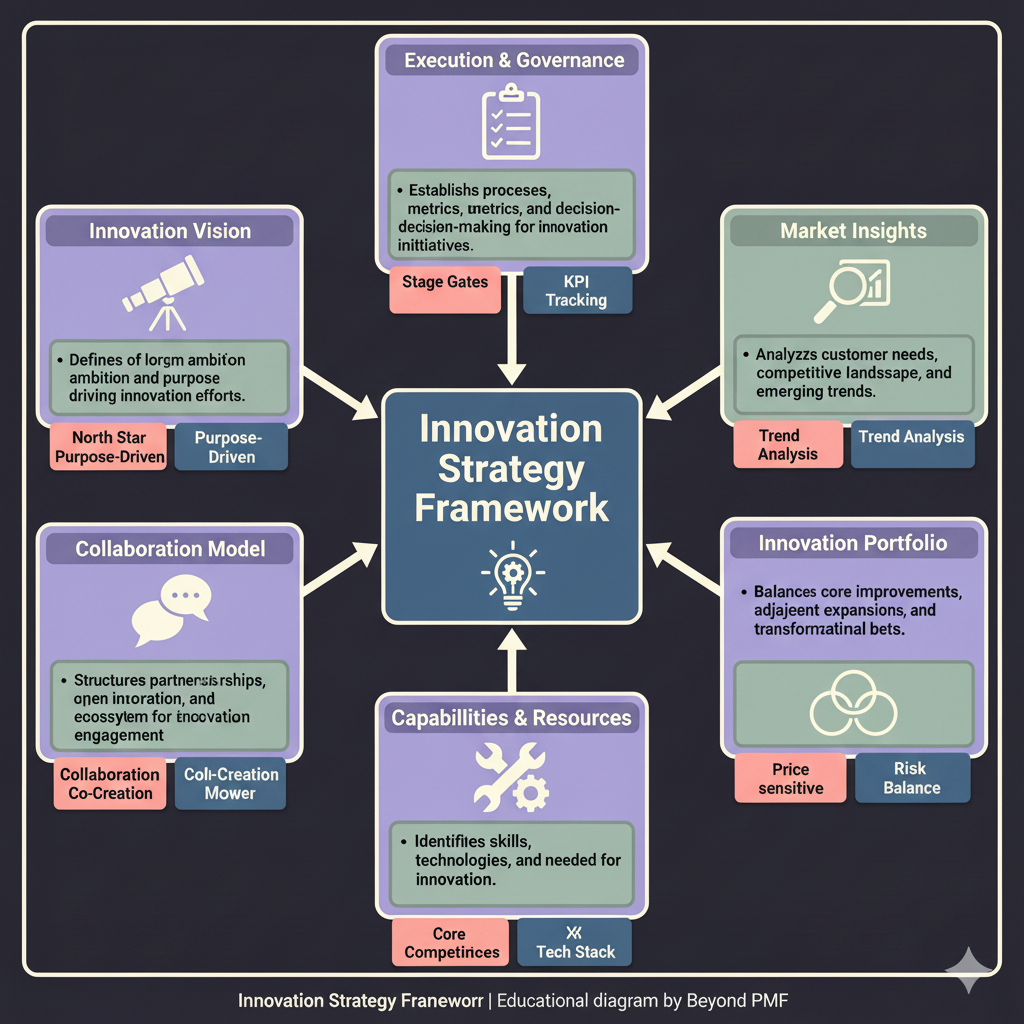
The Innovation Strategy Framework is a tool used to guide organizations in developing and implementing strategies that foster innovation.
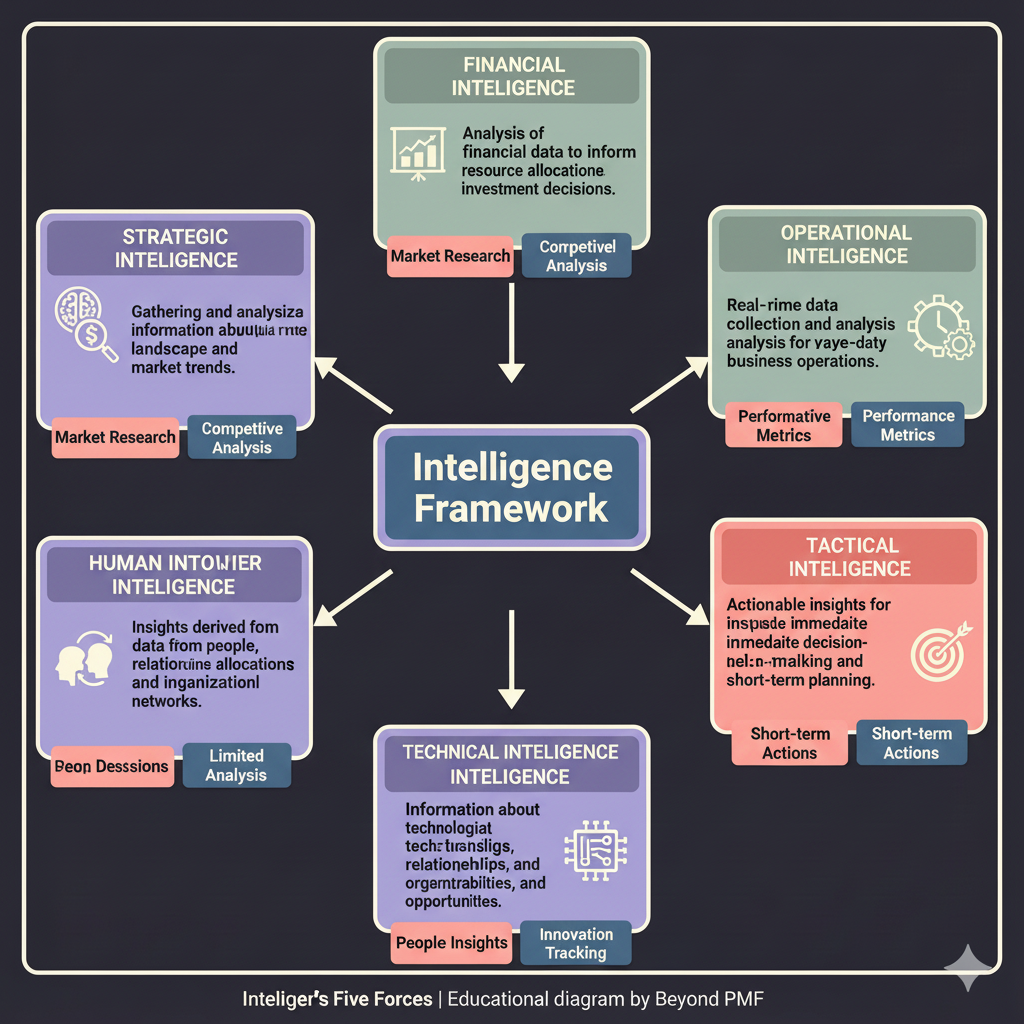
The Intelligence Framework is a strategic tool used to analyze and synthesize information to support decision-making.
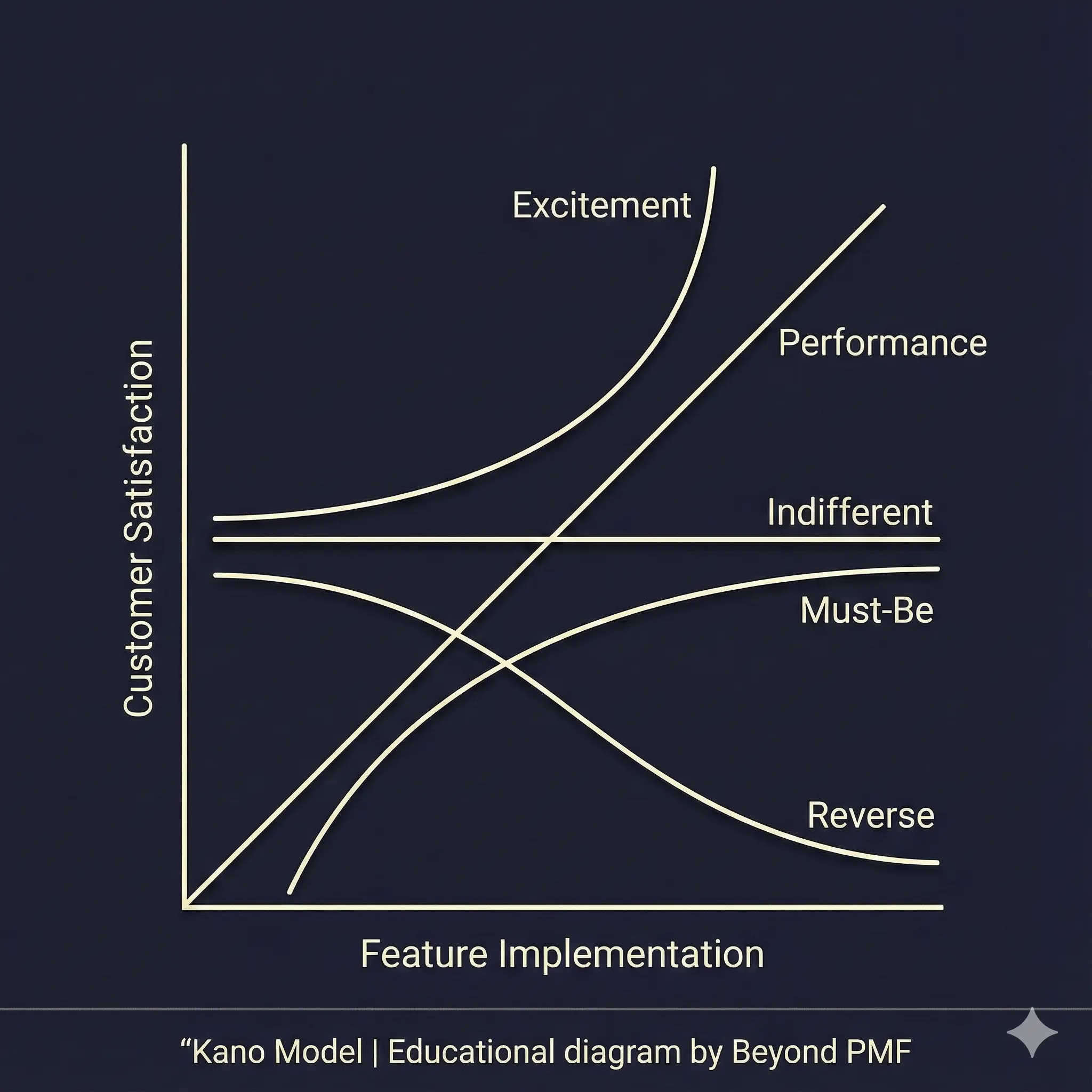
The Kano Model is a framework for product development and customer satisfaction that classifies customer preferences into categories.
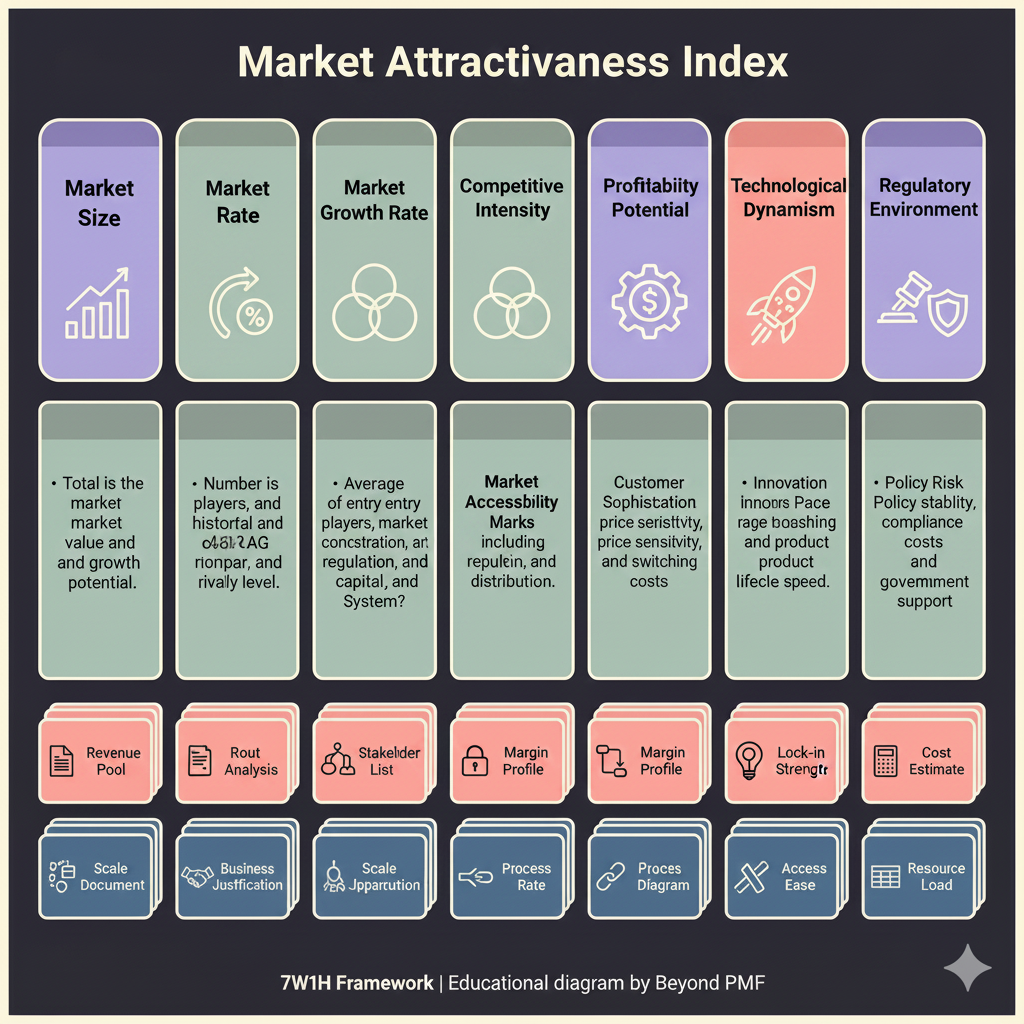
The Market Attractiveness Index evaluates the potential of different markets based on various criteria to guide strategic decisions.
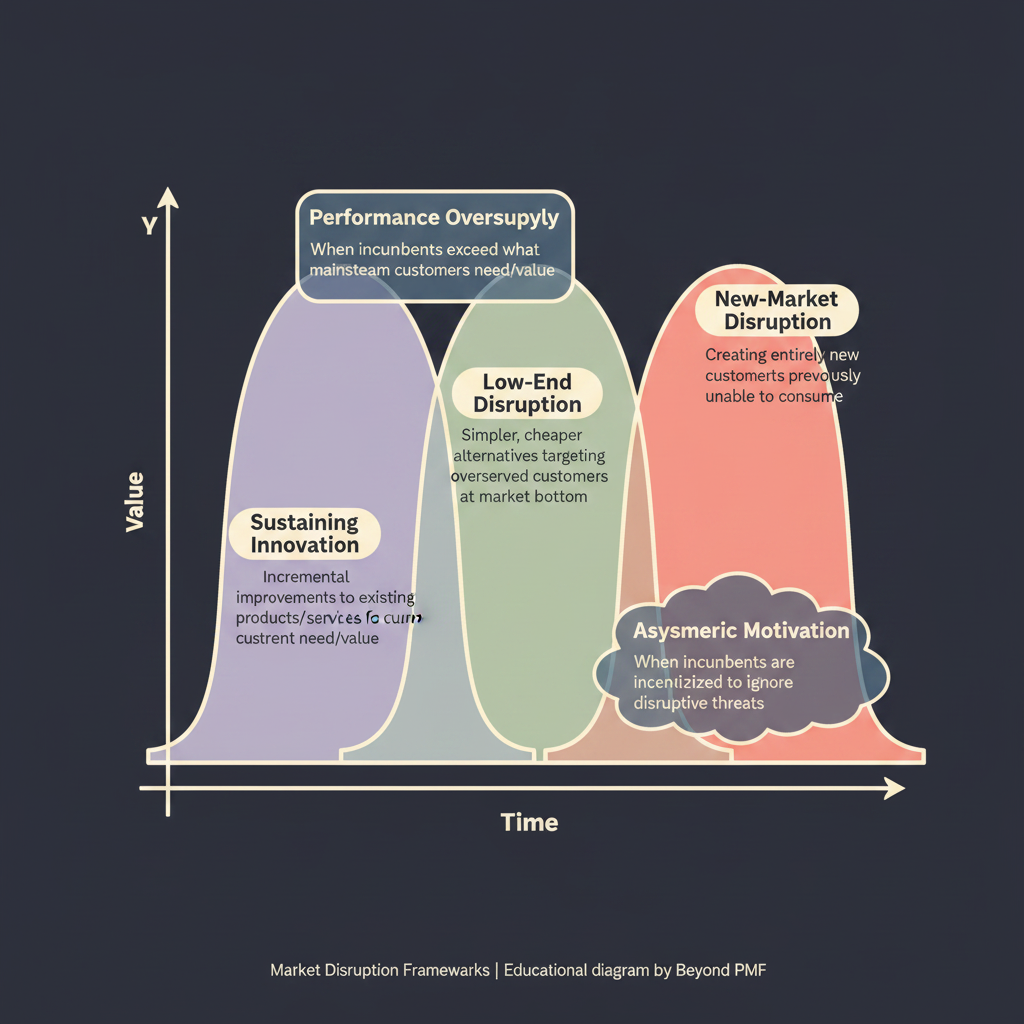
Market Disruption Frameworks are strategic tools used by businesses to innovate and disrupt existing markets, creating new value propositions and competitive advantages.
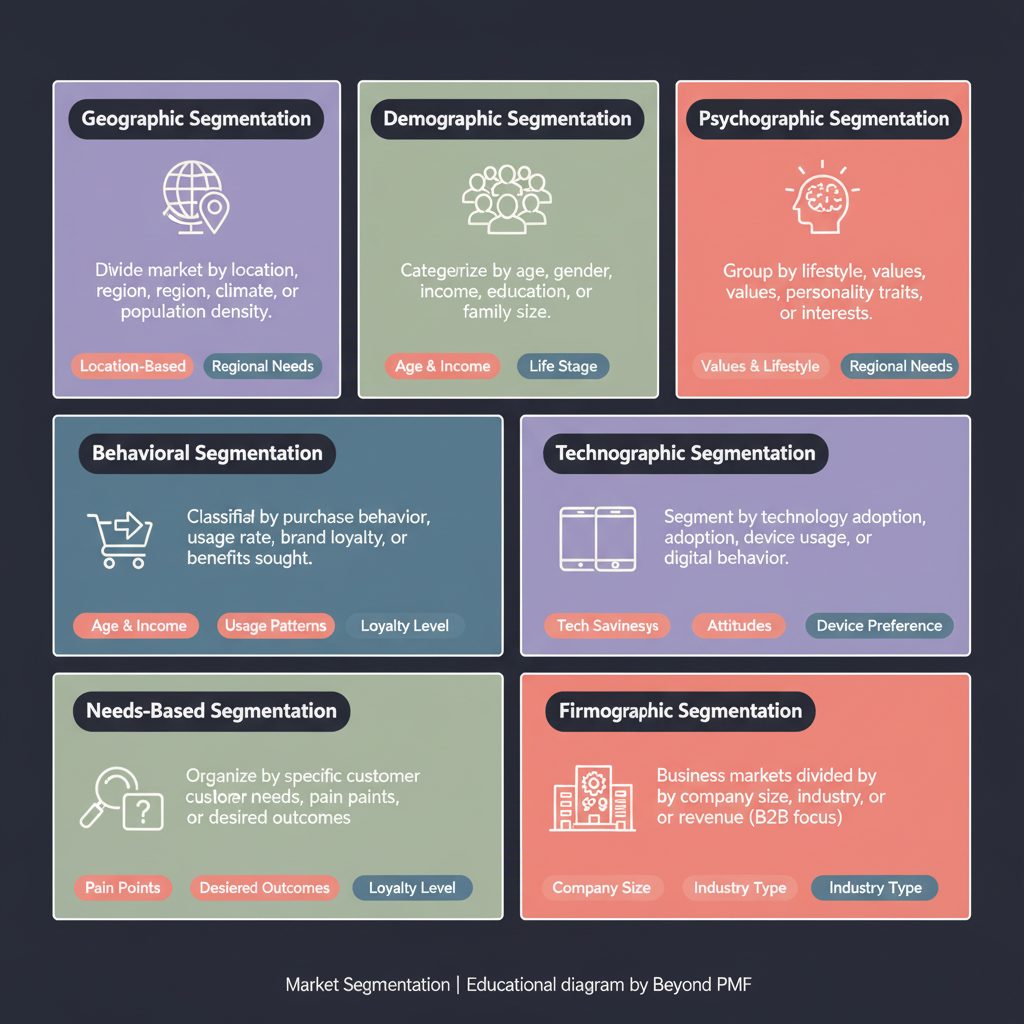
Market Segmentation is a strategic approach to divide a broad market into subsets of consumers with similar needs and preferences.
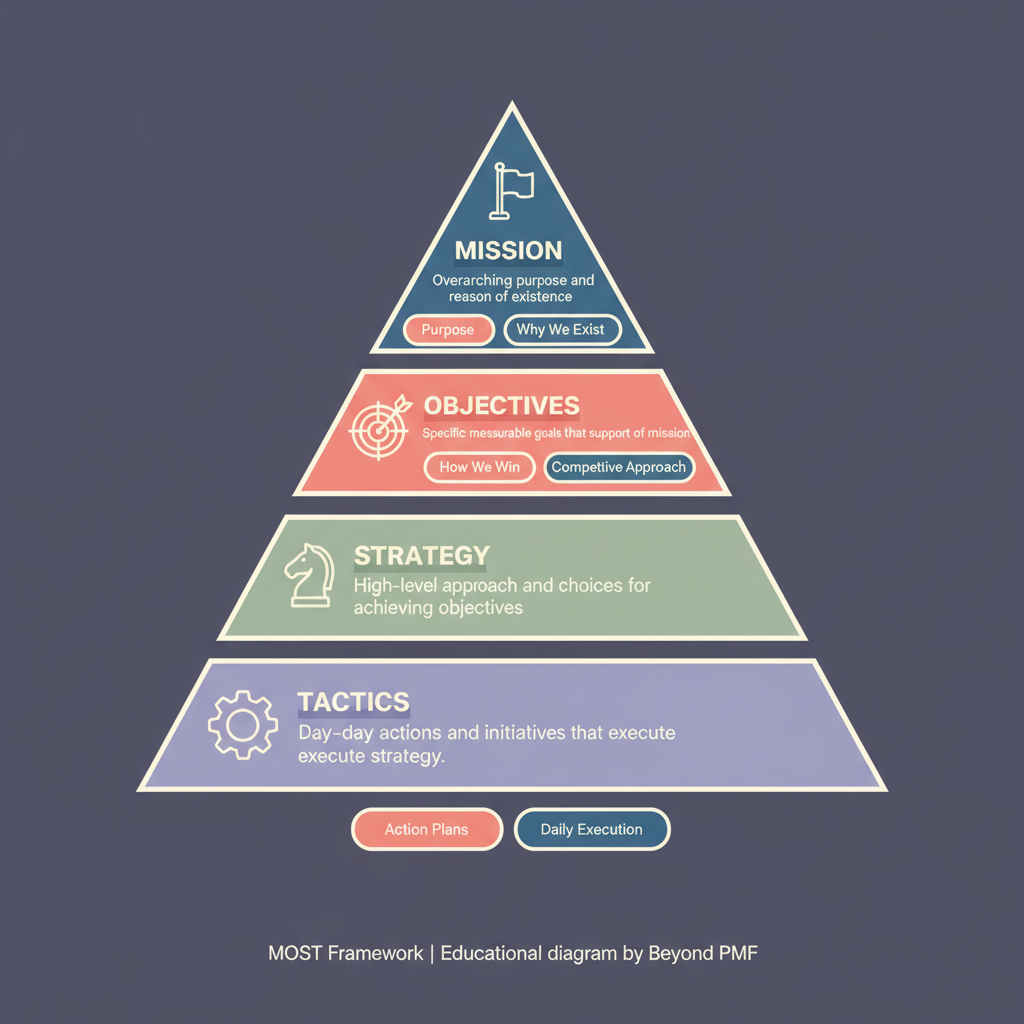
The MOST Framework is a strategic tool used for aligning organizational activities and decisions with clearly defined objectives and strategies.
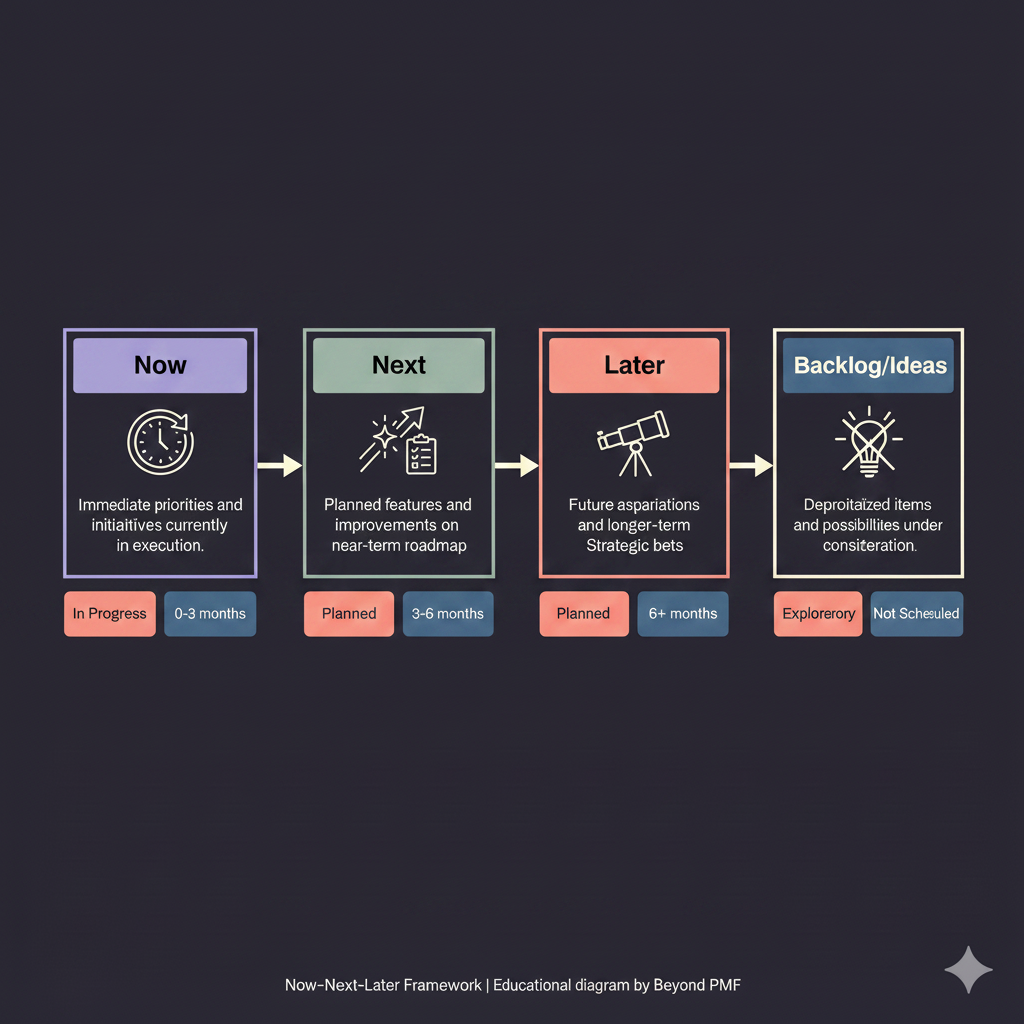
The Now-Next-Later Framework is a strategic planning tool used to prioritize initiatives and allocate resources effectively over time.
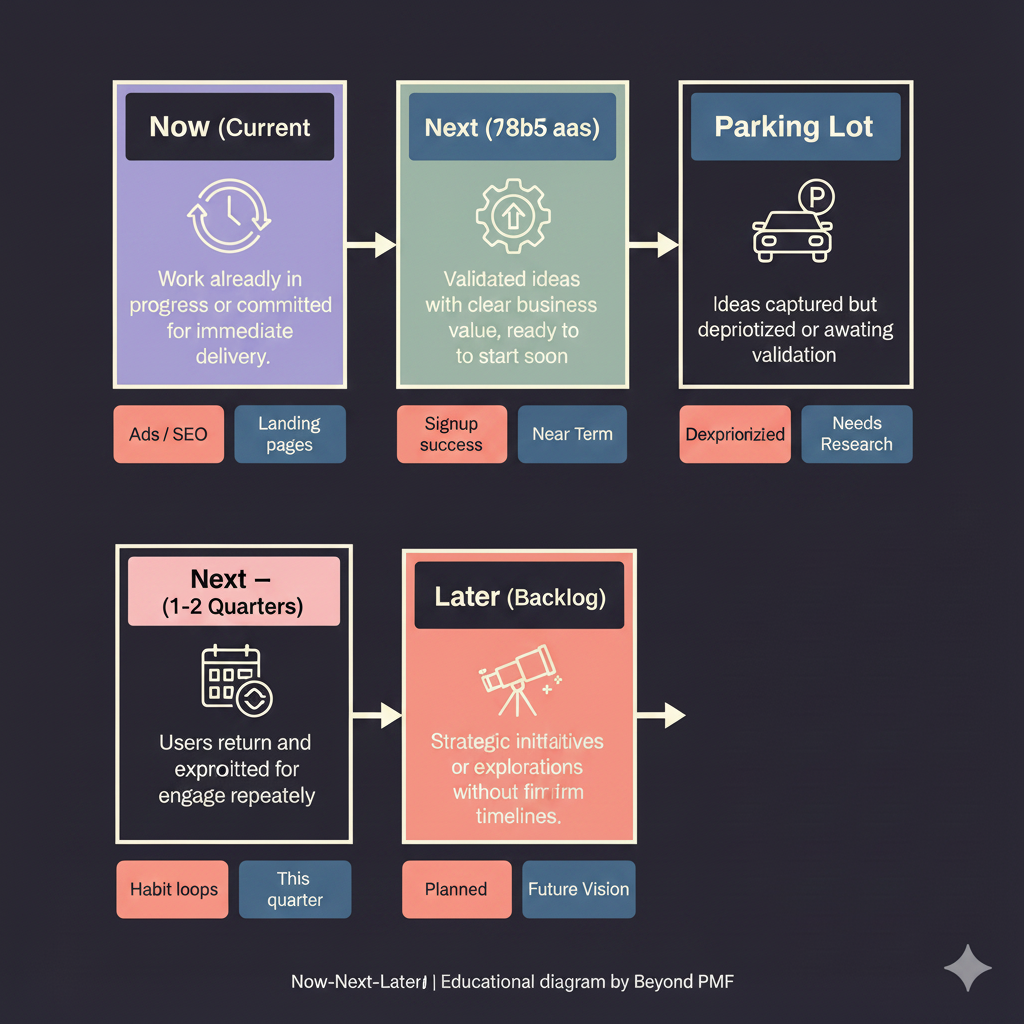
Now-Next-Later Roadmapping is a strategic planning tool used to prioritize initiatives and manage change over time.
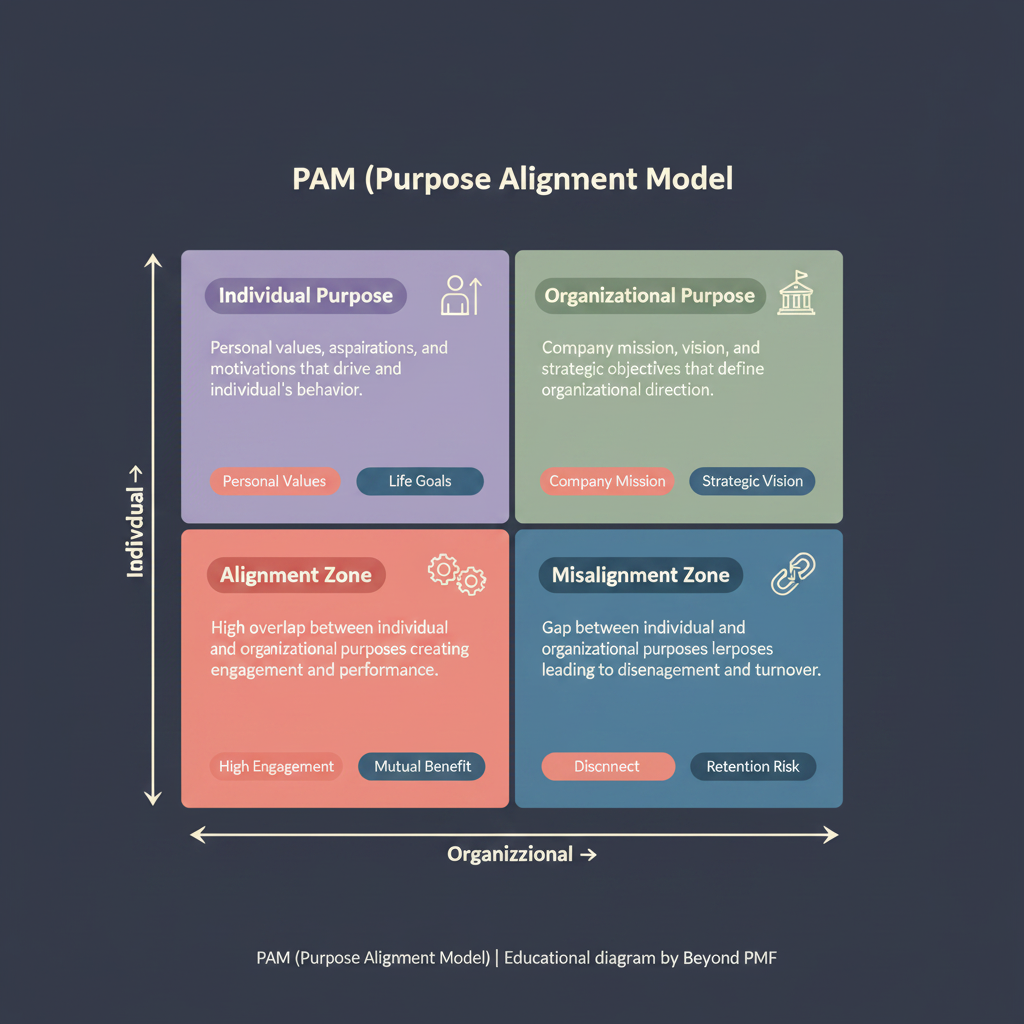
The Purpose Alignment Model (PAM) is a framework used to align business activities and projects with the overarching goals and values of an organization.
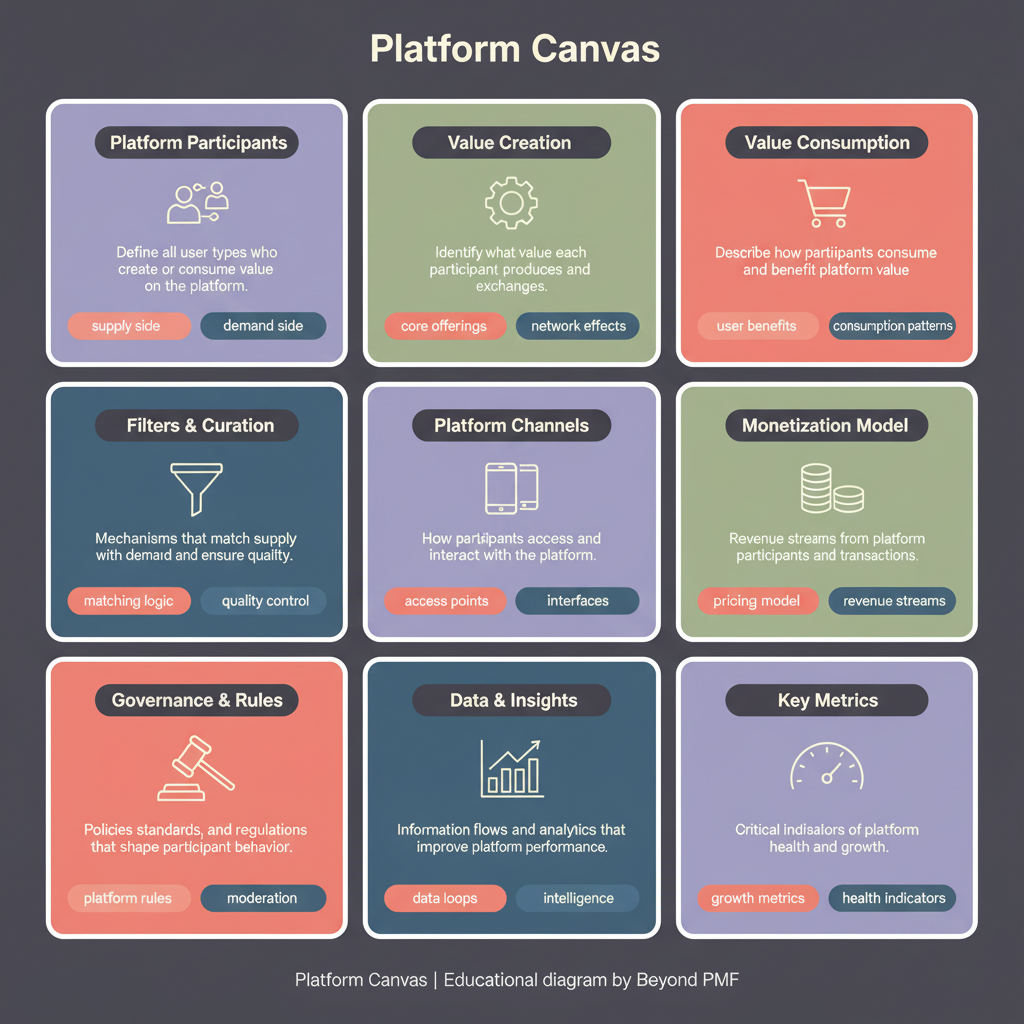
The Platform Canvas is a strategic tool used to map out the essential components of a platform business model.
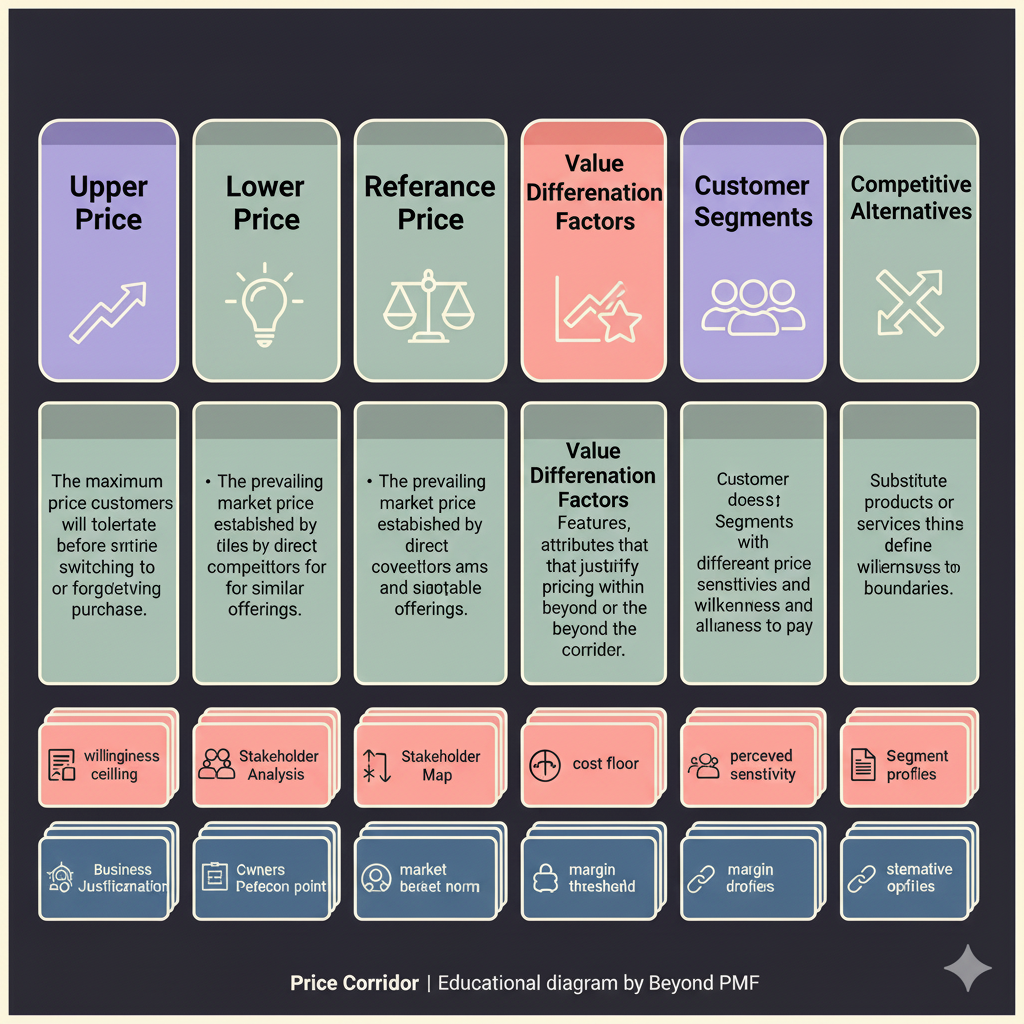
The Price Corridor Framework is a strategic tool used to determine optimal pricing strategies by analyzing competitor prices and customer value perceptions.
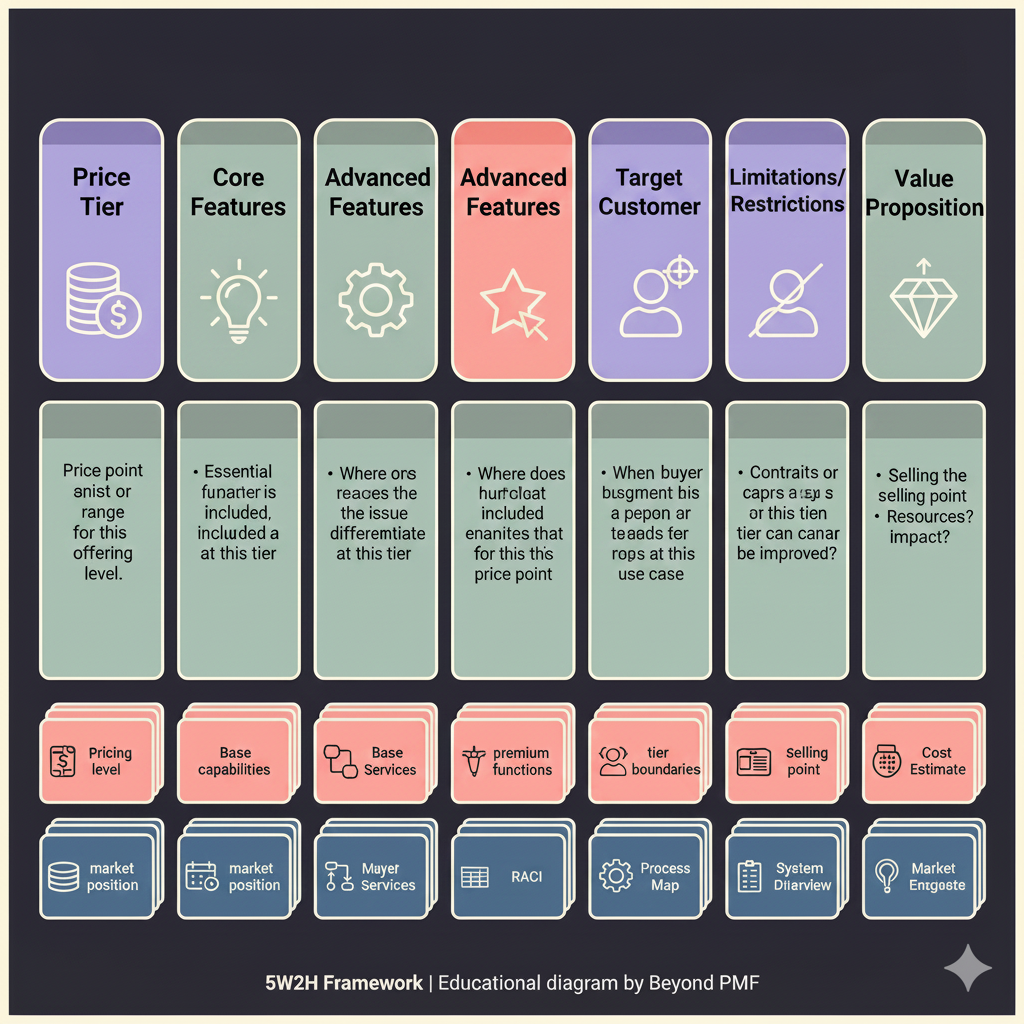
The Price-Feature Ladder is a strategic framework used to set product pricing based on different feature sets.
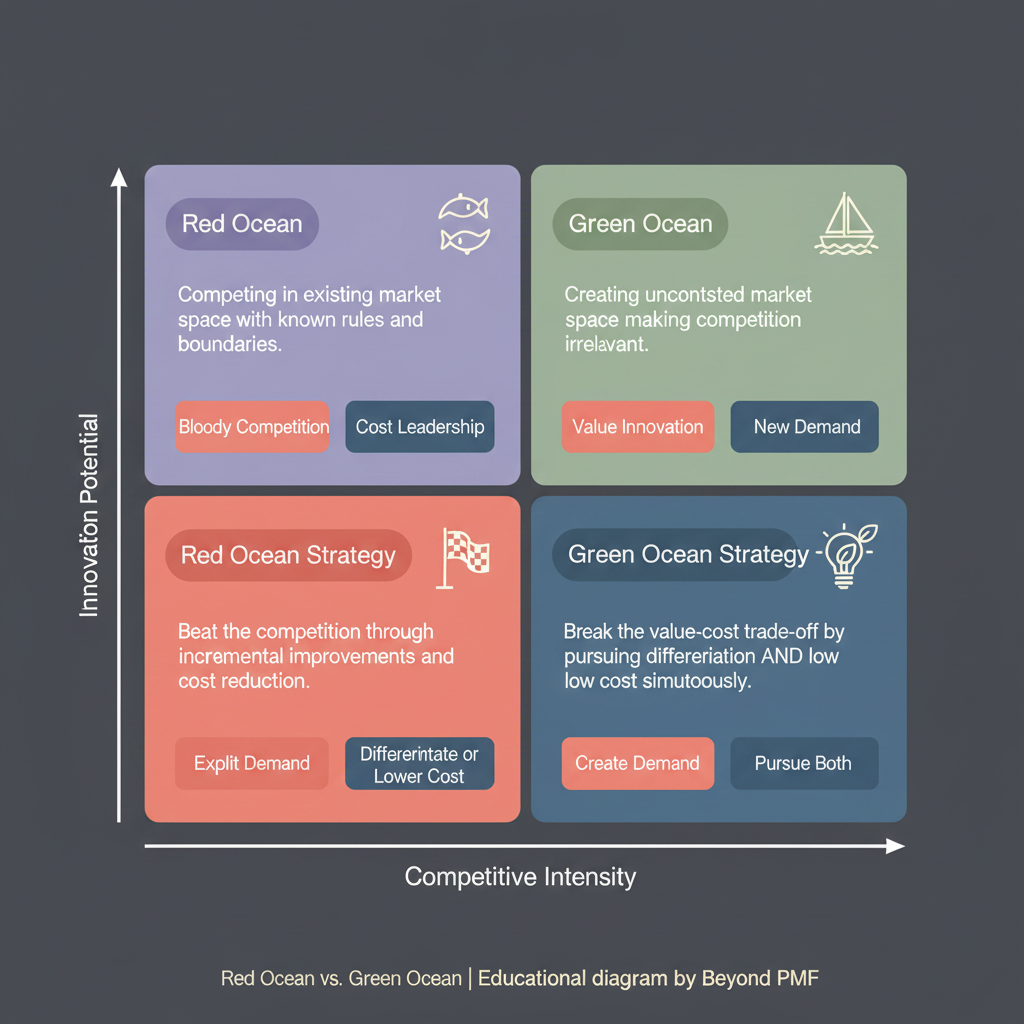
The Red Ocean vs. Green Ocean framework is a strategic tool used to analyze and differentiate between saturated markets (Red Oceans) and untapped, new market spaces (Green Oceans).
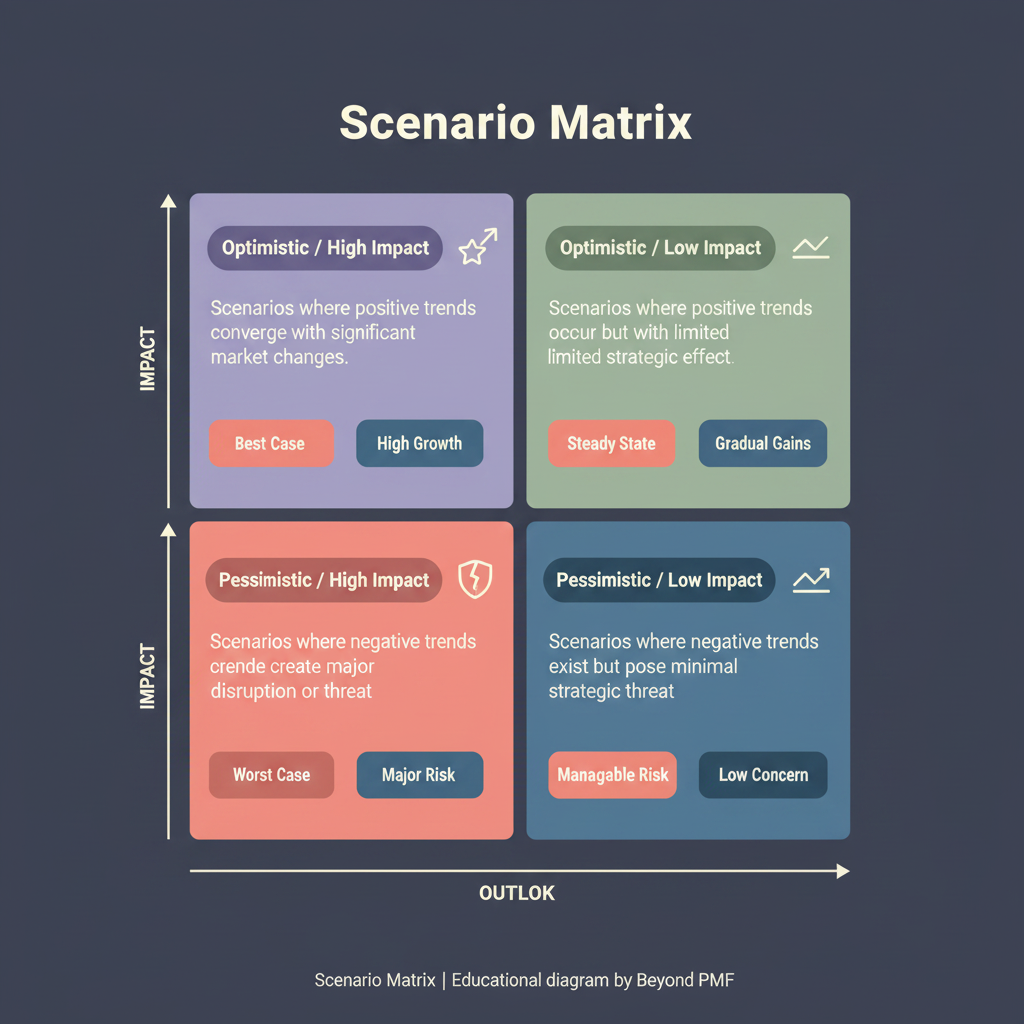
The Scenario Matrix is a strategic planning tool used to visualize and analyze different potential scenarios based on two key variables.
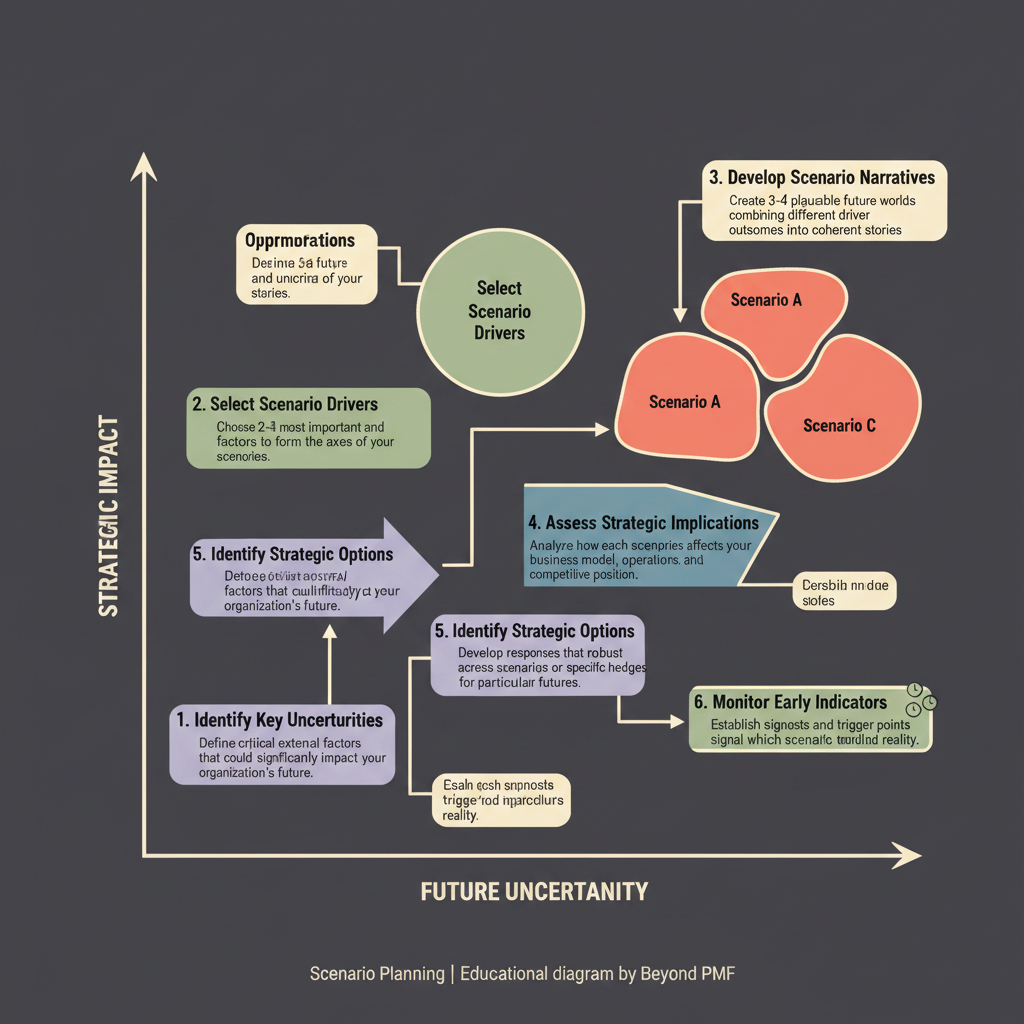
Scenario Planning is a strategic planning method used to make flexible long-term plans based on different plausible future scenarios.
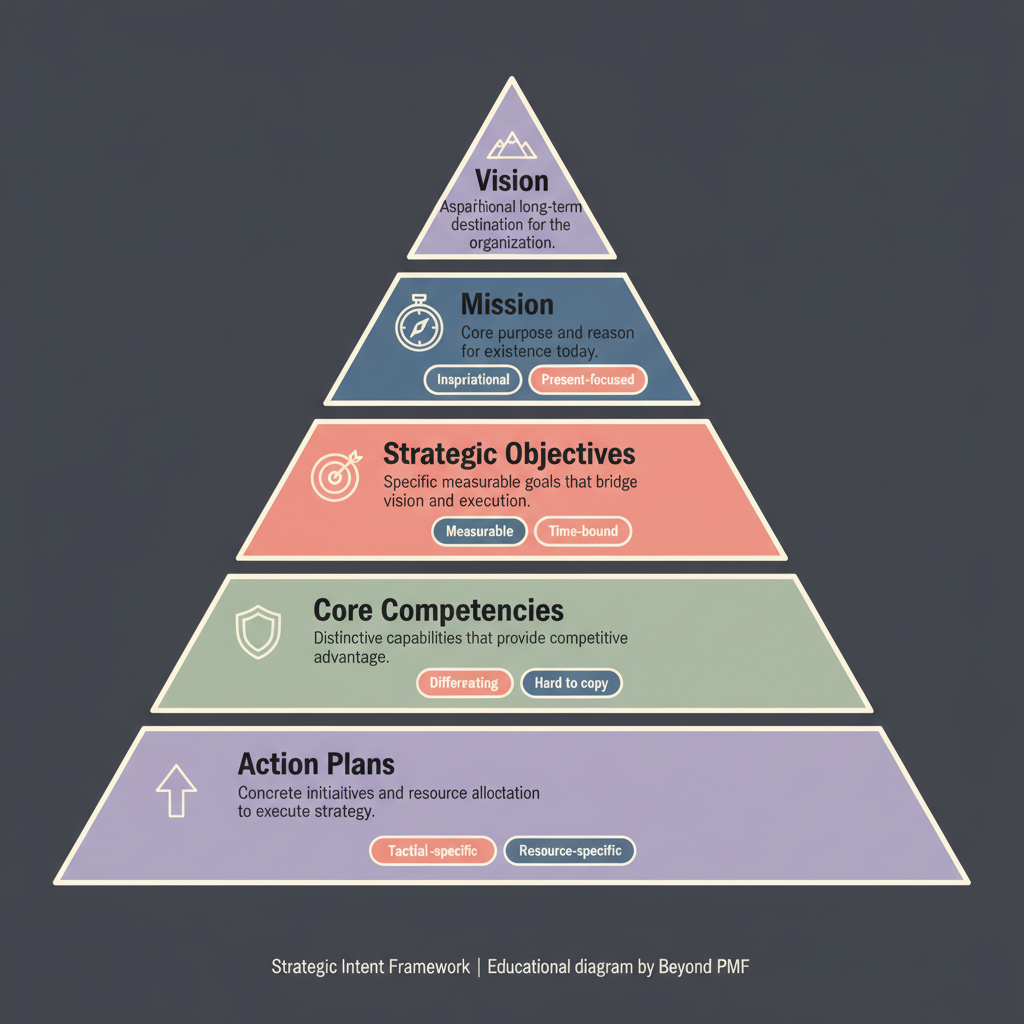
The Strategic Intent Framework helps organizations define long-term goals and align their resources and efforts to achieve these objectives.
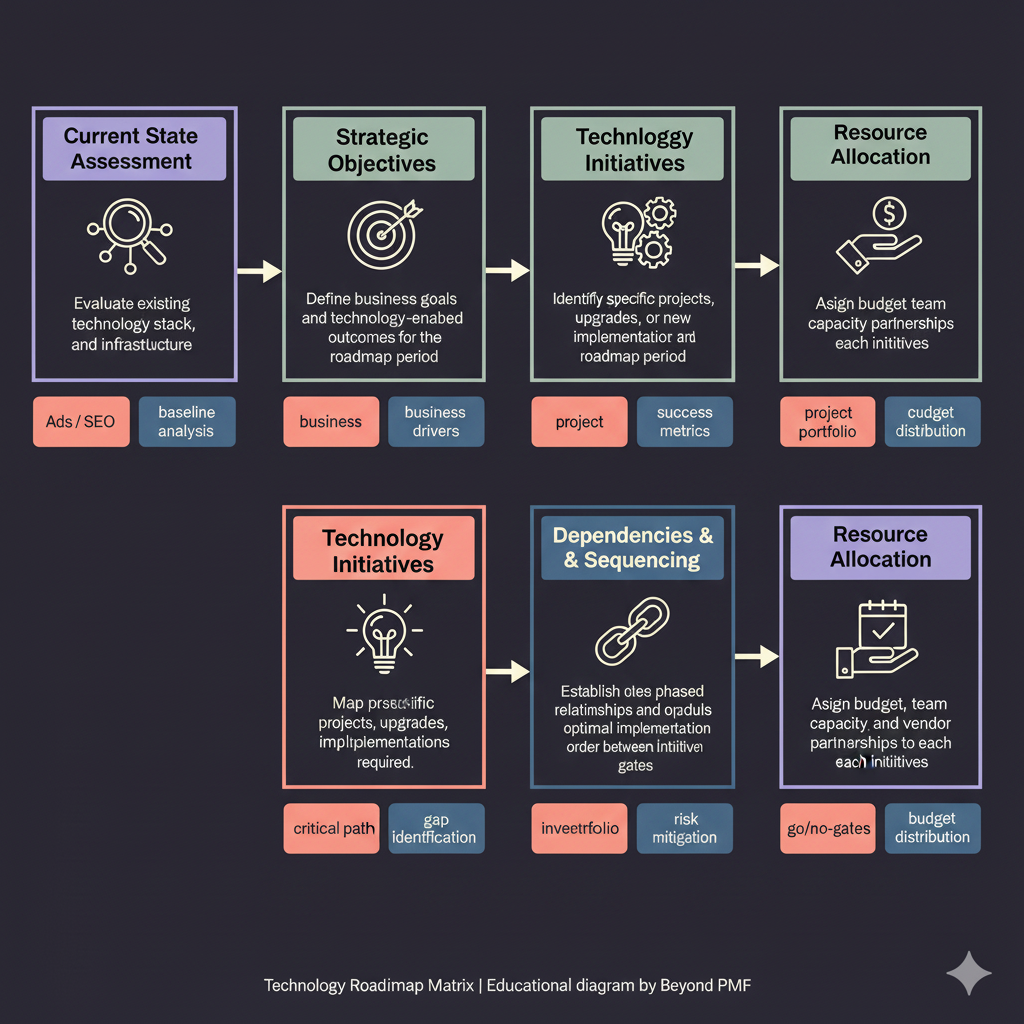
The Technology Roadmap Matrix is a strategic planning tool used to align technological investments with business objectives.
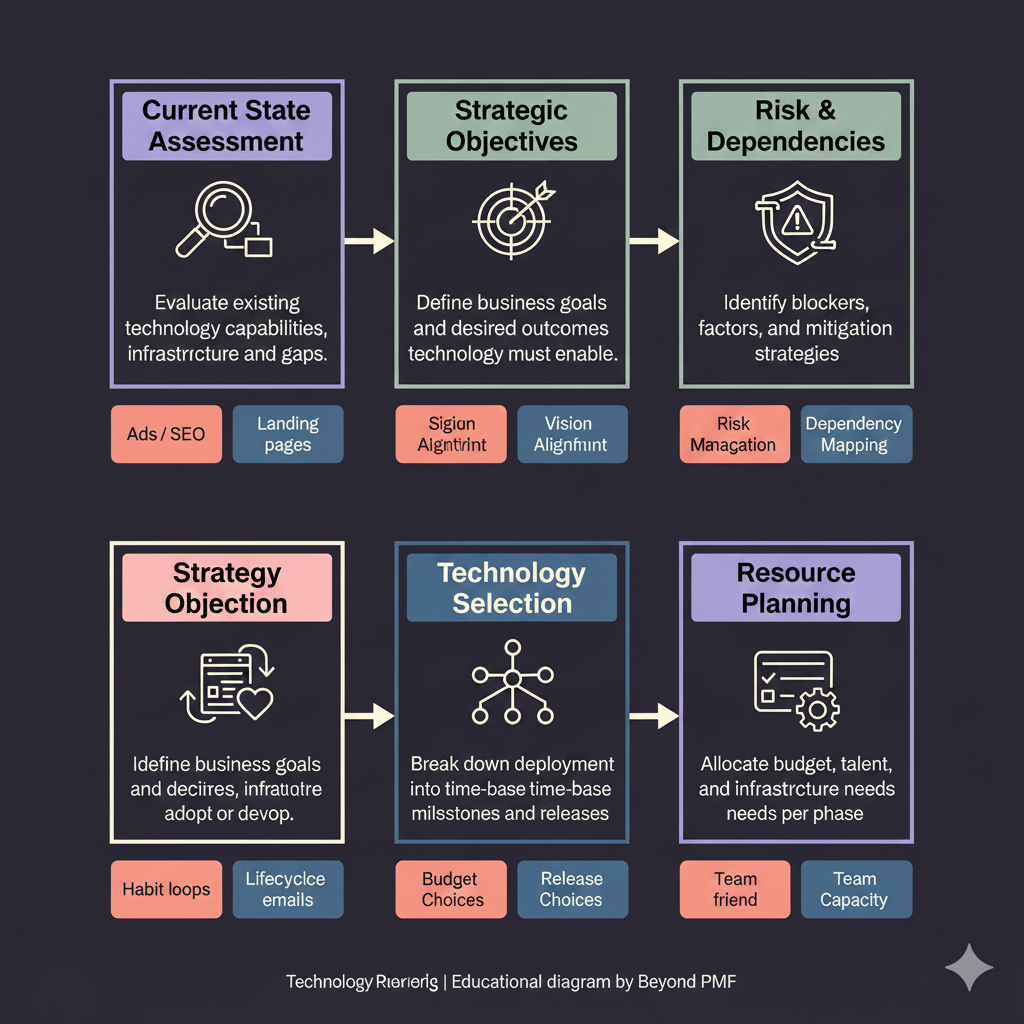
Technology Roadmapping is a strategic planning technique that aligns technological capabilities with business goals and objectives.
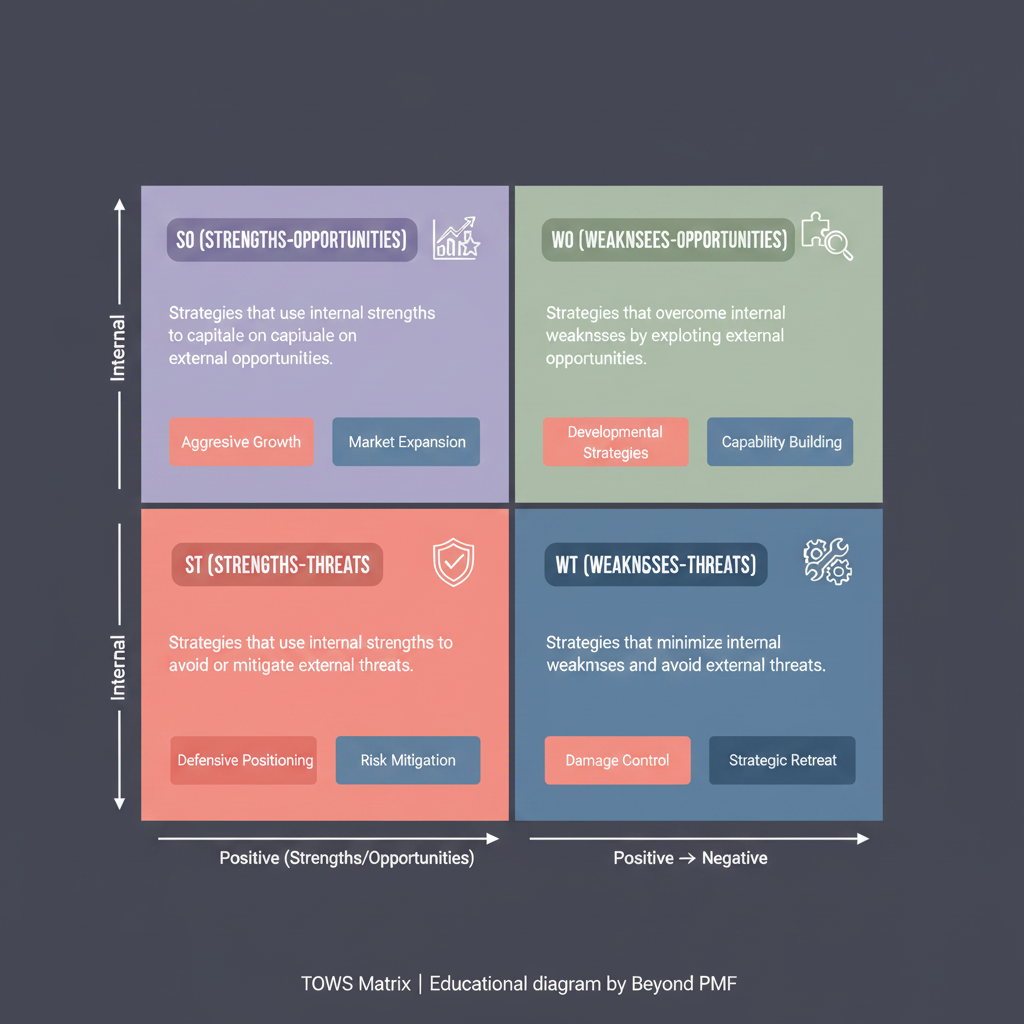
The TOWS Matrix is a strategic management tool used to analyze and match external opportunities and threats with internal strengths and weaknesses.
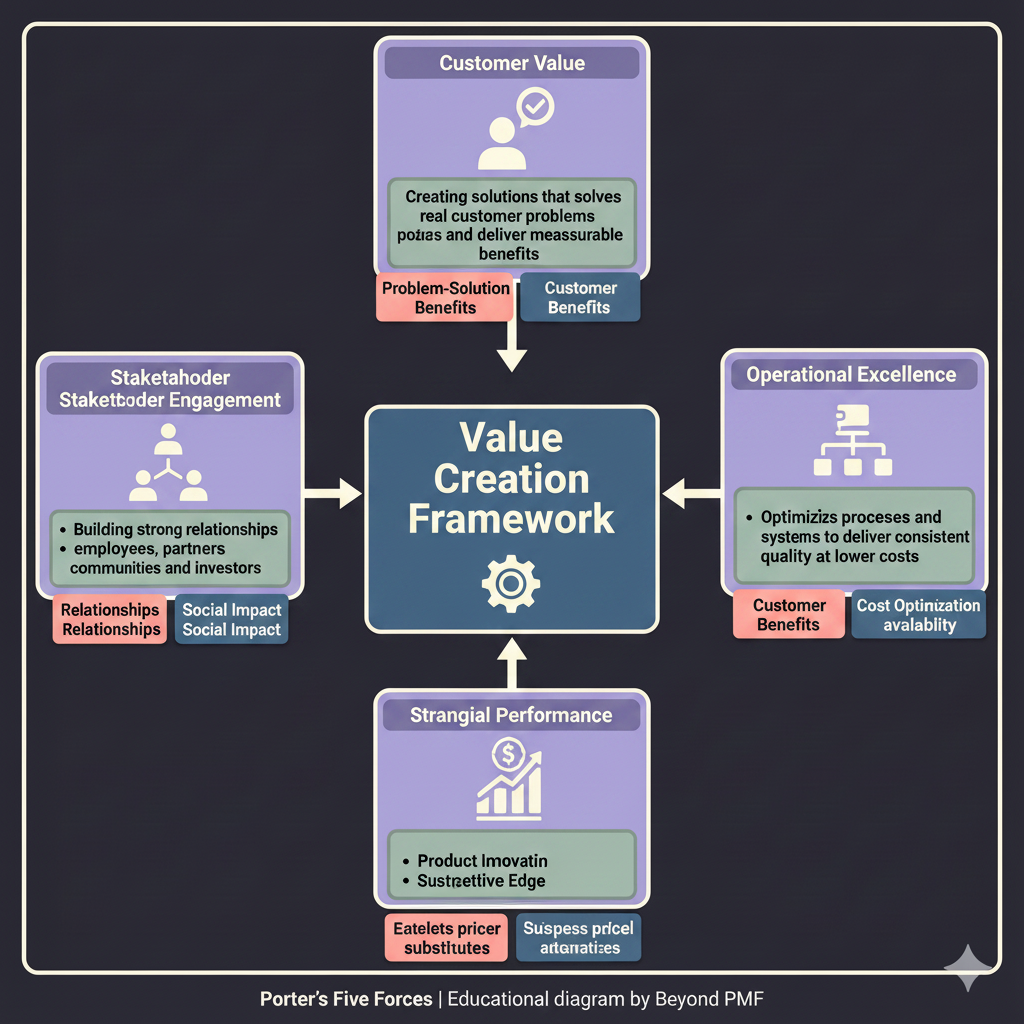
The Value Creation Framework is a strategic tool used to enhance the value delivered to customers and stakeholders.
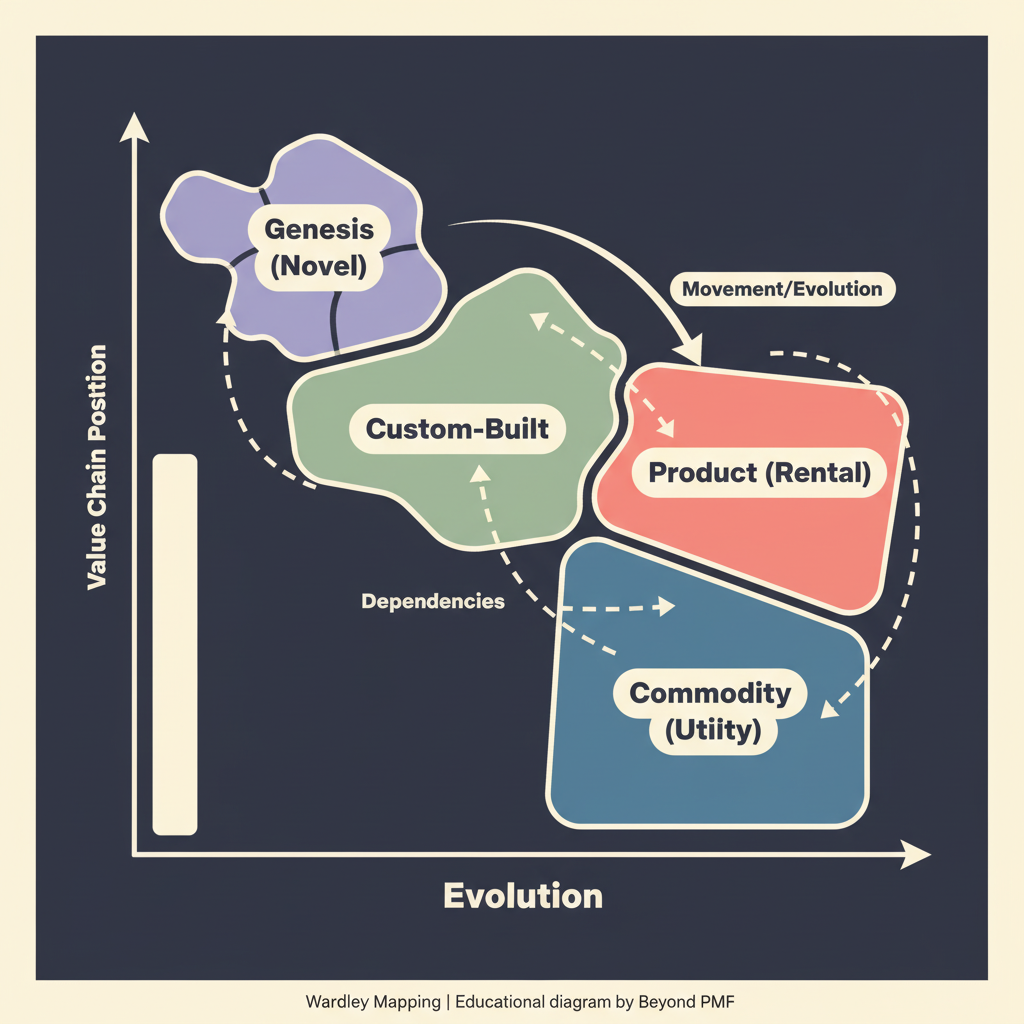
Wardley Mapping is a strategic planning tool that helps organizations visualize their value chain and decision-making landscape.