Market Attractiveness Index

https://ik.imagekit.io/beyondpmf/frameworks/market-attractiveness-index.png
The Market Attractiveness Index directly addresses strategic friction by providing a framework to evaluate markets. This assists in making strategic decisions related to market selection and resource allocation.

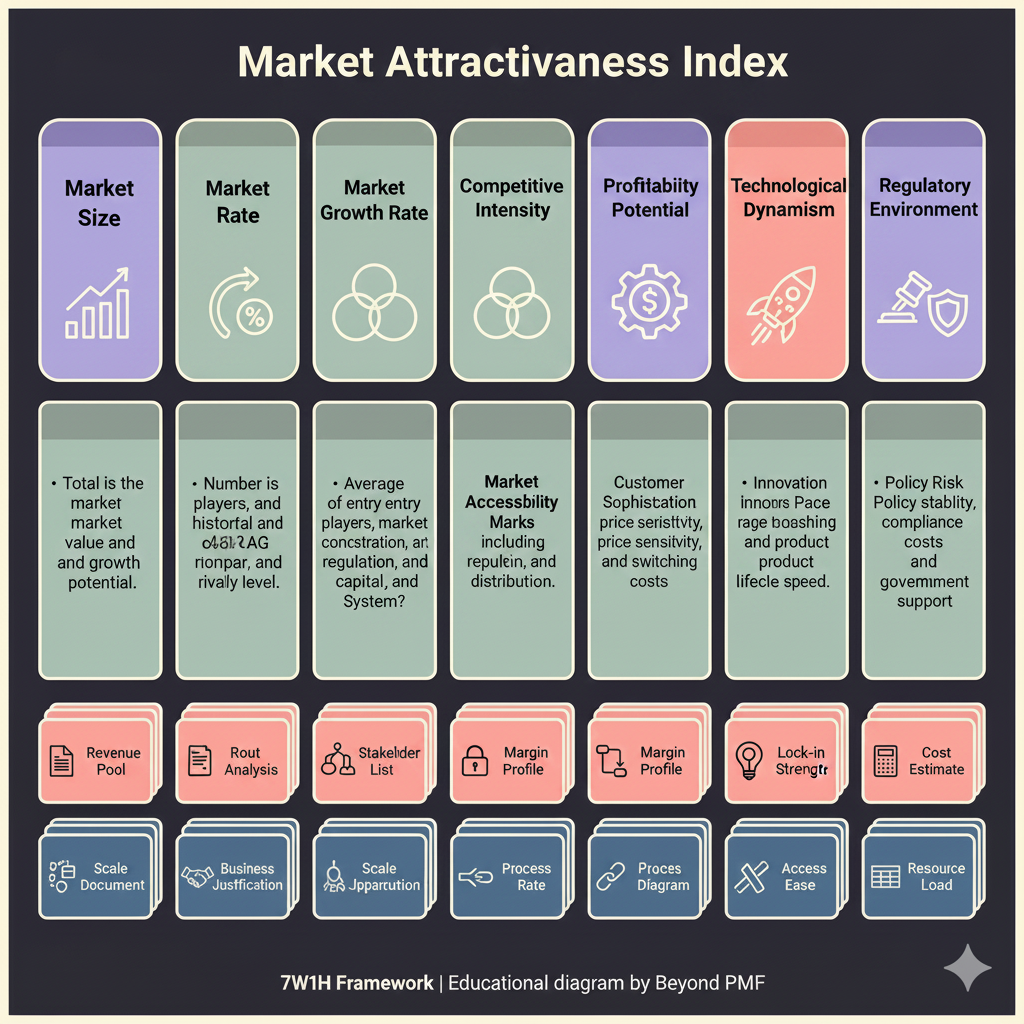
The Market Attractiveness Index is a strategic tool used by businesses to assess the attractiveness of different market segments or geographies. This framework helps in identifying the most lucrative markets by analyzing factors such as market size, growth rate, competition, and profitability. It aids companies in prioritizing their resources and investments efficiently, ensuring that they focus on markets with the highest potential for success.

Steps / Detailed Description

Identify key factors that define market attractiveness for your business. | Assign weights to these factors based on their importance. | Rate each market on these factors using a consistent scale. | Calculate the overall attractiveness score by combining the weighted ratings. | Analyze the results to make informed strategic decisions.

Best Practices

Ensure a comprehensive set of factors is considered to avoid bias. | Regularly update the data and factors to reflect current market conditions. | Combine with other strategic tools for a holistic analysis.

Pros

Provides a structured approach to evaluate market opportunities. | Helps in prioritizing investments and resources effectively. | Facilitates strategic alignment and decision-making based on quantifiable data.

Cons

Can be subjective based on the selection and weighting of factors. | May not account for unforeseen market changes or trends. | Relies heavily on the availability and accuracy of market data.

When to Use

When entering new markets or expanding in existing ones. | For allocating resources among different market segments.

When Not to Use

In highly volatile markets where data changes frequently. | When detailed market data is not available.

Related Frameworks

Categories

Scope

Scope not defined

Maturity Level

Maturity level not specified

Time to Implement

2–4 Weeks
3–6 Months
1–2 Weeks
3–6 Months
1–2 Months
3–6 Months
1–2 Weeks
Less Than 1 Day
1–2 Weeks
Longer Than 6 Months
1–2 Weeks
Longer Than 6 Months
1–2 Weeks
3–6 Months
1–2 Weeks
1–2 Weeks
1–2 Weeks
1–2 Weeks
1–2 Days
1–2 Weeks
1–2 Weeks
1–2 Weeks
1–2 Weeks
1–2 Weeks
1–2 Weeks
3–6 Months
1–2 Weeks
1–2 Weeks
1–2 Weeks
3–6 Months
1–2 Weeks
1–2 Weeks
2–4 Weeks
1–2 Weeks
1–2 Days
1–2 Weeks
Longer Than 6 Months
3–6 Months
Longer Than 6 Months
1–2 Weeks
Longer Than 6 Months
3–6 Months
Less Than 1 Day
3–6 Months
1–2 Months
3–6 Months
Longer Than 6 Months
3–6 Months
Less Than 1 Day
1–2 Weeks
3–6 Months
3–6 Months
1–2 Weeks
3–6 Months
1–2 Weeks
1–2 Weeks
1–2 Days
1–2 Weeks
1–2 Months
Longer Than 6 Months
1–2 Weeks
Longer Than 6 Months
1–2 Weeks
3–6 Months
1–2 Weeks
Less Than 1 Day
1–2 Weeks
3–6 Months
1–2 Weeks
3–6 Months
1–2 Weeks
1–2 Weeks
Longer Than 6 Months
Less Than 1 Day
3–6 Months
Longer Than 6 Months
1–2 Months
1–2 Weeks
Longer Than 6 Months
1–2 Weeks
3–6 Months
1–2 Weeks
1–2 Weeks
3–6 Months
Less Than 1 Day
1–2 Weeks
1–2 Weeks
3–6 Months
3–6 Months
Less Than 1 Day
1–2 Weeks
Longer Than 6 Months
1–2 Months
1–2 Weeks
1–2 Weeks
1–2 Weeks
Longer Than 6 Months

Copyright Information

Autor:
Public Domain
N/A
Publication:
Generic Business Tool