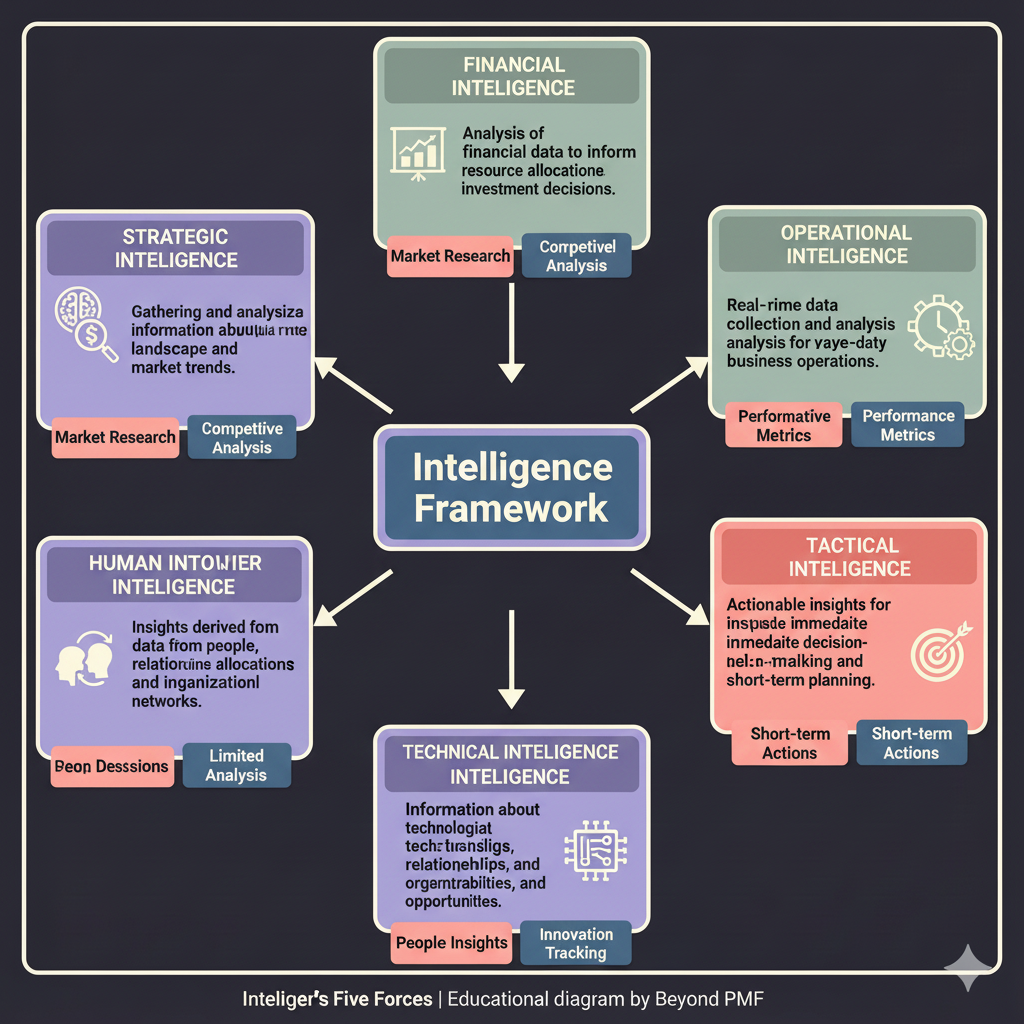
The Intelligence Framework is designed to systematically gather, analyze, and apply information to make informed business decisions. It helps organizations identify threats and opportunities in their external environment, facilitating proactive strategies. The framework is beneficial for enhancing data-driven decision-making, improving competitive advantage, and optimizing strategic planning processes.
Identify the intelligence needs: Define what information is necessary for decision-making. | Collect data: Gather information from various sources, both internal and external. | Analyze information: Use analytical methods to interpret the data collected. | Disseminate intelligence: Share the analyzed information with decision-makers. | Feedback and refinement: Continuously refine the process based on feedback and changing needs.
Clearly define intelligence requirements | Ensure a diverse range of data sources | Regularly review and update the intelligence process
Enhances decision-making with accurate and timely information | Improves strategic alignment and competitiveness | Facilitates proactive risk management
Can be time-consuming and resource-intensive | Risk of information overload if not managed properly | Dependent on the quality and relevance of data collected
Strategic planning sessions | During market analysis and entry strategies
When immediate, tactical decisions are required | In highly unpredictable or volatile markets