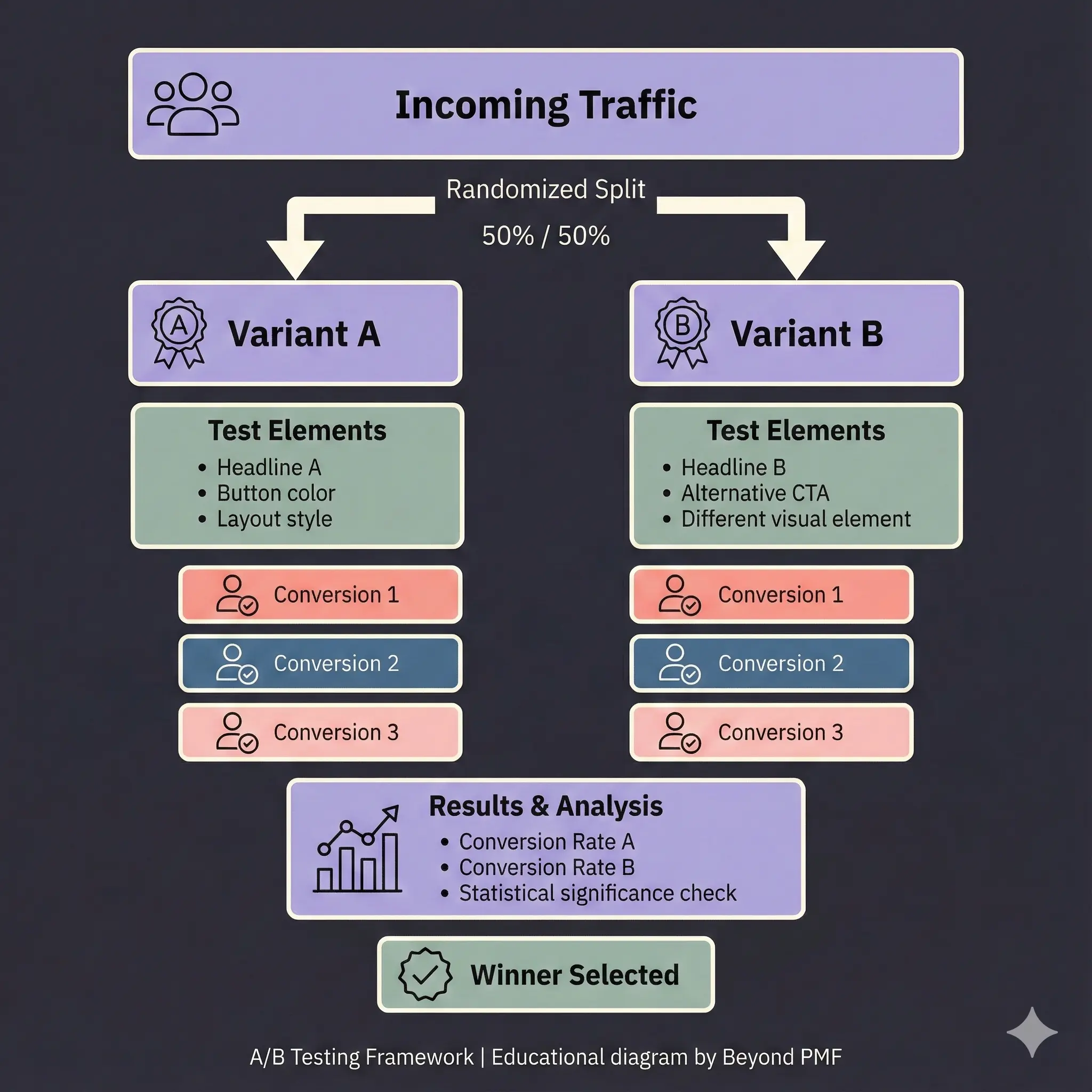
The A/B Testing Framework is a systematic approach used in marketing and user experience design to compare two versions of a digital asset by showing them to different segments of visitors at the same time and measuring the effect on a predefined metric, usually conversion rate. This method helps in making data-driven decisions and increases the effectiveness of marketing content.
Define the goal of the test: What specific performance indicator are you trying to improve? | Create two versions (A and B): Develop two variants of the same page or feature, with one element changed between them. | Split your audience: Randomly assign your audience to either version A or version B. | Run the experiment: Allow both versions to gather data over a set period. | Analyze the results: Use statistical methods to determine which version performed better. | Implement the successful version: Apply the more successful version as the default for all users.
Test one variable at a time to isolate effects | Ensure statistical significance before drawing conclusions | Continuously run tests to keep improving over time
Increases conversion rates | Reduces risks associated with new features | Provides quantifiable data for decision making
Time-consuming to achieve statistically significant results | Can be expensive depending on the tools used | Limited to testing small changes, may not capture complex interactions
Optimizing landing pages for higher conversion | Testing user responses to new features
When changes are too minor to impact user behavior | In situations where quick decisions are needed without time for testing