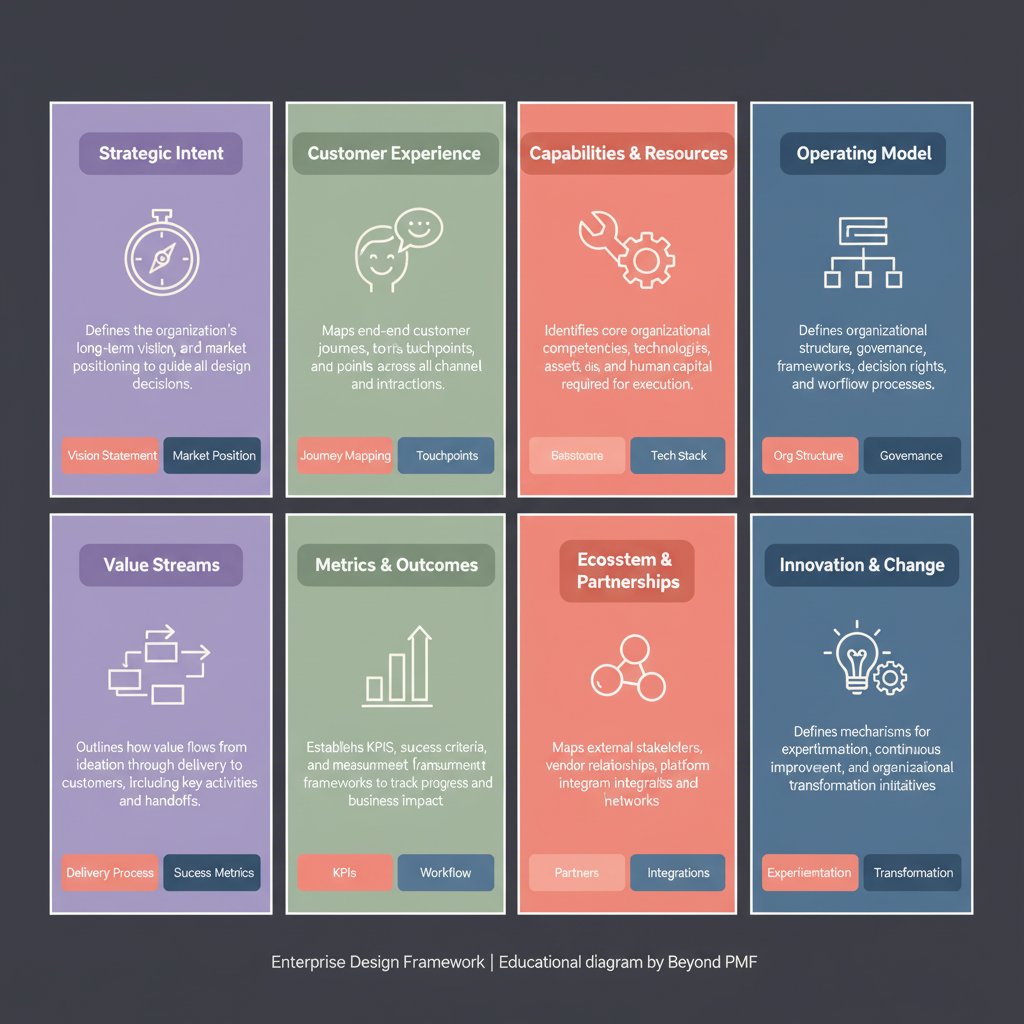
Enterprise Design Framework

https://ik.imagekit.io/beyondpmf/frameworks/enterprise-design-framework.png
The Enterprise Design Framework aims to align business strategies with design principles, suggesting it directly addresses the friction of unclear direction, lack of market alignment, and conflicting priorities related to strategic decision-making and vision.

The Enterprise Design Framework integrates various aspects of business strategy, user experience, and technology to create cohesive and effective enterprise solutions. It is used to strategically align all facets of an organization's operations with its long-term goals, ensuring that every design decision supports the overarching business objectives. This framework is beneficial for improving communication across departments, enhancing user satisfaction, and driving business innovation.

Steps / Detailed Description

Define the enterprise's vision and strategic goals. | Map out the current state of enterprise processes and user experiences. | Identify gaps and opportunities for improvement in the existing setup. | Develop design principles that align with the business strategy. | Implement design solutions across the organization. | Continuously monitor and iterate on the design implementations.

Best Practices

Engage all relevant stakeholders early in the process | Regularly review and update the design principles to stay aligned with business goals | Use data-driven insights to guide design decisions

Pros

Enhances alignment between business strategies and design implementations | Improves cross-departmental communication and collaboration | Drives innovation by focusing on user-centric solutions

Cons

Can be time-consuming to implement across large organizations | Requires high-level executive support and cross-functional collaboration | May lead to initial resistance from stakeholders accustomed to traditional processes

When to Use

When redefining the company’s strategic goals | During major organizational restructuring

When Not to Use

In small-scale projects that do not impact the entire enterprise | When quick, tactical solutions are needed without long-term implications

Related Frameworks

Scope

Scope not defined

Maturity Level

Maturity level not specified

Time to Implement

2–4 Weeks
3–6 Months
1–2 Weeks
3–6 Months
1–2 Months
3–6 Months
1–2 Weeks
Less Than 1 Day
1–2 Weeks
Longer Than 6 Months
1–2 Weeks
Longer Than 6 Months
1–2 Weeks
3–6 Months
1–2 Weeks
1–2 Weeks
1–2 Weeks
1–2 Weeks
1–2 Days
1–2 Weeks
1–2 Weeks
1–2 Weeks
1–2 Weeks
1–2 Weeks
1–2 Weeks
3–6 Months
1–2 Weeks
1–2 Weeks
1–2 Weeks
3–6 Months
1–2 Weeks
1–2 Weeks
2–4 Weeks
1–2 Weeks
1–2 Days
1–2 Weeks
Longer Than 6 Months
3–6 Months
Longer Than 6 Months
1–2 Weeks
Longer Than 6 Months
3–6 Months
Less Than 1 Day
3–6 Months
1–2 Months
3–6 Months
Longer Than 6 Months
3–6 Months
Less Than 1 Day
1–2 Weeks
3–6 Months
3–6 Months
1–2 Weeks
3–6 Months
1–2 Weeks
1–2 Weeks
1–2 Days
1–2 Weeks
1–2 Months
Longer Than 6 Months
1–2 Weeks
Longer Than 6 Months
1–2 Weeks
3–6 Months
1–2 Weeks
Less Than 1 Day
1–2 Weeks
3–6 Months
1–2 Weeks
3–6 Months
1–2 Weeks
1–2 Weeks
Longer Than 6 Months
Less Than 1 Day
3–6 Months
Longer Than 6 Months
1–2 Months
1–2 Weeks
Longer Than 6 Months
1–2 Weeks
3–6 Months
1–2 Weeks
1–2 Weeks
3–6 Months
Less Than 1 Day
1–2 Weeks
1–2 Weeks
3–6 Months
3–6 Months
Less Than 1 Day
1–2 Weeks
Longer Than 6 Months
1–2 Months
1–2 Weeks
1–2 Weeks
1–2 Weeks
Longer Than 6 Months

Copyright Information

Autor:
Unknown
N/A
Publication:
Unknown