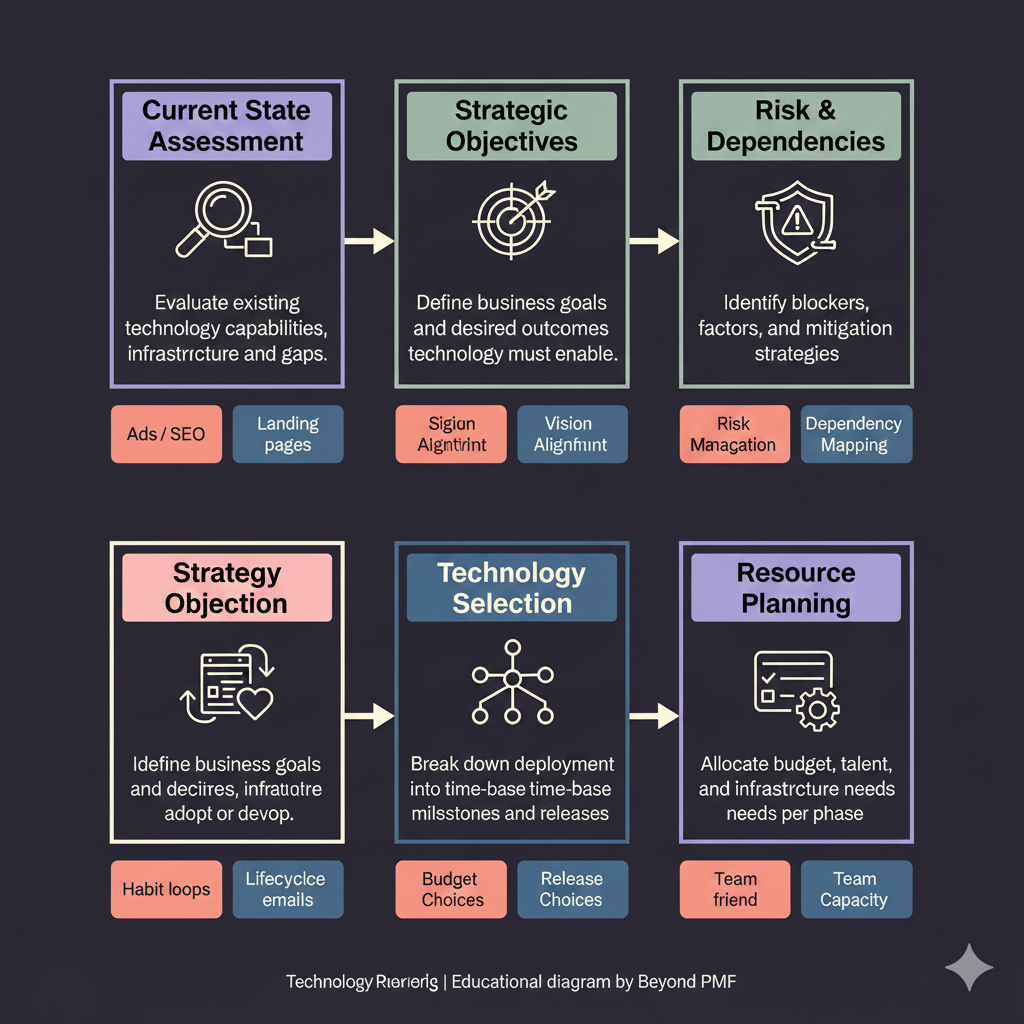
Technology Roadmapping

https://ik.imagekit.io/beyondpmf/frameworks/technology-roadmapping.png
Technology Roadmapping primarily addresses the friction of aligning technology capabilities with business goals. It ensures the direction of technology investments supports the overall business strategy and vision.

Technology Roadmapping is a framework used to plan and align an organization's technology developments with its business strategy. This framework helps companies visualize the timeline of technological advancements and their impact on products, services, and market needs. It is particularly beneficial for managing long-term technological investments and fostering innovation by identifying necessary resources and potential barriers.

Steps / Detailed Description

Define the strategic business objectives: Identify and prioritize the business goals that the technology needs to support. | Identify technology drivers and trends: Research current and emerging technologies that can influence business outcomes. | Develop the roadmap layers: Create layers for products, technologies, and resources that connect the current state to the future strategic goals. | Integrate and align the roadmap: Ensure that the technology initiatives are in alignment with business strategies and market demands. | Review and update regularly: Continuously monitor changes in technology and business environments to keep the roadmap relevant and effective.

Best Practices

Engage stakeholders from various departments to gather diverse insights. | Keep the roadmap flexible to accommodate changes in technology and business strategies. | Regularly review and revise the roadmap to reflect new data and shifts in strategic direction.

Pros

Provides a clear visualization of the relationship between technology investments and business objectives. | Facilitates strategic alignment across different departments within an organization. | Helps in identifying future technological needs and gaps.

Cons

Can be time-consuming to develop and require regular updates. | Depends heavily on accurate forecasting of technological and market trends. | May become rigid if not regularly revised, potentially limiting flexibility in rapidly changing environments.

When to Use

When planning long-term technology strategy in alignment with business growth. | When managing large-scale innovation and development projects.

When Not to Use

For short-term or tactical technology decisions. | When the business environment is extremely volatile and unpredictable.

Related Frameworks

Categories

Scope

Scope not defined

Maturity Level

Maturity level not specified

Time to Implement

2–4 Weeks
3–6 Months
1–2 Weeks
3–6 Months
1–2 Months
3–6 Months
1–2 Weeks
Less Than 1 Day
1–2 Weeks
Longer Than 6 Months
1–2 Weeks
Longer Than 6 Months
1–2 Weeks
3–6 Months
1–2 Weeks
1–2 Weeks
1–2 Weeks
1–2 Weeks
1–2 Days
1–2 Weeks
1–2 Weeks
1–2 Weeks
1–2 Weeks
1–2 Weeks
1–2 Weeks
3–6 Months
1–2 Weeks
1–2 Weeks
1–2 Weeks
3–6 Months
1–2 Weeks
1–2 Weeks
2–4 Weeks
1–2 Weeks
1–2 Days
1–2 Weeks
Longer Than 6 Months
3–6 Months
Longer Than 6 Months
1–2 Weeks
Longer Than 6 Months
3–6 Months
Less Than 1 Day
3–6 Months
1–2 Months
3–6 Months
Longer Than 6 Months
3–6 Months
Less Than 1 Day
1–2 Weeks
3–6 Months
3–6 Months
1–2 Weeks
3–6 Months
1–2 Weeks
1–2 Weeks
1–2 Days
1–2 Weeks
1–2 Months
Longer Than 6 Months
1–2 Weeks
Longer Than 6 Months
1–2 Weeks
3–6 Months
1–2 Weeks
Less Than 1 Day
1–2 Weeks
3–6 Months
1–2 Weeks
3–6 Months
1–2 Weeks
1–2 Weeks
Longer Than 6 Months
Less Than 1 Day
3–6 Months
Longer Than 6 Months
1–2 Months
1–2 Weeks
Longer Than 6 Months
1–2 Weeks
3–6 Months
1–2 Weeks
1–2 Weeks
3–6 Months
Less Than 1 Day
1–2 Weeks
1–2 Weeks
3–6 Months
3–6 Months
Less Than 1 Day
1–2 Weeks
Longer Than 6 Months
1–2 Months
1–2 Weeks
1–2 Weeks
1–2 Weeks
Longer Than 6 Months

Copyright Information

Autor:
Unknown
N/A
Publication:
Generic Business Tool