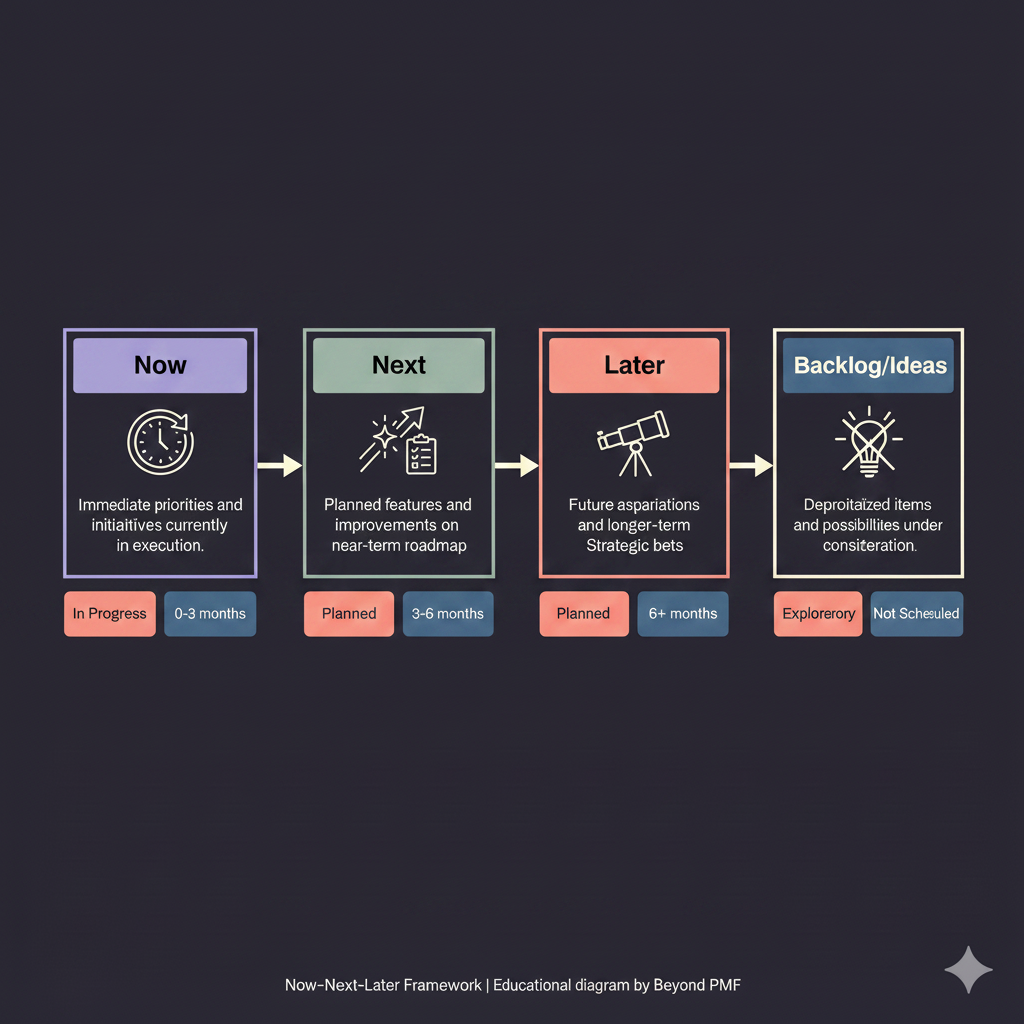
Now-Next-Later Framework

https://ik.imagekit.io/beyondpmf/frameworks/now-next-later-framework.png
The Now-Next-Later Framework primarily addresses the strategic friction of unclear priorities and resource allocation. It helps organizations define and sequence initiatives aligned with their vision by categorizing them into immediate (Now), short-term (Next), and long-term (Later) goals.

The Now-Next-Later Framework is designed to help organizations manage their strategic initiatives across different time horizons. It segments actions into three categories: 'Now' for immediate actions, 'Next' for short-term initiatives, and 'Later' for long-term goals. This approach allows teams to focus on what is most urgent, while also planning for future needs. The framework is beneficial for maintaining a clear focus on current priorities while ensuring alignment with future objectives.

Steps / Detailed Description

Identify all current and future initiatives or tasks. | Categorize each initiative into the Now, Next, or Later buckets based on urgency and impact. | Allocate resources and assign responsibilities for each categorized task. | Develop a timeline for re-evaluating and potentially re-categorizing tasks as circumstances evolve.

Best Practices

Regularly review and adjust the categorizations as projects progress and priorities shift. | Ensure clear communication across all team members about the objectives and status of tasks in each category. | Use data and feedback to inform the re-categorization of tasks during each review cycle.

Pros

Helps in prioritizing tasks effectively | Facilitates better resource allocation | Ensures a balanced focus on current and future initiatives

Cons

Can lead to neglect of long-term goals if not regularly reviewed | May become complex with too many initiatives | Requires constant updating and management attention

When to Use

In strategic planning sessions to align team efforts | When needing to balance short-term achievements with long-term goals

When Not to Use

In highly dynamic environments where priorities shift frequently | When immediate action is required on all fronts without capacity for staged planning

Related Frameworks

Categories

Scope

Scope not defined

Maturity Level

Maturity level not specified

Time to Implement

2–4 Weeks
3–6 Months
1–2 Weeks
3–6 Months
1–2 Months
3–6 Months
1–2 Weeks
Less Than 1 Day
1–2 Weeks
Longer Than 6 Months
1–2 Weeks
Longer Than 6 Months
1–2 Weeks
3–6 Months
1–2 Weeks
1–2 Weeks
1–2 Weeks
1–2 Weeks
1–2 Days
1–2 Weeks
1–2 Weeks
1–2 Weeks
1–2 Weeks
1–2 Weeks
1–2 Weeks
3–6 Months
1–2 Weeks
1–2 Weeks
1–2 Weeks
3–6 Months
1–2 Weeks
1–2 Weeks
2–4 Weeks
1–2 Weeks
1–2 Days
1–2 Weeks
Longer Than 6 Months
3–6 Months
Longer Than 6 Months
1–2 Weeks
Longer Than 6 Months
3–6 Months
Less Than 1 Day
3–6 Months
1–2 Months
3–6 Months
Longer Than 6 Months
3–6 Months
Less Than 1 Day
1–2 Weeks
3–6 Months
3–6 Months
1–2 Weeks
3–6 Months
1–2 Weeks
1–2 Weeks
1–2 Days
1–2 Weeks
1–2 Months
Longer Than 6 Months
1–2 Weeks
Longer Than 6 Months
1–2 Weeks
3–6 Months
1–2 Weeks
Less Than 1 Day
1–2 Weeks
3–6 Months
1–2 Weeks
3–6 Months
1–2 Weeks
1–2 Weeks
Longer Than 6 Months
Less Than 1 Day
3–6 Months
Longer Than 6 Months
1–2 Months
1–2 Weeks
Longer Than 6 Months
1–2 Weeks
3–6 Months
1–2 Weeks
1–2 Weeks
3–6 Months
Less Than 1 Day
1–2 Weeks
1–2 Weeks
3–6 Months
3–6 Months
Less Than 1 Day
1–2 Weeks
Longer Than 6 Months
1–2 Months
1–2 Weeks
1–2 Weeks
1–2 Weeks
Longer Than 6 Months

Copyright Information

Autor:
Unknown
N/A
Publication:
Generic Business Tool