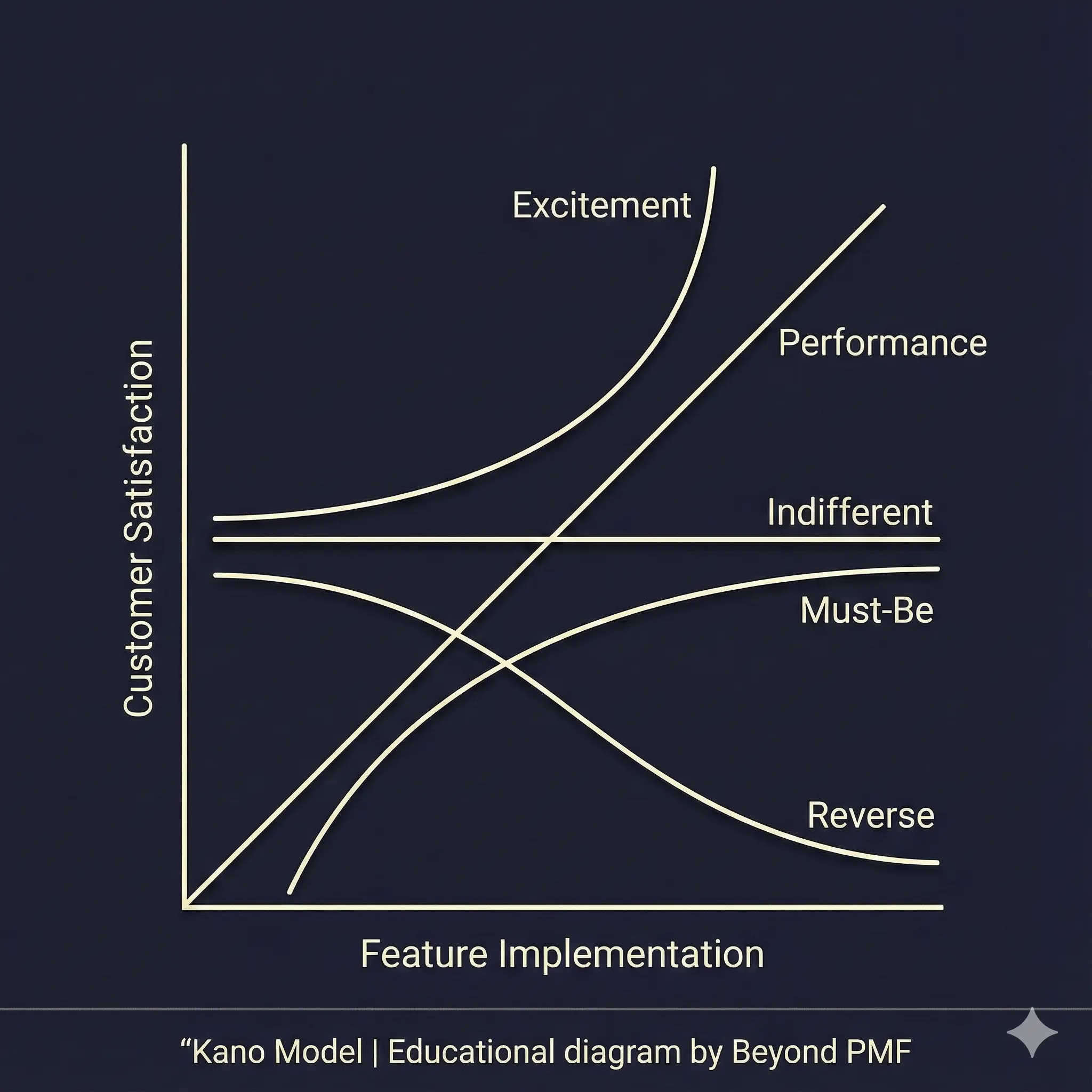
The Kano Model is a theory of product development and customer satisfaction developed in the 1980s by Professor Noriaki Kano. It categorizes customer preferences into five categories: Must-be, One-dimensional, Attractive, Indifferent, and Reverse. This framework helps product developers to prioritize features based on how they are perceived by customers and their potential impact on customer satisfaction. The Kano Model is particularly useful for identifying features that can significantly enhance customer satisfaction without proportionally increasing costs.
Identify customer needs and expectations through surveys or interviews. | Categorize the features into the Kano categories: Must-be, One-dimensional, Attractive, Indifferent, and Reverse. | Analyze how each feature affects customer satisfaction and dissatisfaction. | Prioritize the development of features based on their potential impact on satisfaction and their feasibility. | Continuously update the categories as customer expectations change and new data is gathered.
Regularly update customer data to reflect changing preferences. | Combine with other frameworks like SWOT or Porter's Five Forces for comprehensive analysis. | Use visual tools like the Kano Model diagram for better stakeholder communication.
Helps prioritize features based on customer satisfaction impact. | Enhances understanding of customer needs and expectations. | Facilitates strategic product development with focused investments.
Requires accurate and often extensive customer data. | May lead to overlooking the importance of less exciting but necessary features. | Dynamic market conditions can quickly alter the relevance of categorized features.
When developing new products or features. | When prioritizing features during product updates.
In markets with extremely fast-changing customer preferences. | When there is insufficient data on customer preferences.