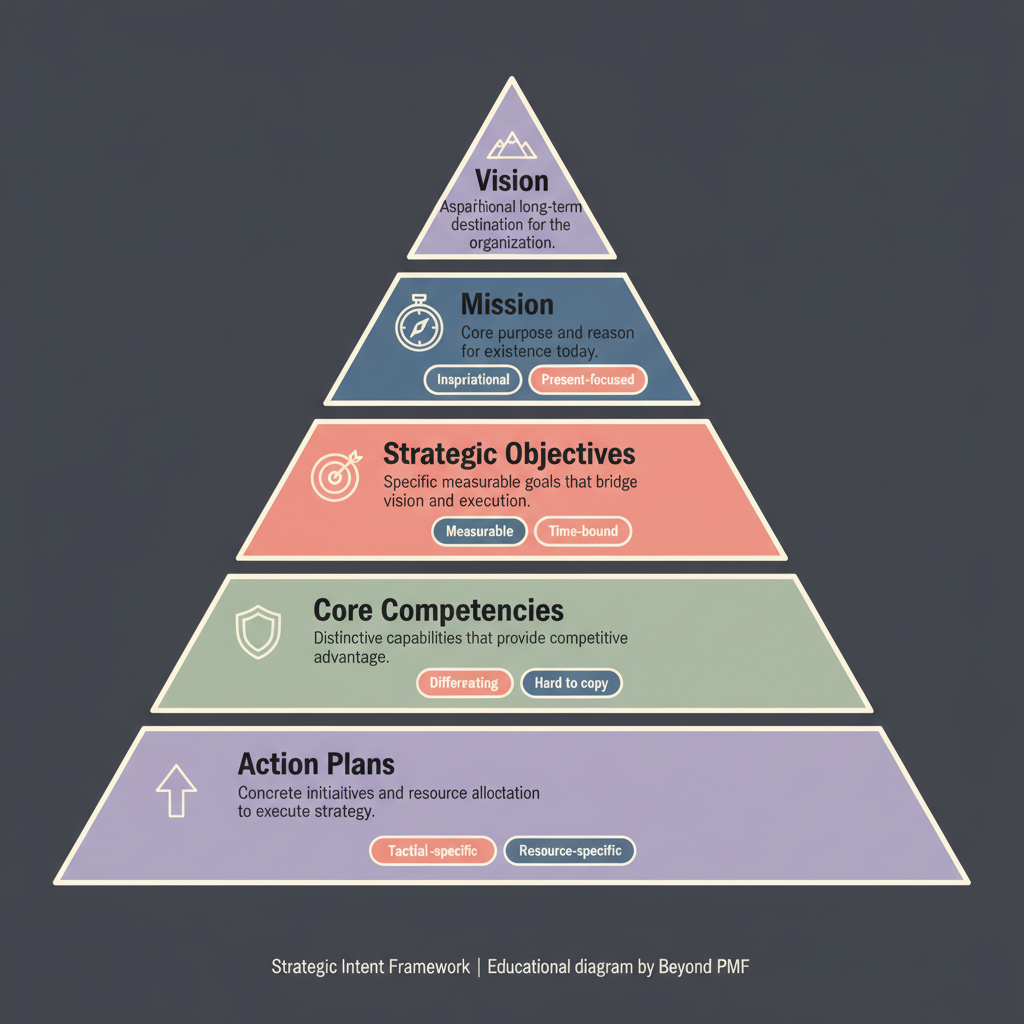
Strategic Intent Framework

https://ik.imagekit.io/beyondpmf/frameworks/strategic-intent-framework.png
The Strategic Intent Framework primarily addresses the friction of unclear direction and lack of strategic alignment. It helps organizations define their long-term goals and ensures resources are focused on achieving them.

The Strategic Intent Framework is a strategic management tool used by organizations to define a clear and compelling statement of the direction they intend to take. By setting a strategic intent, companies articulate their aspirations and outline the course they plan to follow to surpass competitors and achieve market leadership. This framework guides the entire organization by aligning resources, initiatives, and individual actions with the overarching long-term goals.

Steps / Detailed Description

Define the organization's vision and mission to set a foundational direction. | Identify the strategic intent that aligns with the vision and challenges the organization to stretch beyond its current capabilities. | Communicate the strategic intent across all levels of the organization to ensure alignment and commitment. | Develop strategic plans and initiatives that are directly tied to achieving the strategic intent. | Monitor progress and adapt strategies as necessary to maintain alignment with the strategic intent.

Best Practices

Regularly revisit and revise the strategic intent to reflect changes in the business environment | Ensure widespread understanding and buy-in through continuous communication | Align reward and recognition systems with the achievement of strategic intent milestones

Pros

Provides a clear and long-term direction for the organization | Enhances alignment of resources and efforts across the organization | Motivates and inspires employees by setting ambitious goals

Cons

Can be overly ambitious, leading to unrealistic expectations | May lead to neglect of short-term challenges and opportunities | Requires constant communication and reinforcement to maintain focus

When to Use

When defining or redefining the organization's long-term goals | When seeking to align and mobilize the entire organization towards a common objective

When Not to Use

In highly volatile industries where long-term planning is impractical | When immediate financial survival is more critical than long-term strategic positioning

Related Frameworks

Scope

Scope not defined

Maturity Level

Maturity level not specified

Time to Implement

2–4 Weeks
3–6 Months
1–2 Weeks
3–6 Months
1–2 Months
3–6 Months
1–2 Weeks
Less Than 1 Day
1–2 Weeks
Longer Than 6 Months
1–2 Weeks
Longer Than 6 Months
1–2 Weeks
3–6 Months
1–2 Weeks
1–2 Weeks
1–2 Weeks
1–2 Weeks
1–2 Days
1–2 Weeks
1–2 Weeks
1–2 Weeks
1–2 Weeks
1–2 Weeks
1–2 Weeks
3–6 Months
1–2 Weeks
1–2 Weeks
1–2 Weeks
3–6 Months
1–2 Weeks
1–2 Weeks
2–4 Weeks
1–2 Weeks
1–2 Days
1–2 Weeks
Longer Than 6 Months
3–6 Months
Longer Than 6 Months
1–2 Weeks
Longer Than 6 Months
3–6 Months
Less Than 1 Day
3–6 Months
1–2 Months
3–6 Months
Longer Than 6 Months
3–6 Months
Less Than 1 Day
1–2 Weeks
3–6 Months
3–6 Months
1–2 Weeks
3–6 Months
1–2 Weeks
1–2 Weeks
1–2 Days
1–2 Weeks
1–2 Months
Longer Than 6 Months
1–2 Weeks
Longer Than 6 Months
1–2 Weeks
3–6 Months
1–2 Weeks
Less Than 1 Day
1–2 Weeks
3–6 Months
1–2 Weeks
3–6 Months
1–2 Weeks
1–2 Weeks
Longer Than 6 Months
Less Than 1 Day
3–6 Months
Longer Than 6 Months
1–2 Months
1–2 Weeks
Longer Than 6 Months
1–2 Weeks
3–6 Months
1–2 Weeks
1–2 Weeks
3–6 Months
Less Than 1 Day
1–2 Weeks
1–2 Weeks
3–6 Months
3–6 Months
Less Than 1 Day
1–2 Weeks
Longer Than 6 Months
1–2 Months
1–2 Weeks
1–2 Weeks
1–2 Weeks
Longer Than 6 Months

Copyright Information

Autor:
Unknown
N/A
Publication:
Generic Business Tool