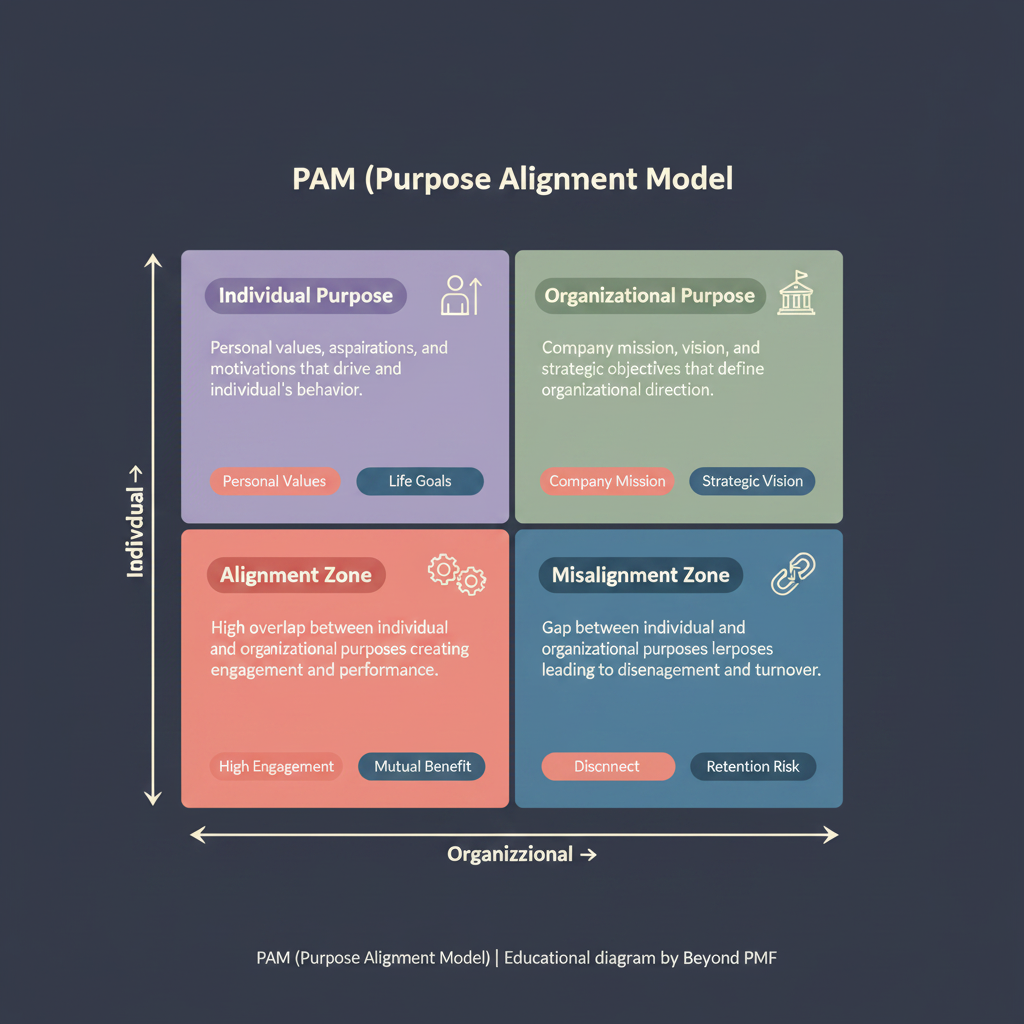
The Purpose Alignment Model (PAM) is a strategic tool designed to help organizations ensure that their initiatives and operational efforts are directly aligned with their core purpose and values. This framework categorizes activities based on their contribution to the business's core mission and market success. It is used to prioritize projects, optimize resource allocation, and enhance decision-making processes. The benefits of using PAM include improved strategic alignment, increased organizational coherence, and enhanced ability to achieve long-term goals.
Identify the core purpose and values of the organization. | Categorize all current and proposed projects and activities according to their alignment with the core purpose. | Assess the impact of each project or activity on market success and operational efficiency. | Prioritize initiatives based on their alignment and impact, focusing on those that are core to the business and enhance market position. | Allocate resources and adjust strategies based on the prioritization to maximize alignment and effectiveness. | Regularly review and reassess projects and activities to ensure ongoing alignment with the organizational purpose.
Regularly update the organization's purpose and values to reflect current objectives | Engage stakeholders from various departments for comprehensive activity assessment | Use quantitative and qualitative data to assess project impact and alignment
Enhances strategic alignment with organizational goals | Improves resource allocation and operational efficiency | Facilitates clearer decision-making processes
Can be time-consuming to categorize and assess all activities | May lead to the deprioritization of innovative but misaligned projects | Requires thorough understanding of organizational goals and market conditions
When redefining company strategy or direction | During annual planning and resource allocation
In highly dynamic markets where flexibility is crucial | When rapid innovation and experimentation are required