Capability-Based Planning

https://ik.imagekit.io/beyondpmf/frameworks/capability-based-planning.png
Capability-Based Planning directly addresses the strategic friction of unclear direction and lack of market alignment by ensuring organizational capabilities are aligned with business goals and customer needs. It helps organizations define their strategic direction through a capability lens.

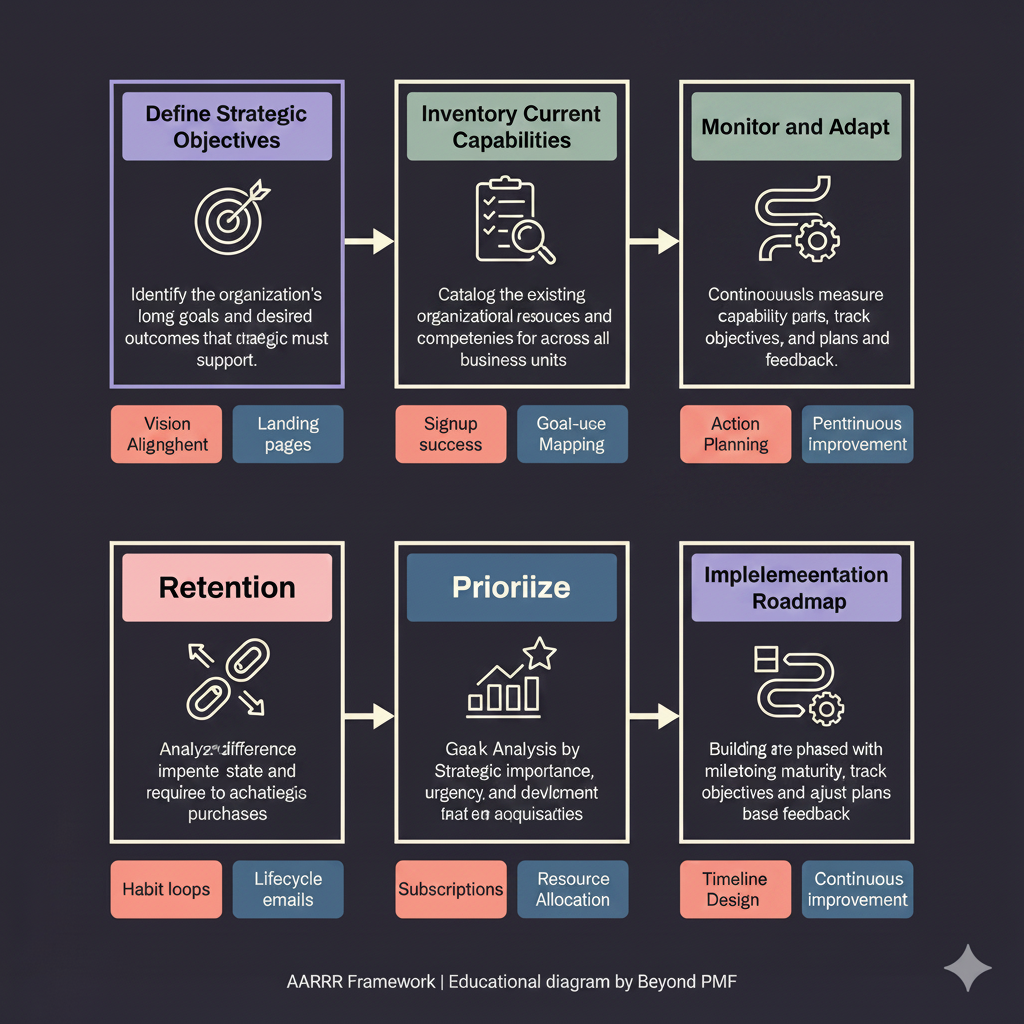
Capability-Based Planning is a framework that helps organizations focus on developing capabilities that are aligned with their strategic objectives and customer demands. It involves identifying the necessary capabilities, assessing current capabilities, and planning for the development of new capabilities to close any gaps. This approach ensures that investments are made strategically to enhance the organization's overall effectiveness and competitiveness.

Steps / Detailed Description

Identify key business objectives and associated capabilities needed to achieve them. | Assess current capabilities to determine strengths and weaknesses. | Analyze gaps between current capabilities and desired state. | Develop a capability investment plan to address identified gaps. | Implement the capability development initiatives. | Monitor and adjust the capability development efforts based on performance and changing needs.

Best Practices

Regularly update capability assessments to reflect changing business conditions | Involve stakeholders from across the organization for comprehensive insights | Prioritize capabilities that directly enhance customer satisfaction and competitive advantage

Pros

Ensures alignment between business goals and operational capabilities | Facilitates strategic investment in areas that offer the highest return | Improves organizational agility and responsiveness to market changes

Cons

Can be resource-intensive in terms of time and finances | Requires comprehensive understanding of current and future business landscapes | Dependent on accurate identification and prioritization of capabilities

When to Use

When aligning new business strategies with operational capabilities | During organizational restructuring or after mergers and acquisitions

When Not to Use

In highly unstable or unpredictable market conditions | When immediate, short-term results are required

Related Frameworks

Scope

Scope not defined

Maturity Level

Maturity level not specified

Time to Implement

2–4 Weeks
3–6 Months
1–2 Weeks
3–6 Months
1–2 Months
3–6 Months
1–2 Weeks
Less Than 1 Day
1–2 Weeks
Longer Than 6 Months
1–2 Weeks
Longer Than 6 Months
1–2 Weeks
3–6 Months
1–2 Weeks
1–2 Weeks
1–2 Weeks
1–2 Weeks
1–2 Days
1–2 Weeks
1–2 Weeks
1–2 Weeks
1–2 Weeks
1–2 Weeks
1–2 Weeks
3–6 Months
1–2 Weeks
1–2 Weeks
1–2 Weeks
3–6 Months
1–2 Weeks
1–2 Weeks
2–4 Weeks
1–2 Weeks
1–2 Days
1–2 Weeks
Longer Than 6 Months
3–6 Months
Longer Than 6 Months
1–2 Weeks
Longer Than 6 Months
3–6 Months
Less Than 1 Day
3–6 Months
1–2 Months
3–6 Months
Longer Than 6 Months
3–6 Months
Less Than 1 Day
1–2 Weeks
3–6 Months
3–6 Months
1–2 Weeks
3–6 Months
1–2 Weeks
1–2 Weeks
1–2 Days
1–2 Weeks
1–2 Months
Longer Than 6 Months
1–2 Weeks
Longer Than 6 Months
1–2 Weeks
3–6 Months
1–2 Weeks
Less Than 1 Day
1–2 Weeks
3–6 Months
1–2 Weeks
3–6 Months
1–2 Weeks
1–2 Weeks
Longer Than 6 Months
Less Than 1 Day
3–6 Months
Longer Than 6 Months
1–2 Months
1–2 Weeks
Longer Than 6 Months
1–2 Weeks
3–6 Months
1–2 Weeks
1–2 Weeks
3–6 Months
Less Than 1 Day
1–2 Weeks
1–2 Weeks
3–6 Months
3–6 Months
Less Than 1 Day
1–2 Weeks
Longer Than 6 Months
1–2 Months
1–2 Weeks
1–2 Weeks
1–2 Weeks
Longer Than 6 Months

Copyright Information

Autor:
Unknown
N/A
Publication:
Generic Business Tool