
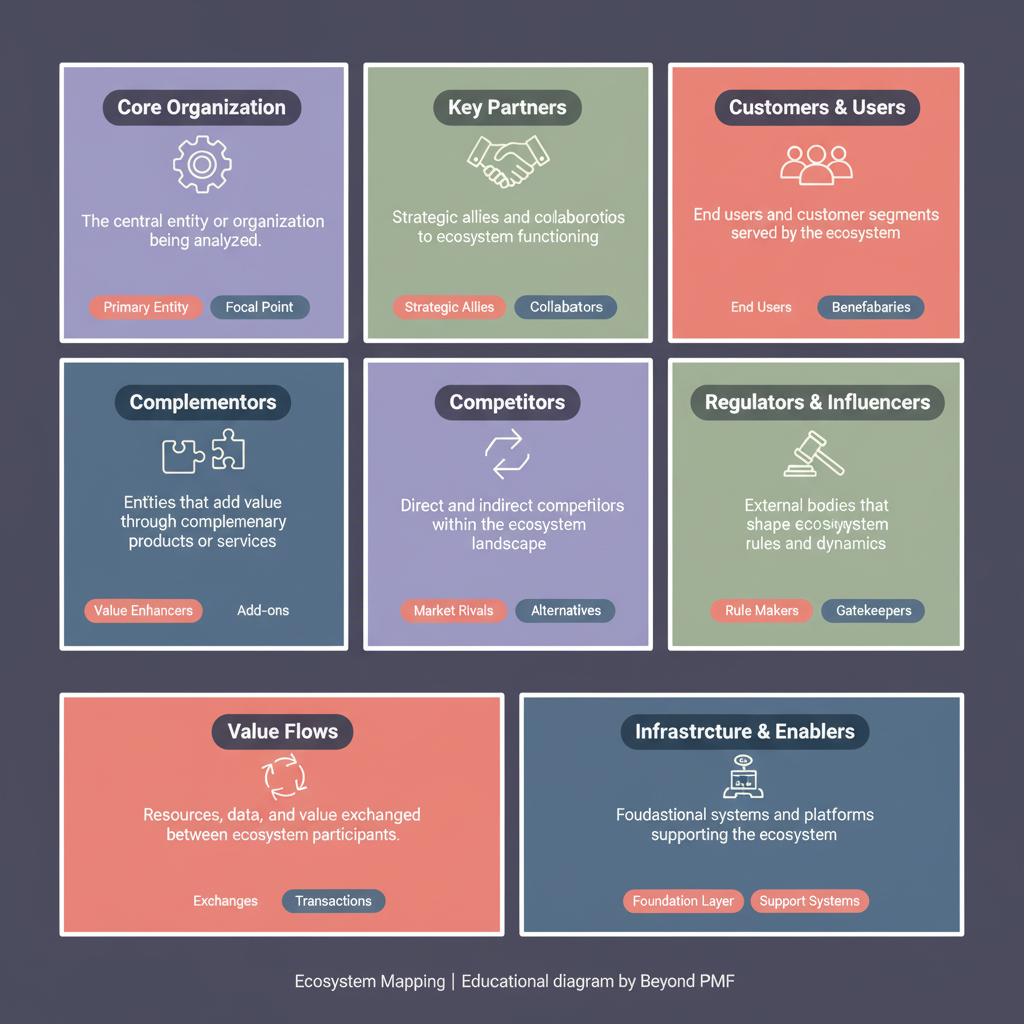
Ecosystem Mapping is a framework that helps organizations understand and visualize the complex networks of relationships that drive value creation and delivery in their business environment. This framework is particularly useful for identifying key stakeholders, understanding their roles, and assessing the influences and dependencies among them. By mapping out these relationships, companies can better strategize, innovate, and maintain competitive advantages in their industry.
Identify the key elements of the ecosystem including stakeholders, resources, and interactions. | Define the objectives of the ecosystem map, such as understanding market dynamics or identifying new opportunities. | Collect data through research, interviews, and collaboration with stakeholders. | Visualize the ecosystem using tools like diagrams or software platforms designed for mapping. | Analyze the map to identify strategic insights and opportunities. | Iterate on the map as new information becomes available or as the ecosystem evolves.
Regularly update the ecosystem map to reflect changes in the environment. | Engage with a wide range of stakeholders for diverse insights. | Use clear and accessible visualization tools to enhance understanding and communication.
Provides a comprehensive view of business relationships and dependencies. | Facilitates better strategic planning and decision making. | Helps identify new opportunities for collaboration and innovation.
Can be time-consuming to gather accurate and comprehensive data. | May become quickly outdated if not regularly updated. | Complexity can be overwhelming and difficult to manage.
When entering a new market or industry. | When seeking to innovate or find new strategic partnerships.
In very stable, unchanging market conditions. | When quick, tactical decisions are needed without comprehensive analysis.