Product Life Cycle (PLC)

https://ik.imagekit.io/beyondpmf/frameworks/product-life-cycle-plc.png
The Product Life Cycle framework primarily addresses the strategic friction of market alignment and product direction. It helps businesses understand where a product is in its life and adapt their strategies for positioning, marketing, and resource allocation accordingly. This helps to guide decisions on vision, business model and strategic roadmap.

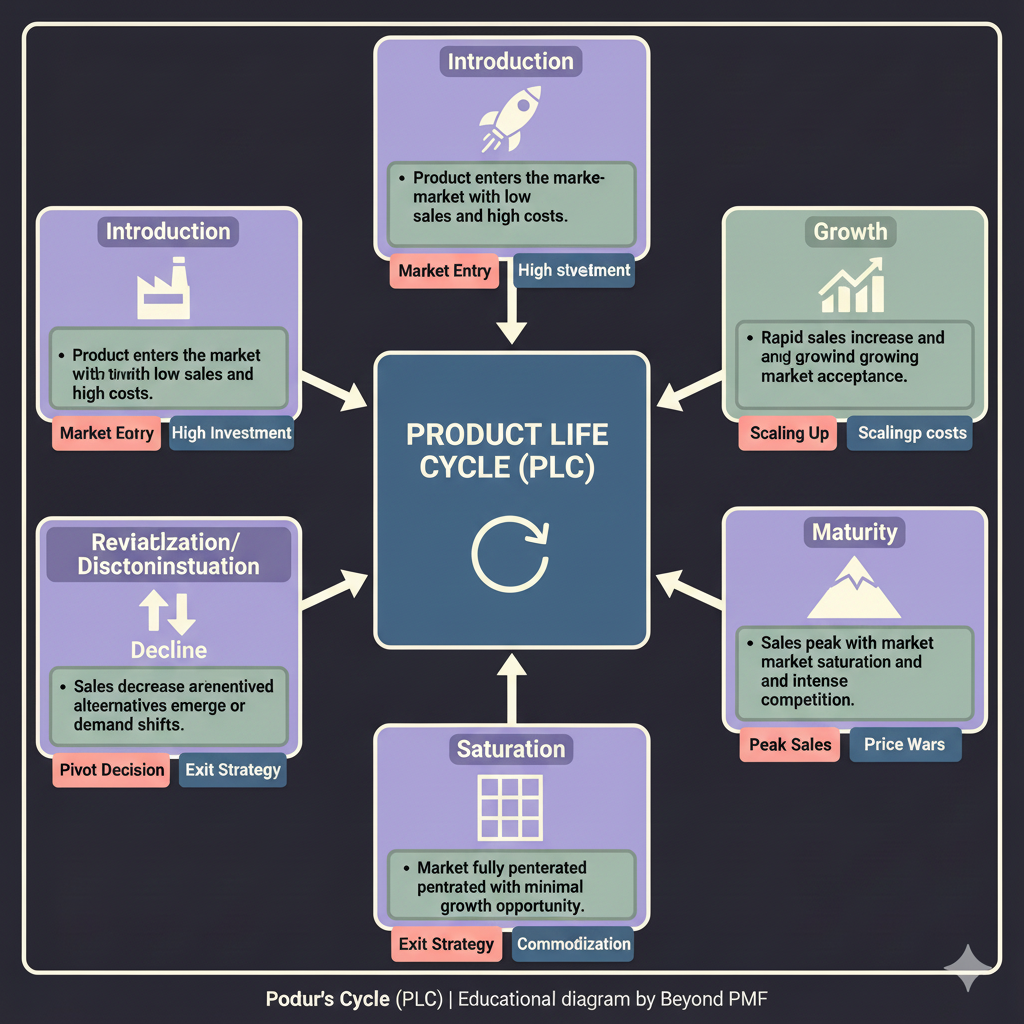
The Product Life Cycle (PLC) is a business framework that outlines the progression of a product through four main stages: introduction, growth, maturity, and decline. This framework helps businesses to understand the changing needs of the market and adjust marketing, production, and financial strategies accordingly. By applying the PLC, companies can better manage product strategies, optimize resource allocation, and extend the profitability of their products.

Steps / Detailed Description

Introduction Stage: Launching the product into the market, characterized by low sales and high costs. | Growth Stage: Rapid market acceptance and increasing profits. | Maturity Stage: Slowing growth as the product reaches peak market penetration. | Decline Stage: Decreasing sales and profits as the product loses market relevance.

Best Practices

Regularly review market trends and product performance. | Adapt marketing strategies to each stage of the lifecycle. | Plan for product updates or improvements during the maturity stage.

Pros

Provides a structured approach to product management. | Helps in forecasting and managing cash flows. | Facilitates strategic planning and lifecycle management.

Cons

May oversimplify product dynamics. | Not all products follow the typical lifecycle pattern. | Can lead to premature product withdrawal.

When to Use

When launching a new product. | When trying to extend the market life of a product.

When Not to Use

For products in rapidly changing industries. | When product behavior is unpredictable.

Related Frameworks

Lifecycle

Not tied to a specific lifecycle stage

Scope

Scope not defined

Maturity Level

Maturity level not specified

Time to Implement

2–4 Weeks
3–6 Months
1–2 Weeks
3–6 Months
1–2 Months
3–6 Months
1–2 Weeks
Less Than 1 Day
1–2 Weeks
Longer Than 6 Months
1–2 Weeks
Longer Than 6 Months
1–2 Weeks
3–6 Months
1–2 Weeks
1–2 Weeks
1–2 Weeks
1–2 Weeks
1–2 Days
1–2 Weeks
1–2 Weeks
1–2 Weeks
1–2 Weeks
1–2 Weeks
1–2 Weeks
3–6 Months
1–2 Weeks
1–2 Weeks
1–2 Weeks
3–6 Months
1–2 Weeks
1–2 Weeks
2–4 Weeks
1–2 Weeks
1–2 Days
1–2 Weeks
Longer Than 6 Months
3–6 Months
Longer Than 6 Months
1–2 Weeks
Longer Than 6 Months
3–6 Months
Less Than 1 Day
3–6 Months
1–2 Months
3–6 Months
Longer Than 6 Months
3–6 Months
Less Than 1 Day
1–2 Weeks
3–6 Months
3–6 Months
1–2 Weeks
3–6 Months
1–2 Weeks
1–2 Weeks
1–2 Days
1–2 Weeks
1–2 Months
Longer Than 6 Months
1–2 Weeks
Longer Than 6 Months
1–2 Weeks
3–6 Months
1–2 Weeks
Less Than 1 Day
1–2 Weeks
3–6 Months
1–2 Weeks
3–6 Months
1–2 Weeks
1–2 Weeks
Longer Than 6 Months
Less Than 1 Day
3–6 Months
Longer Than 6 Months
1–2 Months
1–2 Weeks
Longer Than 6 Months
1–2 Weeks
3–6 Months
1–2 Weeks
1–2 Weeks
3–6 Months
Less Than 1 Day
1–2 Weeks
1–2 Weeks
3–6 Months
3–6 Months
Less Than 1 Day
1–2 Weeks
Longer Than 6 Months
1–2 Months
1–2 Weeks
1–2 Weeks
1–2 Weeks
Longer Than 6 Months

Copyright Information

Autor:
Public Domain
N/A
Publication:
Generic Business Tool