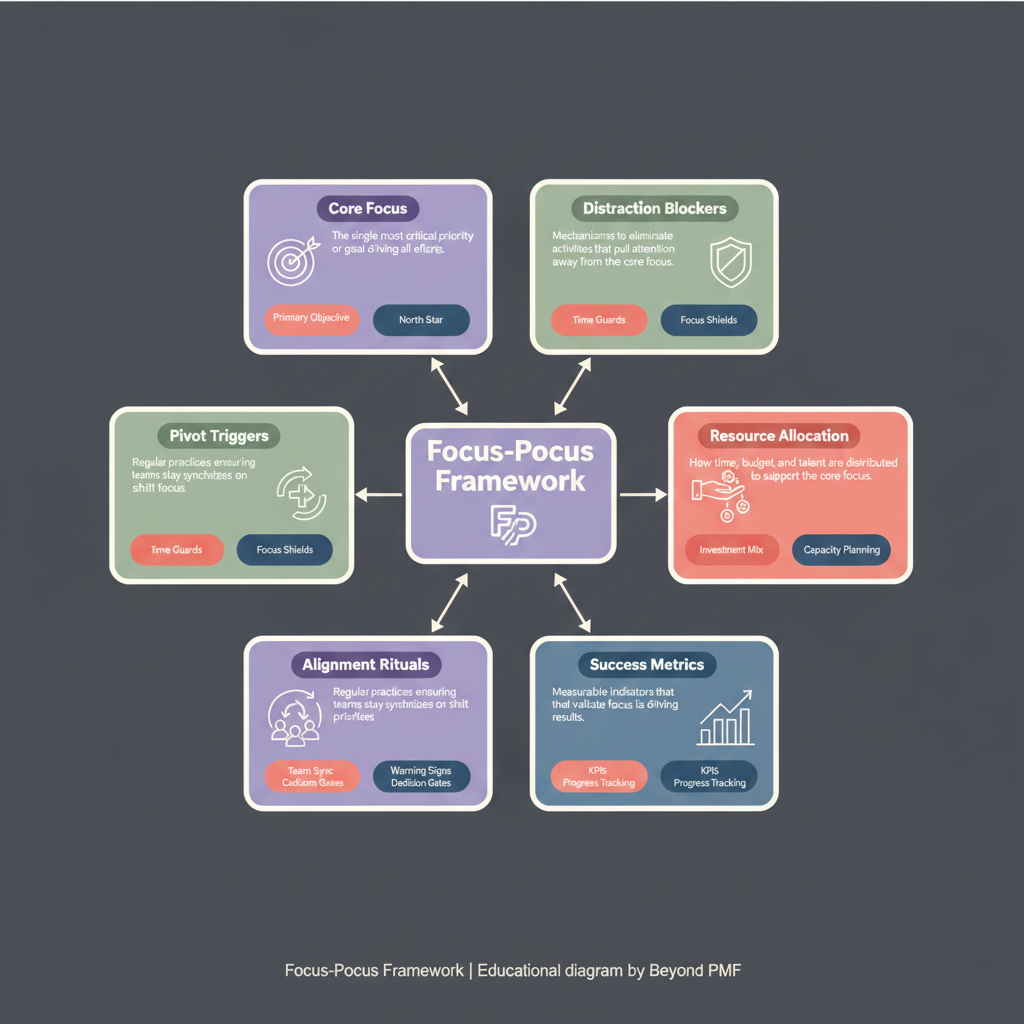
Focus-Pocus Framework

https://ik.imagekit.io/beyondpmf/frameworks/focus-pocus-framework.png
The Focus-Pocus Framework aims to address unclear direction and conflicting priorities within an organization. By promoting targeted actions and mindfulness, it seeks to improve focus, which directly relates to strategic alignment and achieving organizational goals.

The Focus-Pocus Framework is a comprehensive approach to improving concentration and effectiveness in workplace settings. It integrates mindfulness with strategic planning to help teams and individuals prioritize tasks, manage distractions, and achieve their objectives more efficiently. By applying this framework, organizations can expect to see improved employee engagement, higher productivity, and better overall performance.

Steps / Detailed Description

Identify key objectives and priorities for the team or individual. | Assess current distractions and barriers to focus within the work environment. | Implement mindfulness exercises tailored to enhance concentration. | Develop a structured plan to tackle priorities with scheduled focus sessions. | Regularly review and adjust the focus plan to adapt to changing needs and objectives.

Best Practices

Start with clear, achievable goals for focus improvement | Incorporate regular short mindfulness sessions to build habit | Use feedback loops to refine focus strategies continuously

Pros

Increases productivity by reducing distractions | Enhances employee satisfaction through mindful practices | Improves the quality of work by fostering better concentration

Cons

Requires consistent commitment to mindfulness practices | May be challenging to implement across diverse teams | Initial setup and training can be time-consuming

When to Use

When productivity is consistently impacted by distractions | During periods of high stress and tight deadlines

When Not to Use

In highly unpredictable and rapidly changing work environments | When the team is not open to mindfulness and mental health practices

Related Frameworks

Lifecycle

Scope

Scope not defined

Maturity Level

Maturity level not specified

Time to Implement

2–4 Weeks
3–6 Months
1–2 Weeks
3–6 Months
1–2 Months
3–6 Months
1–2 Weeks
Less Than 1 Day
1–2 Weeks
Longer Than 6 Months
1–2 Weeks
Longer Than 6 Months
1–2 Weeks
3–6 Months
1–2 Weeks
1–2 Weeks
1–2 Weeks
1–2 Weeks
1–2 Days
1–2 Weeks
1–2 Weeks
1–2 Weeks
1–2 Weeks
1–2 Weeks
1–2 Weeks
3–6 Months
1–2 Weeks
1–2 Weeks
1–2 Weeks
3–6 Months
1–2 Weeks
1–2 Weeks
2–4 Weeks
1–2 Weeks
1–2 Days
1–2 Weeks
Longer Than 6 Months
3–6 Months
Longer Than 6 Months
1–2 Weeks
Longer Than 6 Months
3–6 Months
Less Than 1 Day
3–6 Months
1–2 Months
3–6 Months
Longer Than 6 Months
3–6 Months
Less Than 1 Day
1–2 Weeks
3–6 Months
3–6 Months
1–2 Weeks
3–6 Months
1–2 Weeks
1–2 Weeks
1–2 Days
1–2 Weeks
1–2 Months
Longer Than 6 Months
1–2 Weeks
Longer Than 6 Months
1–2 Weeks
3–6 Months
1–2 Weeks
Less Than 1 Day
1–2 Weeks
3–6 Months
1–2 Weeks
3–6 Months
1–2 Weeks
1–2 Weeks
Longer Than 6 Months
Less Than 1 Day
3–6 Months
Longer Than 6 Months
1–2 Months
1–2 Weeks
Longer Than 6 Months
1–2 Weeks
3–6 Months
1–2 Weeks
1–2 Weeks
3–6 Months
Less Than 1 Day
1–2 Weeks
1–2 Weeks
3–6 Months
3–6 Months
Less Than 1 Day
1–2 Weeks
Longer Than 6 Months
1–2 Months
1–2 Weeks
1–2 Weeks
1–2 Weeks
Longer Than 6 Months

Copyright Information

Autor:
Unknown
N/A
Publication:
Unknown