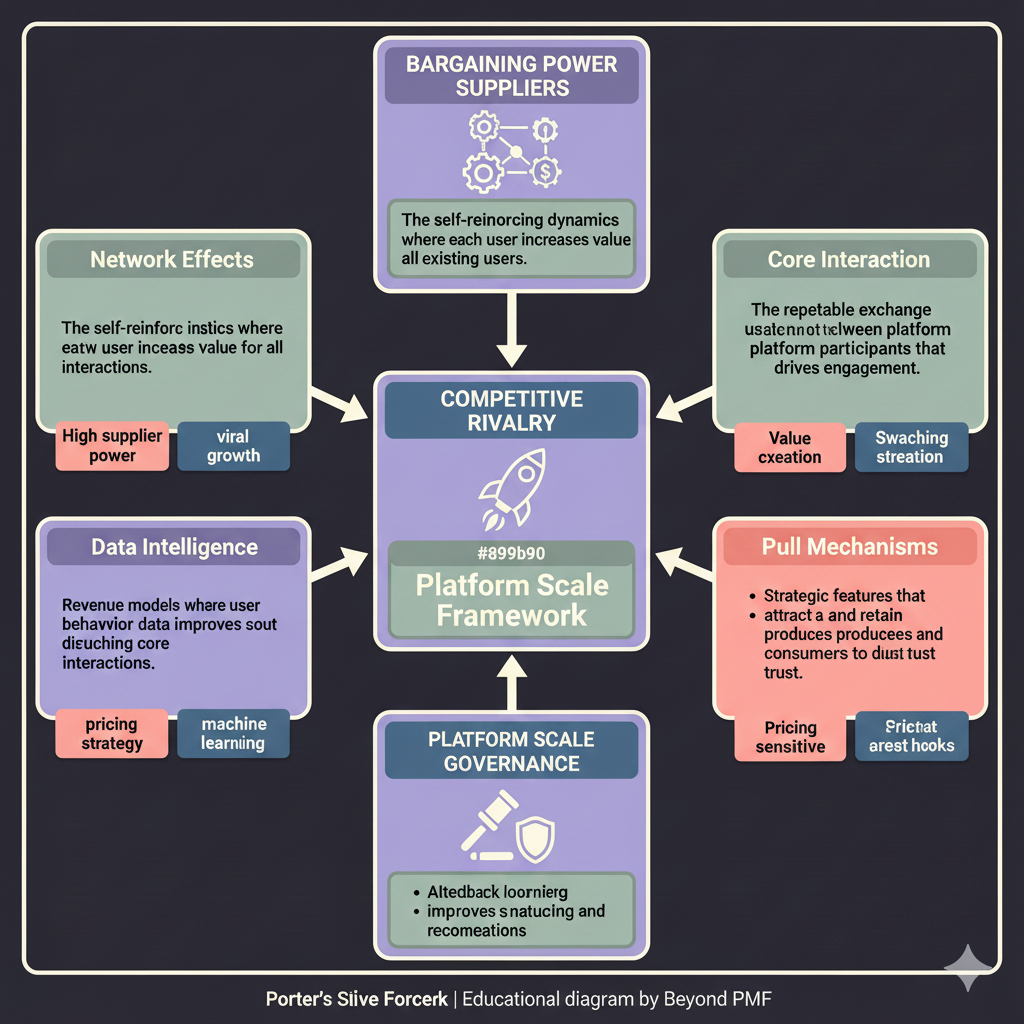
Platform Scale Framework

https://ik.imagekit.io/beyondpmf/frameworks/platform-scale-framework.png
The Platform Scale Framework focuses on scaling platforms, which inherently involves strategic choices about network effects, ecosystem development, and market positioning. This framework directly addresses friction arising from unclear direction and misalignment with market opportunities.

The Platform Scale Framework is a comprehensive approach used by businesses to scale their operations through the creation and management of digital platforms. This framework emphasizes the importance of creating value for a large network of users and partners by facilitating interactions and transactions. It is particularly beneficial for companies looking to expand their market reach and innovate in their service offerings through technology.

Steps / Detailed Description

Identify core interactions: Define the primary interactions that your platform will facilitate. | Design the value unit: Determine what value your platform offers to its users. | Build the platform's ecosystem: Develop a strategy to attract users and third-party providers. | Implement feedback loops: Use data and analytics to refine and improve the platform's offerings. | Scale with network effects: Expand the platform's user base to increase value for all participants.

Best Practices

Focus on user experience to drive engagement | Leverage data analytics for continuous improvement | Encourage ecosystem partnerships for added value

Pros

Rapid scalability through network effects | Diversification of revenue streams | Enhanced user engagement and retention

Cons

High dependency on user acquisition and retention | Complexity in managing a large ecosystem | Risk of platform disintermediation

When to Use

When aiming to build a scalable digital business model | When seeking to create a multi-sided marketplace

When Not to Use

For businesses with a simple, linear service or product offering | When rapid scalability is not a primary goal

Related Frameworks

Lifecycle

Not tied to a specific lifecycle stage

Scope

Scope not defined

Maturity Level

Maturity level not specified

Time to Implement

2–4 Weeks
3–6 Months
1–2 Weeks
3–6 Months
1–2 Months
3–6 Months
1–2 Weeks
Less Than 1 Day
1–2 Weeks
Longer Than 6 Months
1–2 Weeks
Longer Than 6 Months
1–2 Weeks
3–6 Months
1–2 Weeks
1–2 Weeks
1–2 Weeks
1–2 Weeks
1–2 Days
1–2 Weeks
1–2 Weeks
1–2 Weeks
1–2 Weeks
1–2 Weeks
1–2 Weeks
3–6 Months
1–2 Weeks
1–2 Weeks
1–2 Weeks
3–6 Months
1–2 Weeks
1–2 Weeks
2–4 Weeks
1–2 Weeks
1–2 Days
1–2 Weeks
Longer Than 6 Months
3–6 Months
Longer Than 6 Months
1–2 Weeks
Longer Than 6 Months
3–6 Months
Less Than 1 Day
3–6 Months
1–2 Months
3–6 Months
Longer Than 6 Months
3–6 Months
Less Than 1 Day
1–2 Weeks
3–6 Months
3–6 Months
1–2 Weeks
3–6 Months
1–2 Weeks
1–2 Weeks
1–2 Days
1–2 Weeks
1–2 Months
Longer Than 6 Months
1–2 Weeks
Longer Than 6 Months
1–2 Weeks
3–6 Months
1–2 Weeks
Less Than 1 Day
1–2 Weeks
3–6 Months
1–2 Weeks
3–6 Months
1–2 Weeks
1–2 Weeks
Longer Than 6 Months
Less Than 1 Day
3–6 Months
Longer Than 6 Months
1–2 Months
1–2 Weeks
Longer Than 6 Months
1–2 Weeks
3–6 Months
1–2 Weeks
1–2 Weeks
3–6 Months
Less Than 1 Day
1–2 Weeks
1–2 Weeks
3–6 Months
3–6 Months
Less Than 1 Day
1–2 Weeks
Longer Than 6 Months
1–2 Months
1–2 Weeks
1–2 Weeks
1–2 Weeks
Longer Than 6 Months

Copyright Information

Autor:
Unknown
N/A
Publication:
Unknown