
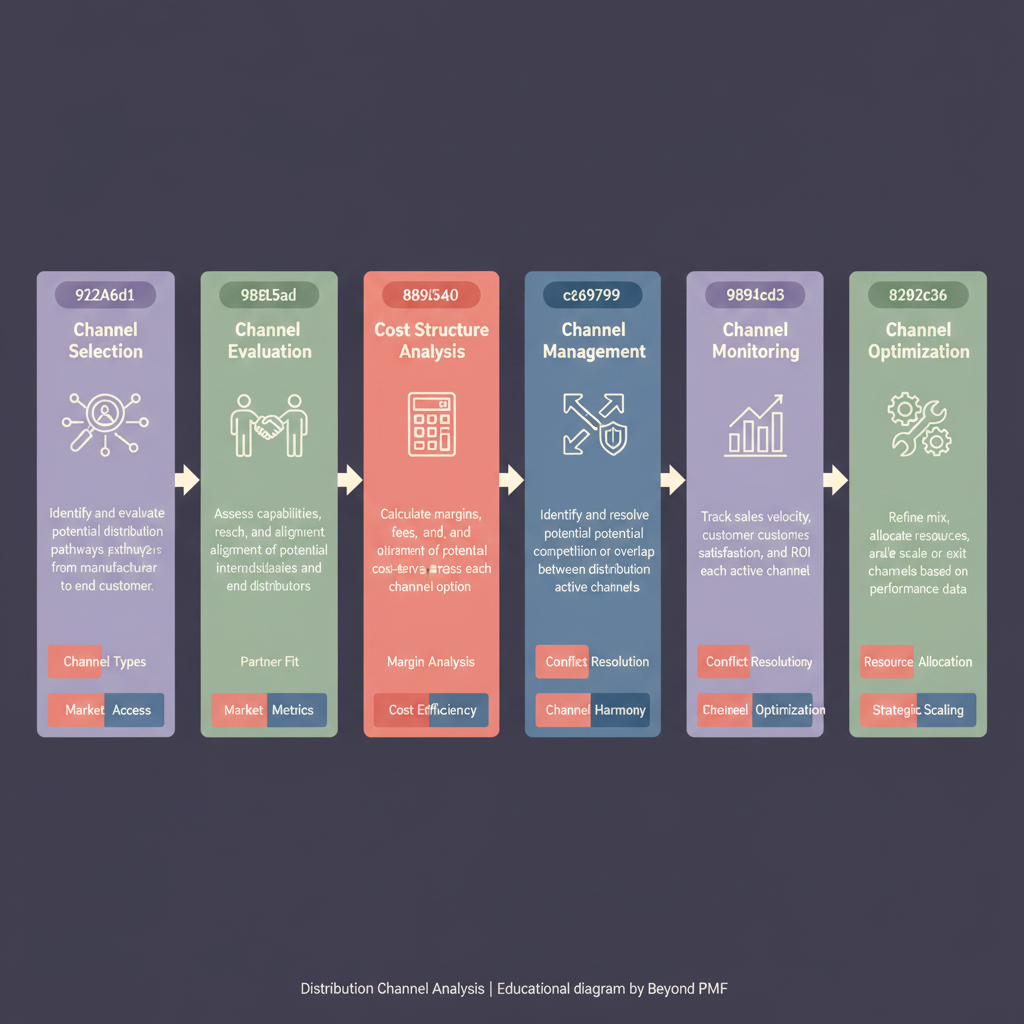
Distribution Channel Analysis is a framework used by businesses to assess and optimize the various channels through which their products are distributed to end users. This analysis helps companies understand the efficiency, effectiveness, and value of different distribution channels, from direct sales to intermediaries like wholesalers and retailers. By examining these channels, businesses can identify opportunities for improvement, reduce costs, enhance customer reach, and increase overall sales performance.
Identify existing distribution channels: Map out all current channels through which the product is distributed. | Evaluate channel performance: Analyze sales data, customer feedback, and channel costs to assess each channel's performance. | Compare with competitors: Study how competitors distribute their products and their channel effectiveness. | Identify gaps and opportunities: Look for unserved or underserved markets and potential for new channels. | Develop improvement strategies: Based on analysis, devise strategies to enhance or modify distribution channels. | Implement changes: Apply the chosen strategies to modify existing channels or develop new ones. | Monitor and adjust: Continuously monitor the performance of the distribution channels and make adjustments as necessary.
Regularly update channel data to maintain accuracy | Involve stakeholders from different channels in the analysis process | Use a mix of qualitative and quantitative data for a comprehensive view
Enhanced market reach | Optimized distribution costs | Improved customer satisfaction
Time-consuming analysis process | Dependence on accurate and comprehensive data | Potential resistance from existing channel partners
When entering a new market | When launching a new product
In very stable markets with established distribution | When there is insufficient data to conduct a thorough analysis