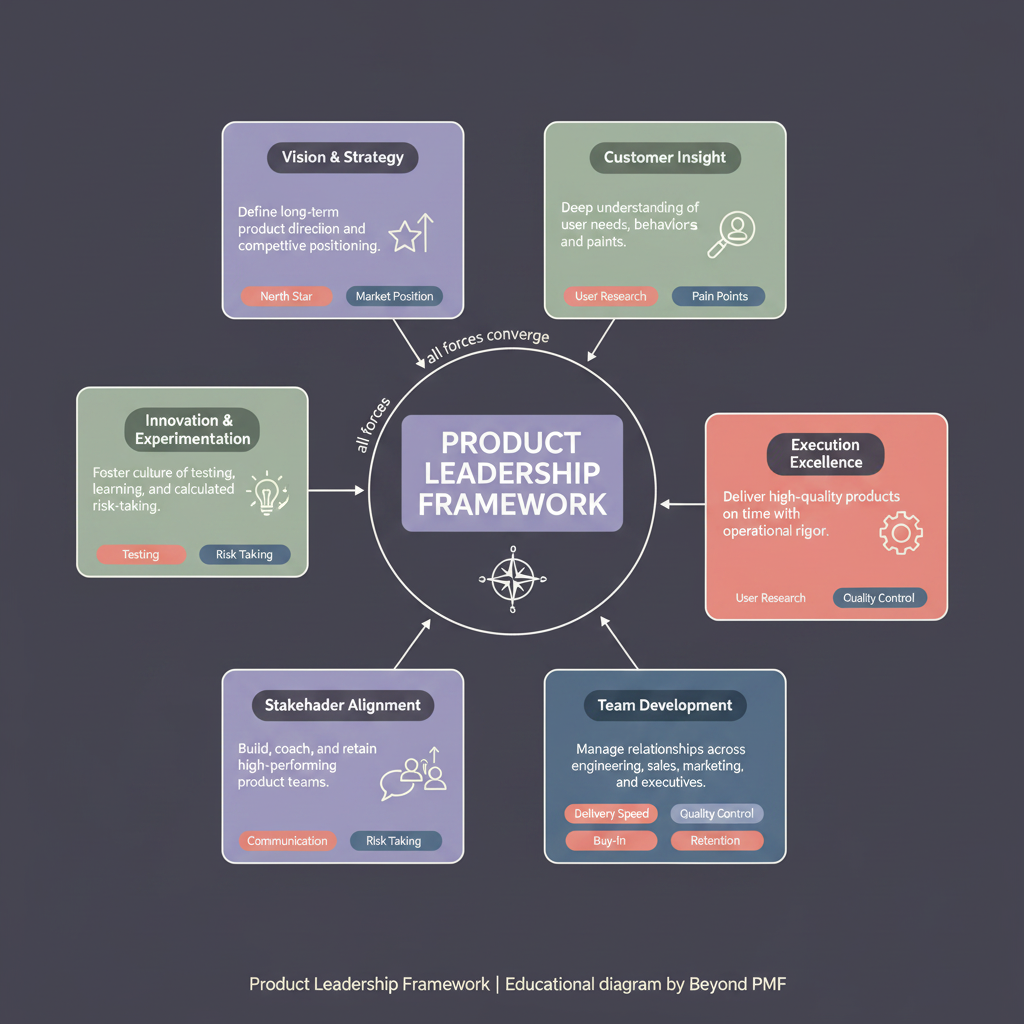
Product Leadership Framework

https://ik.imagekit.io/beyondpmf/frameworks/product-leadership-framework.png
The Product Leadership Framework centers on achieving market dominance through product innovation. This indicates a focus on strategic elements like vision, market positioning, and potentially the business model required to lead through product excellence.

The Product Leadership Framework is a strategic approach used by organizations aiming to lead their market through superior product offerings. It emphasizes innovation, product quality, and customer experience as key differentiators. This framework guides companies in developing products that not only meet but exceed customer expectations, thereby establishing a competitive edge and fostering brand loyalty.

Steps / Detailed Description

Identify customer needs and market gaps through rigorous research. | Foster a culture of innovation within the organization to encourage creative solutions. | Develop a clear and compelling product vision that aligns with business goals. | Implement rapid prototyping and iterative testing to refine product features. | Launch the product with a strong go-to-market strategy and continuous improvement plan.

Best Practices

Maintain close engagement with customers to continually gather feedback. | Invest in top talent and cutting-edge technologies to stay ahead in product development. | Regularly review and adjust the product strategy based on market trends and performance data.

Pros

Drives market differentiation through innovation. | Enhances brand reputation and customer loyalty. | Supports premium pricing strategies due to perceived product superiority.

Cons

High research and development costs. | Risk of market misalignment if customer needs are not accurately predicted. | Requires constant innovation to maintain leadership, which can be resource-intensive.

When to Use

When aiming to establish a brand as a market leader. | In industries where product innovation is a key driver of customer loyalty and competitive advantage.

When Not to Use

In markets where cost leadership is more important than product differentiation. | When resources for extensive R&D and innovation are limited.

Related Frameworks

Lifecycle

Not tied to a specific lifecycle stage

Scope

Scope not defined

Maturity Level

Maturity level not specified

Time to Implement

2–4 Weeks
3–6 Months
1–2 Weeks
3–6 Months
1–2 Months
3–6 Months
1–2 Weeks
Less Than 1 Day
1–2 Weeks
Longer Than 6 Months
1–2 Weeks
Longer Than 6 Months
1–2 Weeks
3–6 Months
1–2 Weeks
1–2 Weeks
1–2 Weeks
1–2 Weeks
1–2 Days
1–2 Weeks
1–2 Weeks
1–2 Weeks
1–2 Weeks
1–2 Weeks
1–2 Weeks
3–6 Months
1–2 Weeks
1–2 Weeks
1–2 Weeks
3–6 Months
1–2 Weeks
1–2 Weeks
2–4 Weeks
1–2 Weeks
1–2 Days
1–2 Weeks
Longer Than 6 Months
3–6 Months
Longer Than 6 Months
1–2 Weeks
Longer Than 6 Months
3–6 Months
Less Than 1 Day
3–6 Months
1–2 Months
3–6 Months
Longer Than 6 Months
3–6 Months
Less Than 1 Day
1–2 Weeks
3–6 Months
3–6 Months
1–2 Weeks
3–6 Months
1–2 Weeks
1–2 Weeks
1–2 Days
1–2 Weeks
1–2 Months
Longer Than 6 Months
1–2 Weeks
Longer Than 6 Months
1–2 Weeks
3–6 Months
1–2 Weeks
Less Than 1 Day
1–2 Weeks
3–6 Months
1–2 Weeks
3–6 Months
1–2 Weeks
1–2 Weeks
Longer Than 6 Months
Less Than 1 Day
3–6 Months
Longer Than 6 Months
1–2 Months
1–2 Weeks
Longer Than 6 Months
1–2 Weeks
3–6 Months
1–2 Weeks
1–2 Weeks
3–6 Months
Less Than 1 Day
1–2 Weeks
1–2 Weeks
3–6 Months
3–6 Months
Less Than 1 Day
1–2 Weeks
Longer Than 6 Months
1–2 Months
1–2 Weeks
1–2 Weeks
1–2 Weeks
Longer Than 6 Months

Copyright Information

Autor:
Unknown
N/A
Publication:
Unknown