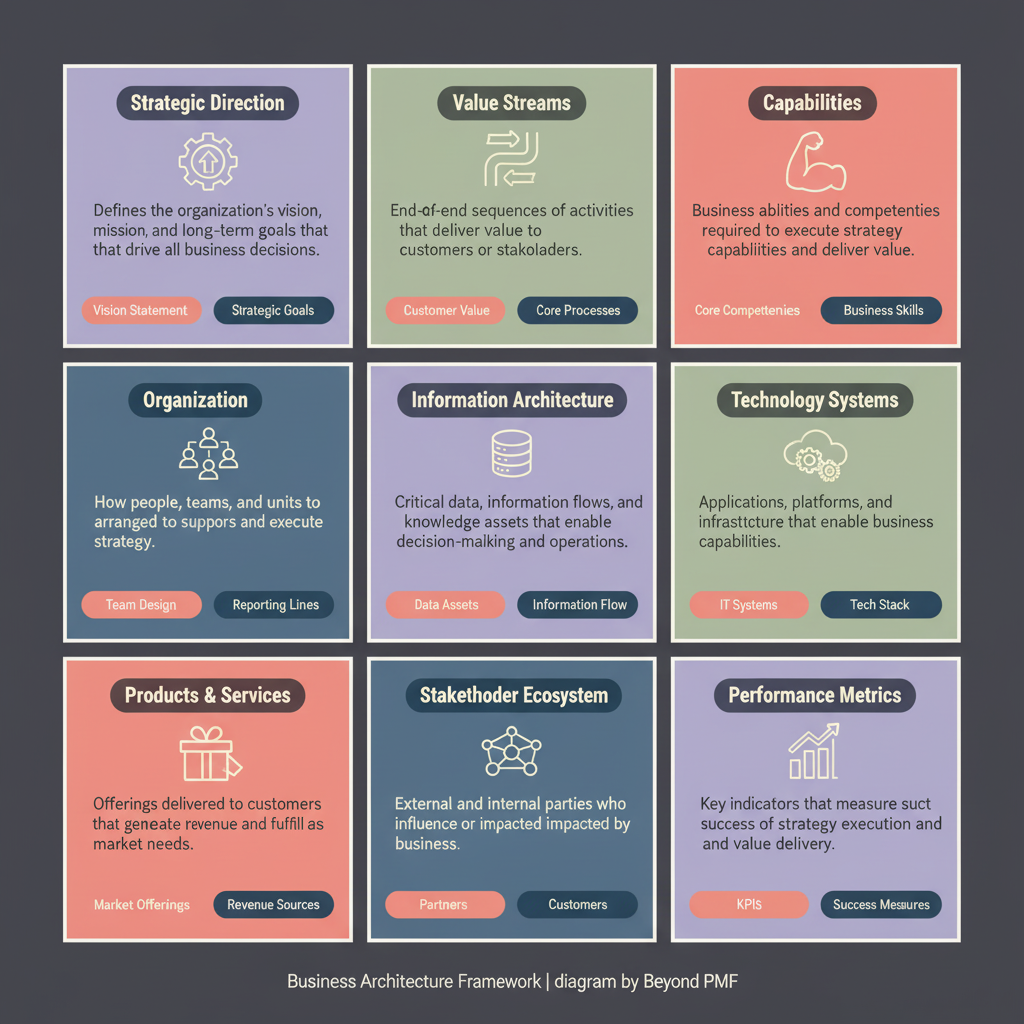
The Business Architecture Framework provides a comprehensive view of an organization's structure, processes, and business models. It is used to align strategic objectives with tactical demands, ensuring that all aspects of the business are optimized and interrelated. This framework helps in identifying opportunities for improvement, facilitating change management, and driving business outcomes effectively.
Define the business strategy and objectives. | Map the organization's core processes and interactions. | Identify key business roles and responsibilities. | Develop a governance structure to oversee the framework's implementation. | Continuously monitor and refine the business architecture.
Engage stakeholders from all levels of the organization | Regularly update the business architecture to reflect changes | Use standardized tools and methodologies for consistency
Improves alignment between strategy and operations | Enhances visibility across the organization | Facilitates better decision-making
Can be time-consuming to implement | Requires high-level executive support | May be complex for smaller organizations
During major organizational changes | When aligning new business strategies
In very small or less complex organizations | When immediate, tactical solutions are required