
Innovation frameworks help organizations systematically create, test, and scale new products, services, or business models. They provide repeatable processes for navigating uncertainty and reducing commercialization risk. These frameworks are critical when companies need differentiation beyond incremental improvements. Use them to build innovation portfolios and sustain long‑term competitiveness.
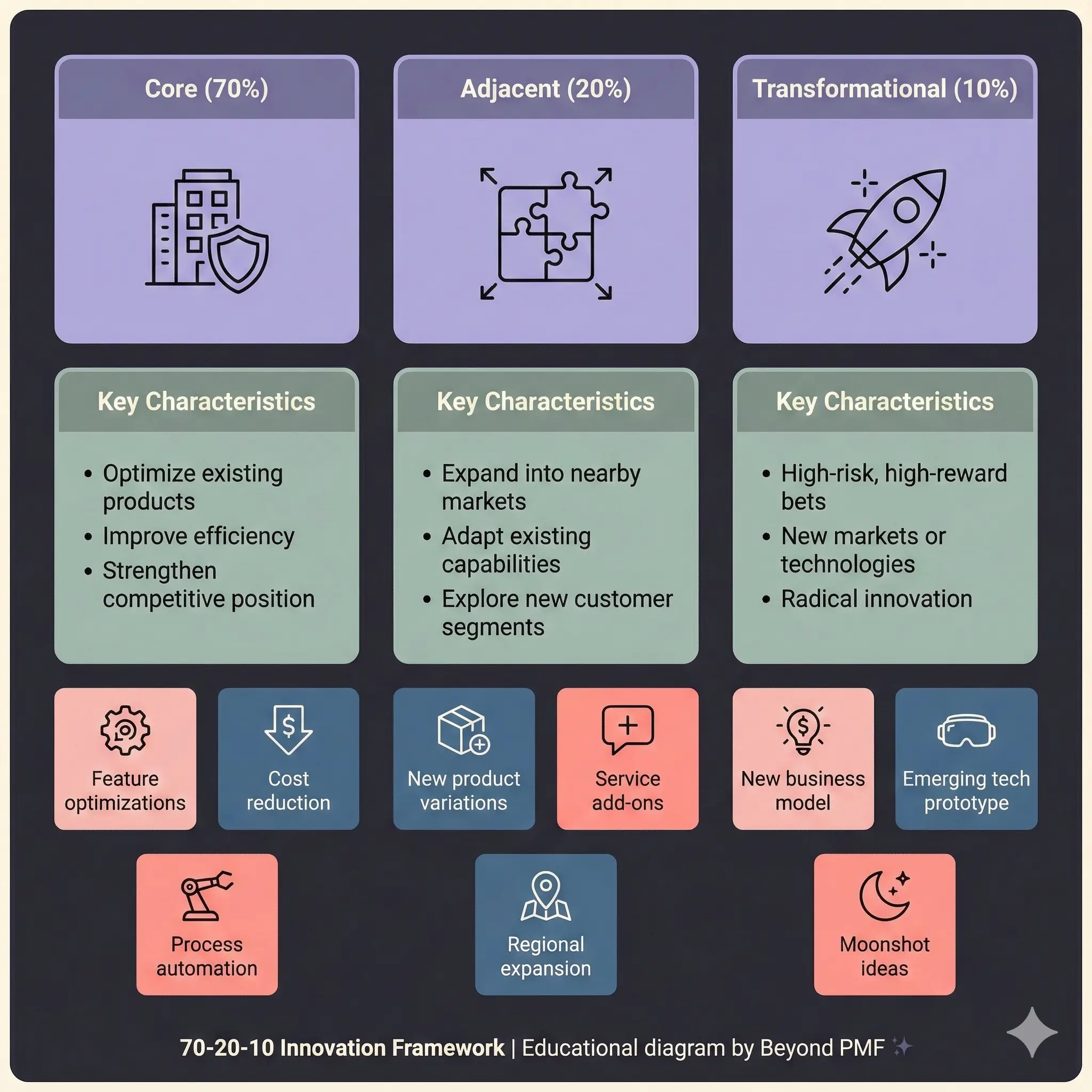
The 70-20-10 Innovation Framework is a strategic tool used by organizations to balance their investment across core, adjacent, and transformational initiatives. It suggests allocating 70% of resources to core business activities, 20% to adjacent innovations, and 10% to transformational efforts. This distribution helps companies maintain competitiveness while also investing in future growth and innovation.
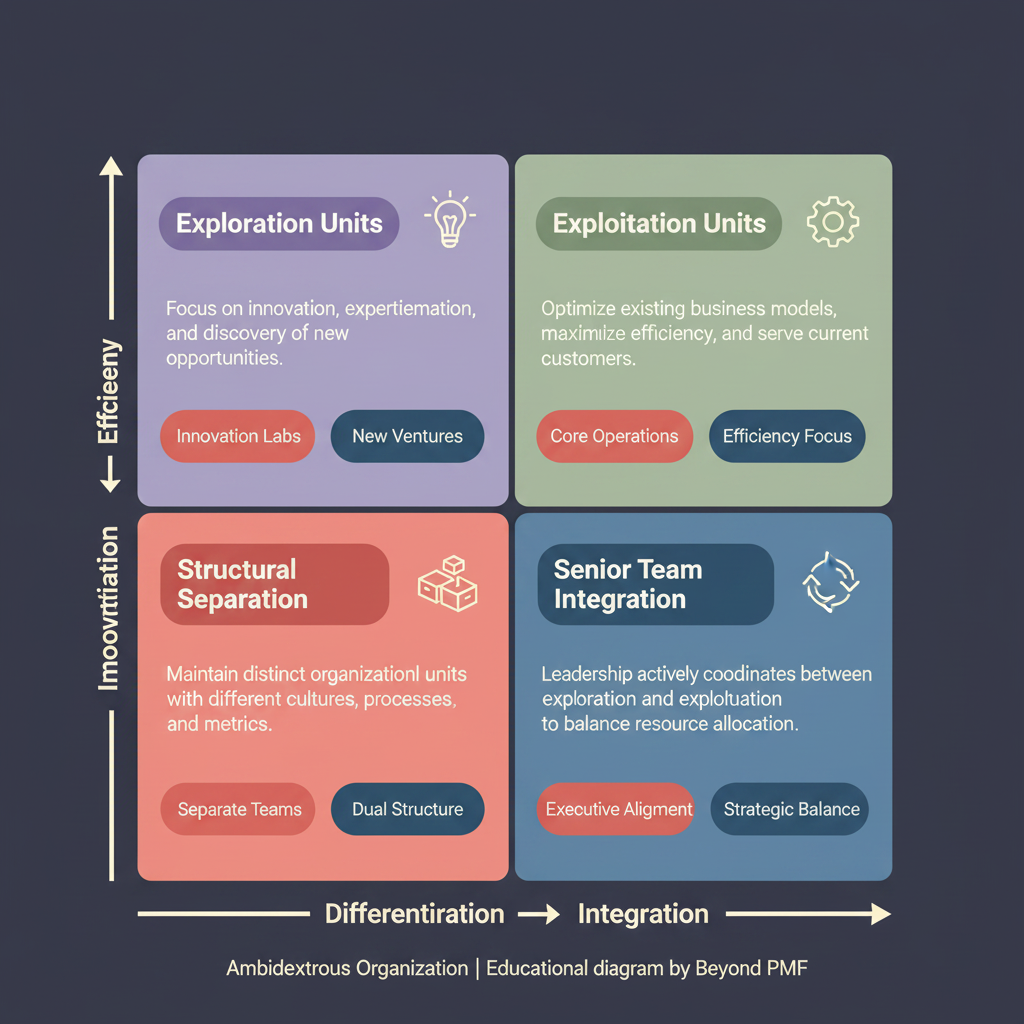
An Ambidextrous Organization is structured to handle both the exploitation of existing assets and capabilities through incremental innovation, and the exploration of new opportunities through radical innovation. This dual approach allows organizations to be stable yet agile, optimizing current business while also pursuing new growth areas. The framework is crucial for sustaining competitiveness in rapidly changing environments.
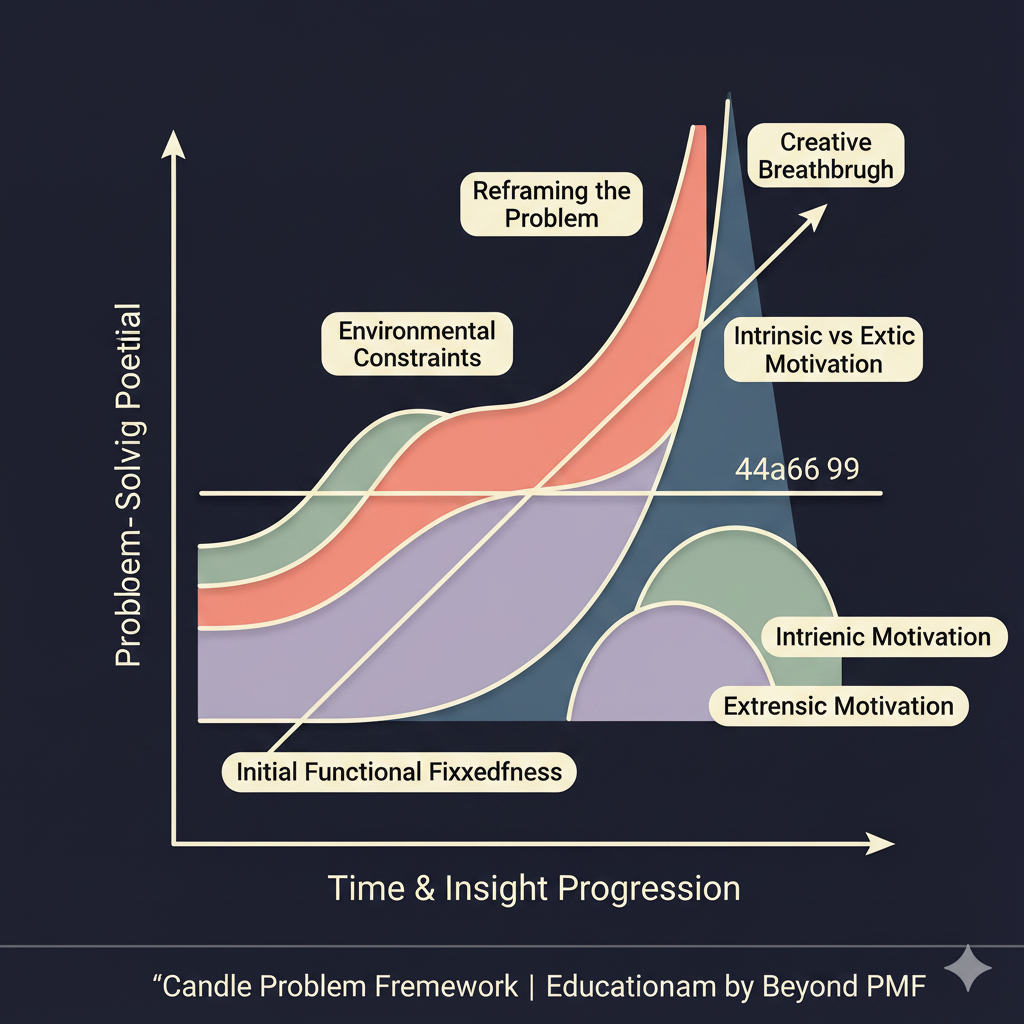
The Candle Problem Framework is inspired by a classic cognitive performance test used to evaluate an individual's ability to overcome functional fixedness and think outside the box. In a business context, this framework helps teams identify unconventional solutions to problems by challenging their preconceived notions about the use and function of resources. It encourages innovative thinking and can lead to breakthrough ideas and solutions.
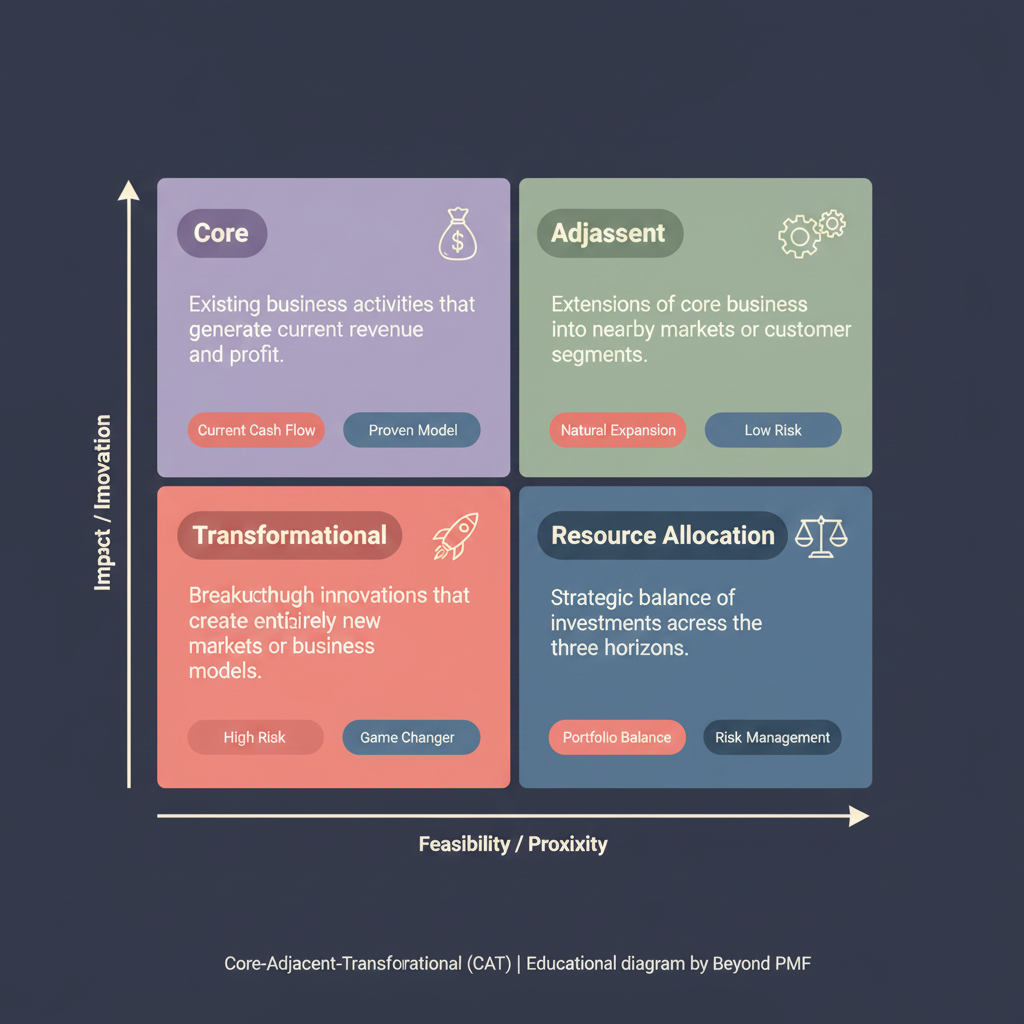
The Core-Adjacent-Transformational (CAT) framework is a strategic tool used by businesses to manage and align their innovation portfolio. It divides projects into three categories: core innovations that optimize existing products for current customers, adjacent innovations that expand existing business into new markets or products, and transformational innovations that create completely new markets or services. This categorization helps companies allocate resources effectively, ensuring a balanced portfolio that supports sustainable growth.

The Core/Edge Innovation Framework is designed to manage and foster innovation within companies by distinguishing between 'core' (current business operations and technologies) and 'edge' (emerging opportunities and technologies). This framework is used to systematically explore new ideas while maintaining the stability of the core business. It helps in allocating resources effectively, managing risks associated with innovation, and ensuring continuous growth.

The Creative Problem Solving (CPS) Framework is a structured approach that helps individuals and teams solve problems or identify opportunities where conventional thinking has failed. It emphasizes divergent and convergent thinking to foster creativity, enabling the generation of novel solutions and effective decision-making. This framework is particularly beneficial in complex scenarios where traditional problem-solving methods are inadequate.

The Disruptive Innovation Theory Framework, developed by Clayton Christensen, outlines how new entrants in a market can disrupt established players by creating simpler, more accessible, or more affordable products that initially target a niche segment. Over time, these innovations move upmarket and disrupt the status quo, forcing traditional companies to adapt or exit. This framework is used to understand market dynamics, guide strategic planning, and foster innovation that capitalizes on overlooked segments.
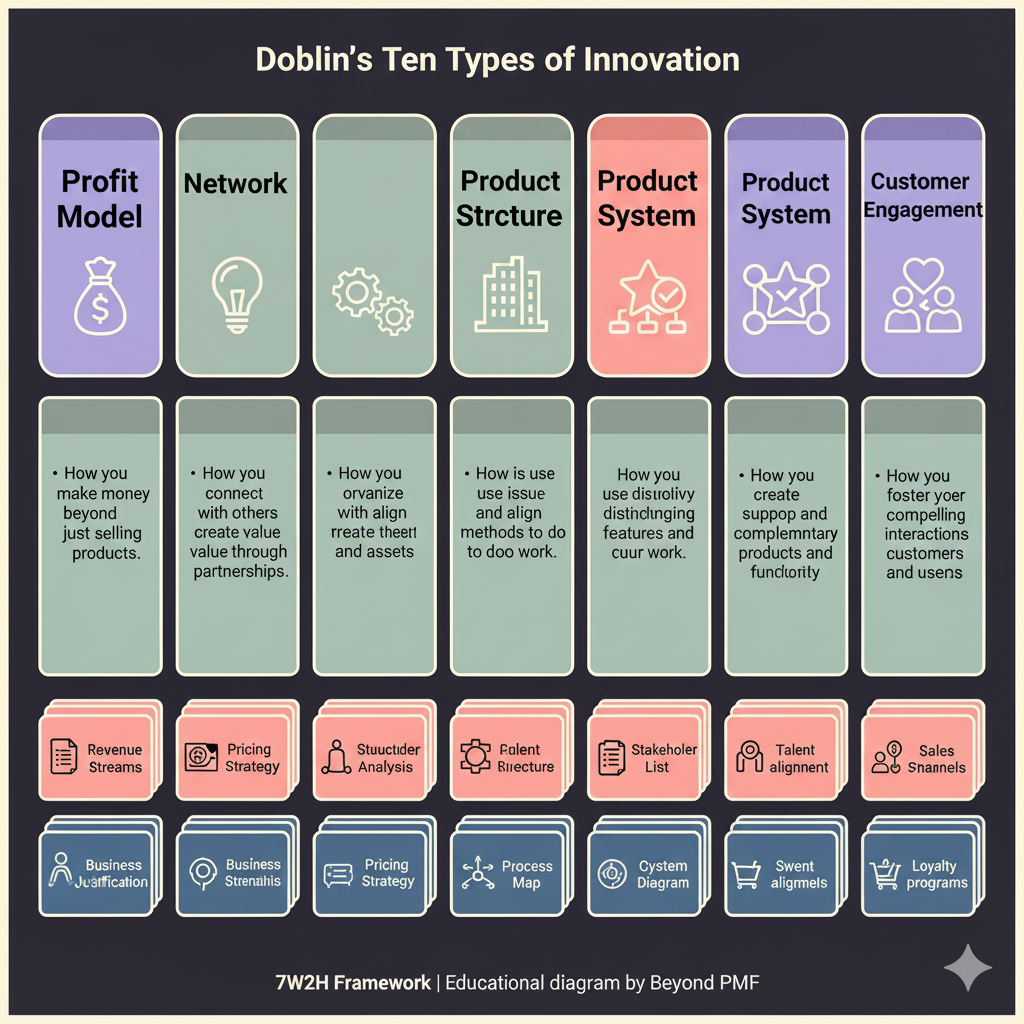
Doblin's Ten Types of Innovation framework provides a comprehensive approach to business innovation by categorizing it into ten distinct types. These types range from product and service innovations to business model and process improvements, offering a holistic view of potential innovation strategies. The framework helps organizations identify opportunities for differentiation and competitive advantage, encouraging a systematic exploration of all aspects of business operations.

First Principles Thinking is a methodology used to analyze complicated problems by breaking them down to their most fundamental parts. It involves questioning every assumption about a given problem and breaking it down to the most basic, underlying truths. This approach helps to develop original solutions and encourages innovation by avoiding conventional thinking. It is particularly beneficial in situations where existing solutions are inadequate or when tackling completely new challenges.
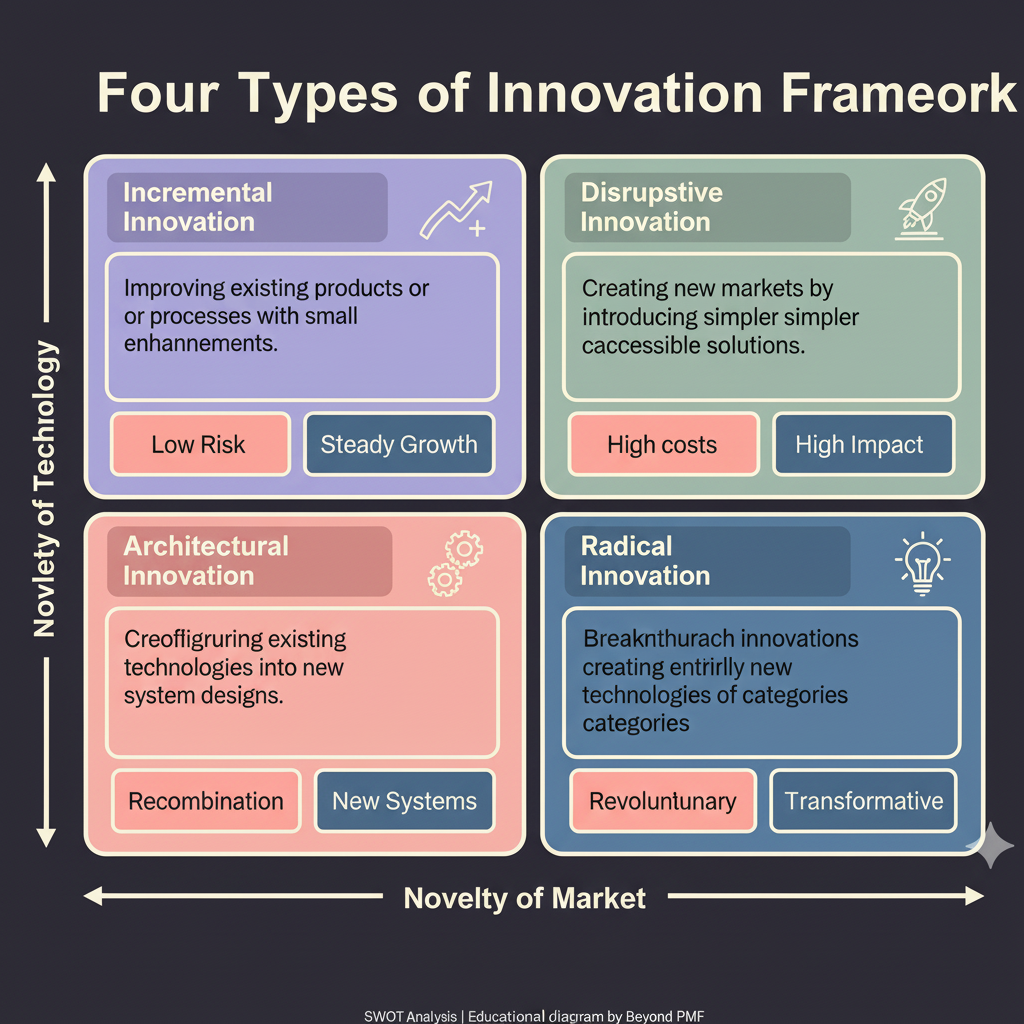
The Four Types of Innovation Framework is a tool used by businesses to identify and develop different types of innovation: Incremental, Disruptive, Architectural, and Radical. Each type represents a different approach to market and technology changes, providing a structured way to explore new opportunities and improve existing products and services. This framework aids in aligning innovation strategies with business goals and market needs, enhancing competitive advantage and fostering sustainable growth.
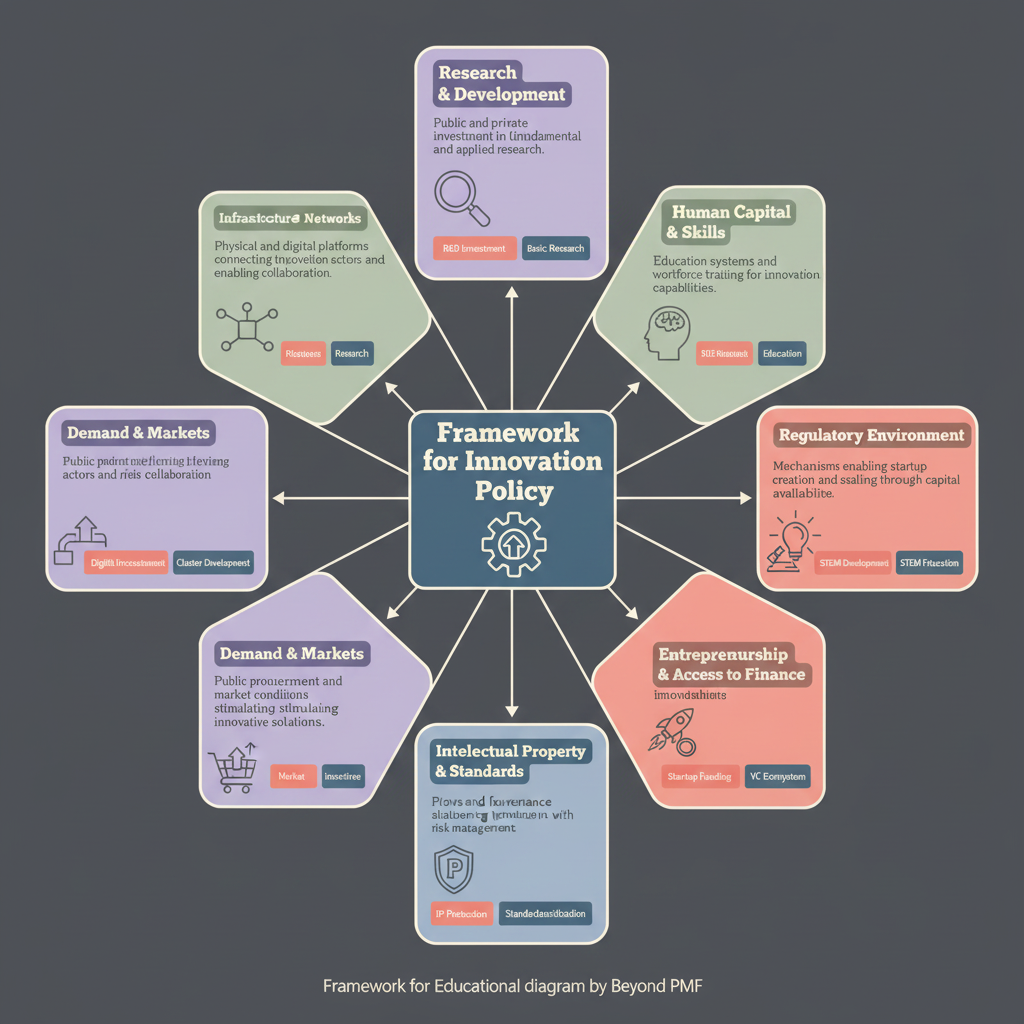
The Framework for Innovation Policy is a comprehensive set of guidelines and principles aimed at fostering innovation through the development and implementation of supportive policies. It is used by governments, institutions, and corporations to create an environment conducive to innovation. The framework helps in identifying key areas for policy intervention, aligning innovation objectives with broader economic goals, and leveraging resources effectively to enhance competitiveness and growth.

The Fuzzy Front End (FFE) refers to the early stage of the new product development process, before formal development begins. It involves activities such as idea generation, concept development, and initial feasibility assessments. The FFE is crucial because it sets the direction for all subsequent development efforts and can significantly impact the innovation's success and alignment with market needs. It is used to explore multiple avenues creatively without the constraints of formal procedures, which can lead to more innovative and competitive products.

Gamestorming Techniques encompass a collection of practices designed to facilitate innovation and business problem-solving in a workshop format. These techniques leverage games to engage participants, encourage creativity, and generate actionable insights. The framework is used to break down communication barriers, foster collaboration, and surface new ideas, making it a powerful tool in complex business environments.
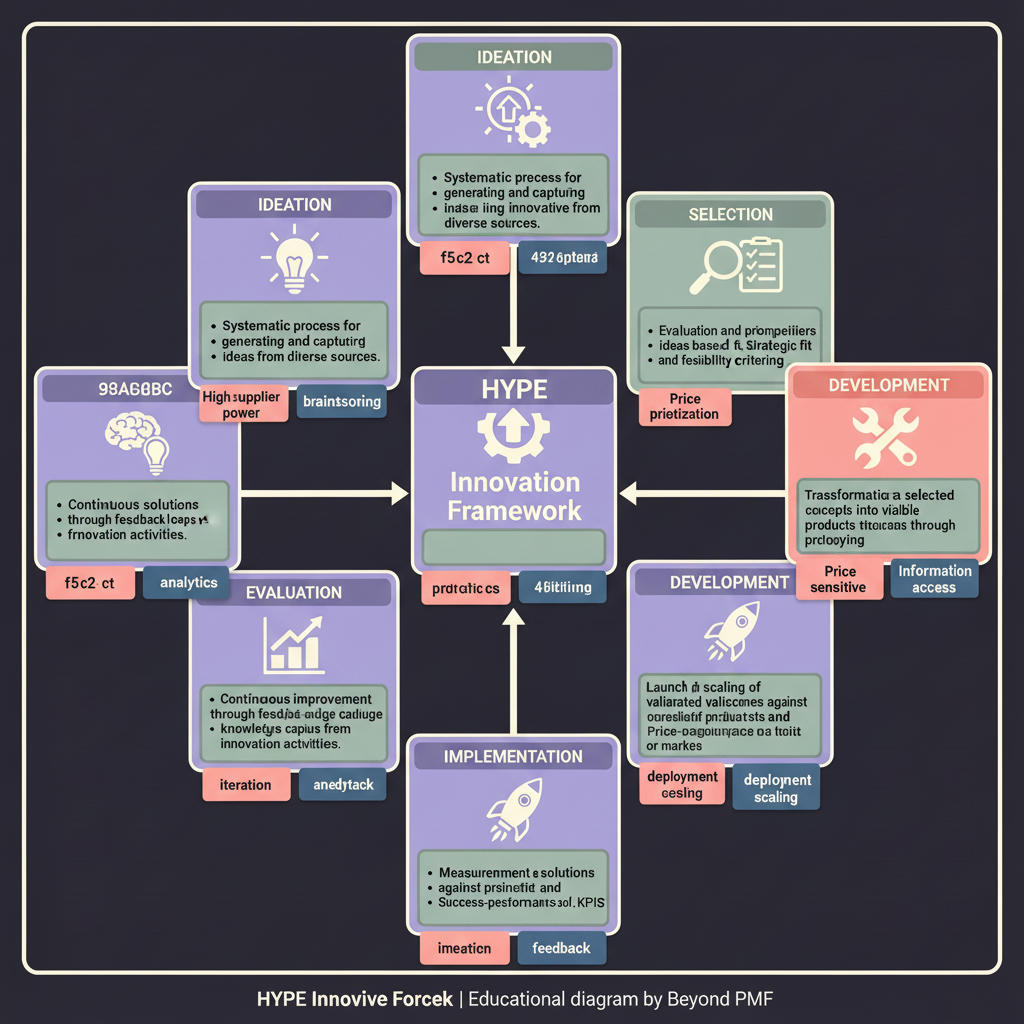
The HYPE Innovation Framework is designed to help organizations systematically manage the process of innovation. By providing a clear structure for ideation, development, and implementation, it ensures that innovative ideas are effectively captured, evaluated, and executed. The framework emphasizes collaboration, open innovation, and iterative learning, making it a valuable tool for companies looking to enhance their innovative capabilities and maintain competitive advantage.
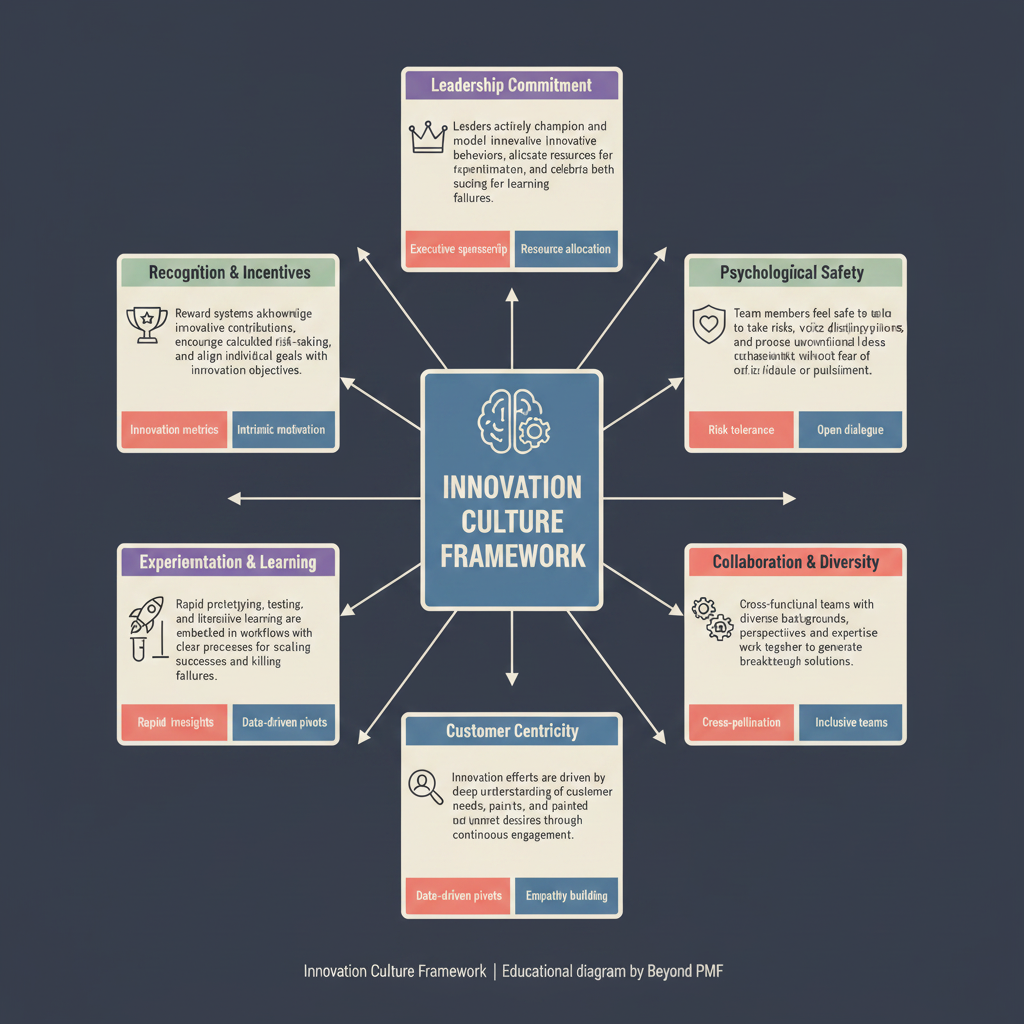
The Innovation Culture Framework is designed to help organizations create a supportive environment that promotes the continuous generation of innovative ideas and solutions. It focuses on aligning organizational structures, processes, and leadership styles to support innovation. The framework is used to assess current cultural attributes, identify gaps, and implement strategies that encourage creativity and risk-taking, ultimately leading to enhanced competitiveness and growth.

The Innovation Funnel Framework is a model used by organizations to streamline the process of innovation. It involves capturing a wide range of ideas and then narrowing them down through various stages of evaluation and development, ultimately leading to a marketable product or service. This framework helps in prioritizing resources, reducing time to market, and enhancing the likelihood of success by focusing on the most promising ideas.
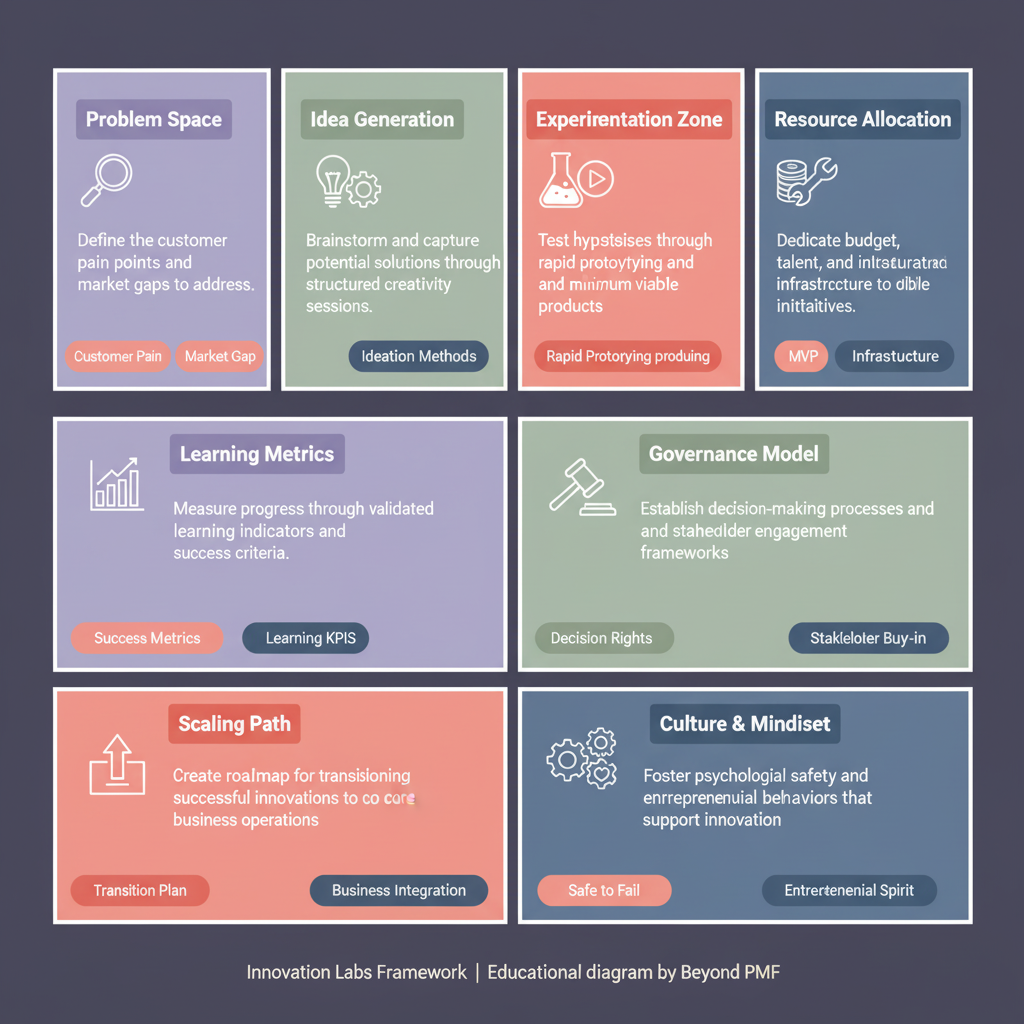
The Innovation Labs Framework is designed to help organizations systematically explore and develop new ideas and technologies separate from their core operations. It involves setting up an innovation lab where cross-functional teams can work on disruptive projects without the constraints of day-to-day business pressures. This framework is used to accelerate innovation, prototype new products and services, and explore potential new markets. The benefits include enhanced creativity, faster idea-to-market times, and the cultivation of a forward-thinking organizational culture.
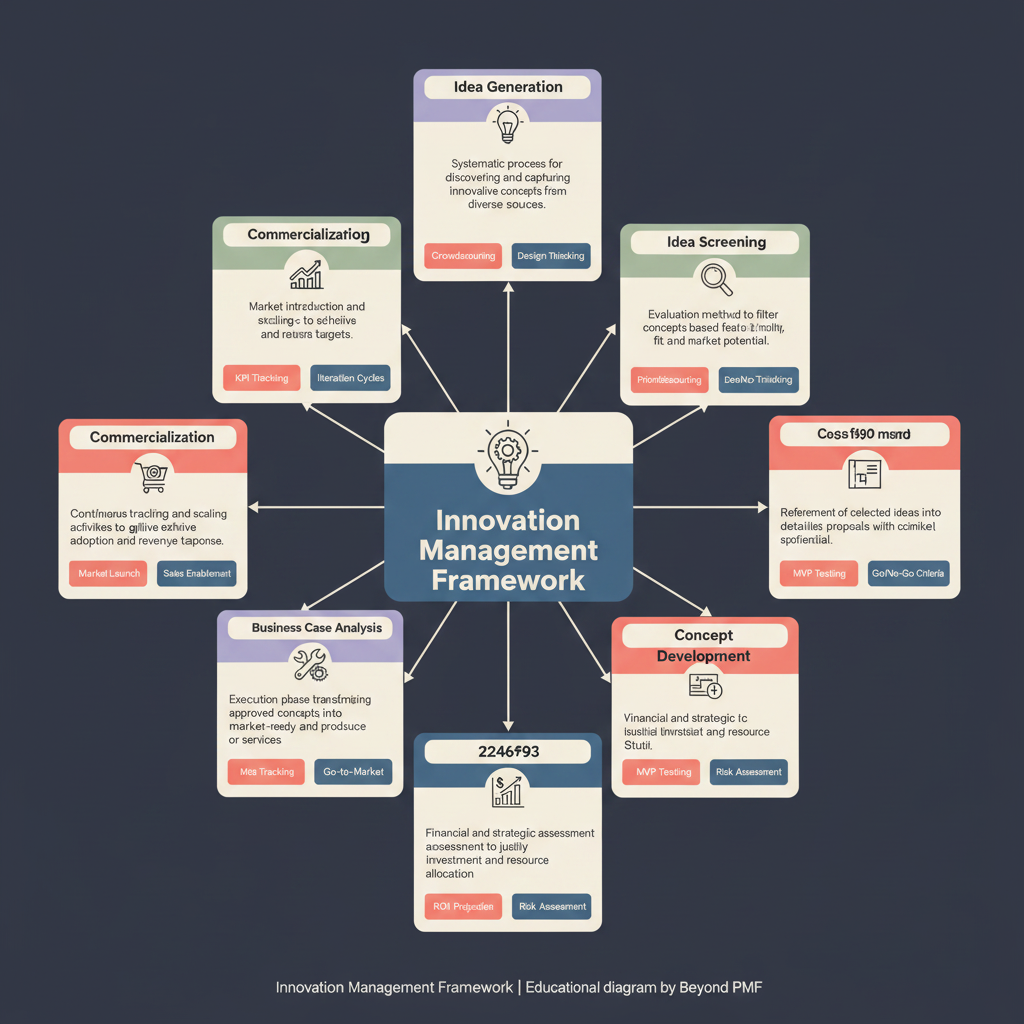
The Innovation Management Framework is a comprehensive guide designed to help organizations systematically manage the process of innovation. It provides a structured approach to nurturing creativity, implementing new ideas, and bringing innovative products or services to market. The framework assists in aligning innovation with business strategy, optimizing resource allocation, and enhancing competitiveness.
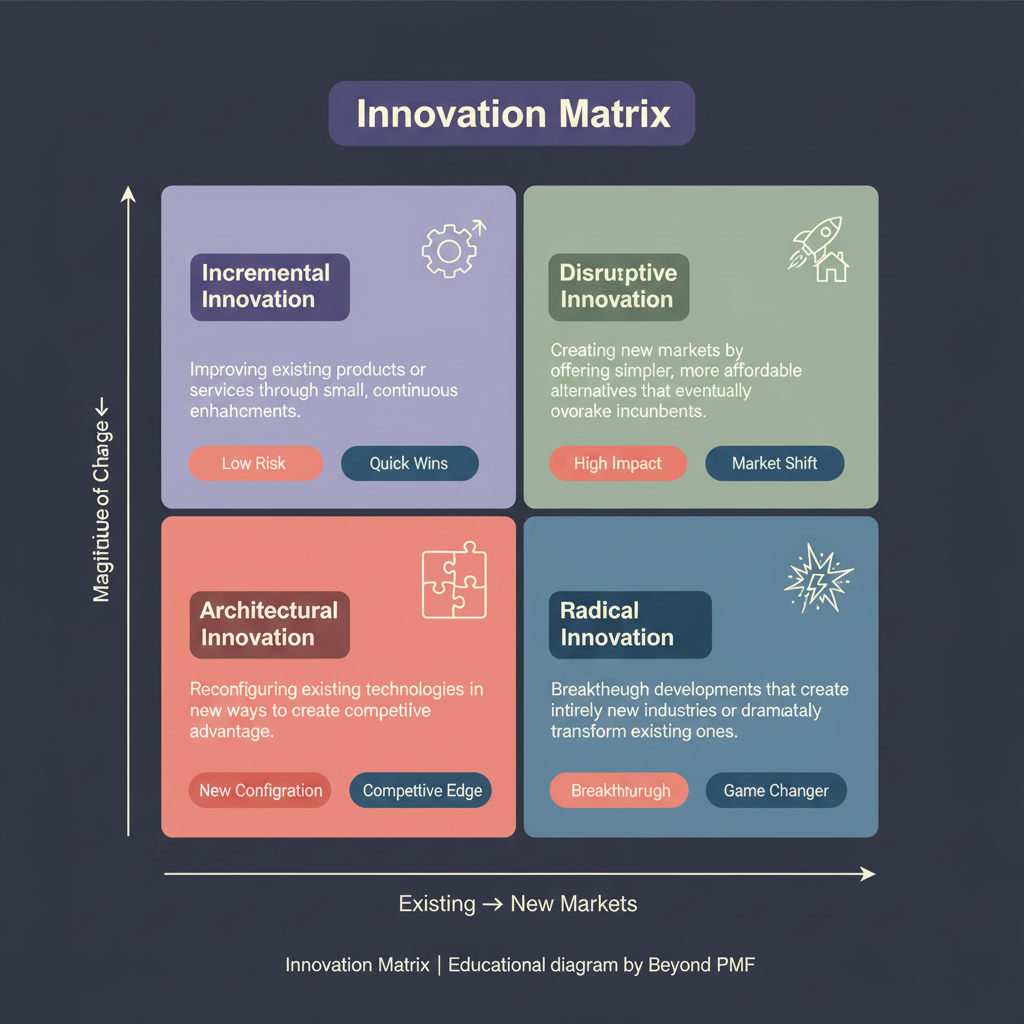
The Innovation Matrix is a strategic framework that helps organizations map out their innovation efforts. It categorizes innovations into different types based on their level of novelty and the complexity of their implementation. This framework assists in prioritizing projects and allocating resources effectively, ensuring that innovation aligns with overall business goals. It is widely used for its ability to simplify decision-making processes in innovation management and enhance strategic planning.

The Innovation Pipeline Framework is designed to guide organizations through the complex process of transforming innovative ideas into successful market offerings. It provides a structured methodology to capture, evaluate, and develop ideas systematically. This framework helps in prioritizing projects based on strategic alignment and potential return on investment, ensuring resources are optimally allocated. The benefits include improved innovation throughput, better alignment with market needs, and enhanced competitive advantage.
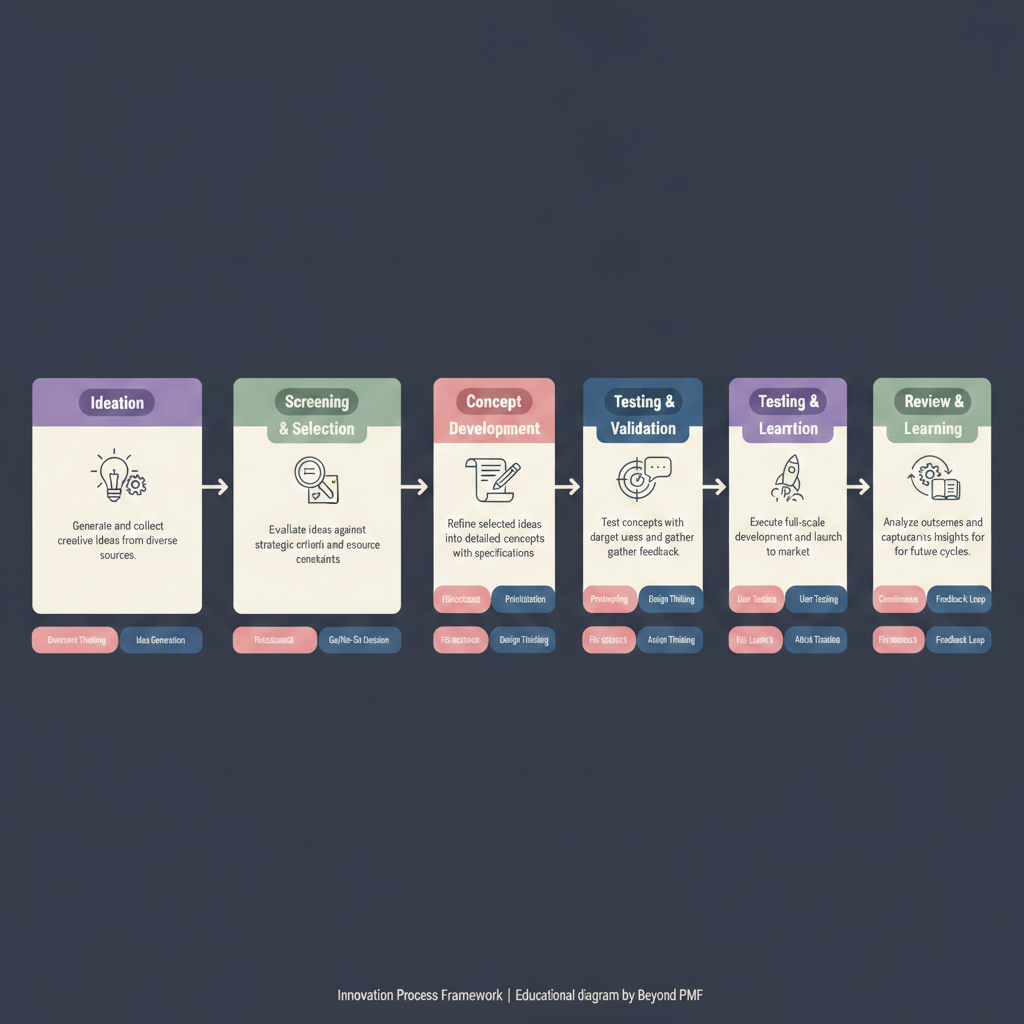
The Innovation Process Framework is designed to guide organizations through the complex task of innovating effectively. It structures the creative process into manageable stages, ensuring that ideas are not only generated but also evaluated, developed, and implemented efficiently. This framework helps businesses maintain a competitive edge by fostering a culture of continuous improvement and adaptation. Its use leads to enhanced problem-solving capabilities, better resource management, and increased market responsiveness.
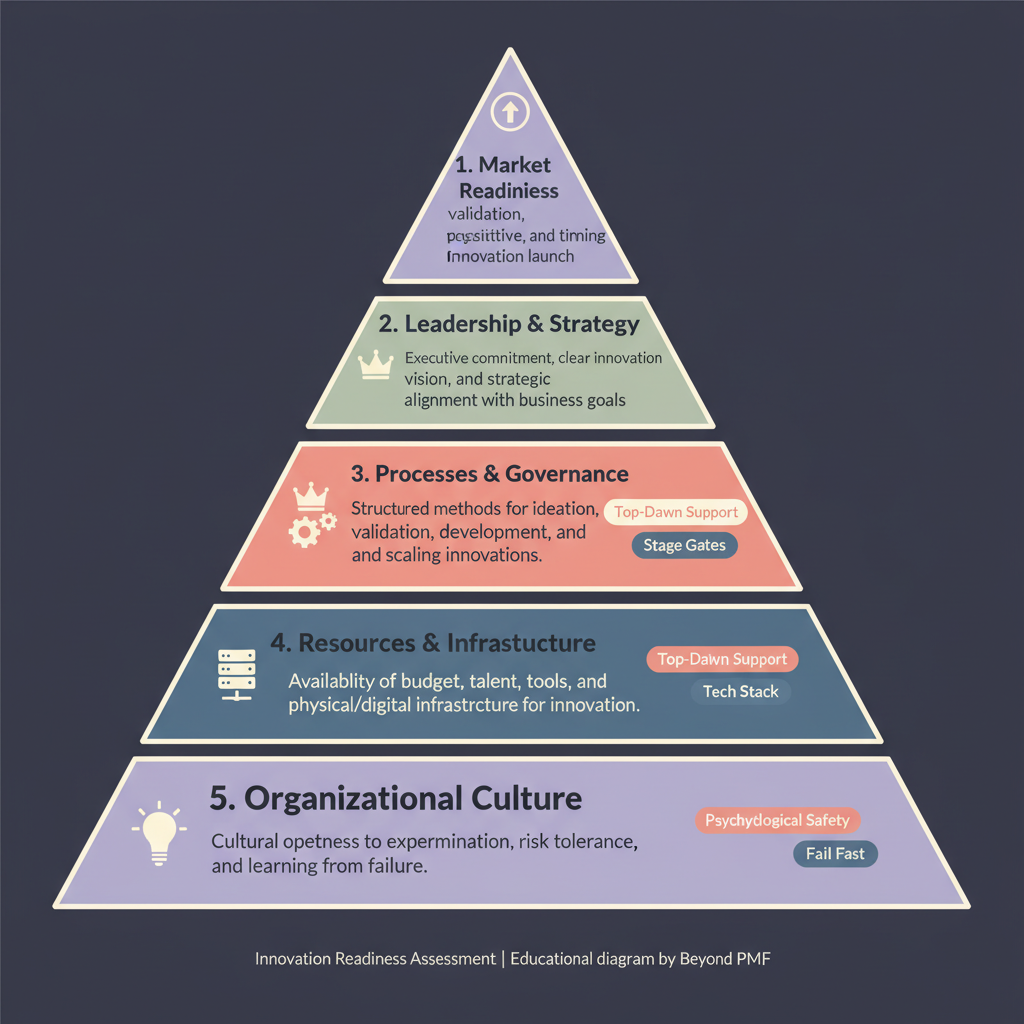
The Innovation Readiness Assessment framework is designed to help organizations identify their strengths and weaknesses in fostering innovation. By evaluating key areas such as leadership commitment, strategic alignment, and resource allocation, this framework provides insights into how prepared an organization is to implement and sustain innovative practices. It is used to benchmark current capabilities against best practices and to develop action plans for improvement, thereby enhancing the organization's overall innovation potential.
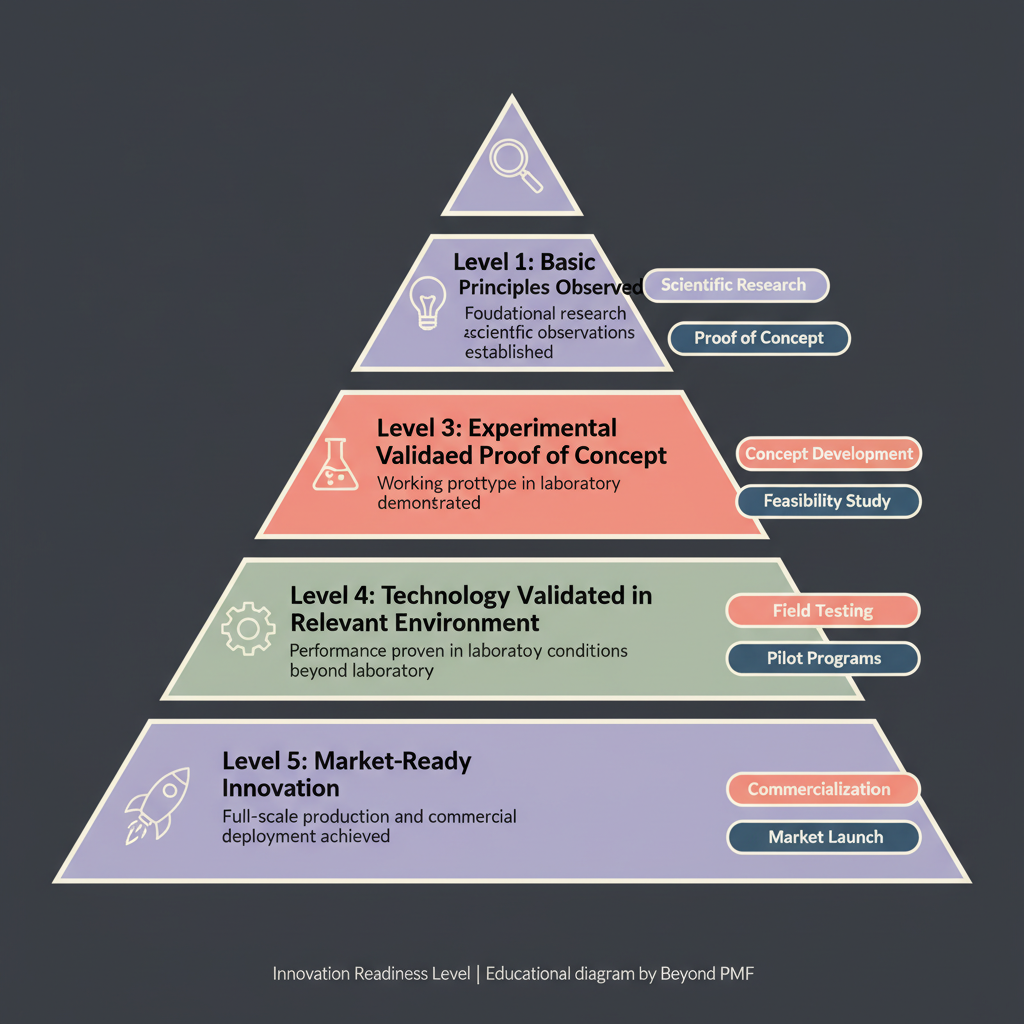
The Innovation Readiness Level framework is a tool used to evaluate and enhance an organization's readiness to adopt and integrate new technologies or processes. It helps identify the gaps in an organization's capabilities and provides a structured approach to address these gaps, thereby facilitating smoother innovation implementation. The framework is beneficial for prioritizing investments in innovation and ensuring that the necessary support structures are in place.
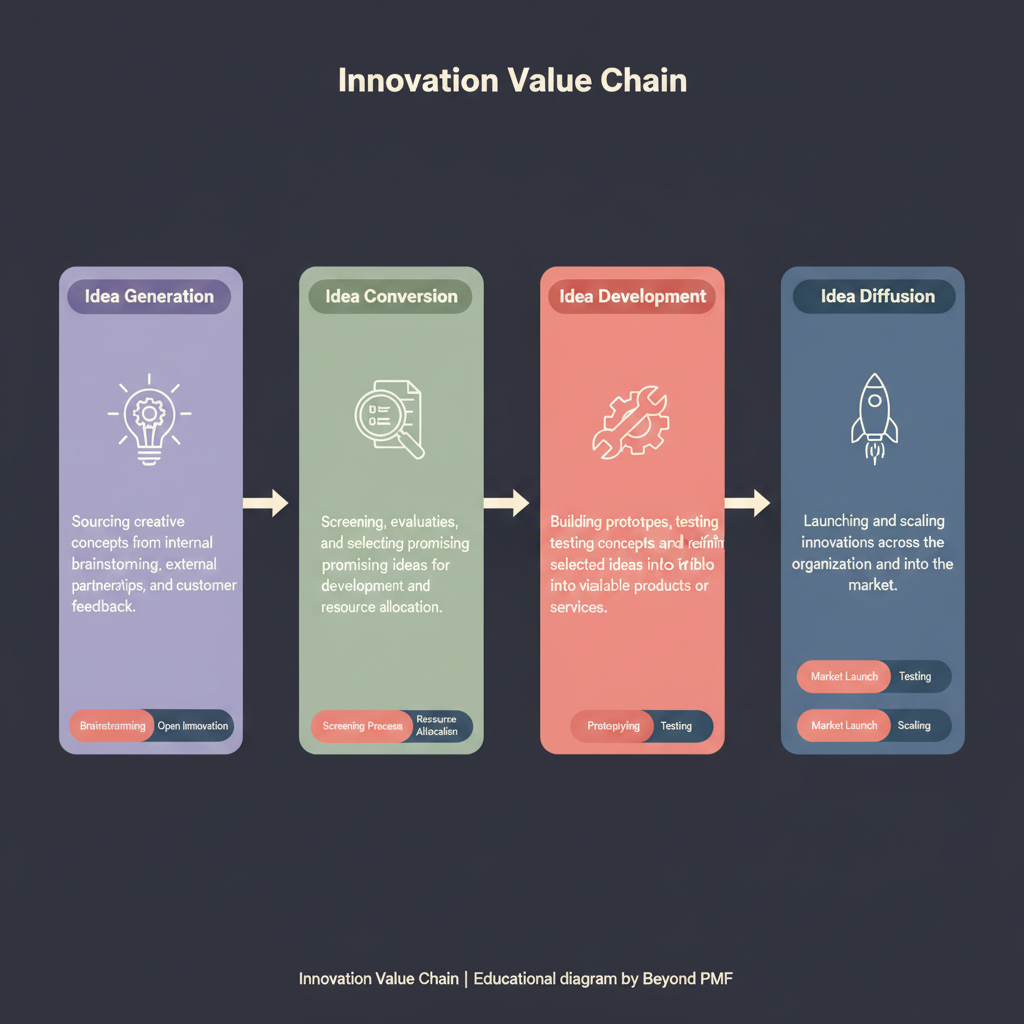
The Innovation Value Chain is a comprehensive framework designed to systematically manage the flow of ideas through different stages until they are successfully implemented. It emphasizes the interconnectedness of various phases of innovation, from ideation to final execution, ensuring that ideas are effectively captured, developed, and transformed into value-creating strategies or products. This framework is used to identify bottlenecks and improve the efficiency of the innovation process, thereby enhancing the organization's overall competitive edge.
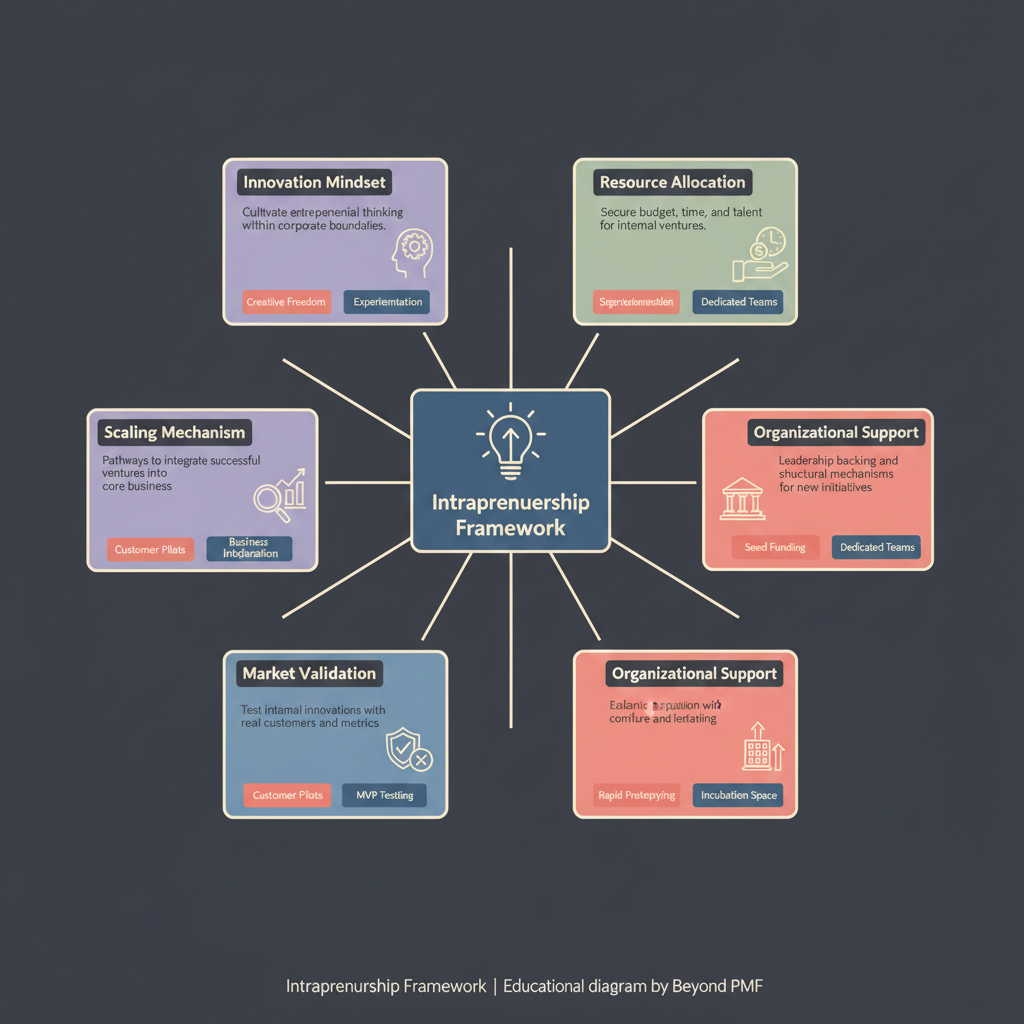
The Intrapreneurship Framework is a strategic approach used by companies to stimulate innovation by treating employees as entrepreneurs within the firm. This framework encourages staff to develop new ideas, products, or services as if they were creating a startup, but with the resources and support of the larger organization. It leverages internal talent to drive growth and adaptability, fostering a culture of creativity and proactive problem-solving.

Keeley's Ten Types of Innovation framework provides a comprehensive approach to understanding and implementing innovation across different aspects of a business. It categorizes innovation into ten types, each focusing on different areas such as product features, customer engagement, and internal processes. This framework helps organizations to identify new opportunities for growth and differentiation, ensuring a holistic approach to innovation that can lead to sustainable competitive advantage.
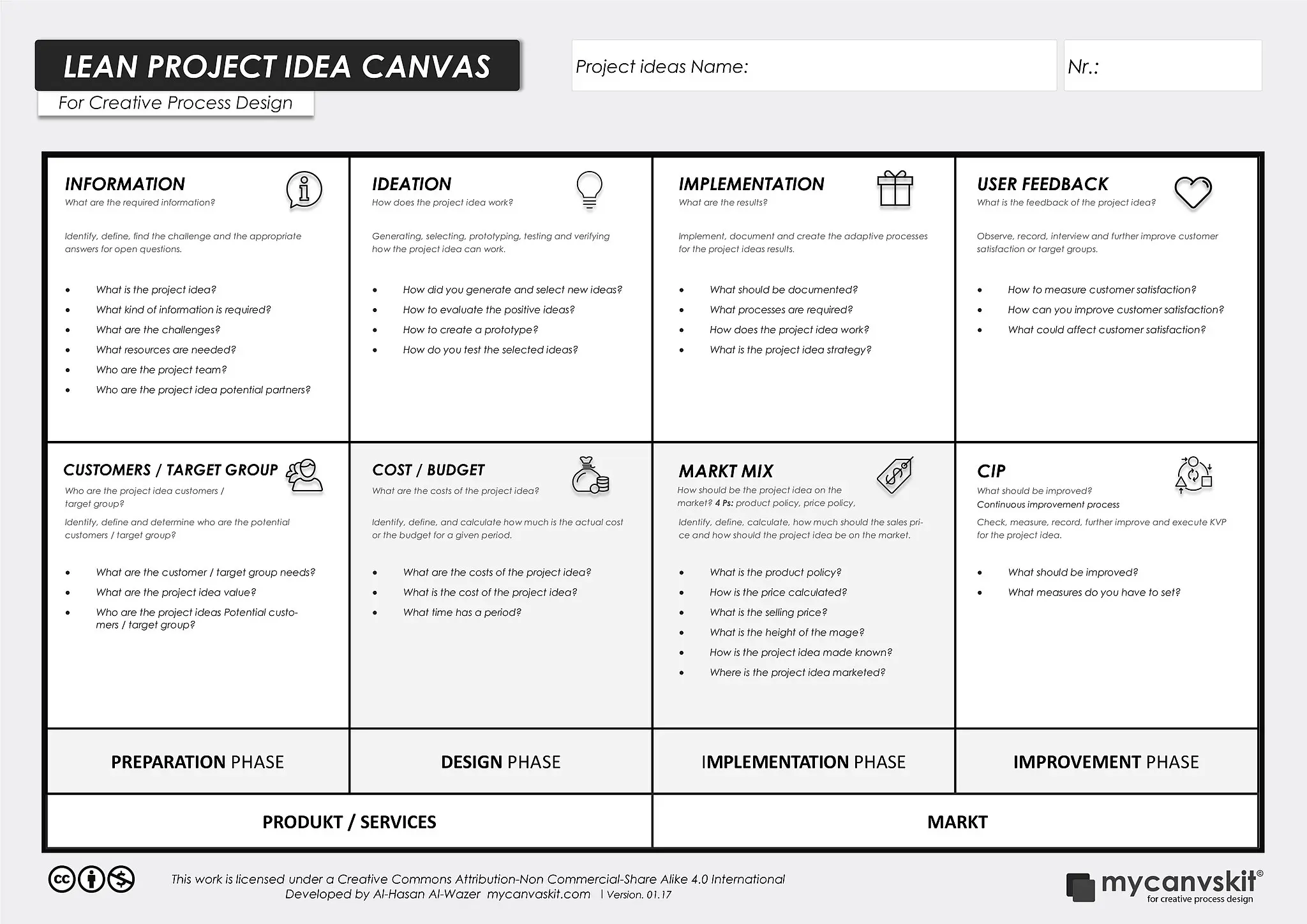
The Lean Canvas is a one-page business planning tool that helps founders deconstruct their idea into key assumptions. Developed by Ash Maurya, it is adapted from the Business Model Canvas by Alexander Osterwalder. This framework focuses on addressing startup risks and challenges, emphasizing problem-solving, customer segments, unique value propositions, and revenue streams. It's designed to be dynamic and easy to adjust, making it ideal for startups that need to pivot and adapt quickly.

Lean Inception is a framework designed to help teams define the MVP (Minimum Viable Product) of new products or services in a short timeframe. It involves key stakeholders and team members in a series of workshops to align on the product vision, identify customer needs, and prioritize features. This approach ensures that development efforts are focused on creating value, reducing waste, and accelerating time to market.
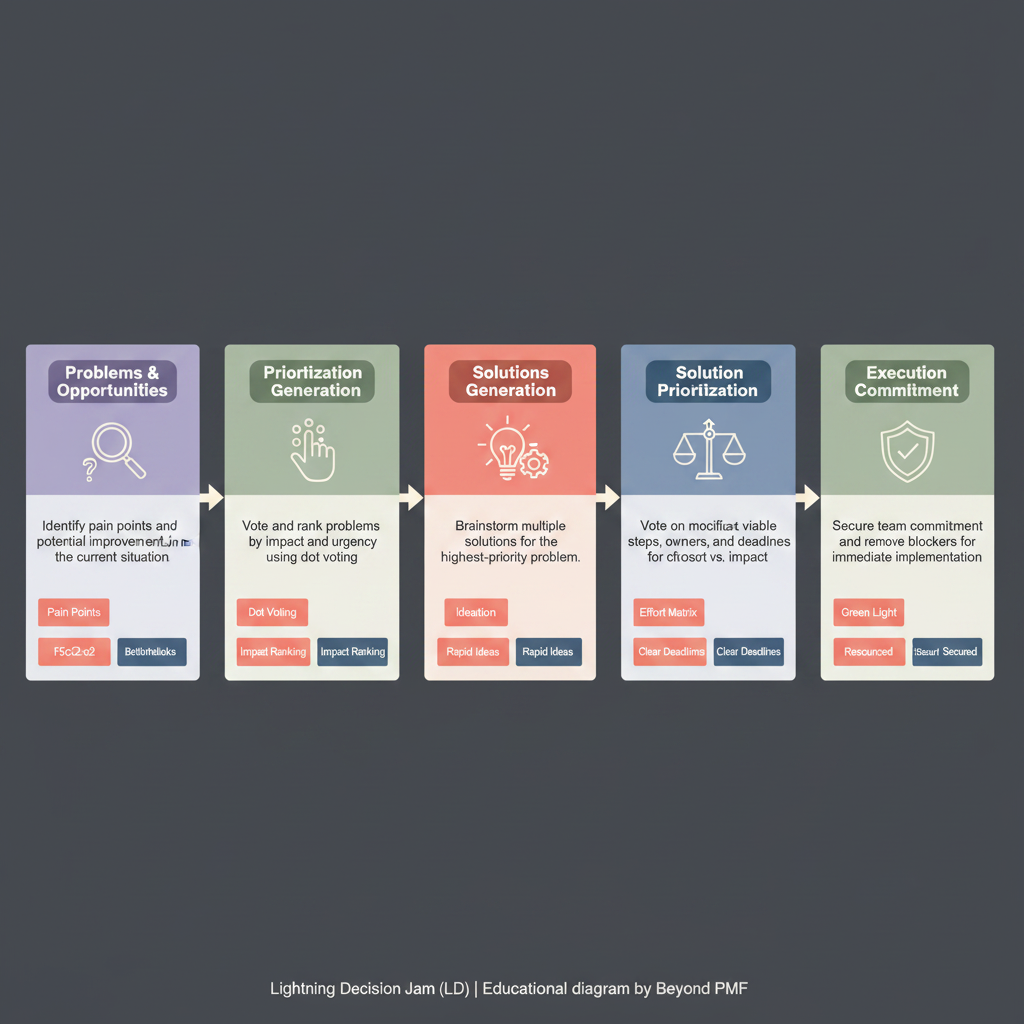
The Lightning Decision Jam (LDJ) is a facilitation technique used to address and solve complex problems quickly and efficiently. It replaces open-ended discussions with a clear, time-boxed process, helping teams to avoid common decision-making pitfalls like unstructured debates and decision fatigue. By using a series of structured exercises, LDJ helps teams to prioritize issues, generate solutions, and decide on action steps in a democratic and efficient manner. This approach not only accelerates the decision-making process but also enhances team alignment and collaboration.
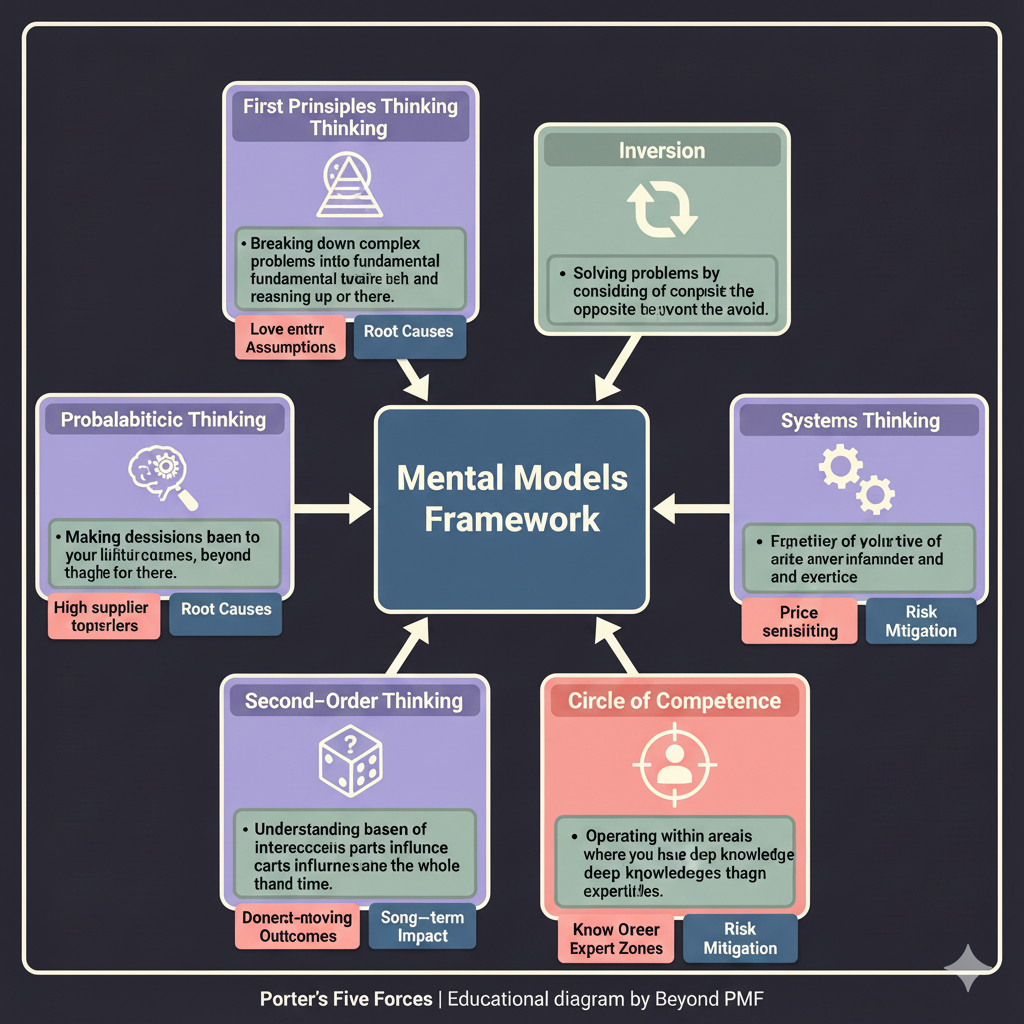
The Mental Models Framework involves understanding and applying simplified representations of the world to improve decision-making and problem-solving. It is used to enhance clarity and efficiency in thinking, allowing users to predict outcomes more accurately and plan future actions effectively. The framework is beneficial for its ability to facilitate deeper understanding, foster innovation, and improve strategic planning across various contexts.
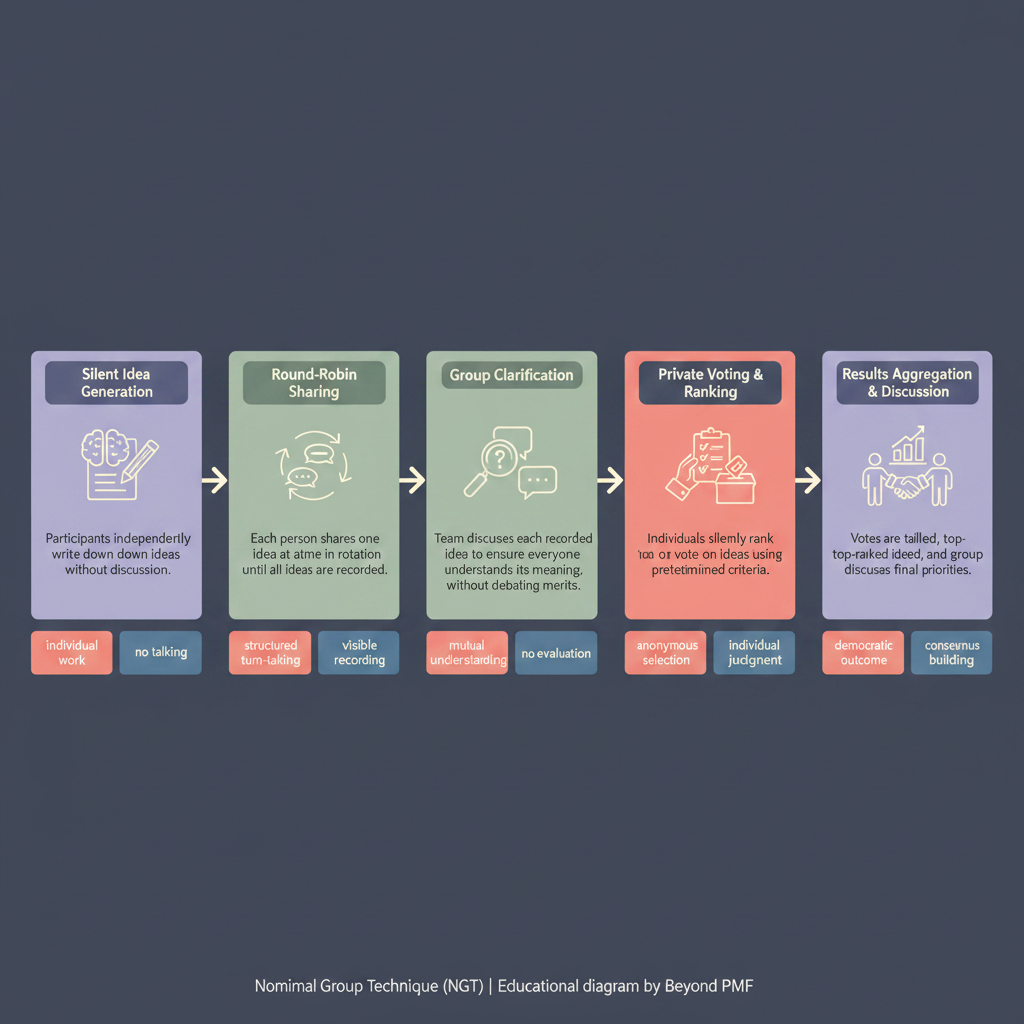
The Nominal Group Technique (NGT) is a collaborative decision-making process used to ensure equal participation from all members of a group. It is particularly effective in situations where some group members are much more vocal than others. The technique helps in gathering a wide range of ideas and achieving a consensus by prioritizing issues, making it highly beneficial for strategic planning and problem-solving.
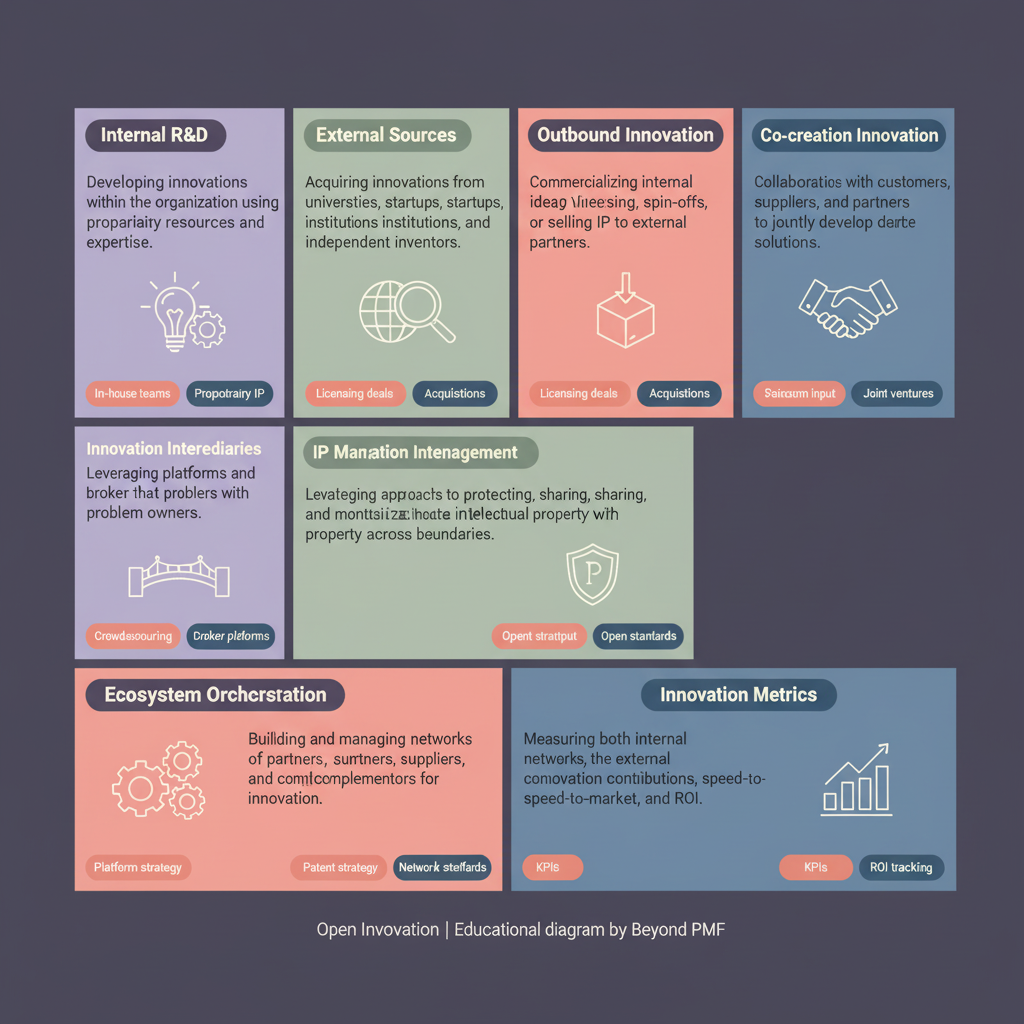
Open Innovation is a paradigm that assumes firms can and should use external ideas as well as internal ideas, and internal and external paths to market, as the firms look to advance their technology. This approach contrasts with the traditional model where innovation is driven solely within the company. Open Innovation allows companies to reduce costs, accelerate time-to-market, increase differentiation in the market, and create new revenue streams.
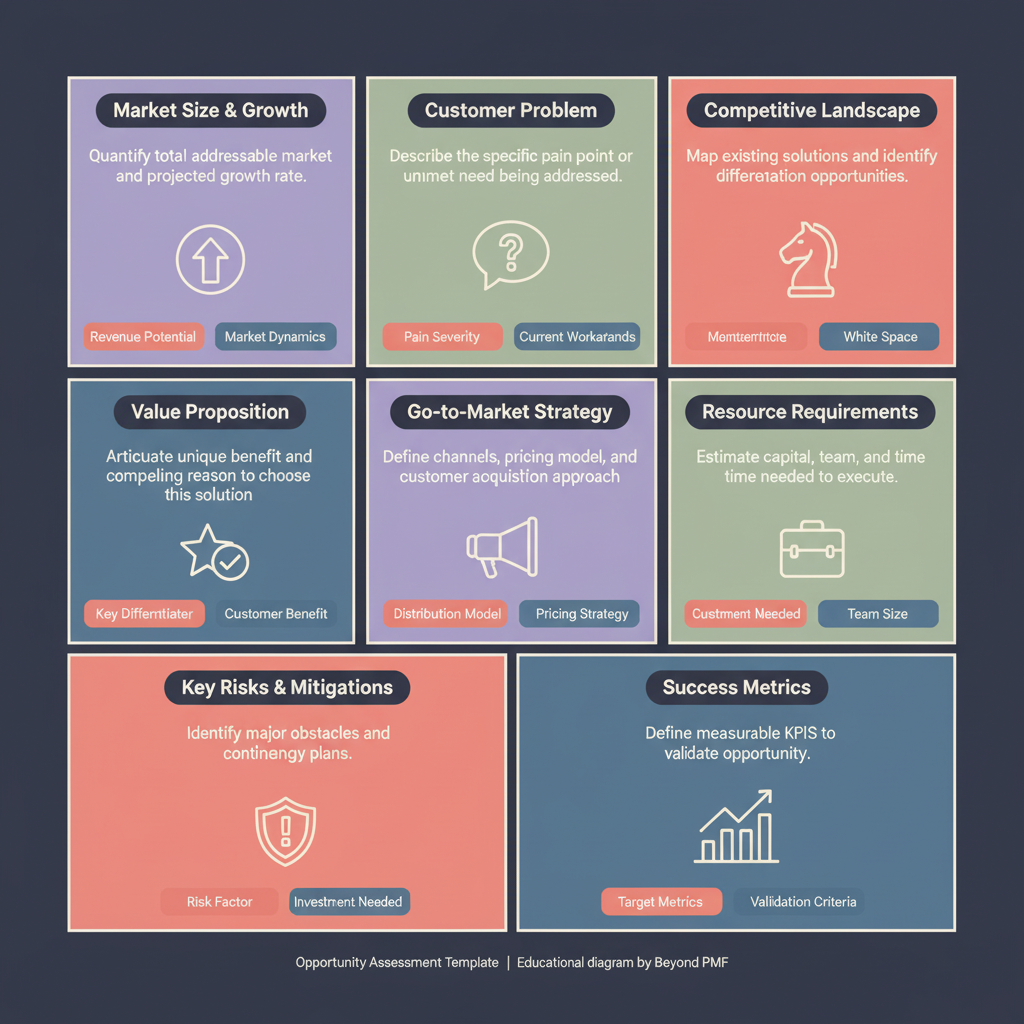
The Opportunity Assessment Template is a strategic tool used by businesses to analyze and evaluate potential opportunities before committing resources. This framework guides decision-makers through a structured process to assess the viability, risks, and benefits of new ventures or projects. It helps in making informed decisions by providing a clear methodology to quantify and qualify potential opportunities.

The Opportunity Canvas is a framework designed to help organizations identify, evaluate, and prioritize potential business opportunities. It guides teams through a structured analysis of the market environment, customer needs, and the organization's capabilities. This framework is particularly useful for aligning team focus, fostering innovation, and ensuring that resources are allocated to the most promising opportunities.
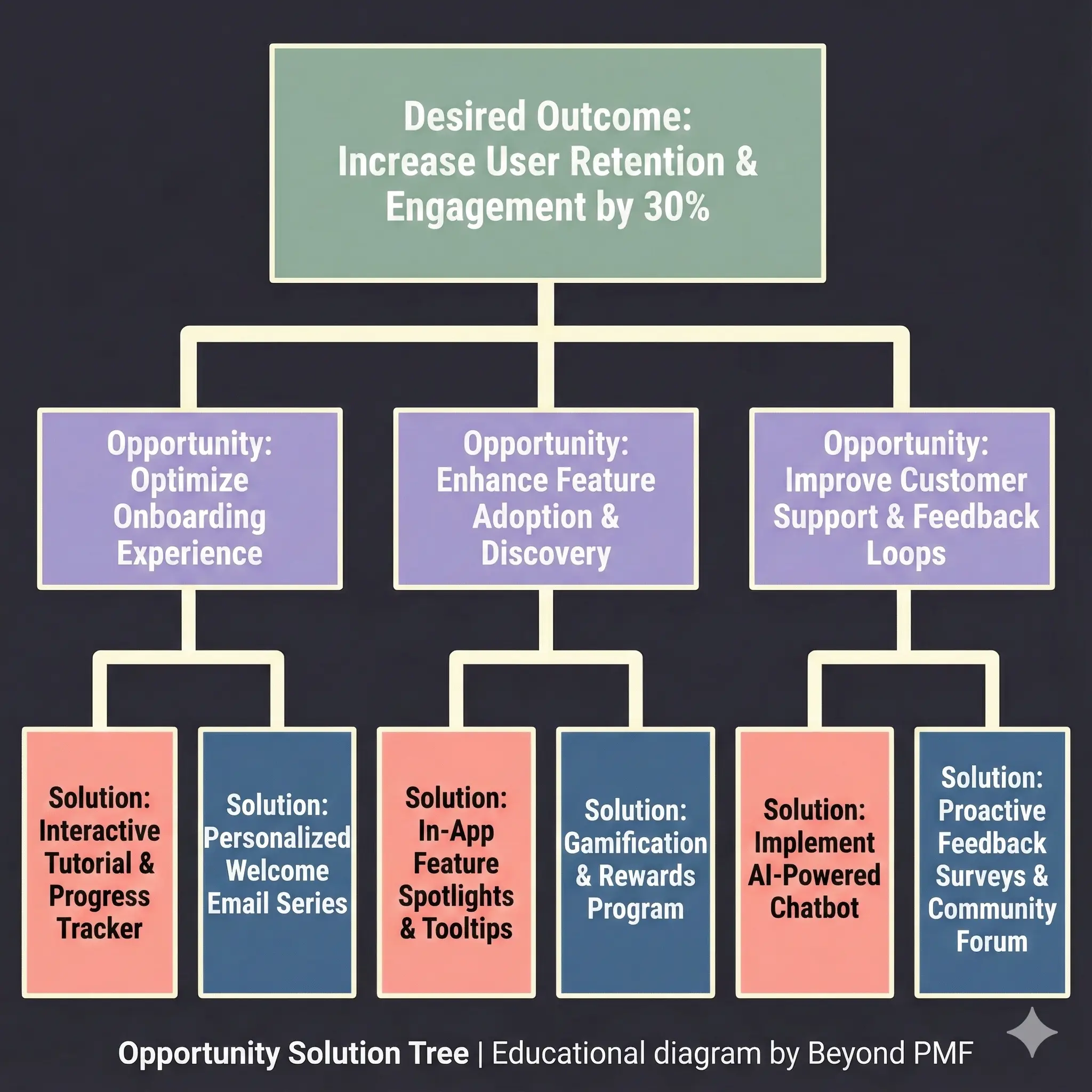
The Opportunity Solution Tree is a strategic tool used by teams to identify and explore multiple opportunities that could solve a customer problem. It starts with a clear desired outcome and branches out into opportunities and then into solutions, helping teams prioritize based on impact and feasibility. This framework encourages broad thinking, followed by a narrowing down process, ensuring that the final solutions are both innovative and closely aligned with user needs.
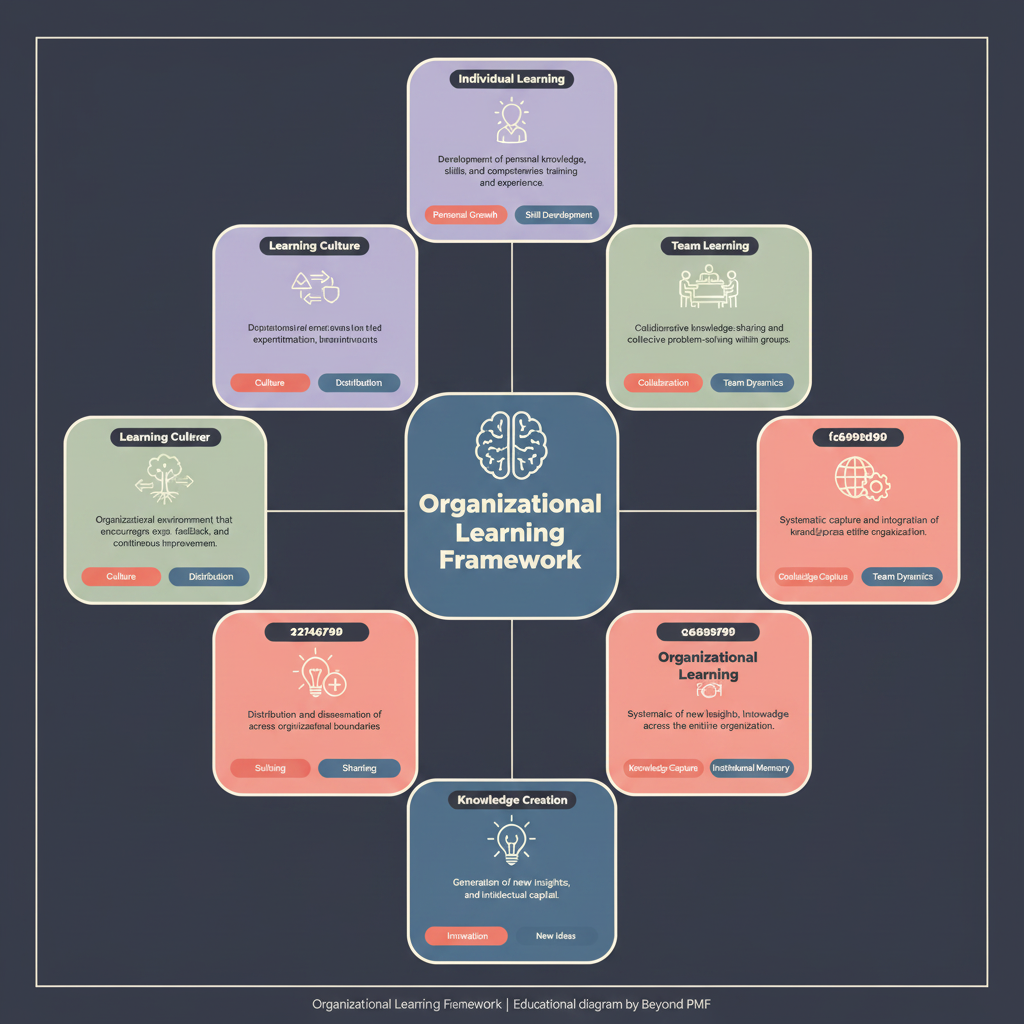
The Organizational Learning Framework is a comprehensive approach that helps organizations embed continuous learning into their culture. It focuses on leveraging the collective knowledge and experience of employees to foster innovation and adaptability. This framework is crucial for maintaining competitive advantage in rapidly changing industries by enabling organizations to respond quickly to changes, improve processes, and enhance employee skills.
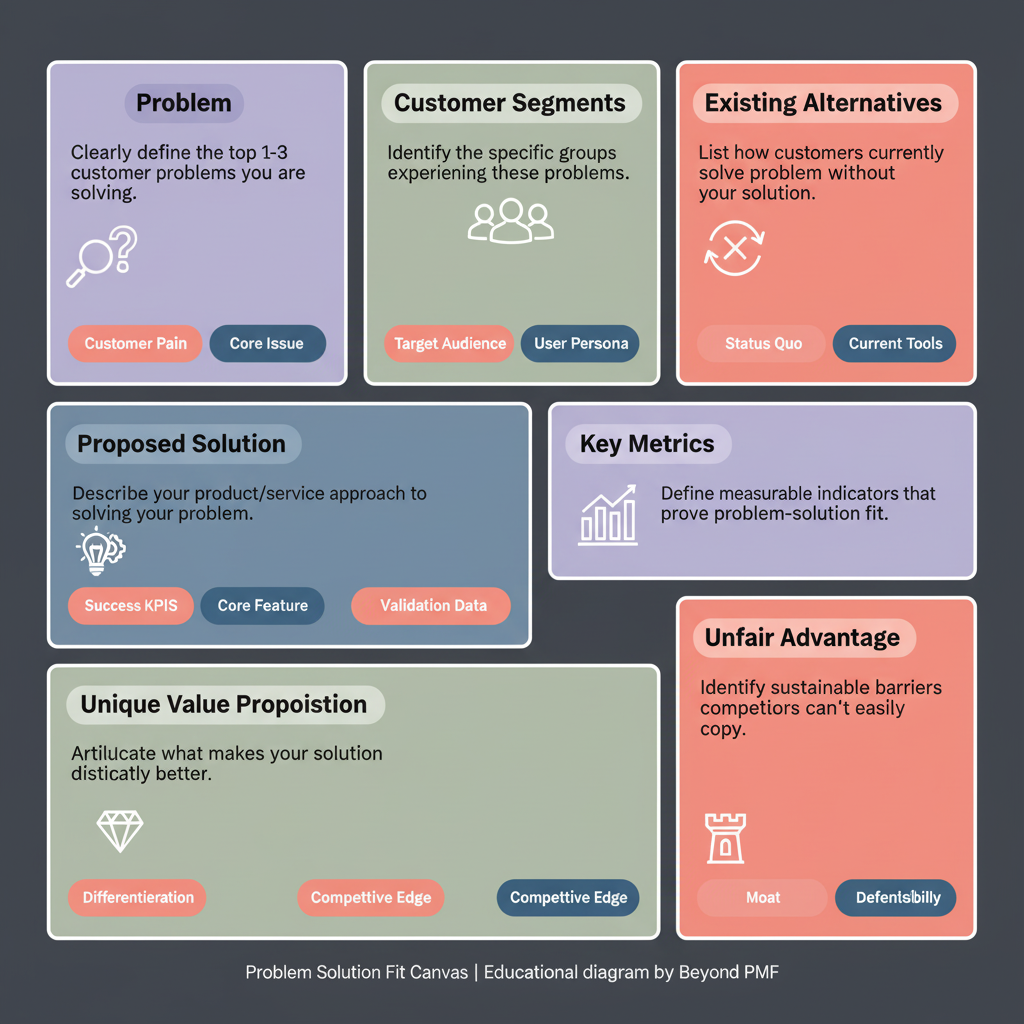
The Problem Solution Fit Canvas is a framework designed to help businesses identify and align customer problems with effective solutions. It serves as a visual tool to map out customer needs, the proposed solutions, and the expected impact. This framework is particularly beneficial for startups and existing businesses looking to innovate or improve their product offerings, ensuring that the solutions developed are directly addressing the real issues faced by their customers.
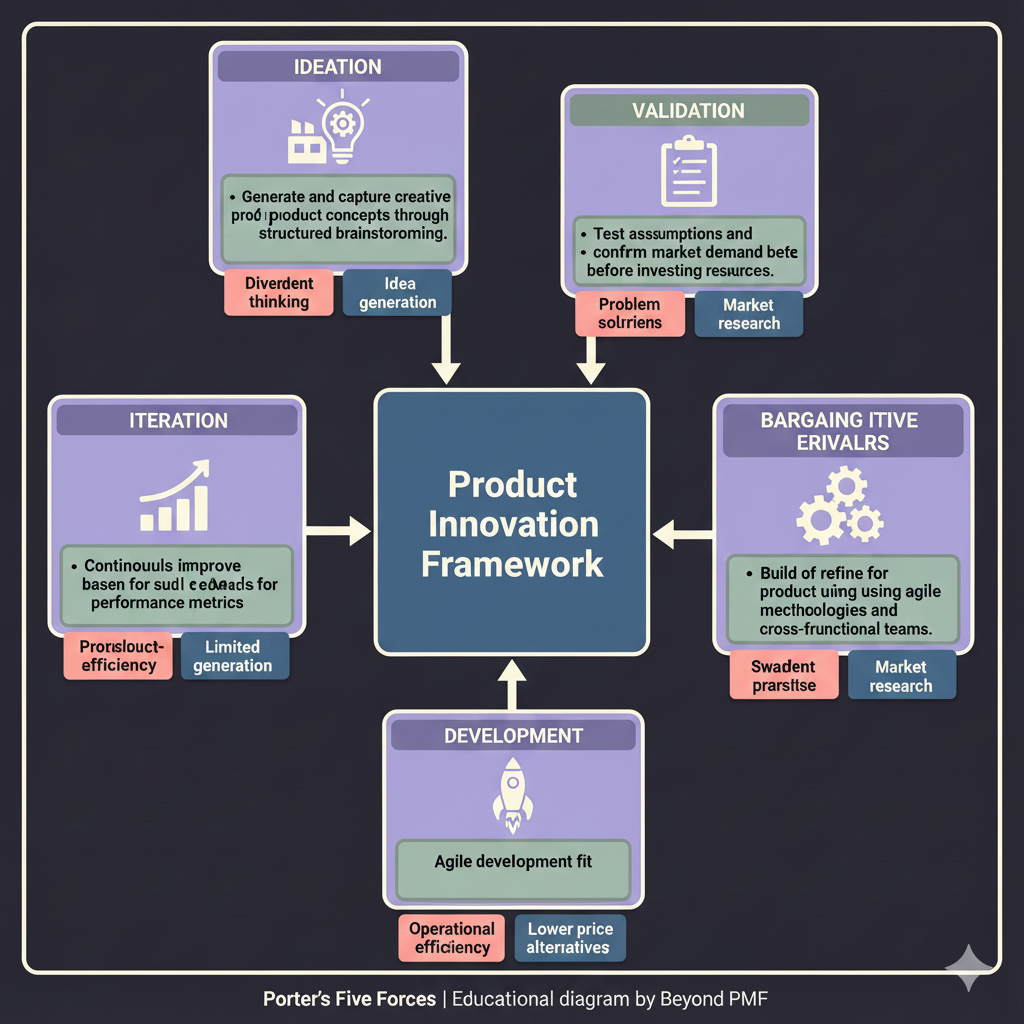
The Product Innovation Framework is designed to streamline the process of bringing new products to market by identifying key opportunities, aligning with market needs, and leveraging technological advancements. It helps organizations to systematically approach product development, ensuring that each step from ideation to launch is executed with precision. The framework not only enhances the chances of market success but also fosters creativity and innovation within the team.

The SCAMPER Technique is a brainstorming method used to spark creativity and innovative thinking in problem-solving. It involves a checklist of idea-spurring questions, which guide users to think about a product or service in different ways. The acronym SCAMPER stands for Substitute, Combine, Adapt, Modify, Put to another use, Eliminate, and Reverse. This technique is beneficial for developing new products, improving services, or refreshing marketing strategies by exploring multiple perspectives and alternatives.
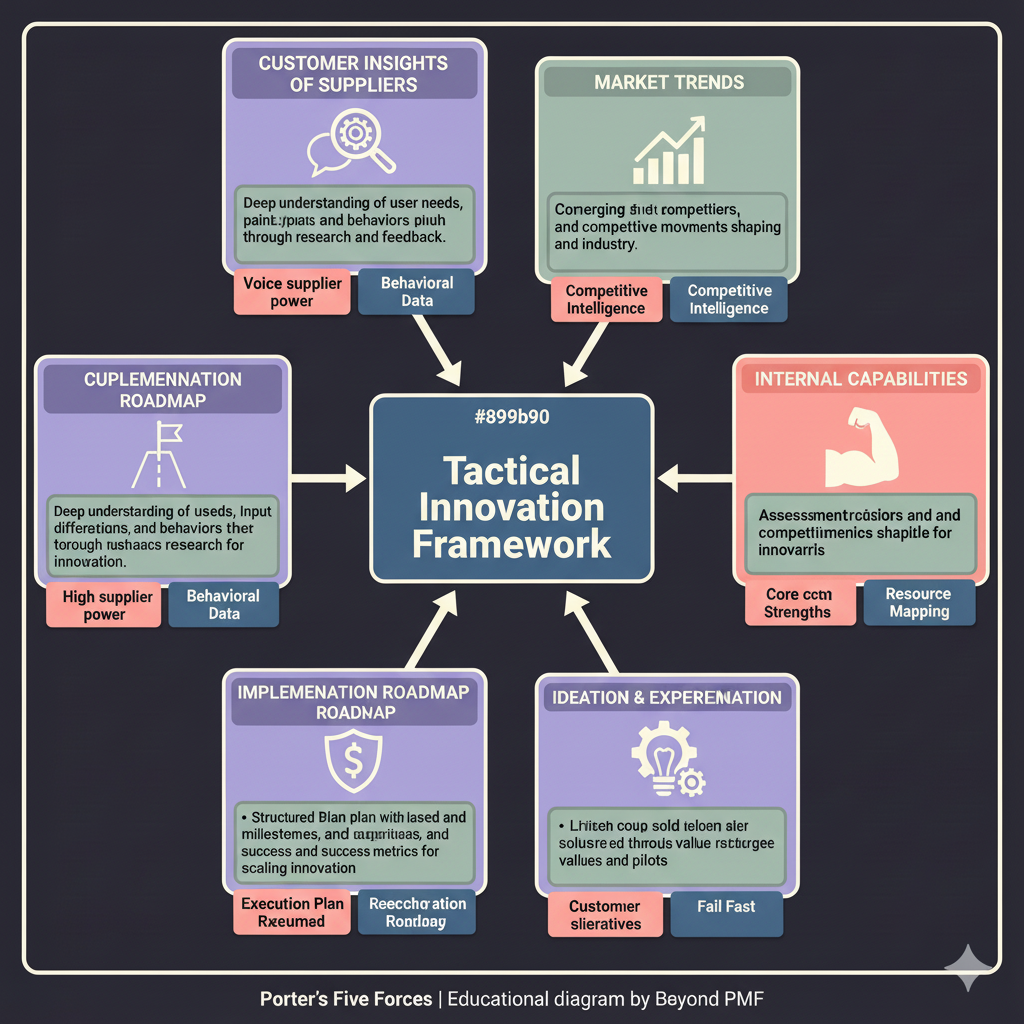
The Tactical Innovation Framework is a structured approach used by businesses to drive innovation through focused, short-term projects. It emphasizes rapid ideation, prototyping, and implementation to quickly respond to market changes and opportunities. This framework helps organizations stay competitive by enabling them to swiftly adapt and innovate, leveraging tactical moves that can be quickly executed and evaluated for effectiveness.
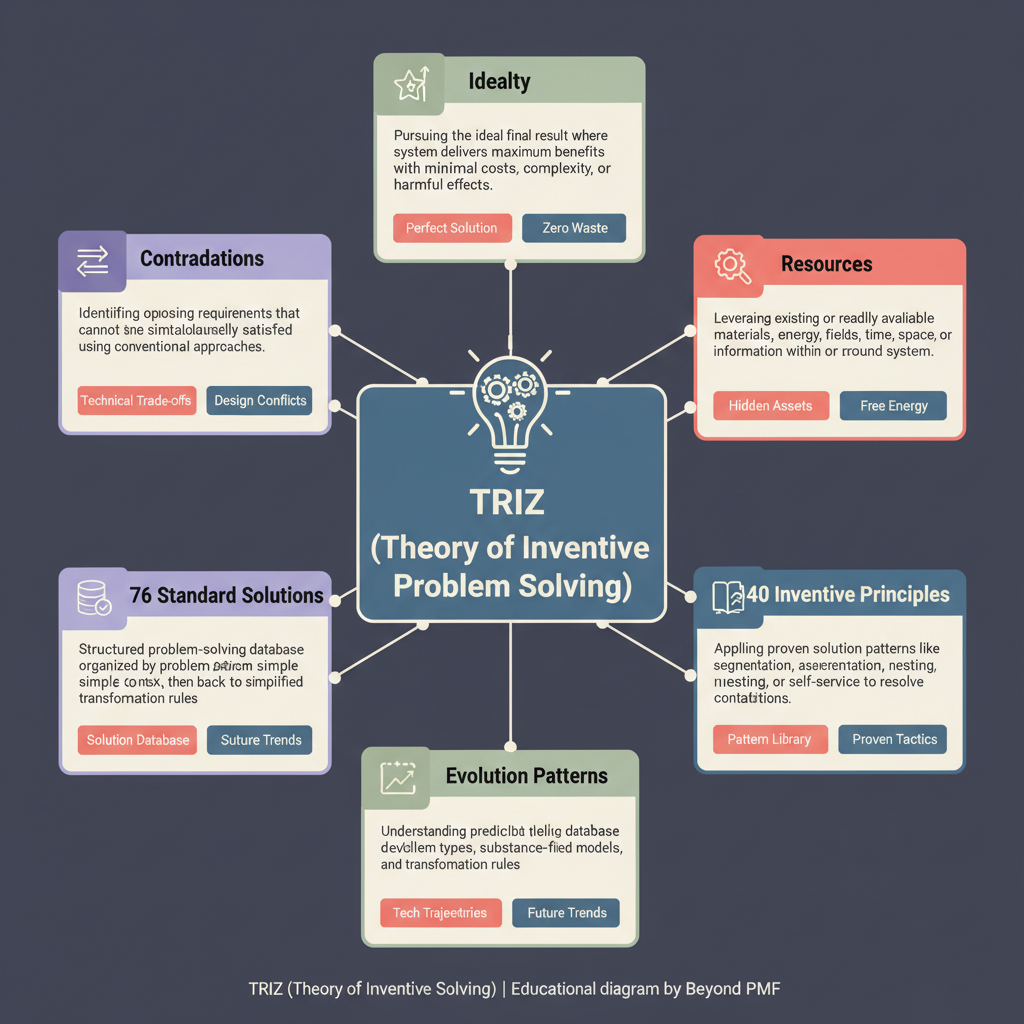
TRIZ is a systematic framework that aims to enhance the process of invention and creativity. It was developed by Soviet inventor and science fiction writer Genrich Altshuller and his colleagues, starting in 1946. The framework is based on the premise that the evolution of systems follows predictable patterns, and by understanding these patterns, inventors can more quickly develop innovative solutions to problems. TRIZ provides tools and strategies for problem analysis, idea generation, and the overcoming of technical contradictions.