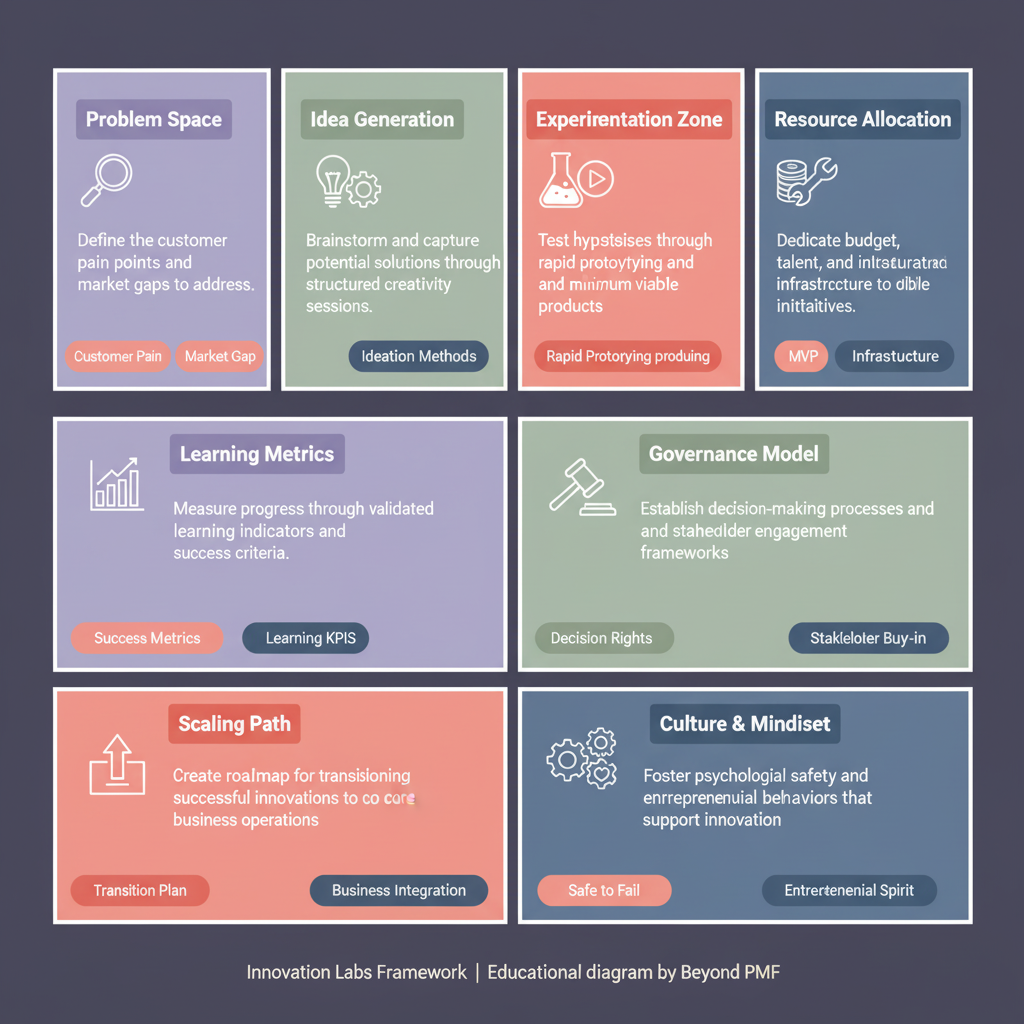
Innovation Labs Framework

https://ik.imagekit.io/beyondpmf/frameworks/innovation-labs-framework.png
The Innovation Labs Framework primarily addresses structural friction by creating dedicated teams and spaces, aiming to overcome organizational design issues that hinder innovation. It seeks to establish clear ownership and potentially improve cross-functional alignment for exploring new ideas.

The Innovation Labs Framework is designed to help organizations systematically explore and develop new ideas and technologies separate from their core operations. It involves setting up an innovation lab where cross-functional teams can work on disruptive projects without the constraints of day-to-day business pressures. This framework is used to accelerate innovation, prototype new products and services, and explore potential new markets. The benefits include enhanced creativity, faster idea-to-market times, and the cultivation of a forward-thinking organizational culture.

Steps / Detailed Description

Establish the lab's strategic objectives and alignment with overall business goals. | Select a suitable location and design a space that encourages creativity and collaboration. | Form a diverse team with a mix of skills, including technology, design, and business strategy. | Implement a governance model that supports autonomy while ensuring alignment with corporate standards. | Develop partnerships with external entities such as universities, tech startups, and other innovation ecosystems. | Launch pilot projects to test hypotheses and learn from successes and failures. | Scale successful innovations into the company's main business operations.

Best Practices

Ensure clear alignment with corporate strategy | Foster a culture of experimentation and acceptance of failure | Regularly review and adapt the innovation lab's focus based on feedback and market changes

Pros

Encourages creativity and experimentation | Reduces time to market for new innovations | Helps attract and retain talented employees interested in cutting-edge work

Cons

High initial setup and operational costs | Risk of projects failing to align with business objectives | Potential isolation from core business, leading to integration challenges

When to Use

When seeking to disrupt existing markets or create new ones | When needing to accelerate the pace of innovation within the company

When Not to Use

When the organization is not ready to invest in long-term experimental projects | When immediate returns on investment are a priority

Related Frameworks

Scope

Scope not defined

Maturity Level

Maturity level not specified

Time to Implement

2–4 Weeks
3–6 Months
1–2 Weeks
3–6 Months
1–2 Months
3–6 Months
1–2 Weeks
Less Than 1 Day
1–2 Weeks
Longer Than 6 Months
1–2 Weeks
Longer Than 6 Months
1–2 Weeks
3–6 Months
1–2 Weeks
1–2 Weeks
1–2 Weeks
1–2 Weeks
1–2 Days
1–2 Weeks
1–2 Weeks
1–2 Weeks
1–2 Weeks
1–2 Weeks
1–2 Weeks
3–6 Months
1–2 Weeks
1–2 Weeks
1–2 Weeks
3–6 Months
1–2 Weeks
1–2 Weeks
2–4 Weeks
1–2 Weeks
1–2 Days
1–2 Weeks
Longer Than 6 Months
3–6 Months
Longer Than 6 Months
1–2 Weeks
Longer Than 6 Months
3–6 Months
Less Than 1 Day
3–6 Months
1–2 Months
3–6 Months
Longer Than 6 Months
3–6 Months
Less Than 1 Day
1–2 Weeks
3–6 Months
3–6 Months
1–2 Weeks
3–6 Months
1–2 Weeks
1–2 Weeks
1–2 Days
1–2 Weeks
1–2 Months
Longer Than 6 Months
1–2 Weeks
Longer Than 6 Months
1–2 Weeks
3–6 Months
1–2 Weeks
Less Than 1 Day
1–2 Weeks
3–6 Months
1–2 Weeks
3–6 Months
1–2 Weeks
1–2 Weeks
Longer Than 6 Months
Less Than 1 Day
3–6 Months
Longer Than 6 Months
1–2 Months
1–2 Weeks
Longer Than 6 Months
1–2 Weeks
3–6 Months
1–2 Weeks
1–2 Weeks
3–6 Months
Less Than 1 Day
1–2 Weeks
1–2 Weeks
3–6 Months
3–6 Months
Less Than 1 Day
1–2 Weeks
Longer Than 6 Months
1–2 Months
1–2 Weeks
1–2 Weeks
1–2 Weeks
Longer Than 6 Months

Copyright Information

Autor:
Unknown
N/A
Publication:
Generic Business Tool