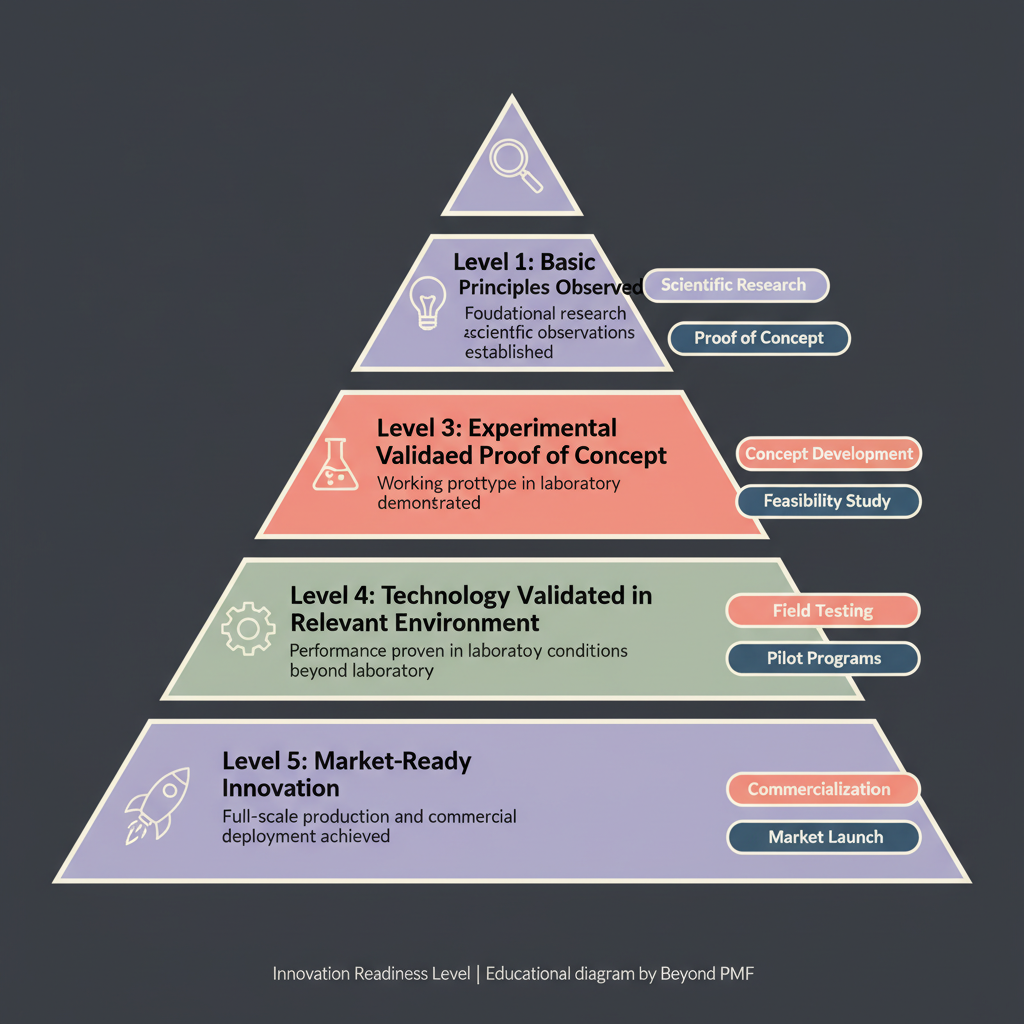
Innovation Readiness Level

https://ik.imagekit.io/beyondpmf/frameworks/innovation-readiness-level.png
The Innovation Readiness Level framework assesses an organization's ability to 'implement new innovations effectively'. This directly targets the ability to deliver new ideas and initiatives, focusing on the practical challenges of implementation and execution. The effectiveness aspect also includes customer-facing delivery and experience.

The Innovation Readiness Level framework is a tool used to evaluate and enhance an organization's readiness to adopt and integrate new technologies or processes. It helps identify the gaps in an organization's capabilities and provides a structured approach to address these gaps, thereby facilitating smoother innovation implementation. The framework is beneficial for prioritizing investments in innovation and ensuring that the necessary support structures are in place.

Steps / Detailed Description

Assessment of current innovation capabilities | Identification of gaps in innovation processes | Development of a strategic plan to address identified gaps | Implementation of strategies to enhance readiness | Continuous monitoring and adjustment of strategies

Best Practices

Regularly update the readiness assessment | Involve all levels of the organization in the assessment process | Use the results to guide strategic decision-making

Pros

Provides a clear assessment of current capabilities | Helps in strategic planning for innovation | Facilitates effective resource allocation

Cons

Can be time-consuming to implement | May require significant organizational change | Depends heavily on accurate self-assessment

When to Use

When planning to introduce new technologies | Before major innovation projects

When Not to Use

In very small or less complex projects | When immediate action is required without time for thorough assessment

Related Frameworks

Categories

Lifecycle

Not tied to a specific lifecycle stage

Scope

Scope not defined

Maturity Level

Maturity level not specified

Time to Implement

2–4 Weeks
3–6 Months
1–2 Weeks
3–6 Months
1–2 Months
3–6 Months
1–2 Weeks
Less Than 1 Day
1–2 Weeks
Longer Than 6 Months
1–2 Weeks
Longer Than 6 Months
1–2 Weeks
3–6 Months
1–2 Weeks
1–2 Weeks
1–2 Weeks
1–2 Weeks
1–2 Days
1–2 Weeks
1–2 Weeks
1–2 Weeks
1–2 Weeks
1–2 Weeks
1–2 Weeks
3–6 Months
1–2 Weeks
1–2 Weeks
1–2 Weeks
3–6 Months
1–2 Weeks
1–2 Weeks
2–4 Weeks
1–2 Weeks
1–2 Days
1–2 Weeks
Longer Than 6 Months
3–6 Months
Longer Than 6 Months
1–2 Weeks
Longer Than 6 Months
3–6 Months
Less Than 1 Day
3–6 Months
1–2 Months
3–6 Months
Longer Than 6 Months
3–6 Months
Less Than 1 Day
1–2 Weeks
3–6 Months
3–6 Months
1–2 Weeks
3–6 Months
1–2 Weeks
1–2 Weeks
1–2 Days
1–2 Weeks
1–2 Months
Longer Than 6 Months
1–2 Weeks
Longer Than 6 Months
1–2 Weeks
3–6 Months
1–2 Weeks
Less Than 1 Day
1–2 Weeks
3–6 Months
1–2 Weeks
3–6 Months
1–2 Weeks
1–2 Weeks
Longer Than 6 Months
Less Than 1 Day
3–6 Months
Longer Than 6 Months
1–2 Months
1–2 Weeks
Longer Than 6 Months
1–2 Weeks
3–6 Months
1–2 Weeks
1–2 Weeks
3–6 Months
Less Than 1 Day
1–2 Weeks
1–2 Weeks
3–6 Months
3–6 Months
Less Than 1 Day
1–2 Weeks
Longer Than 6 Months
1–2 Months
1–2 Weeks
1–2 Weeks
1–2 Weeks
Longer Than 6 Months

Copyright Information

Autor:
Unknown
N/A
Publication:
Generic Business Tool