70-20-10 Innovation Framework

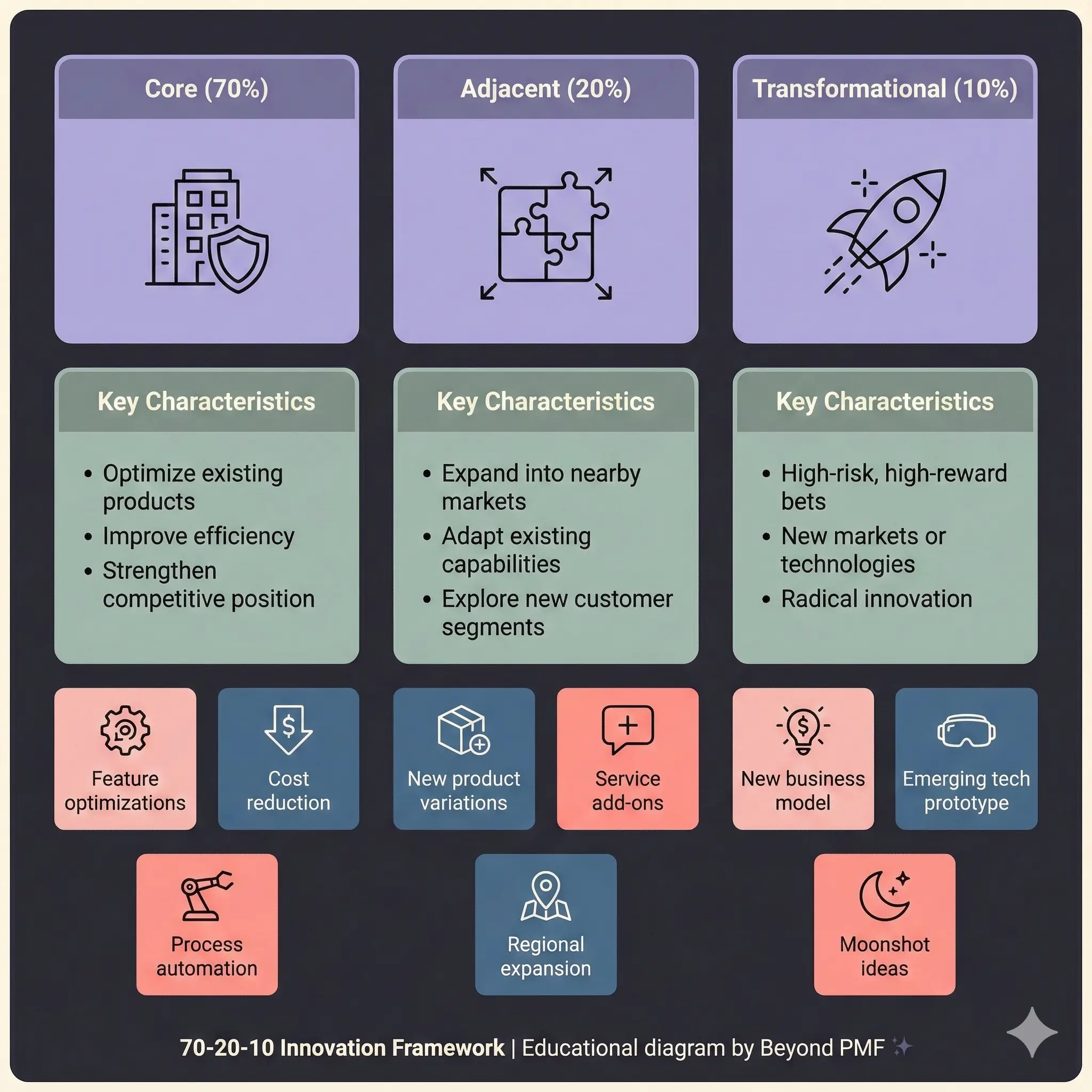
Diagram of the 70–20–10 Innovation Framework showing three investment categories: Core (70%), Adjacent (20%), and Transformational (10%). Each category lists key characteristics such as optimization, expansion, and high-risk innovation. The bottom row provides examples including feature optimizations, cost reduction, new product variations, service add-ons, new business models, emerging tech prototypes, and moonshot ideas.
The 70-20-10 framework primarily addresses strategic friction by providing a structured approach to allocating resources for innovation. It helps organizations balance exploration (new ideas) with exploitation (refining existing offerings) and risk management, which are core strategic decisions.

The 70-20-10 Innovation Framework is a strategic tool used by organizations to balance their investment across core, adjacent, and transformational initiatives. It suggests allocating 70% of resources to core business activities, 20% to adjacent innovations, and 10% to transformational efforts. This distribution helps companies maintain competitiveness while also investing in future growth and innovation.

Steps / Detailed Description

Identify core, adjacent, and transformational projects within your organization. | Allocate resources according to the 70-20-10 rule: 70% to core, 20% to adjacent, 10% to transformational. | Implement projects while monitoring progress and adjusting allocations as needed. | Measure the impact of each type of project on overall business performance. | Refine and iterate the innovation strategy based on feedback and results.

Best Practices

Regularly review and adjust the resource allocation | Ensure clear definitions and criteria for categorizing projects | Foster a culture that supports all types of innovation

Pros

Encourages a balanced approach to innovation | Reduces risk by diversifying investment | Promotes long-term sustainability and growth

Cons

Can be challenging to correctly categorize projects | May lead to underfunding transformative ideas | Requires constant adjustment and monitoring

When to Use

In companies seeking balanced growth | When diversifying product or service offerings

When Not to Use

In startups or companies with limited resources | When immediate returns are a priority over long-term innovation

Related Frameworks

Lifecycle

Not tied to a specific lifecycle stage

Scope

Scope not defined

Maturity Level

Maturity level not specified

Time to Implement

2–4 Weeks
3–6 Months
1–2 Weeks
3–6 Months
1–2 Months
3–6 Months
1–2 Weeks
Less Than 1 Day
1–2 Weeks
Longer Than 6 Months
1–2 Weeks
Longer Than 6 Months
1–2 Weeks
3–6 Months
1–2 Weeks
1–2 Weeks
1–2 Weeks
1–2 Weeks
1–2 Days
1–2 Weeks
1–2 Weeks
1–2 Weeks
1–2 Weeks
1–2 Weeks
1–2 Weeks
3–6 Months
1–2 Weeks
1–2 Weeks
1–2 Weeks
3–6 Months
1–2 Weeks
1–2 Weeks
2–4 Weeks
1–2 Weeks
1–2 Days
1–2 Weeks
Longer Than 6 Months
3–6 Months
Longer Than 6 Months
1–2 Weeks
Longer Than 6 Months
3–6 Months
Less Than 1 Day
3–6 Months
1–2 Months
3–6 Months
Longer Than 6 Months
3–6 Months
Less Than 1 Day
1–2 Weeks
3–6 Months
3–6 Months
1–2 Weeks
3–6 Months
1–2 Weeks
1–2 Weeks
1–2 Days
1–2 Weeks
1–2 Months
Longer Than 6 Months
1–2 Weeks
Longer Than 6 Months
1–2 Weeks
3–6 Months
1–2 Weeks
Less Than 1 Day
1–2 Weeks
3–6 Months
1–2 Weeks
3–6 Months
1–2 Weeks
1–2 Weeks
Longer Than 6 Months
Less Than 1 Day
3–6 Months
Longer Than 6 Months
1–2 Months
1–2 Weeks
Longer Than 6 Months
1–2 Weeks
3–6 Months
1–2 Weeks
1–2 Weeks
3–6 Months
Less Than 1 Day
1–2 Weeks
1–2 Weeks
3–6 Months
3–6 Months
Less Than 1 Day
1–2 Weeks
Longer Than 6 Months
1–2 Months
1–2 Weeks
1–2 Weeks
1–2 Weeks
Longer Than 6 Months

Copyright Information

Autor:
Unknown
Unknown
Publication:
Unknown