Product Innovation Framework

https://ik.imagekit.io/beyondpmf/frameworks/product-innovation-framework.png
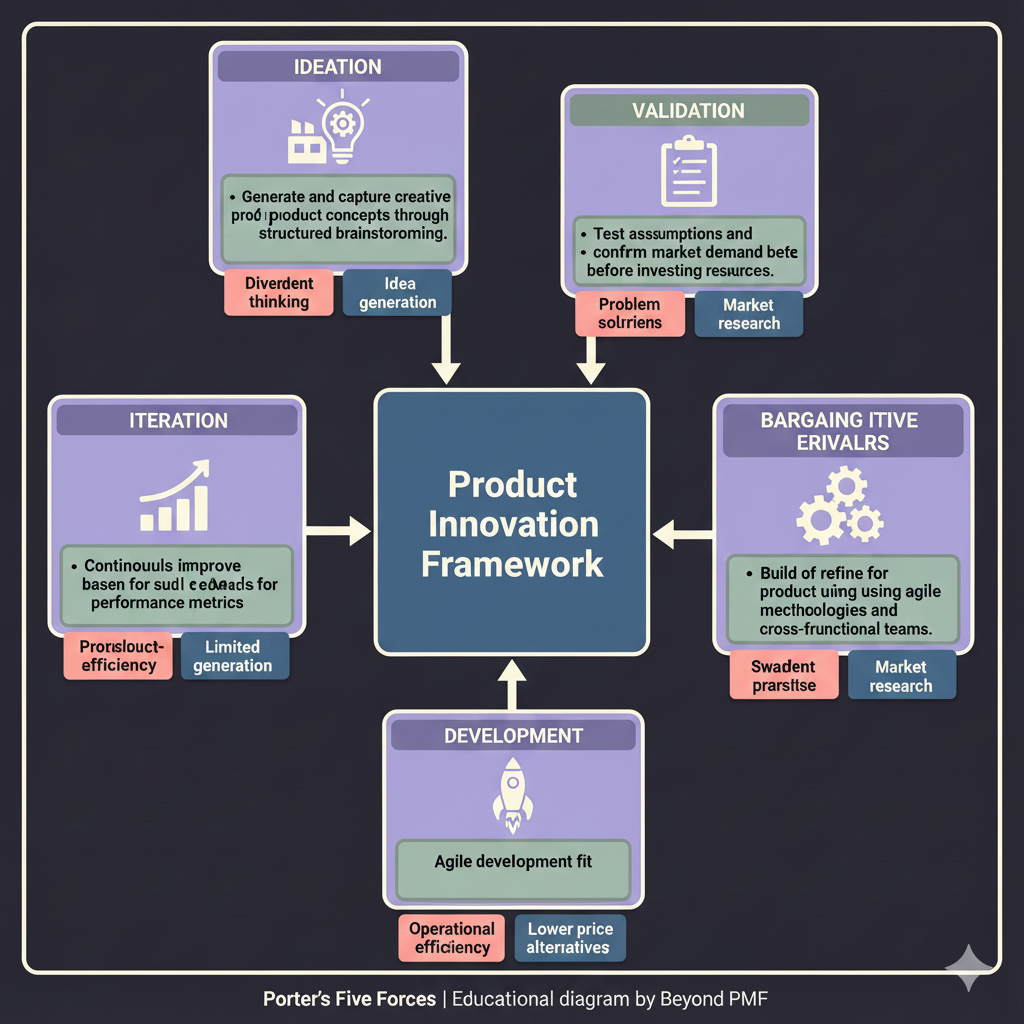
The Product Innovation Framework directly addresses the strategic friction inherent in developing and launching new products. It provides a structured approach to ensure the new product aligns with the overall vision, strategy, and market opportunities.

The Product Innovation Framework is designed to streamline the process of bringing new products to market by identifying key opportunities, aligning with market needs, and leveraging technological advancements. It helps organizations to systematically approach product development, ensuring that each step from ideation to launch is executed with precision. The framework not only enhances the chances of market success but also fosters creativity and innovation within the team.

Steps / Detailed Description

Identify market gaps and customer needs through research and data analysis. | Generate ideas and concepts that align with the identified needs and market trends. | Evaluate and prioritize ideas based on feasibility, market potential, and strategic fit. | Develop prototypes and conduct iterative testing to refine the product. | Plan and execute a go-to-market strategy that includes marketing, distribution, and sales.

Best Practices

Maintain flexibility in the innovation process to encourage creativity. | Regularly update and refine the framework based on feedback and market changes. | Ensure cross-functional collaboration to integrate diverse perspectives.

Pros

Enhances alignment between product offerings and market demands | Fosters a structured approach to innovation, reducing time to market | Improves the success rate of new products through systematic validation and testing

Cons

Can be resource-intensive, requiring significant time and investment | May stifle creativity if too rigidly applied | Risk of overemphasis on market needs, potentially overlooking breakthrough innovations

When to Use

When launching a new product in a competitive market | When needing to revitalize or expand a product line

When Not to Use

In highly uncertain or rapidly changing markets where flexibility is paramount | When innovation needs are purely incremental and well-defined by existing processes

Related Frameworks

Lifecycle

Scope

Scope not defined

Maturity Level

Maturity level not specified

Time to Implement

2–4 Weeks
3–6 Months
1–2 Weeks
3–6 Months
1–2 Months
3–6 Months
1–2 Weeks
Less Than 1 Day
1–2 Weeks
Longer Than 6 Months
1–2 Weeks
Longer Than 6 Months
1–2 Weeks
3–6 Months
1–2 Weeks
1–2 Weeks
1–2 Weeks
1–2 Weeks
1–2 Days
1–2 Weeks
1–2 Weeks
1–2 Weeks
1–2 Weeks
1–2 Weeks
1–2 Weeks
3–6 Months
1–2 Weeks
1–2 Weeks
1–2 Weeks
3–6 Months
1–2 Weeks
1–2 Weeks
2–4 Weeks
1–2 Weeks
1–2 Days
1–2 Weeks
Longer Than 6 Months
3–6 Months
Longer Than 6 Months
1–2 Weeks
Longer Than 6 Months
3–6 Months
Less Than 1 Day
3–6 Months
1–2 Months
3–6 Months
Longer Than 6 Months
3–6 Months
Less Than 1 Day
1–2 Weeks
3–6 Months
3–6 Months
1–2 Weeks
3–6 Months
1–2 Weeks
1–2 Weeks
1–2 Days
1–2 Weeks
1–2 Months
Longer Than 6 Months
1–2 Weeks
Longer Than 6 Months
1–2 Weeks
3–6 Months
1–2 Weeks
Less Than 1 Day
1–2 Weeks
3–6 Months
1–2 Weeks
3–6 Months
1–2 Weeks
1–2 Weeks
Longer Than 6 Months
Less Than 1 Day
3–6 Months
Longer Than 6 Months
1–2 Months
1–2 Weeks
Longer Than 6 Months
1–2 Weeks
3–6 Months
1–2 Weeks
1–2 Weeks
3–6 Months
Less Than 1 Day
1–2 Weeks
1–2 Weeks
3–6 Months
3–6 Months
Less Than 1 Day
1–2 Weeks
Longer Than 6 Months
1–2 Months
1–2 Weeks
1–2 Weeks
1–2 Weeks
Longer Than 6 Months

Copyright Information

Autor:
Unknown
N/A
Publication:
Generic Business Tool