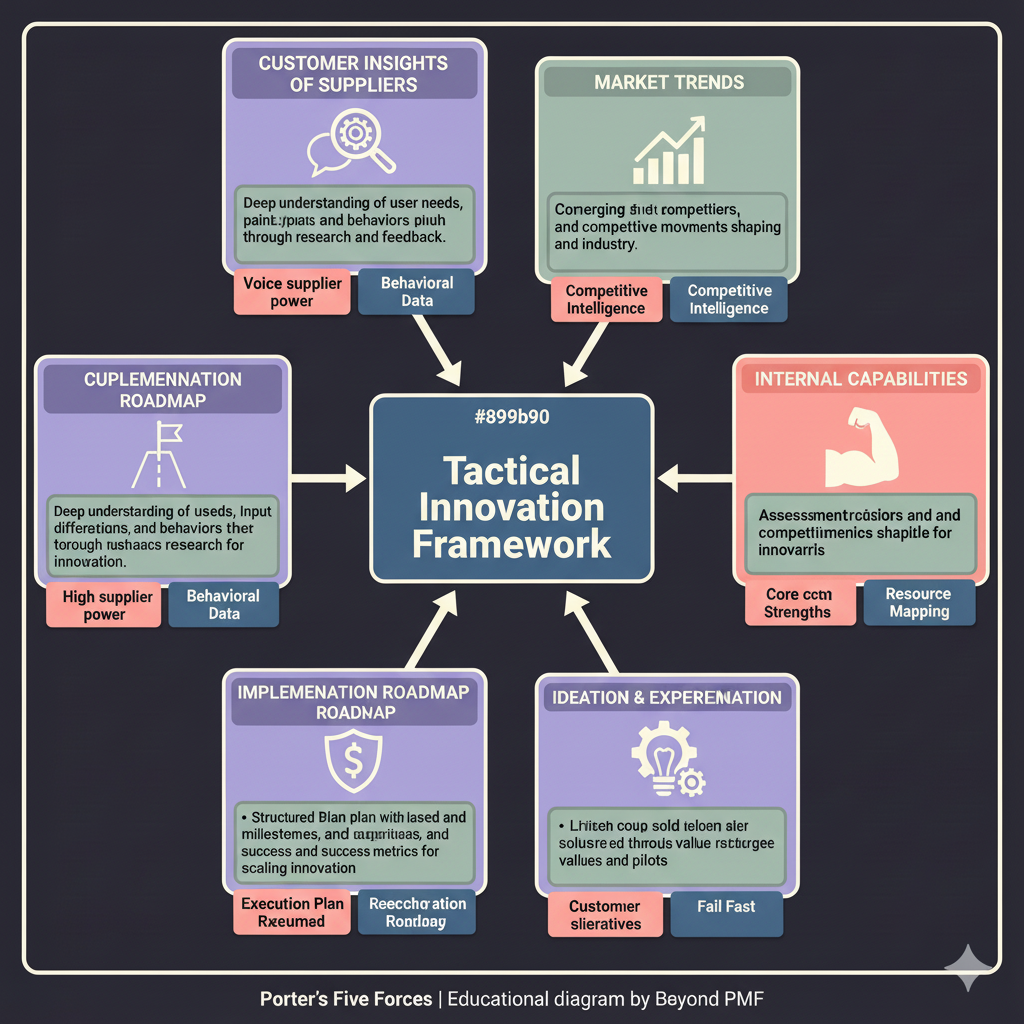
Tactical Innovation Framework

https://ik.imagekit.io/beyondpmf/frameworks/tactical-innovation-framework.png
The Tactical Innovation Framework focuses on fostering innovation through short-term initiatives. This suggests a strategic emphasis on direction and prioritization, aiming to guide innovation efforts.

The Tactical Innovation Framework is a structured approach used by businesses to drive innovation through focused, short-term projects. It emphasizes rapid ideation, prototyping, and implementation to quickly respond to market changes and opportunities. This framework helps organizations stay competitive by enabling them to swiftly adapt and innovate, leveraging tactical moves that can be quickly executed and evaluated for effectiveness.

Steps / Detailed Description

  • Identify strategic innovation goals that align with the business's short-term objectives.
  • Conduct a market and internal capabilities analysis to pinpoint tactical opportunities.
  • Generate ideas through brainstorming sessions focused on the identified opportunities.
  • Select the most promising ideas and develop prototypes or pilot projects.
  • Test prototypes in controlled environments to gather data and refine the approach.
  • Implement successful innovations at a larger scale within the organization.
  • Review and analyze the impact of implemented innovations and iterate as necessary.

Best Practices

  • Clearly define innovation goals and align them with overall business strategy.
  • Encourage a culture of open communication and collaboration across departments.
  • Regularly review and adjust the innovation process based on outcomes and feedback.

Pros

  • Allows for quick adaptation to market changes
  • Focuses resources on high-impact, short-term projects
  • Facilitates rapid testing and iteration

Cons

  • May overlook long-term strategic goals
  • Can lead to fragmented efforts if not properly managed
  • Risk of frequent pivoting disrupting core business processes

When to Use

  • When needing to quickly adapt to new market conditions
  • When seeking to exploit short-term opportunities

When Not to Use

  • For long-term strategic overhauls
  • When organizational stability is a priority

Related Frameworks

Lifecycle

Scope

Maturity Level

Time to Implement

1–2 Months

Copyright Information

Autor:
Unknown
N/A
Publication:
Unknown