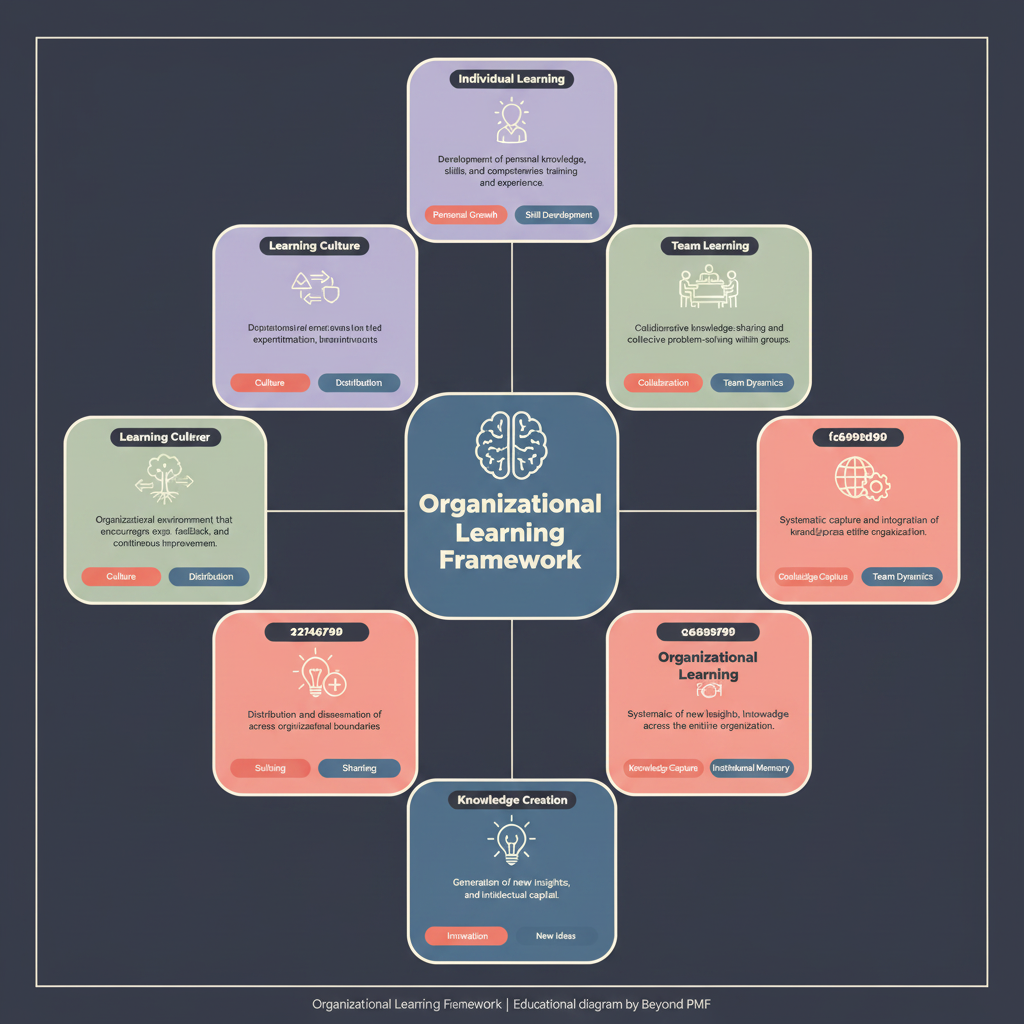
Organizational Learning Framework

https://ik.imagekit.io/beyondpmf/frameworks/organizational-learning-framework.png
The Organizational Learning Framework directly addresses the strategic friction of unclear direction and lack of market alignment by promoting continuous improvement and innovation through learning, helping organizations adapt to a changing environment.

The Organizational Learning Framework is a comprehensive approach that helps organizations embed continuous learning into their culture. It focuses on leveraging the collective knowledge and experience of employees to foster innovation and adaptability. This framework is crucial for maintaining competitive advantage in rapidly changing industries by enabling organizations to respond quickly to changes, improve processes, and enhance employee skills.

Steps / Detailed Description

Identify learning needs: Assess the current skills, knowledge gaps, and future needs of the organization. | Design learning interventions: Develop targeted programs or initiatives to address the identified needs. | Implement learning strategies: Execute the designed interventions across the organization. | Evaluate and measure impact: Continuously assess the effectiveness of learning activities and their impact on organizational performance. | Iterate and adapt: Use feedback and results to refine learning strategies and interventions.

Best Practices

Align learning objectives with organizational goals | Encourage a culture of continuous learning and knowledge sharing | Utilize technology to facilitate and track learning processes

Pros

Enhances adaptability and responsiveness | Fosters innovation and continuous improvement | Builds a more knowledgeable and skilled workforce

Cons

Can be time-consuming and resource-intensive | Requires strong leadership and commitment | Potential resistance to change within the organization

When to Use

During periods of organizational change or growth | When entering new markets or launching new products

When Not to Use

In highly stable, unchanging market conditions | When immediate results are required without the capacity for a learning curve

Related Frameworks

Lifecycle

Not tied to a specific lifecycle stage

Scope

Scope not defined

Maturity Level

Maturity level not specified

Time to Implement

2–4 Weeks
3–6 Months
1–2 Weeks
3–6 Months
1–2 Months
3–6 Months
1–2 Weeks
Less Than 1 Day
1–2 Weeks
Longer Than 6 Months
1–2 Weeks
Longer Than 6 Months
1–2 Weeks
3–6 Months
1–2 Weeks
1–2 Weeks
1–2 Weeks
1–2 Weeks
1–2 Days
1–2 Weeks
1–2 Weeks
1–2 Weeks
1–2 Weeks
1–2 Weeks
1–2 Weeks
3–6 Months
1–2 Weeks
1–2 Weeks
1–2 Weeks
3–6 Months
1–2 Weeks
1–2 Weeks
2–4 Weeks
1–2 Weeks
1–2 Days
1–2 Weeks
Longer Than 6 Months
3–6 Months
Longer Than 6 Months
1–2 Weeks
Longer Than 6 Months
3–6 Months
Less Than 1 Day
3–6 Months
1–2 Months
3–6 Months
Longer Than 6 Months
3–6 Months
Less Than 1 Day
1–2 Weeks
3–6 Months
3–6 Months
1–2 Weeks
3–6 Months
1–2 Weeks
1–2 Weeks
1–2 Days
1–2 Weeks
1–2 Months
Longer Than 6 Months
1–2 Weeks
Longer Than 6 Months
1–2 Weeks
3–6 Months
1–2 Weeks
Less Than 1 Day
1–2 Weeks
3–6 Months
1–2 Weeks
3–6 Months
1–2 Weeks
1–2 Weeks
Longer Than 6 Months
Less Than 1 Day
3–6 Months
Longer Than 6 Months
1–2 Months
1–2 Weeks
Longer Than 6 Months
1–2 Weeks
3–6 Months
1–2 Weeks
1–2 Weeks
3–6 Months
Less Than 1 Day
1–2 Weeks
1–2 Weeks
3–6 Months
3–6 Months
Less Than 1 Day
1–2 Weeks
Longer Than 6 Months
1–2 Months
1–2 Weeks
1–2 Weeks
1–2 Weeks
Longer Than 6 Months

Copyright Information

Autor:
Unknown
N/A
Publication:
Generic Business Tool