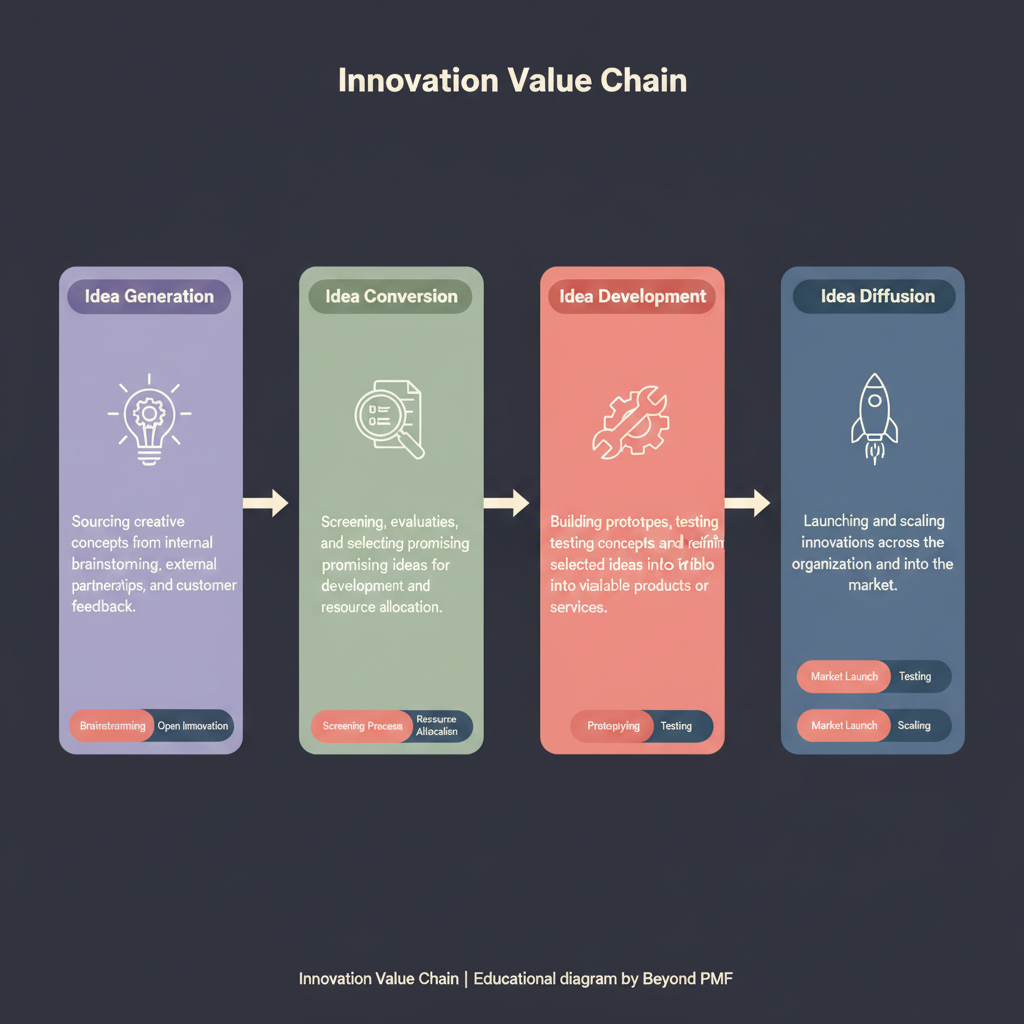
The Innovation Value Chain is a comprehensive framework designed to systematically manage the flow of ideas through different stages until they are successfully implemented. It emphasizes the interconnectedness of various phases of innovation, from ideation to final execution, ensuring that ideas are effectively captured, developed, and transformed into value-creating strategies or products. This framework is used to identify bottlenecks and improve the efficiency of the innovation process, thereby enhancing the organization's overall competitive edge.
Idea Generation: Encouraging the creation of new ideas through brainstorming sessions, open innovation platforms, or employee suggestions. | Conversion: Filtering and developing ideas into viable concepts through evaluation processes, prototypes, and feasibility studies. | Diffusion: Implementing the refined ideas into marketable products or services and ensuring widespread adoption within the organization or market.
Foster an open culture that encourages idea sharing | Regularly review and refine the innovation process | Ensure alignment between innovation goals and business strategy
Enhances systematic innovation management | Identifies and removes bottlenecks in the innovation process | Improves the success rate of new products or services
Can be complex and resource-intensive to implement | May stifle creativity if too rigidly applied | Requires strong organizational alignment and communication
When needing to systematize innovation in large organizations | When seeking to improve the throughput of innovation processes
In very small or less structured organizations where formal frameworks may be too cumbersome | When rapid, ad-hoc innovation is required without the need for systematic processing