Intrapreneurship Framework

https://ik.imagekit.io/beyondpmf/frameworks/intrapreneurship-framework.png
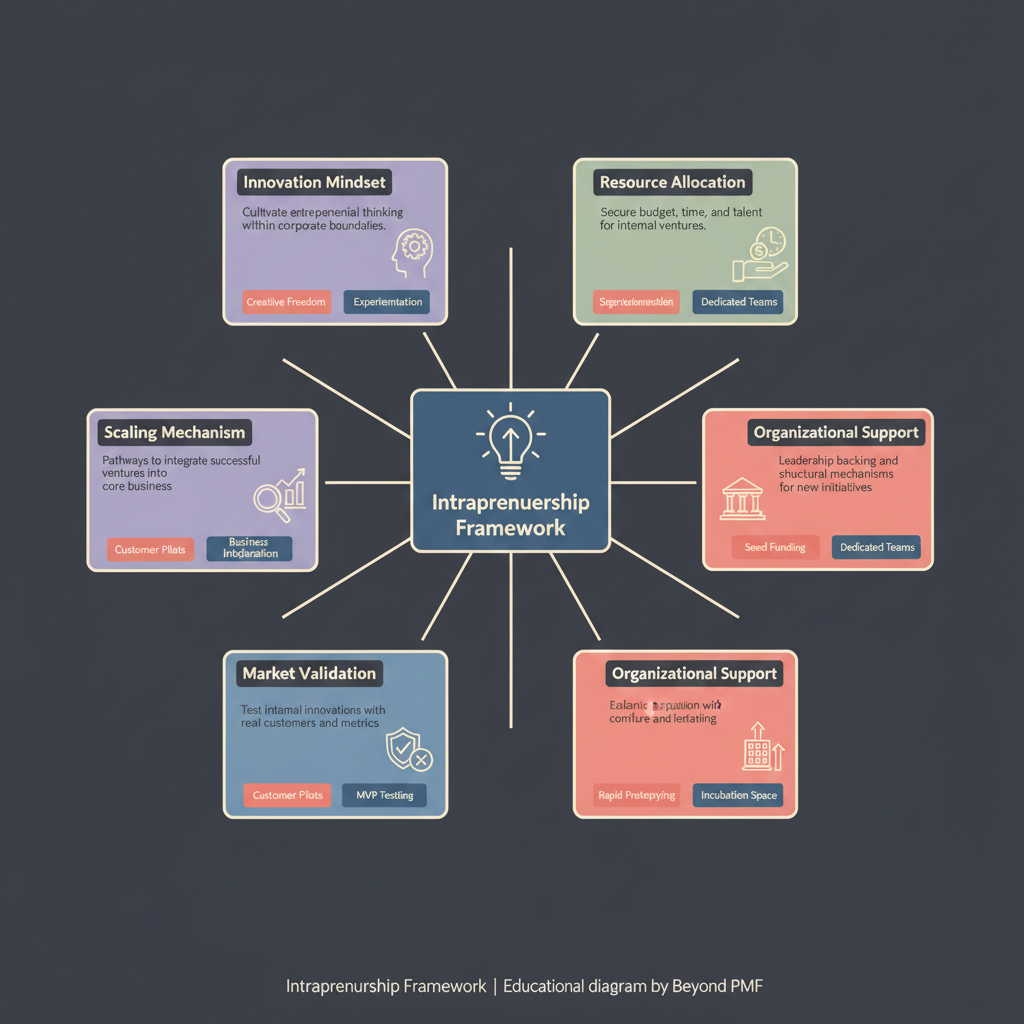
The Intrapreneurship Framework addresses structural friction by aiming to create an environment where employees can act like entrepreneurs. This involves redefining roles, promoting ownership, and potentially altering team structures to foster innovation and autonomy, which are organizational design elements. It seeks to overcome organizational silos and bottlenecks hindering innovation.

The Intrapreneurship Framework is a strategic approach used by companies to stimulate innovation by treating employees as entrepreneurs within the firm. This framework encourages staff to develop new ideas, products, or services as if they were creating a startup, but with the resources and support of the larger organization. It leverages internal talent to drive growth and adaptability, fostering a culture of creativity and proactive problem-solving.

Steps / Detailed Description

Identify and empower potential intrapreneurs within the organization. | Provide resources, training, and support to encourage innovation. | Set up a system for pitching ideas and prototypes similar to venture funding rounds. | Implement pilot projects to test the viability of new concepts. | Scale successful innovations across the wider organization.

Best Practices

Establish clear guidelines and support systems for intrapreneurs. | Encourage a fail-fast, learn-fast mentality to iterate on ideas quickly. | Maintain open communication channels between intrapreneurs and management.

Pros

Promotes a culture of innovation and creativity. | Utilizes existing resources to foster growth and development. | Increases employee engagement and retention.

Cons

Risk of failure and financial losses from untested ideas. | Potential for internal conflict between traditional and innovative practices. | Requires significant management support and flexibility.

When to Use

When seeking to innovate without the risks of a full external startup. | In large organizations needing to stay competitive and agile.

When Not to Use

In very small organizations with limited resources. | Where a conservative, risk-averse culture predominates.

Related Frameworks

Lifecycle

Scope

Scope not defined

Maturity Level

Maturity level not specified

Time to Implement

2–4 Weeks
3–6 Months
1–2 Weeks
3–6 Months
1–2 Months
3–6 Months
1–2 Weeks
Less Than 1 Day
1–2 Weeks
Longer Than 6 Months
1–2 Weeks
Longer Than 6 Months
1–2 Weeks
3–6 Months
1–2 Weeks
1–2 Weeks
1–2 Weeks
1–2 Weeks
1–2 Days
1–2 Weeks
1–2 Weeks
1–2 Weeks
1–2 Weeks
1–2 Weeks
1–2 Weeks
3–6 Months
1–2 Weeks
1–2 Weeks
1–2 Weeks
3–6 Months
1–2 Weeks
1–2 Weeks
2–4 Weeks
1–2 Weeks
1–2 Days
1–2 Weeks
Longer Than 6 Months
3–6 Months
Longer Than 6 Months
1–2 Weeks
Longer Than 6 Months
3–6 Months
Less Than 1 Day
3–6 Months
1–2 Months
3–6 Months
Longer Than 6 Months
3–6 Months
Less Than 1 Day
1–2 Weeks
3–6 Months
3–6 Months
1–2 Weeks
3–6 Months
1–2 Weeks
1–2 Weeks
1–2 Days
1–2 Weeks
1–2 Months
Longer Than 6 Months
1–2 Weeks
Longer Than 6 Months
1–2 Weeks
3–6 Months
1–2 Weeks
Less Than 1 Day
1–2 Weeks
3–6 Months
1–2 Weeks
3–6 Months
1–2 Weeks
1–2 Weeks
Longer Than 6 Months
Less Than 1 Day
3–6 Months
Longer Than 6 Months
1–2 Months
1–2 Weeks
Longer Than 6 Months
1–2 Weeks
3–6 Months
1–2 Weeks
1–2 Weeks
3–6 Months
Less Than 1 Day
1–2 Weeks
1–2 Weeks
3–6 Months
3–6 Months
Less Than 1 Day
1–2 Weeks
Longer Than 6 Months
1–2 Months
1–2 Weeks
1–2 Weeks
1–2 Weeks
Longer Than 6 Months

Copyright Information

Autor:
Public Domain
N/A
Publication:
Generic Business Tool