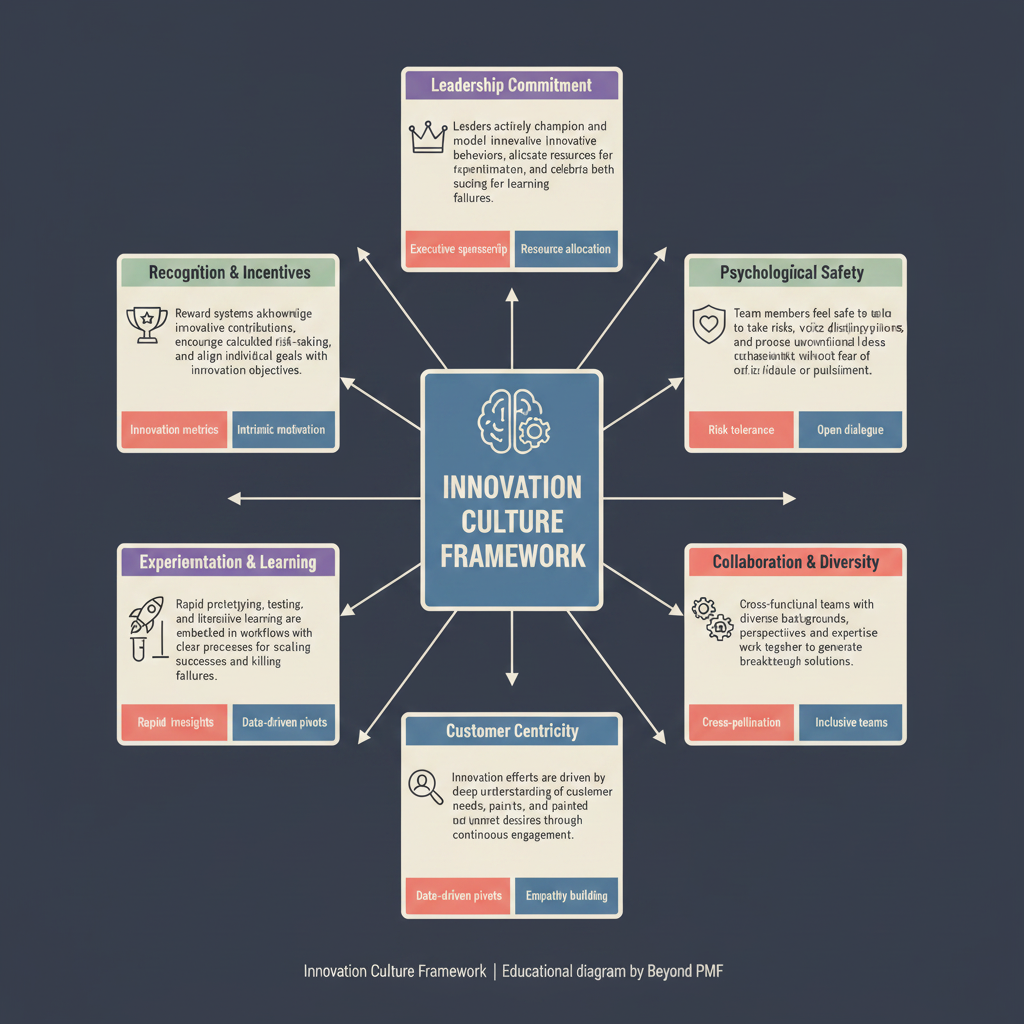
Innovation Culture Framework

https://ik.imagekit.io/beyondpmf/frameworks/innovation-culture-framework.png
The Innovation Culture Framework is primarily designed to address strategic friction by setting the direction for innovation and fostering a culture that aligns with the organization's vision for new products, services, or processes. This framework aims to establish a shared understanding of innovation goals and how they support the broader business strategy.

The Innovation Culture Framework is designed to help organizations create a supportive environment that promotes the continuous generation of innovative ideas and solutions. It focuses on aligning organizational structures, processes, and leadership styles to support innovation. The framework is used to assess current cultural attributes, identify gaps, and implement strategies that encourage creativity and risk-taking, ultimately leading to enhanced competitiveness and growth.

Steps / Detailed Description

Assess the current organizational culture to understand existing values, behaviors, and practices. | Define clear innovation objectives aligned with the organization's strategic goals. | Develop and implement policies that encourage experimentation and tolerate failures. | Foster an inclusive environment where diverse ideas are welcomed and valued. | Provide ongoing training and resources to support innovative thinking and skills development. | Establish metrics to measure the effectiveness of the innovation culture.

Best Practices

Regularly communicate the importance of innovation through leadership. | Recognize and reward innovative contributions and successes. | Ensure alignment of innovation activities with overall business strategy.

Pros

Enhances creativity and flexibility within the organization. | Improves competitive advantage by fostering continuous innovation. | Attracts and retains top talent who seek dynamic and innovative work environments.

Cons

Can be challenging to implement in rigid, traditional organizational structures. | Requires significant time and resource investment. | Risk of failure and uncertainty can affect short-term stability.

When to Use

When transforming organizational culture to support growth. | During times of industry disruption or increased competition.

When Not to Use

In highly regulated industries where changes can risk compliance. | When the organization is not ready to invest in necessary changes.

Related Frameworks

Lifecycle

Not tied to a specific lifecycle stage

Scope

Scope not defined

Maturity Level

Maturity level not specified

Time to Implement

2–4 Weeks
3–6 Months
1–2 Weeks
3–6 Months
1–2 Months
3–6 Months
1–2 Weeks
Less Than 1 Day
1–2 Weeks
Longer Than 6 Months
1–2 Weeks
Longer Than 6 Months
1–2 Weeks
3–6 Months
1–2 Weeks
1–2 Weeks
1–2 Weeks
1–2 Weeks
1–2 Days
1–2 Weeks
1–2 Weeks
1–2 Weeks
1–2 Weeks
1–2 Weeks
1–2 Weeks
3–6 Months
1–2 Weeks
1–2 Weeks
1–2 Weeks
3–6 Months
1–2 Weeks
1–2 Weeks
2–4 Weeks
1–2 Weeks
1–2 Days
1–2 Weeks
Longer Than 6 Months
3–6 Months
Longer Than 6 Months
1–2 Weeks
Longer Than 6 Months
3–6 Months
Less Than 1 Day
3–6 Months
1–2 Months
3–6 Months
Longer Than 6 Months
3–6 Months
Less Than 1 Day
1–2 Weeks
3–6 Months
3–6 Months
1–2 Weeks
3–6 Months
1–2 Weeks
1–2 Weeks
1–2 Days
1–2 Weeks
1–2 Months
Longer Than 6 Months
1–2 Weeks
Longer Than 6 Months
1–2 Weeks
3–6 Months
1–2 Weeks
Less Than 1 Day
1–2 Weeks
3–6 Months
1–2 Weeks
3–6 Months
1–2 Weeks
1–2 Weeks
Longer Than 6 Months
Less Than 1 Day
3–6 Months
Longer Than 6 Months
1–2 Months
1–2 Weeks
Longer Than 6 Months
1–2 Weeks
3–6 Months
1–2 Weeks
1–2 Weeks
3–6 Months
Less Than 1 Day
1–2 Weeks
1–2 Weeks
3–6 Months
3–6 Months
Less Than 1 Day
1–2 Weeks
Longer Than 6 Months
1–2 Months
1–2 Weeks
1–2 Weeks
1–2 Weeks
Longer Than 6 Months

Copyright Information

Autor:
Public Domain
N/A
Publication:
Generic Business Tool