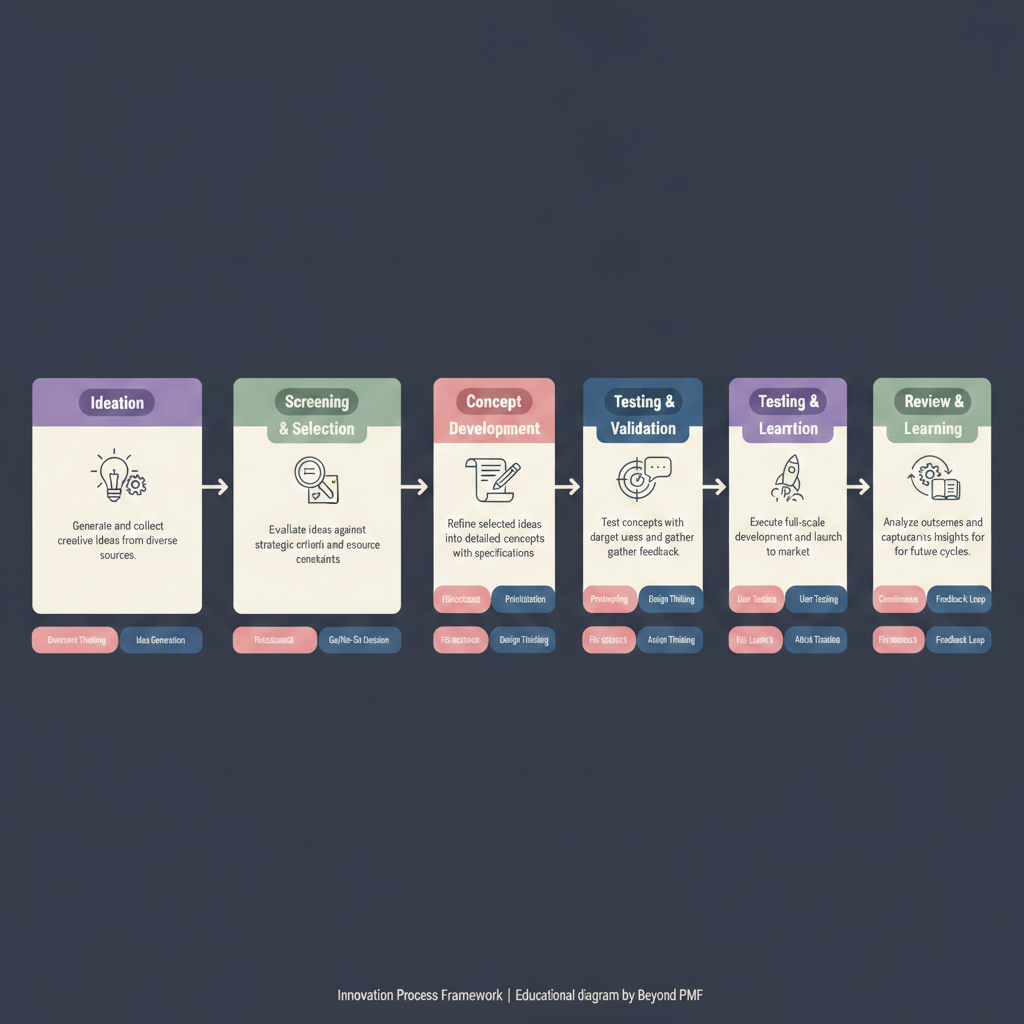
The Innovation Process Framework is designed to guide organizations through the complex task of innovating effectively. It structures the creative process into manageable stages, ensuring that ideas are not only generated but also evaluated, developed, and implemented efficiently. This framework helps businesses maintain a competitive edge by fostering a culture of continuous improvement and adaptation. Its use leads to enhanced problem-solving capabilities, better resource management, and increased market responsiveness.
Identify Opportunities: Recognize gaps and potential areas for innovation within the market or existing processes. | Generate Ideas: Brainstorm and gather diverse ideas that address identified opportunities. | Evaluate and Select: Assess the feasibility, potential impact, and resource requirements of each idea. | Develop: Turn selected ideas into prototypes or pilot projects to test their viability. | Implement: Fully integrate the successful innovations into the company's operations or product lines. | Review and Optimize: Continuously monitor the results and make improvements where necessary.
Foster an open culture that encourages risk-taking and creativity. | Use cross-functional teams to bring diverse perspectives. | Regularly review and iterate on the innovation process itself.
Enhances creativity and ideation | Improves resource allocation and efficiency | Increases competitiveness and market adaptability
Can be time-consuming | May require significant upfront investment | Risk of failure with new innovations
When launching new products or services | When seeking to improve existing processes or products
In highly regulated industries where changes can be risky | When immediate results are required, as the process can be lengthy