
Prioritization frameworks help teams decide what to build, improve, or stop by making trade‑offs explicit. They balance customer value, business impact, effort, risk, and strategic alignment. These frameworks are essential for roadmapping, backlog management, and portfolio governance. Use them to protect focus and accelerate high‑value delivery.
The 2x2 Matrix is a business framework that involves plotting options along two axes, each representing a different dimension (e.g., cost vs. benefit). This results in four quadrants, each of which can be analyzed to make strategic decisions or prioritize actions. The framework is widely used due to its simplicity and effectiveness in clarifying choices and facilitating comparisons.
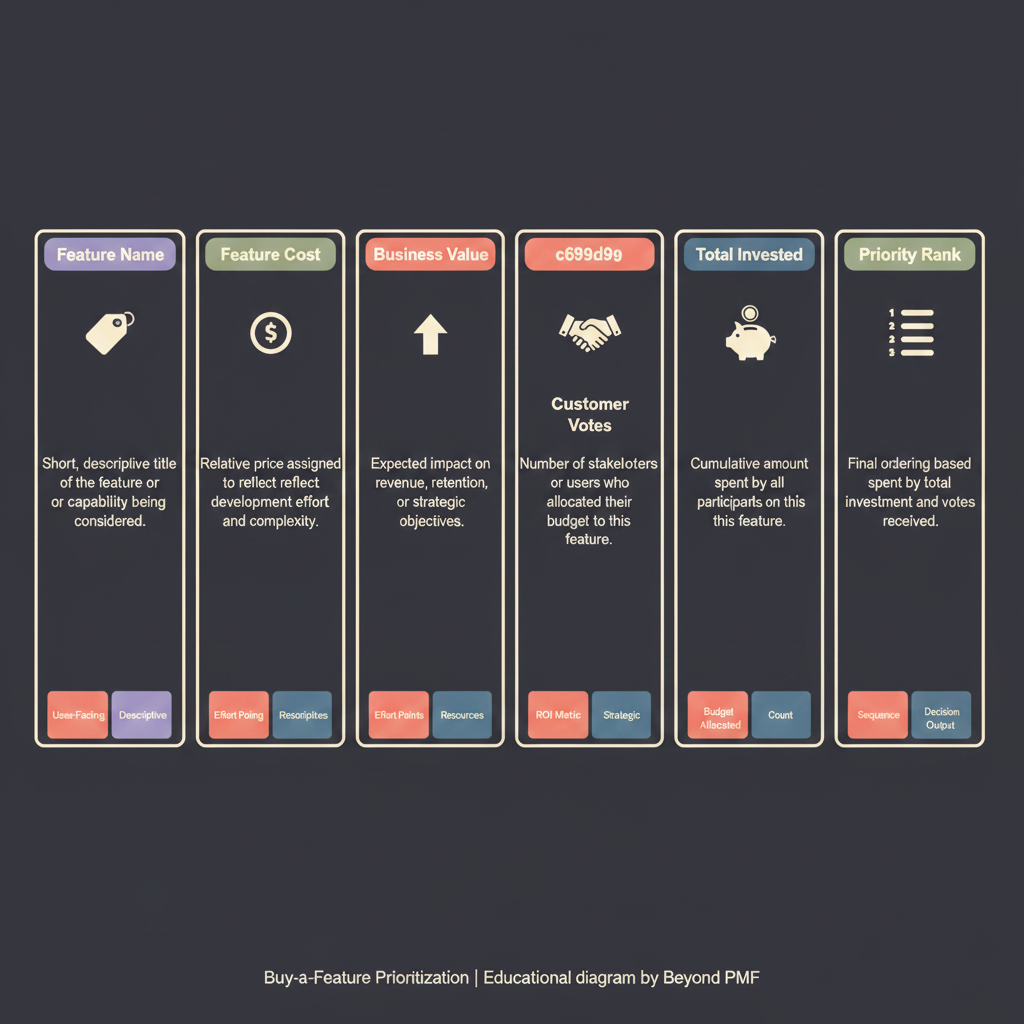
Buy-a-Feature Prioritization is a gamified approach used in product management to help prioritize features based on stakeholder input. In this framework, stakeholders are given a fictional budget to spend on a list of potential features, each priced according to its estimated cost of implementation. This method encourages stakeholders to weigh the importance of each feature against its cost, fostering engagement and revealing the features that provide the most perceived value. It is particularly beneficial for aligning diverse groups on product priorities and making the prioritization process transparent and data-driven.
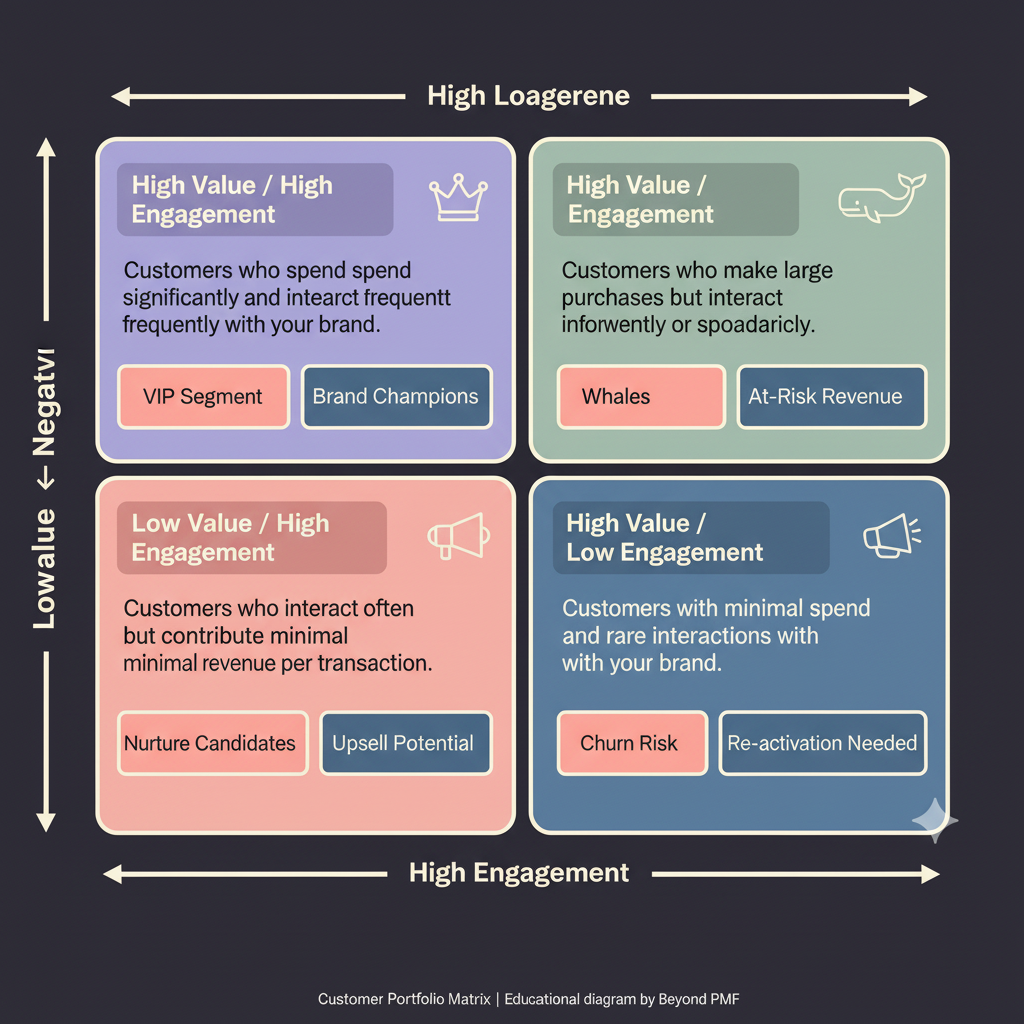
The Customer Portfolio Matrix is a framework designed to help businesses categorize and evaluate their customer base in terms of profitability and growth potential. By segmenting customers into different groups based on specific criteria, companies can tailor their marketing and service strategies to maximize returns. This strategic tool is crucial for optimizing resource allocation, enhancing customer satisfaction, and driving business growth.

DIE Scoring is a systematic approach that helps teams and individuals prioritize tasks by evaluating them based on three criteria: Difficulty, Importance, and Engagement. This framework is particularly beneficial in project management and personal productivity, as it aids in identifying which tasks should be prioritized to optimize resource allocation and achieve strategic goals efficiently.
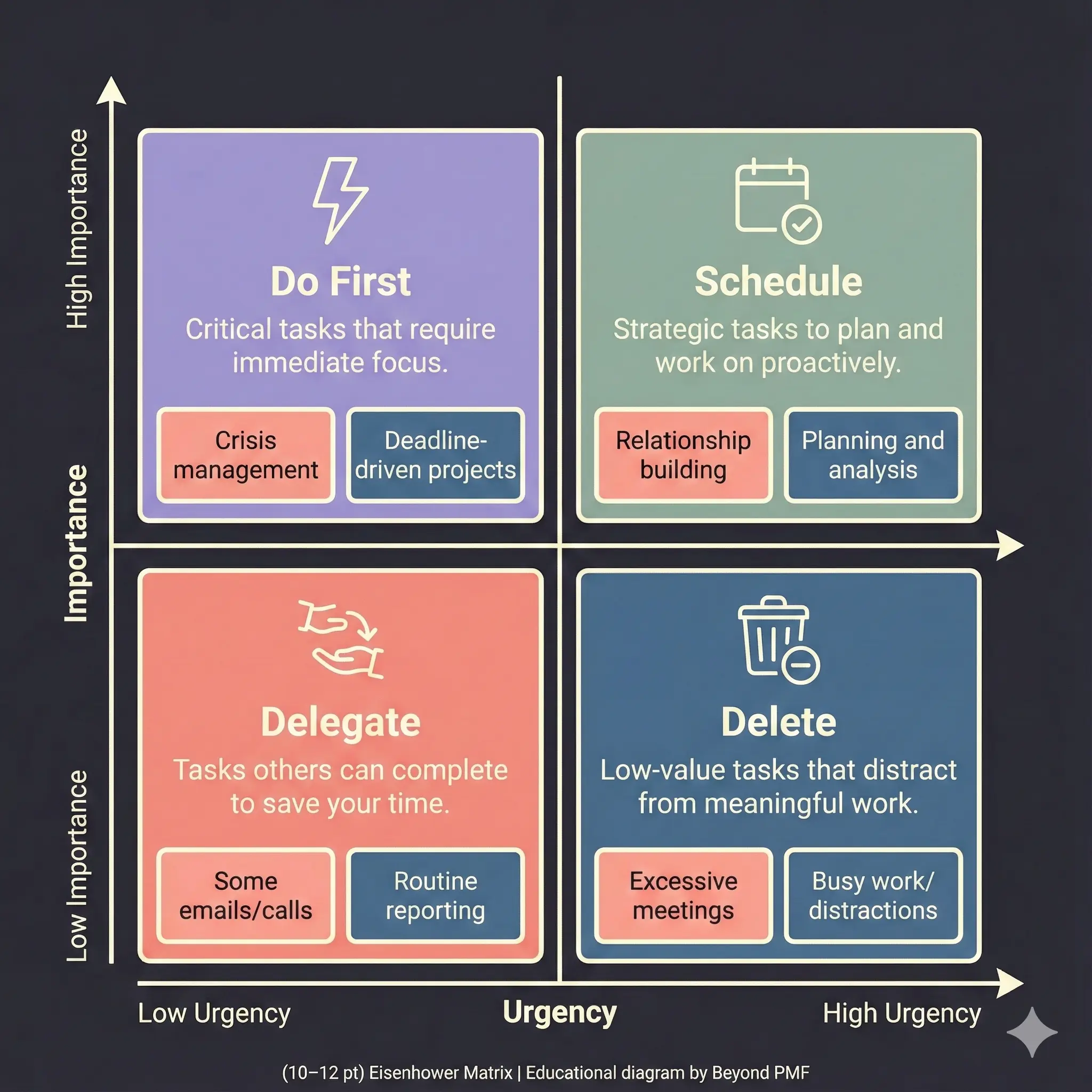
The Eisenhower Matrix, also known as the Urgency-Importance Matrix, is a decision-making tool used to prioritize tasks by categorizing them into four quadrants: urgent and important, important but not urgent, urgent but not important, and neither urgent nor important. This framework helps individuals and teams focus on what truly matters, manage distractions, and increase productivity by clearly identifying which tasks to delegate, delay, or delete.
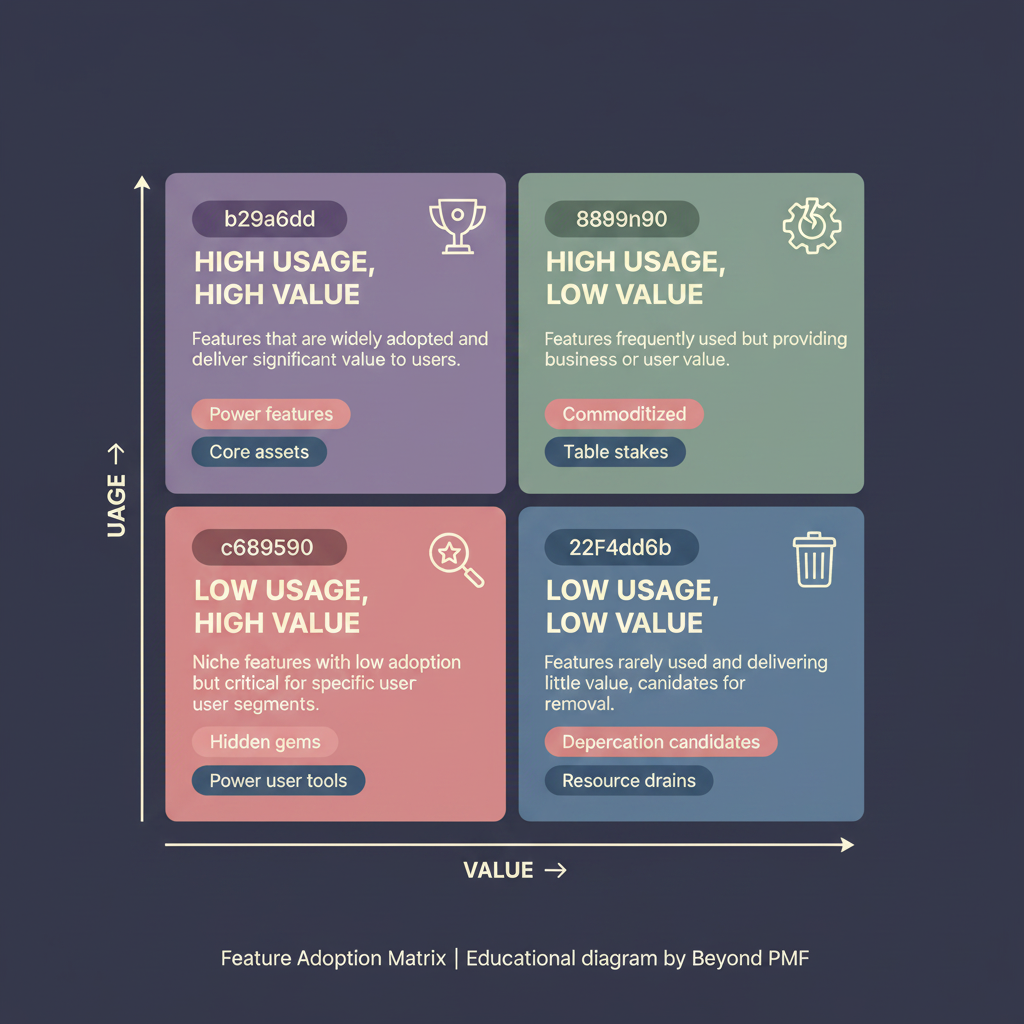
The Feature Adoption Matrix is a strategic framework that helps organizations evaluate which new features should be implemented to maximize user engagement and business value. It categorizes features based on their adoption rates and perceived value, allowing decision-makers to prioritize development and marketing efforts effectively. This framework is particularly useful in product development and project management to ensure that resources are allocated to features that will drive the most impact.
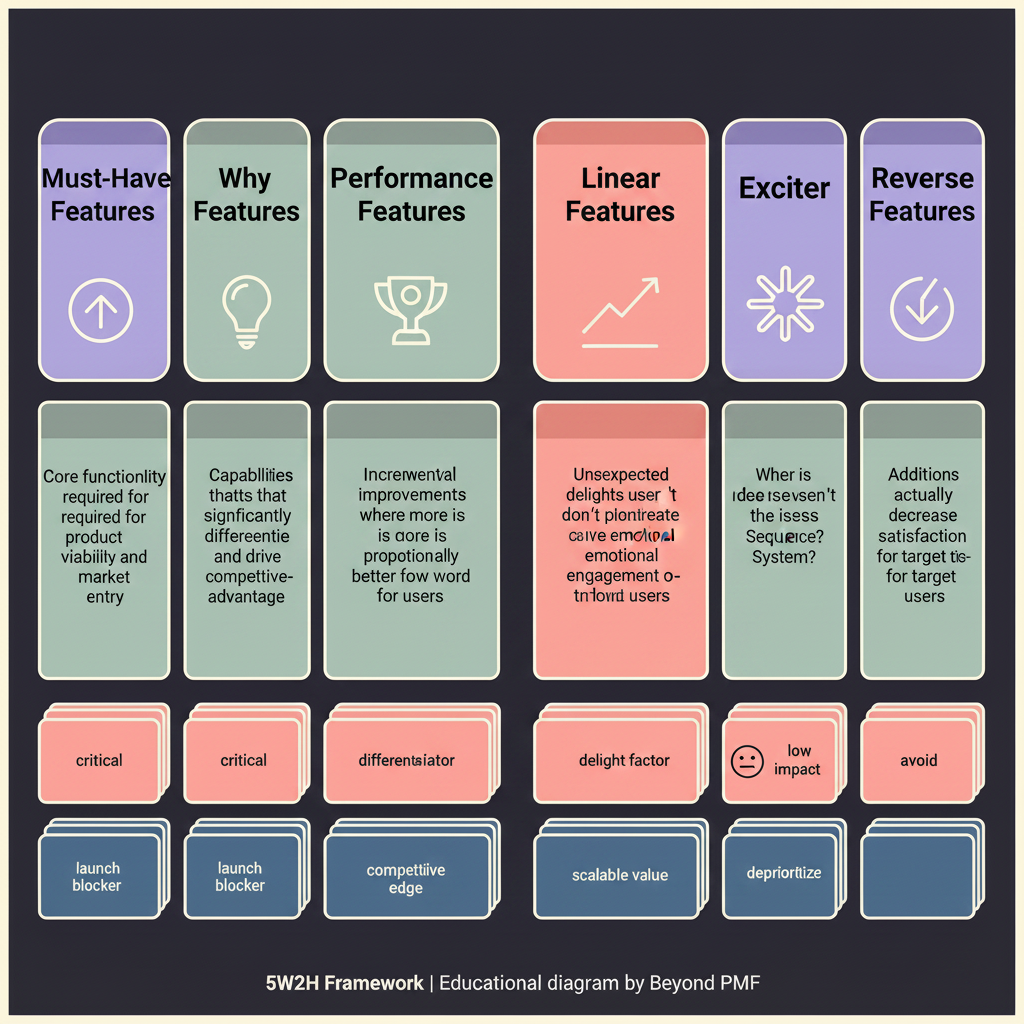
The Feature Bucket Framework is a strategic tool used in product management to categorize and prioritize features into various buckets such as 'must have', 'nice to have', and 'innovative'. This framework helps teams focus on delivering value by aligning feature development with business goals and customer needs. It is particularly beneficial for managing resources efficiently and ensuring that the most impactful features are developed first.
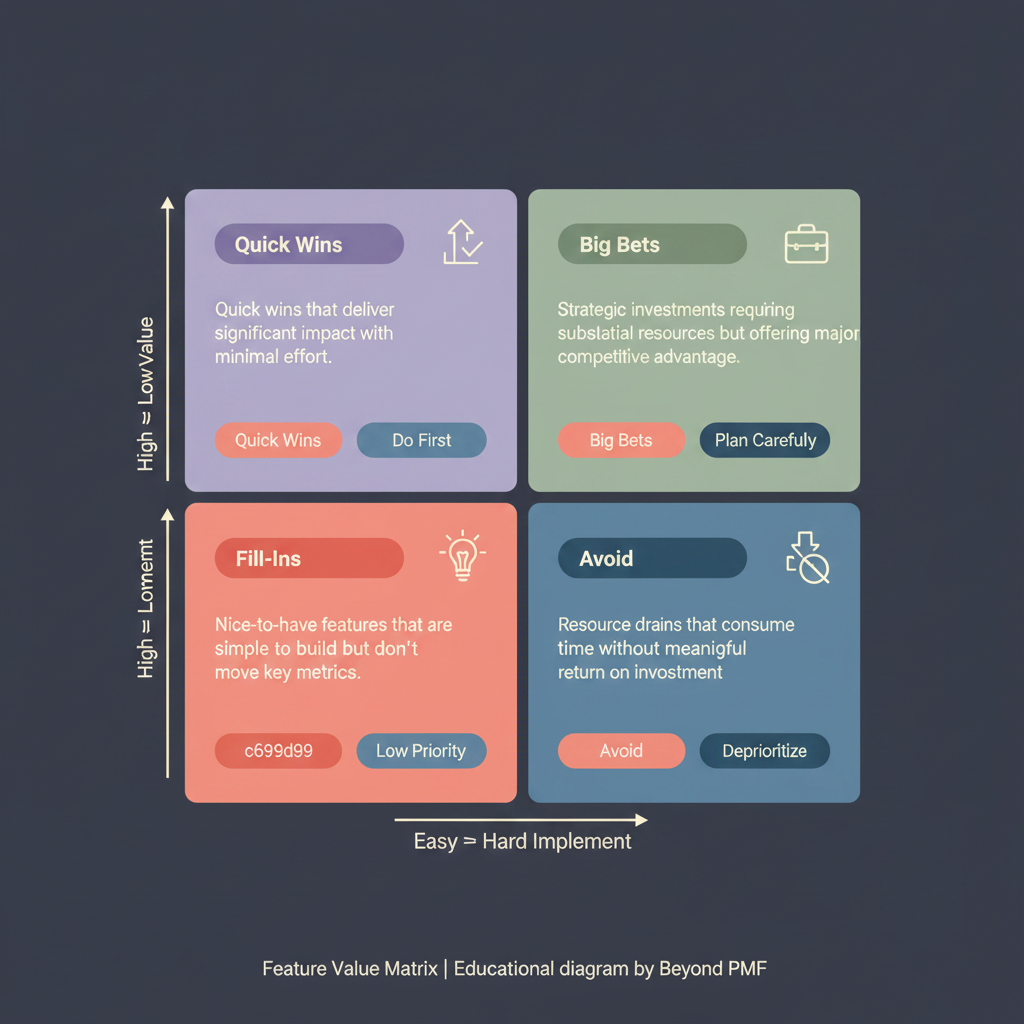
The Feature Value Matrix is a strategic framework used primarily in product management and development. It helps teams prioritize features by assessing and comparing their potential value against the cost or effort required to implement them. This matrix is particularly beneficial in aligning product features with business goals, optimizing resource allocation, and enhancing decision-making processes by providing a clear visual representation of where the greatest value can be generated.

The GE-McKinsey Matrix, also known as the GE Matrix, is a framework developed by McKinsey & Company for General Electric in the 1970s. It helps corporations decide which business units to invest in based on their market attractiveness and competitive strength. The matrix categorizes business units into three categories (high, medium, low) on a nine-cell grid, aiding in strategic decision-making and resource allocation. This tool is particularly beneficial for multi-business corporations looking to optimize their investments and streamline their portfolio.
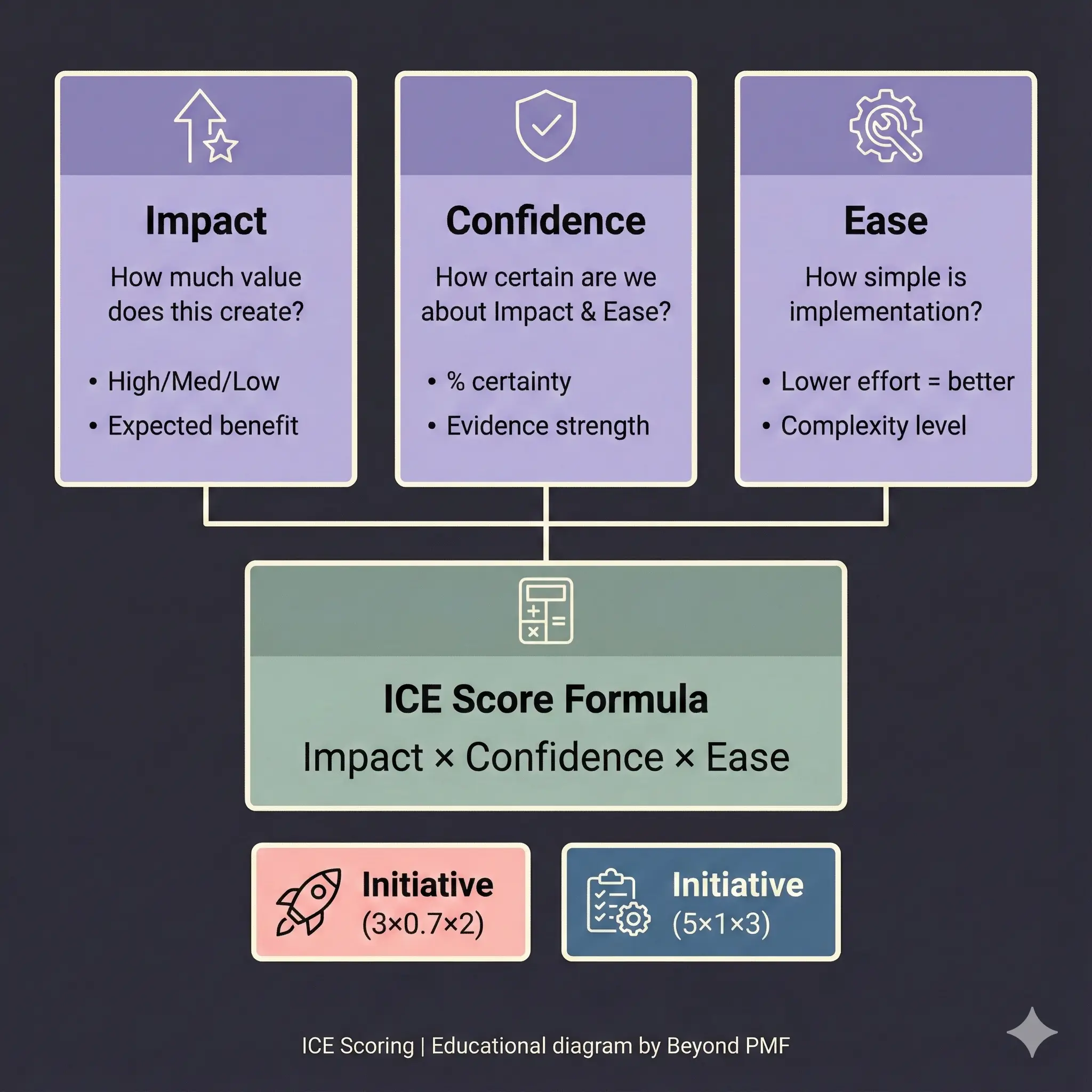
ICE Scoring is a framework designed to help teams prioritize features, projects, or ideas by scoring them on three criteria: Impact, Confidence, and Ease. Each criterion is rated, and the scores are then multiplied to give an overall ICE score. This method provides a quantitative way to compare different initiatives, helping teams to focus resources on the most valuable projects and ensure alignment with business objectives.
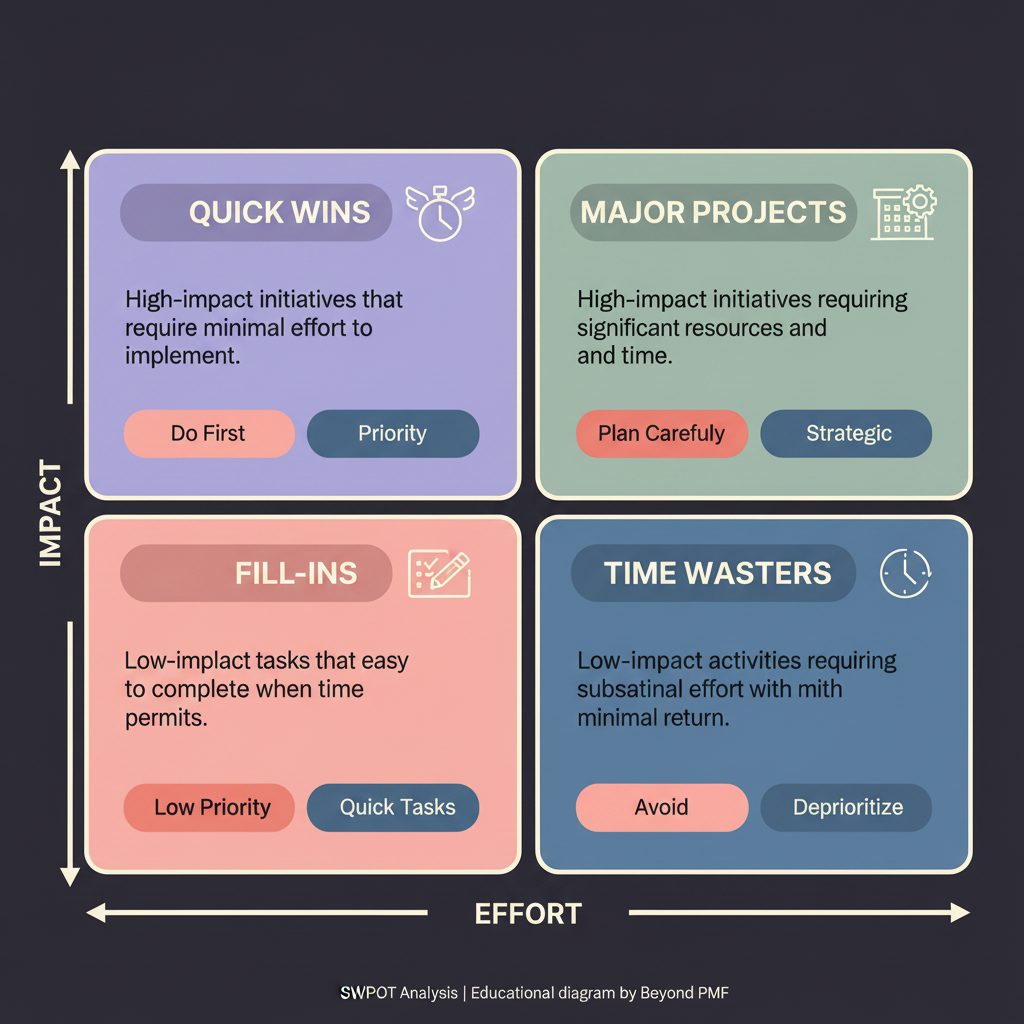
The Impact/Effort Matrix, also known as the Priority Matrix, helps teams prioritize tasks by categorizing them based on the estimated impact and the effort needed for implementation. This framework is widely used in project management and strategic planning to optimize resource allocation and increase efficiency. By evaluating tasks on these two dimensions, teams can focus on high-impact, low-effort initiatives that deliver the most value with the least resource expenditure.

The IPA Matrix, standing for Impact and Performance Analysis, is a decision-making framework that helps organizations prioritize initiatives based on their potential impact and the effort needed for their implementation. It is particularly useful in resource allocation, strategic planning, and productivity enhancement. By evaluating projects or tasks on these two dimensions, organizations can effectively decide where to allocate resources to maximize returns and operational efficiency.
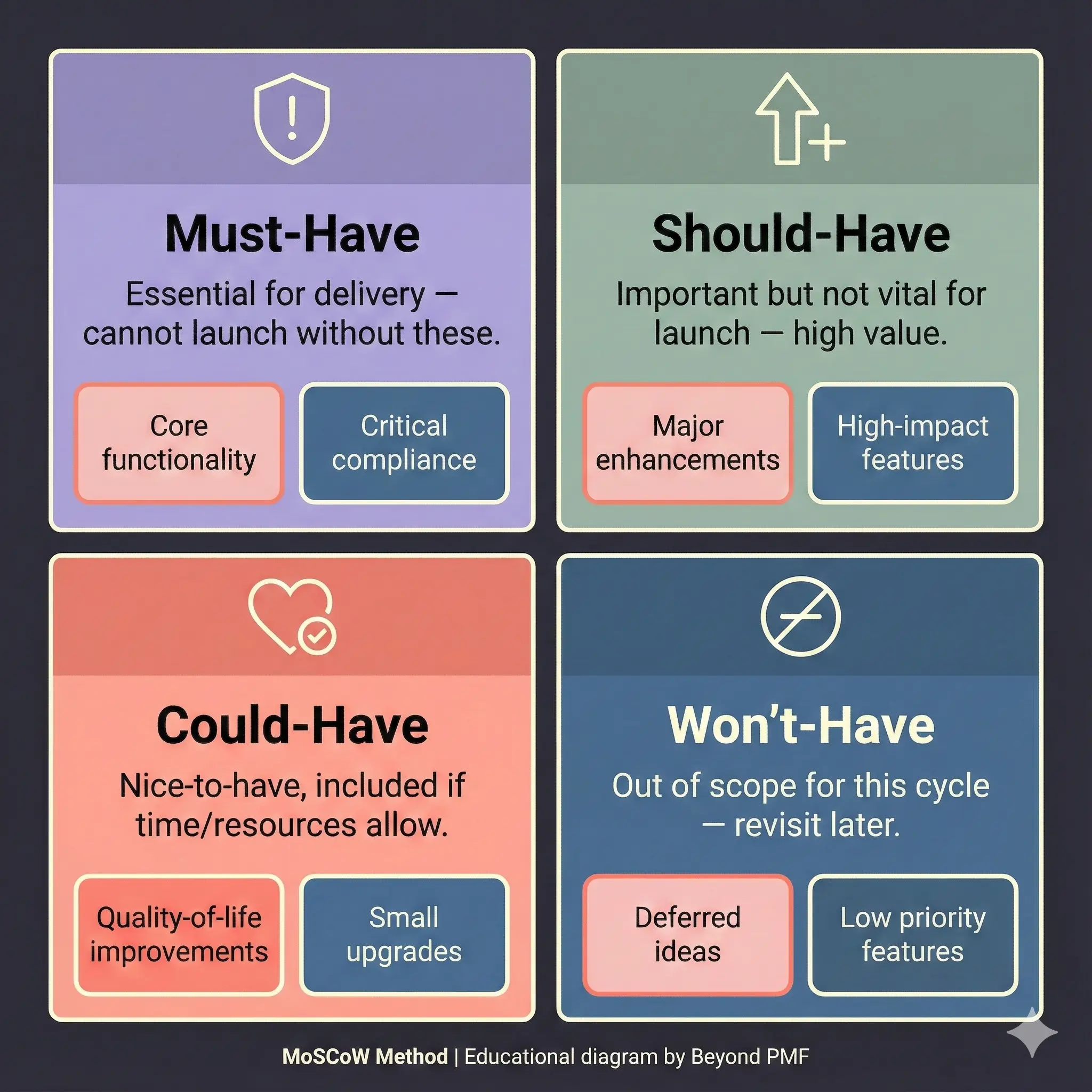
The MoSCoW Method is a prioritization framework that helps teams distinguish between must-have, should-have, could-have, and won't-have requirements. This method is particularly useful in managing time and resources effectively by focusing on the essential features first. It encourages flexibility and swift decision-making, making it ideal for projects with tight deadlines or limited resources.
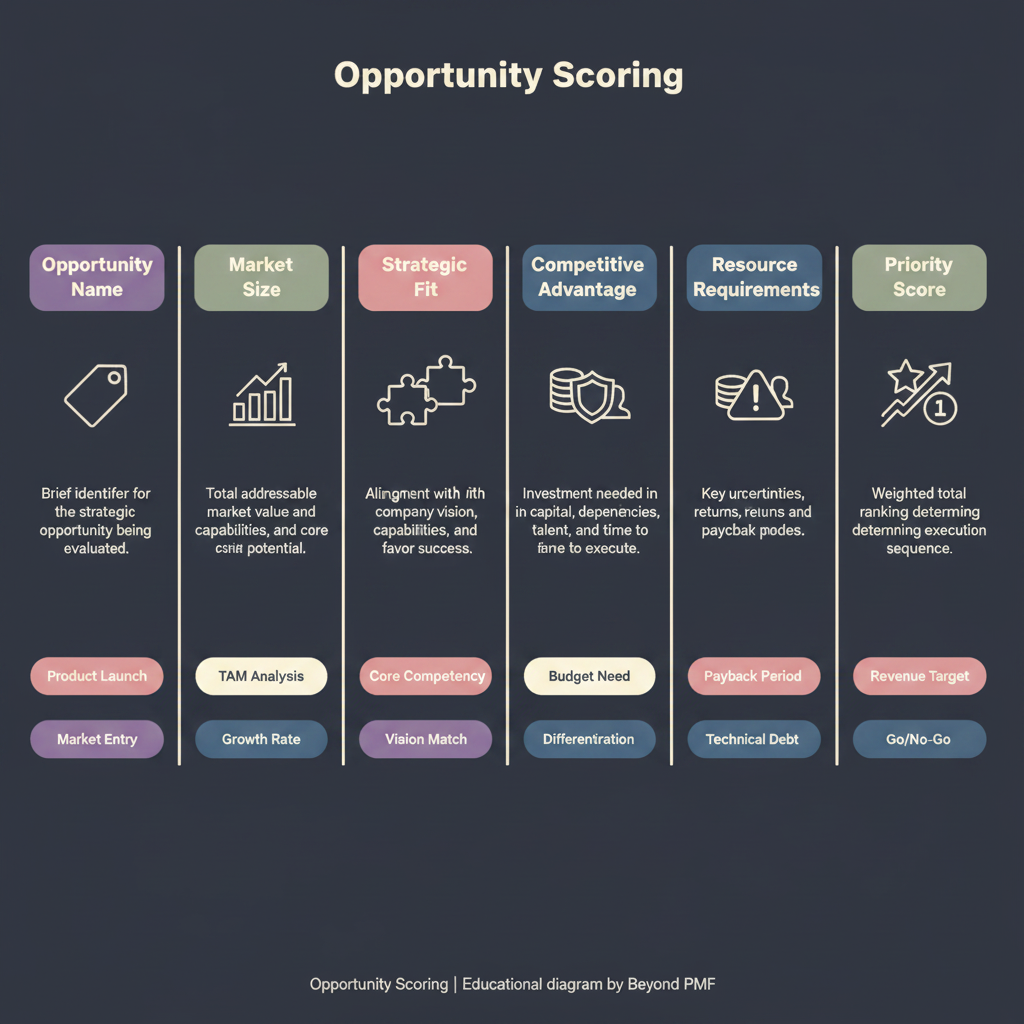
Opportunity Scoring is a framework designed to help organizations assess and rank various business opportunities by assigning scores based on specific criteria such as market potential, resource requirements, and strategic fit. This methodical approach enables decision-makers to objectively compare different opportunities, facilitating more informed and strategic decisions. The framework is particularly beneficial in optimizing resource allocation and enhancing the strategic planning process.
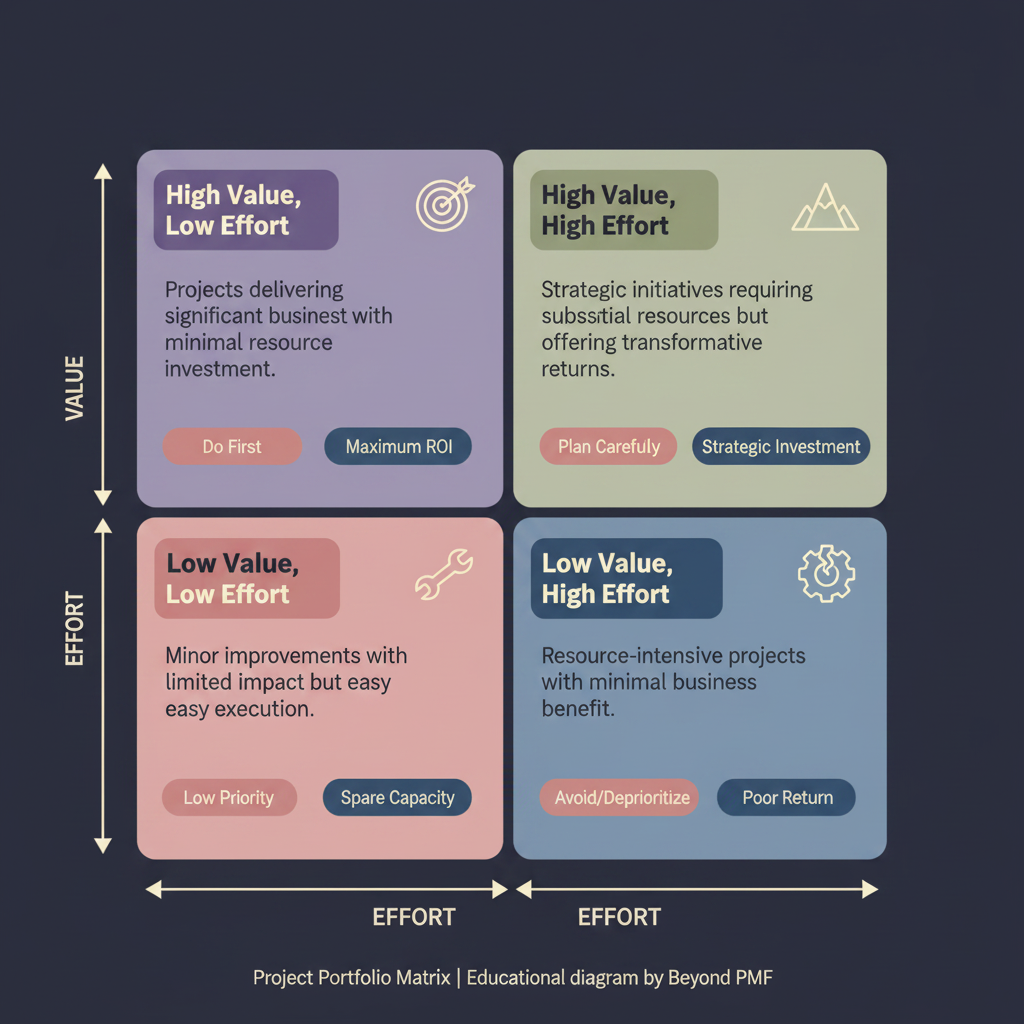
The Project Portfolio Matrix is a framework designed to help organizations manage multiple projects efficiently by categorizing them into a matrix based on factors such as risk, return, resource allocation, and strategic alignment. This categorization aids in decision-making about project prioritization, resource distribution, and strategic alignment. The framework enables organizations to balance their project portfolio to achieve optimal performance and align projects with overall business objectives.
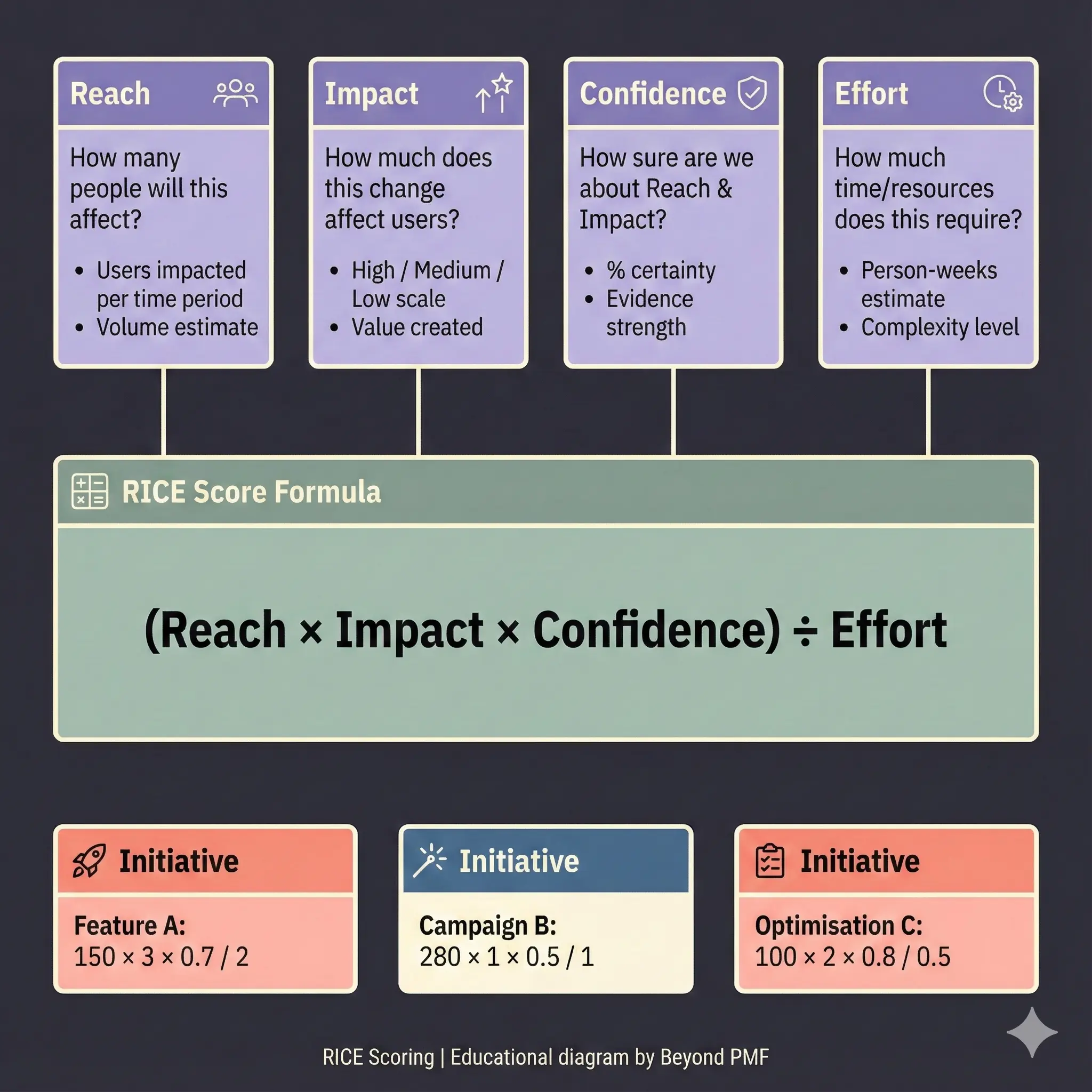
RICE Scoring is a decision-making tool designed to help teams prioritize features, projects, or initiatives effectively. It stands for Reach, Impact, Confidence, and Effort. Each element is quantified and combined to produce a RICE score, which helps in comparing different projects objectively. This framework is particularly beneficial in resource-limited environments, enabling teams to allocate their efforts where the highest returns are expected.
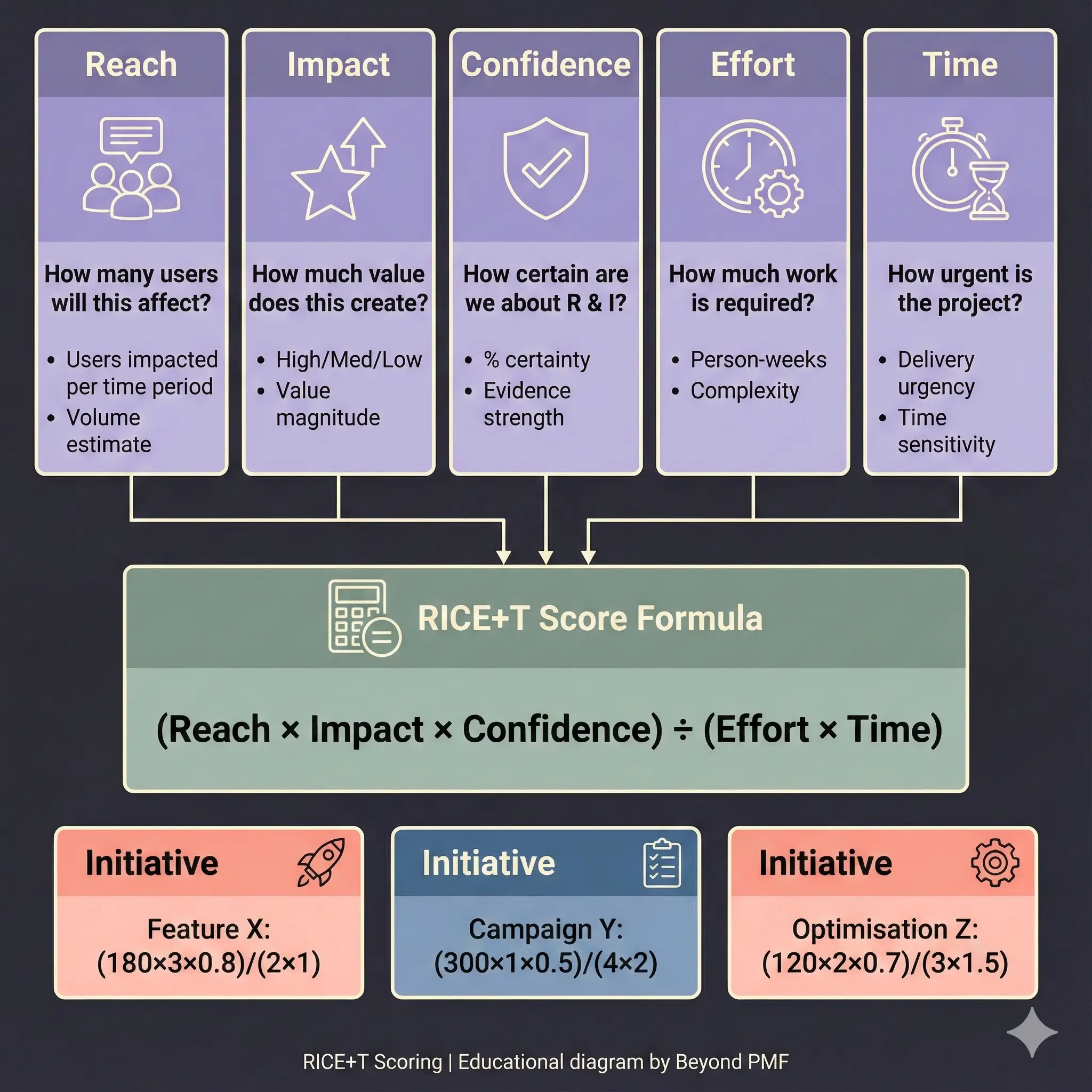
RICE+T Scoring is a prioritization framework used primarily in project management and product development. It extends the traditional RICE framework (Reach, Impact, Confidence, Effort) by incorporating 'Time' as an additional factor. This adjustment allows teams to better gauge the urgency and timing of projects, enhancing decision-making processes. The framework is beneficial for aligning projects with strategic goals and optimizing resource allocation.
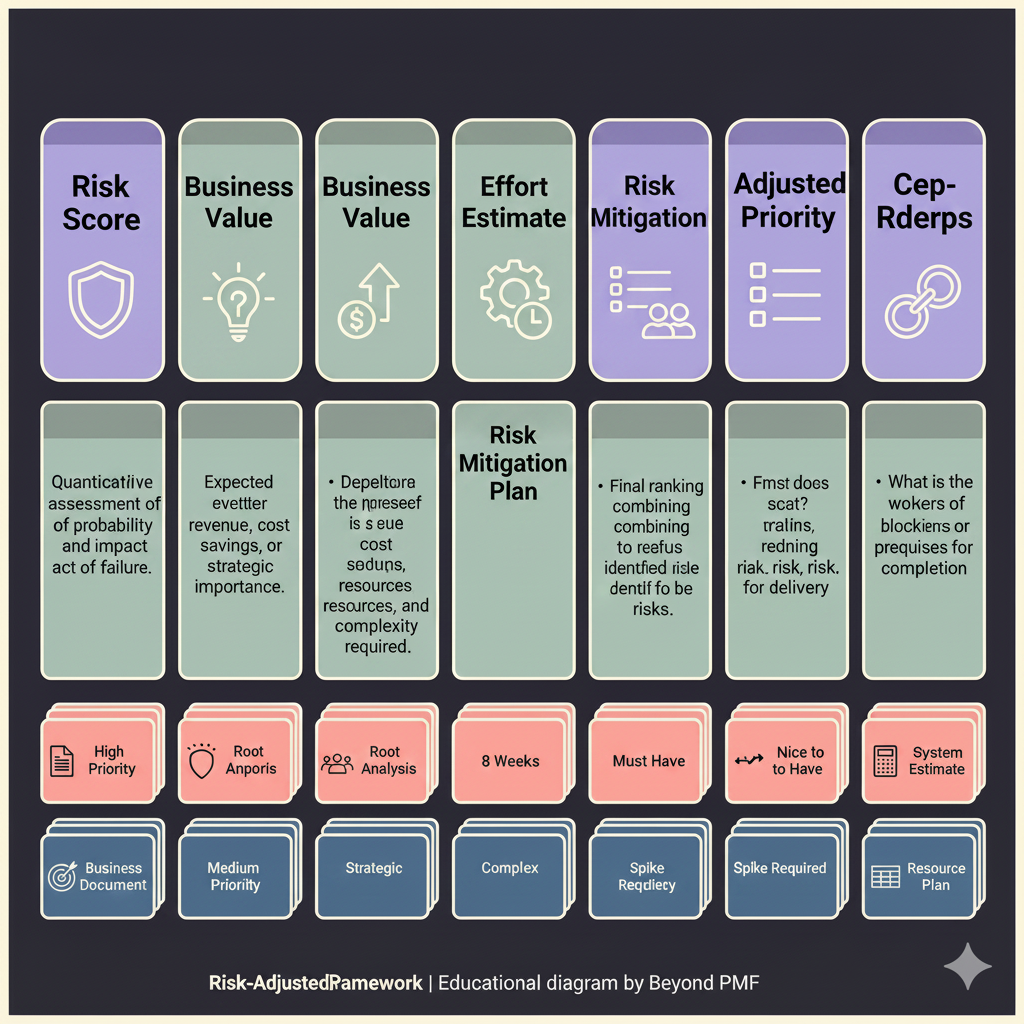
The Risk-Adjusted Backlog is a project management framework that integrates risk assessment directly into the backlog prioritization process. By evaluating both the potential impact and the associated risks of each task, teams can prioritize work that maximizes value while minimizing potential setbacks. This approach helps in making informed decisions, ensuring that high-risk issues are addressed proactively rather than reactively.
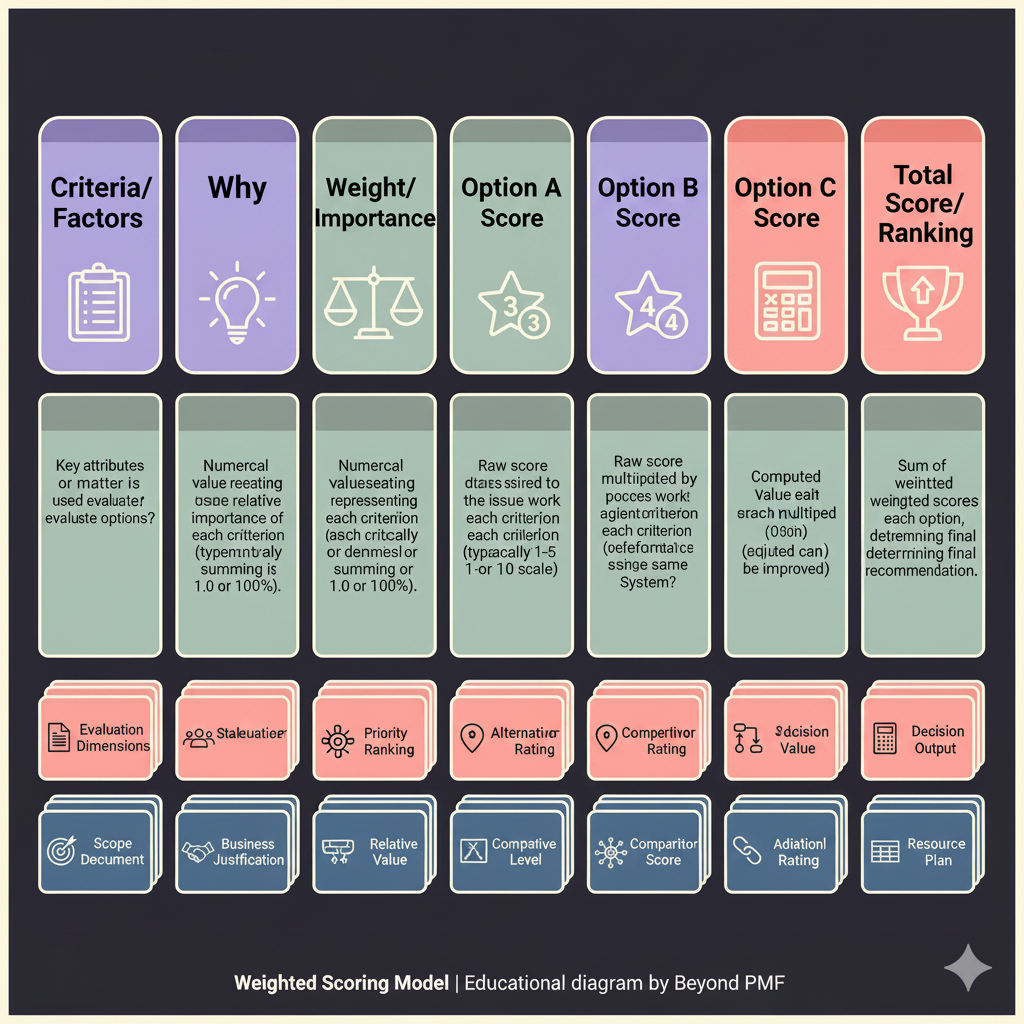
The Weighted Scoring Model is a versatile decision-making framework that helps organizations evaluate various options against a set of predefined criteria, each weighted according to its importance. This method quantifies qualitative data, enabling decision-makers to make informed choices by assessing the relative value of different alternatives. It is particularly beneficial for prioritizing projects, allocating resources, and strategic planning.

Weighted Shortest Job First (WSJF) is a decision-making framework used in Agile software development and product management to prioritize projects, features, or other work items. It calculates the cost of delay and divides it by the job duration, helping teams to prioritize tasks that deliver the highest value in the shortest time. This framework is particularly useful in environments where the work backlog exceeds the available development capacity, helping to maximize economic outcomes and improve efficiency.