RICE Scoring

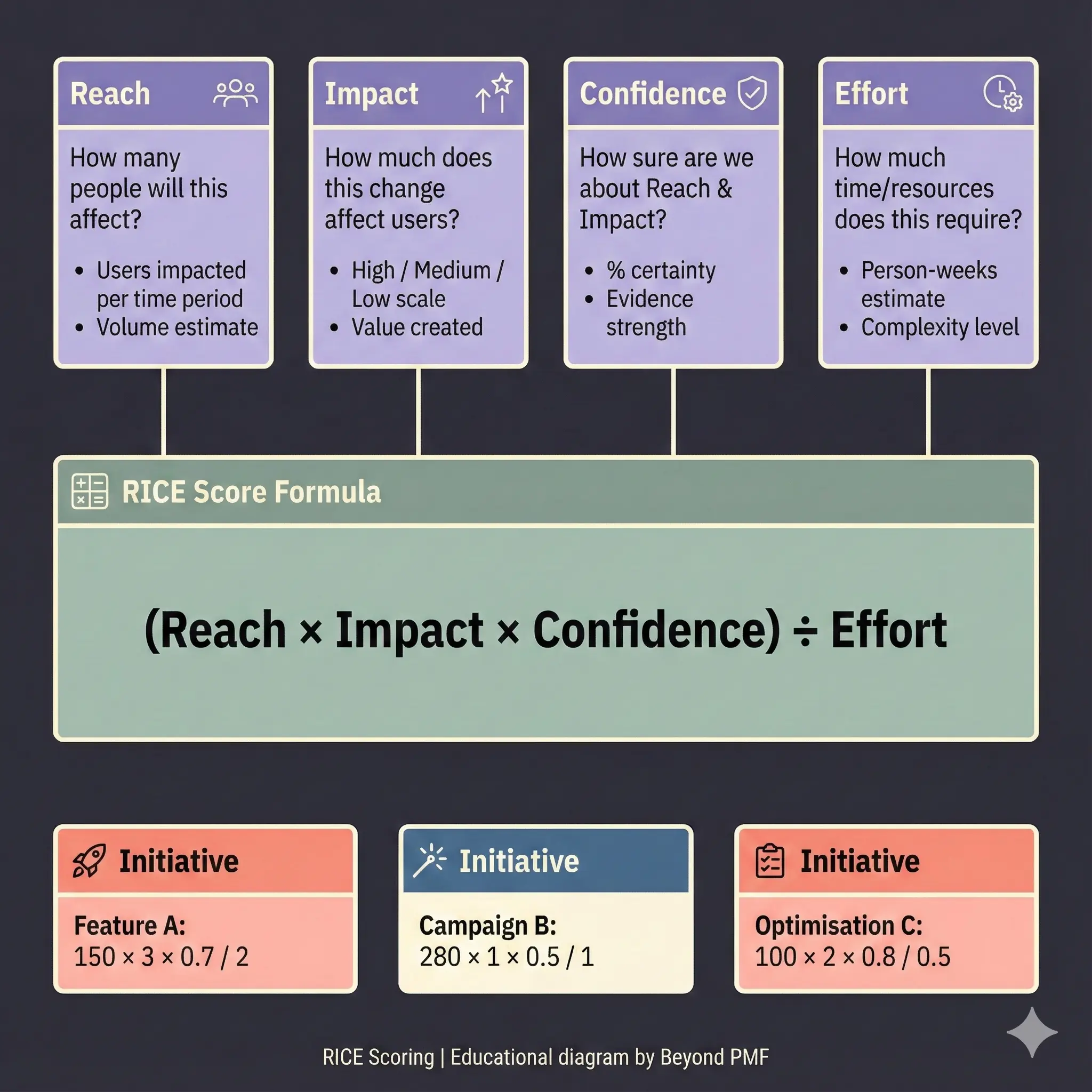
Diagram of the RICE Scoring Framework showing the four factorsβ€”Reach, Impact, Confidence, and Effortβ€”used to prioritize initiatives. Each factor includes guiding questions and examples. The RICE formula (Reach Γ— Impact Γ— Confidence Γ· Effort) is displayed prominently, along with sample initiative scores for comparison.
RICE Scoring helps teams prioritize competing project ideas or features, which directly addresses the operational friction of coordinating and choosing which initiatives to undertake. It provides a standardized process for evaluating and ranking options.

RICE Scoring is a decision-making tool designed to help teams prioritize features, projects, or initiatives effectively. It stands for Reach, Impact, Confidence, and Effort. Each element is quantified and combined to produce a RICE score, which helps in comparing different projects objectively. This framework is particularly beneficial in resource-limited environments, enabling teams to allocate their efforts where the highest returns are expected.

Steps / Detailed Description

Define the components of each project: Reach, Impact, Confidence, and Effort. | Assign a numerical value to each component based on estimated benefits and resources required. | Calculate the RICE score using the formula: (Reach * Impact * Confidence) / Effort. | Rank projects or features based on their RICE scores. | Review and adjust scores periodically as new information becomes available.

Best Practices

Ensure all team members are trained on how to accurately estimate each component | Regularly review and recalibrate the scoring as projects progress and new data becomes available | Combine RICE scoring with other frameworks or qualitative insights for comprehensive decision-making

Pros

Provides a systematic approach to prioritization | Helps in making objective decisions based on quantifiable data | Facilitates alignment and transparency among team members

Cons

Can be subjective, especially in estimating Impact and Confidence | May not account for external factors or dependencies | Requires regular updates as project scopes and environments change

When to Use

When prioritizing a large backlog of features or projects | In resource-constrained situations where optimal allocation is critical

When Not to Use

For small or less complex projects where the overhead of scoring might outweigh the benefits | When the project success criteria are too subjective or intangible to be quantified reliably

Related Frameworks

Categories

Lifecycle

Scope

Scope not defined

Maturity Level

Maturity level not specified

Time to Implement

2–4 Weeks
3–6 Months
1–2 Weeks
3–6 Months
1–2 Months
3–6 Months
1–2 Weeks
Less Than 1 Day
1–2 Weeks
Longer Than 6 Months
1–2 Weeks
Longer Than 6 Months
1–2 Weeks
3–6 Months
1–2 Weeks
1–2 Weeks
1–2 Weeks
1–2 Weeks
1–2 Days
1–2 Weeks
1–2 Weeks
1–2 Weeks
1–2 Weeks
1–2 Weeks
1–2 Weeks
3–6 Months
1–2 Weeks
1–2 Weeks
1–2 Weeks
3–6 Months
1–2 Weeks
1–2 Weeks
2–4 Weeks
1–2 Weeks
1–2 Days
1–2 Weeks
Longer Than 6 Months
3–6 Months
Longer Than 6 Months
1–2 Weeks
Longer Than 6 Months
3–6 Months
Less Than 1 Day
3–6 Months
1–2 Months
3–6 Months
Longer Than 6 Months
3–6 Months
Less Than 1 Day
1–2 Weeks
3–6 Months
3–6 Months
1–2 Weeks
3–6 Months
1–2 Weeks
1–2 Weeks
1–2 Days
1–2 Weeks
1–2 Months
Longer Than 6 Months
1–2 Weeks
Longer Than 6 Months
1–2 Weeks
3–6 Months
1–2 Weeks
Less Than 1 Day
1–2 Weeks
3–6 Months
1–2 Weeks
3–6 Months
1–2 Weeks
1–2 Weeks
Longer Than 6 Months
Less Than 1 Day
3–6 Months
Longer Than 6 Months
1–2 Months
1–2 Weeks
Longer Than 6 Months
1–2 Weeks
3–6 Months
1–2 Weeks
1–2 Weeks
3–6 Months
Less Than 1 Day
1–2 Weeks
1–2 Weeks
3–6 Months
3–6 Months
Less Than 1 Day
1–2 Weeks
Longer Than 6 Months
1–2 Months
1–2 Weeks
1–2 Weeks
1–2 Weeks
Longer Than 6 Months

Copyright Information

Autor:
Intercom
N/A
Publication:
Intercom