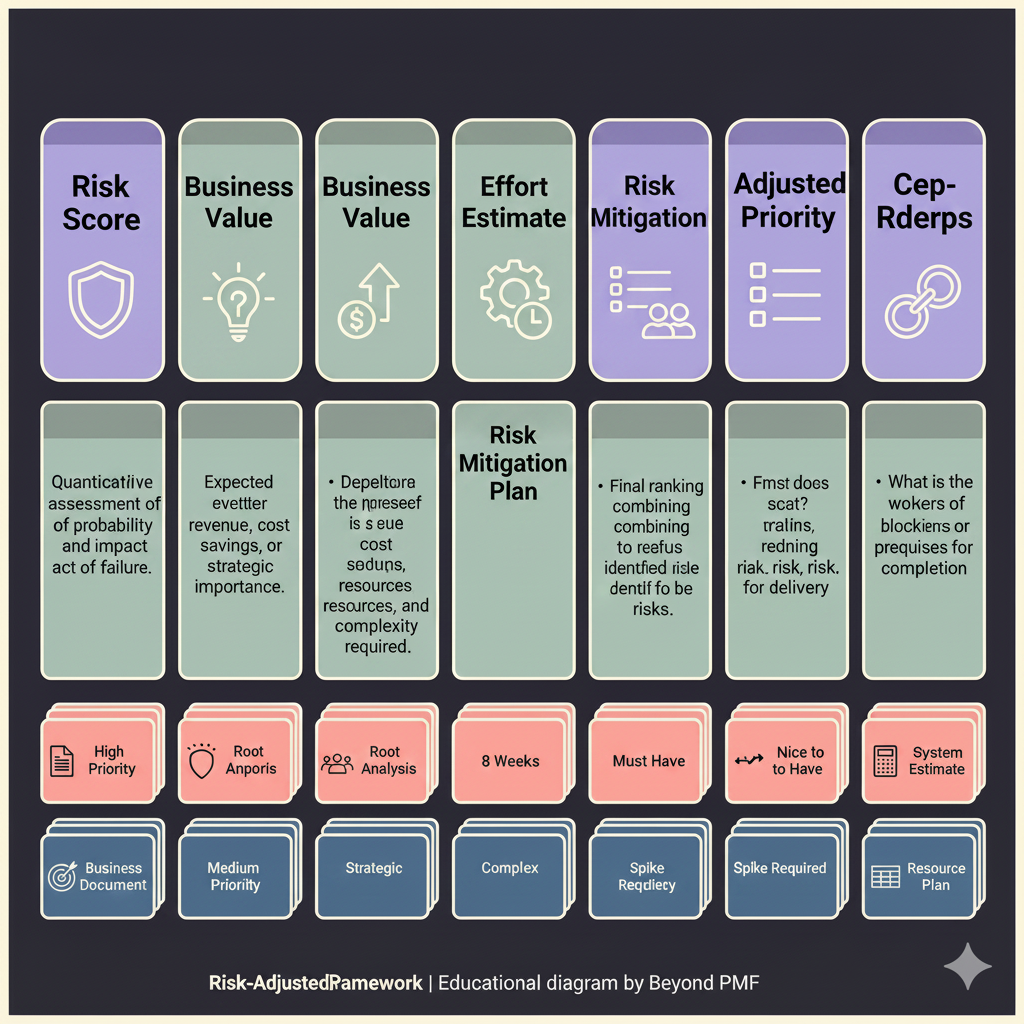
The Risk-Adjusted Backlog is a project management framework that integrates risk assessment directly into the backlog prioritization process. By evaluating both the potential impact and the associated risks of each task, teams can prioritize work that maximizes value while minimizing potential setbacks. This approach helps in making informed decisions, ensuring that high-risk issues are addressed proactively rather than reactively.
Identify all tasks and their potential impacts on the project. | Assess the risk associated with each task, considering factors like probability and severity of potential issues. | Prioritize tasks based on a combined assessment of impact and risk. | Allocate resources and schedule tasks according to their prioritization. | Regularly review and adjust the backlog as project conditions and risk assessments evolve.
Regularly update risk assessments as project conditions change. | Involve stakeholders in the risk assessment process for better accuracy. | Use a standardized risk assessment tool for consistency.
Improves project outcomes by addressing high-risk tasks early. | Helps in allocating resources more effectively. | Increases the likelihood of project success by proactive risk management.
Can be time-consuming to assess risks for all tasks. | May lead to over-cautious decision making, slowing down the project. | Requires detailed knowledge of risk management techniques.
In complex projects with high uncertainty. | When project failure can result in significant consequences.
For small or low-risk projects where the overhead isn't justified. | When quick decision-making is more critical than detailed risk analysis.