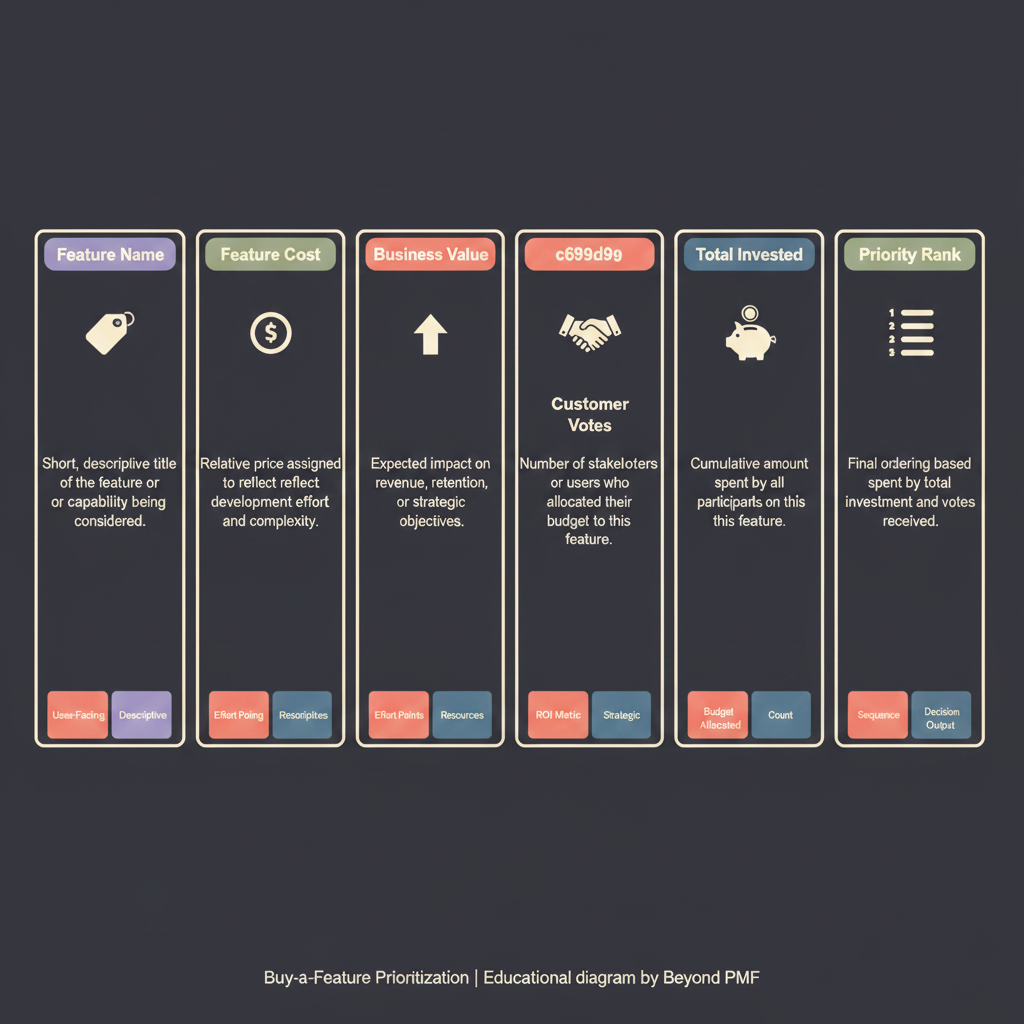
Buy-a-Feature Prioritization is a gamified approach used in product management to help prioritize features based on stakeholder input. In this framework, stakeholders are given a fictional budget to spend on a list of potential features, each priced according to its estimated cost of implementation. This method encourages stakeholders to weigh the importance of each feature against its cost, fostering engagement and revealing the features that provide the most perceived value. It is particularly beneficial for aligning diverse groups on product priorities and making the prioritization process transparent and data-driven.
List all potential features and assign a hypothetical cost to each based on complexity or implementation effort. | Distribute a fixed amount of fictional currency to each stakeholder. | Allow stakeholders to allocate their budget to the features they most want to see implemented. | Tally the total money spent on each feature to determine the prioritization based on stakeholder preferences.
Ensure the cost assigned to each feature reflects its complexity and value accurately. | Prepare stakeholders by providing clear instructions and the importance of strategic spending. | Review and adjust the feature costs and stakeholder budgets based on feedback and previous sessions.
Encourages active participation and engagement from stakeholders. | Provides clear insights into which features are valued most by stakeholders. | Helps in aligning diverse groups with different perspectives.
May not accurately reflect the real-world feasibility of each feature. | Can be influenced by the stakeholders' understanding of the costs involved. | Risk of prioritizing popular features over strategically important ones.
When needing to prioritize a large number of potential features. | In early stages of product development to align on key functionalities.
When the product team has already established clear strategic priorities. | In situations where stakeholder input cannot be easily gathered or is too biased.