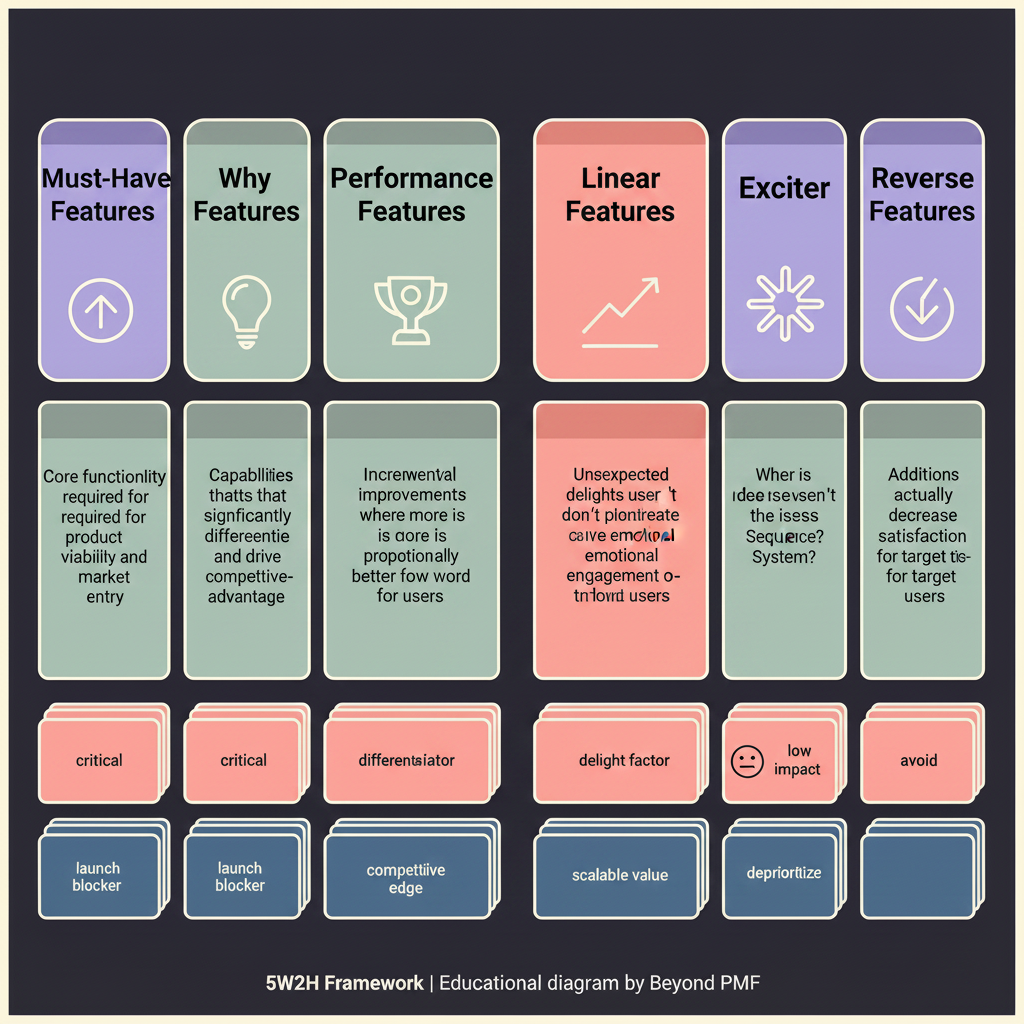
Feature Bucket Framework

https://ik.imagekit.io/beyondpmf/frameworks/feature-bucket-framework.png
The Feature Bucket Framework primarily addresses friction related to process and prioritization. It provides a structured method for categorizing and ranking features, which helps improve workflow and coordination in product development.

The Feature Bucket Framework is a strategic tool used in product management to categorize and prioritize features into various buckets such as 'must have', 'nice to have', and 'innovative'. This framework helps teams focus on delivering value by aligning feature development with business goals and customer needs. It is particularly beneficial for managing resources efficiently and ensuring that the most impactful features are developed first.

Steps / Detailed Description

Identify all potential features that could be developed for the product. | Categorize each feature into predefined buckets based on criteria such as customer value, strategic importance, and innovation. | Prioritize the features within each bucket to determine the order of development. | Allocate resources and schedule development based on the prioritization. | Review and adjust the buckets periodically based on feedback and changing business objectives.

Best Practices

Clearly define the criteria for each bucket | Involve cross-functional teams in the bucketing process | Regularly review and adjust the buckets based on new data and feedback

Pros

Helps in prioritizing features effectively | Aligns feature development with strategic business goals | Facilitates better resource management

Cons

Can be subjective and prone to bias | May overlook the interdependencies between features | Requires constant updating and review

When to Use

When launching a new product | When resources are limited and prioritization is crucial

When Not to Use

In highly dynamic environments where priorities change frequently | When a comprehensive, detailed feature analysis is not feasible

Related Frameworks

Categories

Lifecycle

Scope

Scope not defined

Maturity Level

Maturity level not specified

Time to Implement

2–4 Weeks
3–6 Months
1–2 Weeks
3–6 Months
1–2 Months
3–6 Months
1–2 Weeks
Less Than 1 Day
1–2 Weeks
Longer Than 6 Months
1–2 Weeks
Longer Than 6 Months
1–2 Weeks
3–6 Months
1–2 Weeks
1–2 Weeks
1–2 Weeks
1–2 Weeks
1–2 Days
1–2 Weeks
1–2 Weeks
1–2 Weeks
1–2 Weeks
1–2 Weeks
1–2 Weeks
3–6 Months
1–2 Weeks
1–2 Weeks
1–2 Weeks
3–6 Months
1–2 Weeks
1–2 Weeks
2–4 Weeks
1–2 Weeks
1–2 Days
1–2 Weeks
Longer Than 6 Months
3–6 Months
Longer Than 6 Months
1–2 Weeks
Longer Than 6 Months
3–6 Months
Less Than 1 Day
3–6 Months
1–2 Months
3–6 Months
Longer Than 6 Months
3–6 Months
Less Than 1 Day
1–2 Weeks
3–6 Months
3–6 Months
1–2 Weeks
3–6 Months
1–2 Weeks
1–2 Weeks
1–2 Days
1–2 Weeks
1–2 Months
Longer Than 6 Months
1–2 Weeks
Longer Than 6 Months
1–2 Weeks
3–6 Months
1–2 Weeks
Less Than 1 Day
1–2 Weeks
3–6 Months
1–2 Weeks
3–6 Months
1–2 Weeks
1–2 Weeks
Longer Than 6 Months
Less Than 1 Day
3–6 Months
Longer Than 6 Months
1–2 Months
1–2 Weeks
Longer Than 6 Months
1–2 Weeks
3–6 Months
1–2 Weeks
1–2 Weeks
3–6 Months
Less Than 1 Day
1–2 Weeks
1–2 Weeks
3–6 Months
3–6 Months
Less Than 1 Day
1–2 Weeks
Longer Than 6 Months
1–2 Months
1–2 Weeks
1–2 Weeks
1–2 Weeks
Longer Than 6 Months

Copyright Information

Autor:
Public Domain
N/A
Publication:
Generic Business Tool