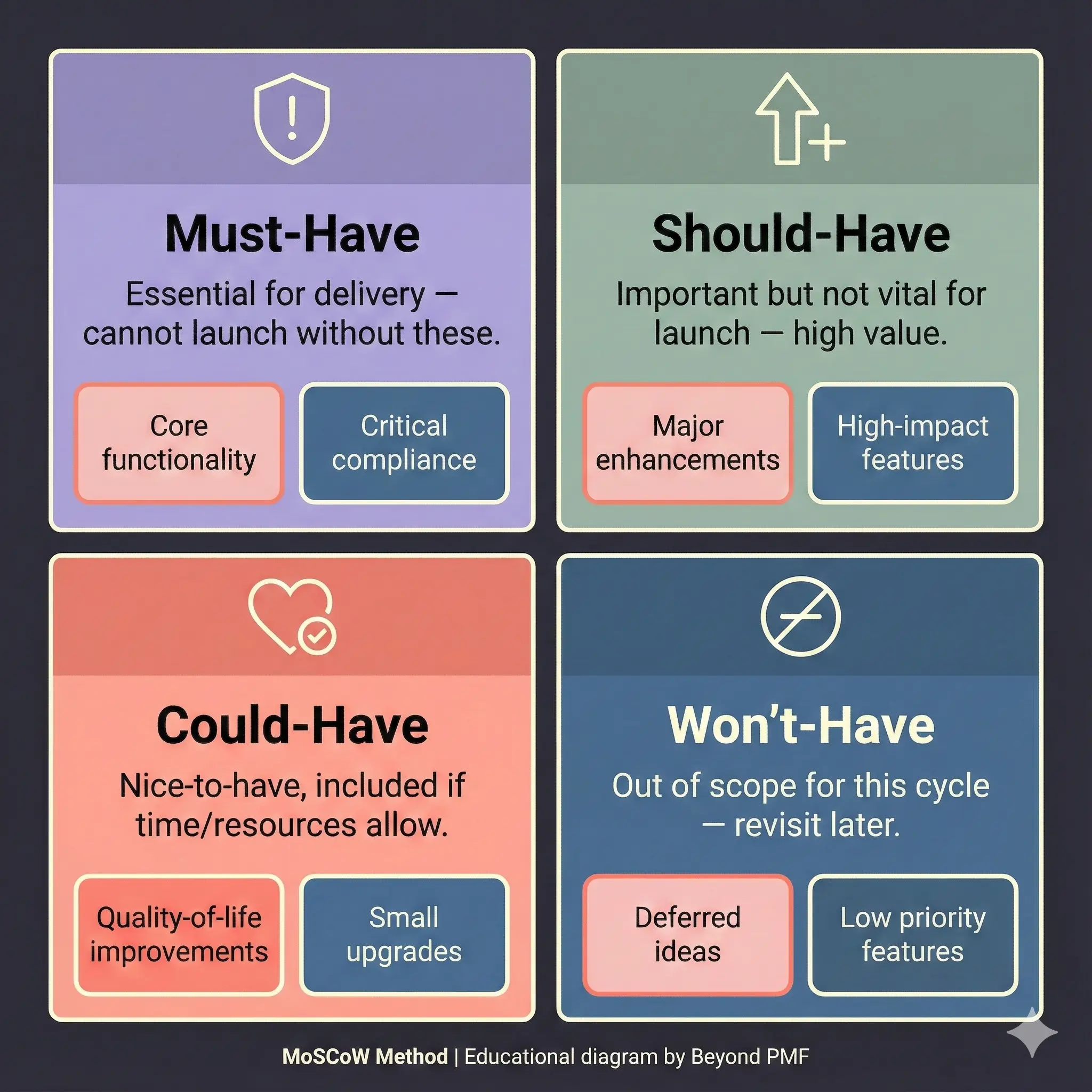
The MoSCoW Method is a prioritization framework that helps teams distinguish between must-have, should-have, could-have, and won't-have requirements. This method is particularly useful in managing time and resources effectively by focusing on the essential features first. It encourages flexibility and swift decision-making, making it ideal for projects with tight deadlines or limited resources.
Identify all potential requirements or features of the project. | Categorize each requirement into one of four categories: Must have, Should have, Could have, and Won't have. | Discuss and negotiate the categorization with all stakeholders to ensure alignment and understanding. | Review the categories and adjust as necessary throughout the project lifecycle to reflect any changes in priority or project scope.
Ensure thorough stakeholder involvement during the categorization process | Regularly review and adjust priorities as project progresses | Balance the distribution of requirements across the four categories to avoid resource misallocation
Facilitates clear and immediate prioritization | Enhances stakeholder communication and agreement | Flexible to changes and easy to update
Risk of over-prioritizing 'Must have' at the expense of other categories | Possible neglect of 'Could have' items that might add significant value | Dependent on accurate initial requirement analysis
In agile project management environments | When managing projects with clear but flexible deliverable priorities
In projects where all requirements are equally critical | When the project scope and priorities are fixed and unchangeable