
Compliance frameworks ensure products and organizations meet legal, regulatory, and contractual obligations. They define processes for risk assessment, auditability, documentation, and control implementation without unnecessarily blocking delivery. These frameworks matter in regulated industries and security‑sensitive environments, including data protection and industry standards. Use them to reduce regulatory exposure while keeping execution efficient and transparent.

Architecture Decision Records (ADR) are a collection of documents that record important architectural decisions made during a project's lifecycle, detailing the decision-making process, its context, and the consequences. These records help maintain project consistency, facilitate team understanding, and ensure that past decisions are easy to reference and learn from. ADRs are particularly beneficial in complex projects where many decisions impact software architecture.

The COBIT framework is designed to help organizations develop, implement, monitor, and improve IT governance and management practices. It provides a comprehensive set of measures, processes, and best practices that are aligned with business goals, focusing on the management and governance of information and technology. The framework is widely recognized for its ability to enhance control, minimize IT risks, and ensure compliance with relevant laws and regulations.
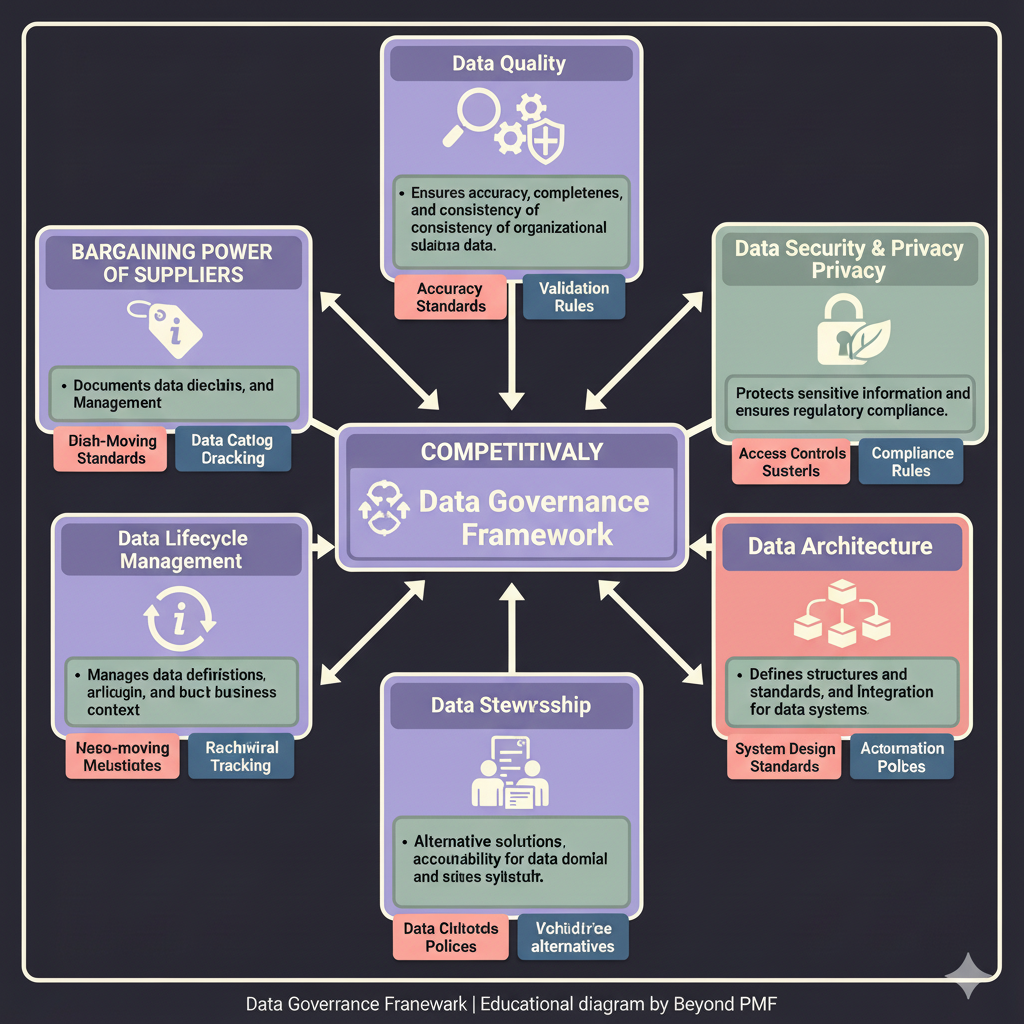
The Data Governance Framework is a set of processes, policies, standards, and metrics that ensure the effective and efficient use of information in enabling an organization to achieve its goals. It encompasses the roles, responsibilities, and controls to ensure data accuracy, privacy, and access. This framework helps organizations in consistent data handling, enhances decision-making, and ensures compliance with regulations and standards.
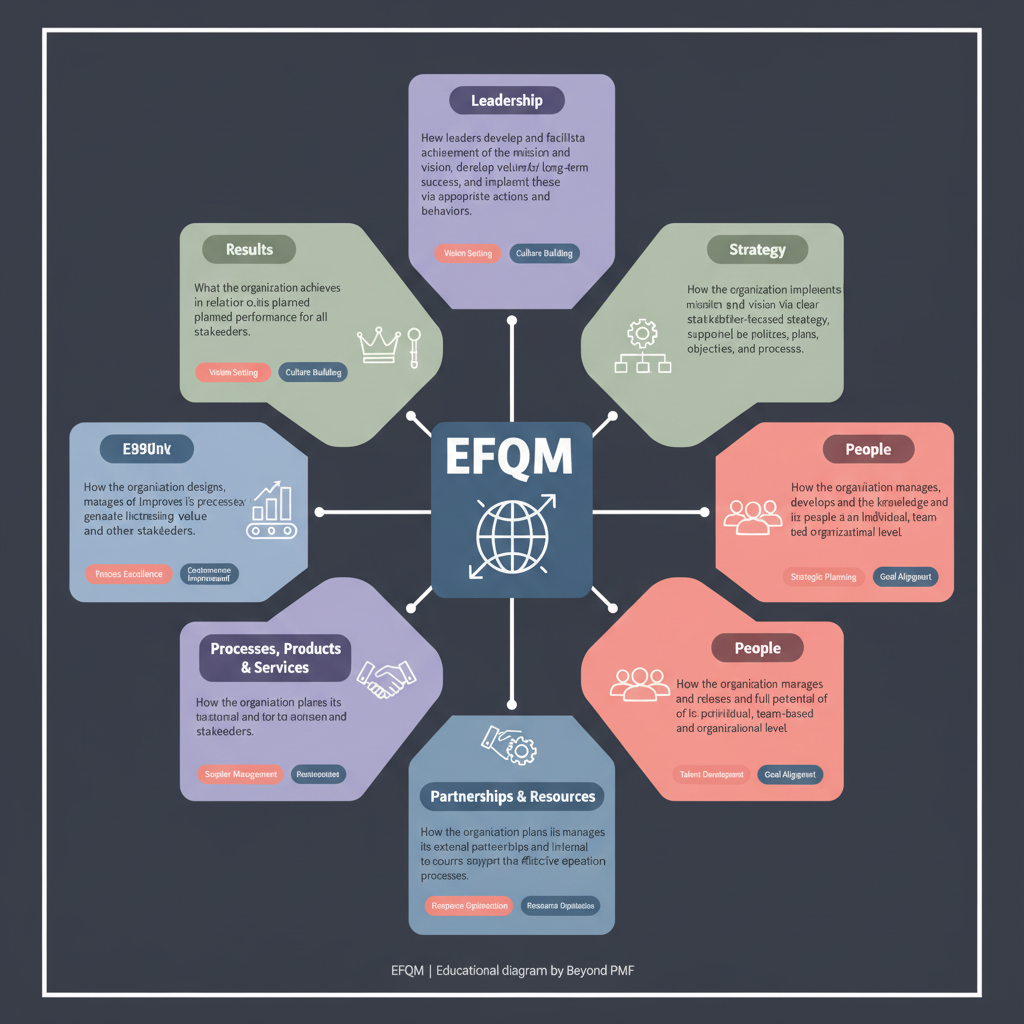
The EFQM (European Foundation for Quality Management) Model is a comprehensive management framework used by organizations to improve performance and achieve excellence. It provides a holistic tool for assessing where organizations are on the path to excellence, helping them understand their gaps, and offering solutions for improvement. The framework encourages organizations to be sustainable by balancing the needs of all stakeholders. It is widely used across Europe and globally by organizations seeking to implement a culture of continuous improvement.

The Governance Framework Matrix is a strategic tool designed to help organizations structure their governance processes. It outlines roles, responsibilities, and the decision-making hierarchy, ensuring clarity and efficiency in governance operations. This framework is particularly beneficial for organizations looking to enhance accountability, improve decision-making processes, and ensure compliance with regulations and standards.
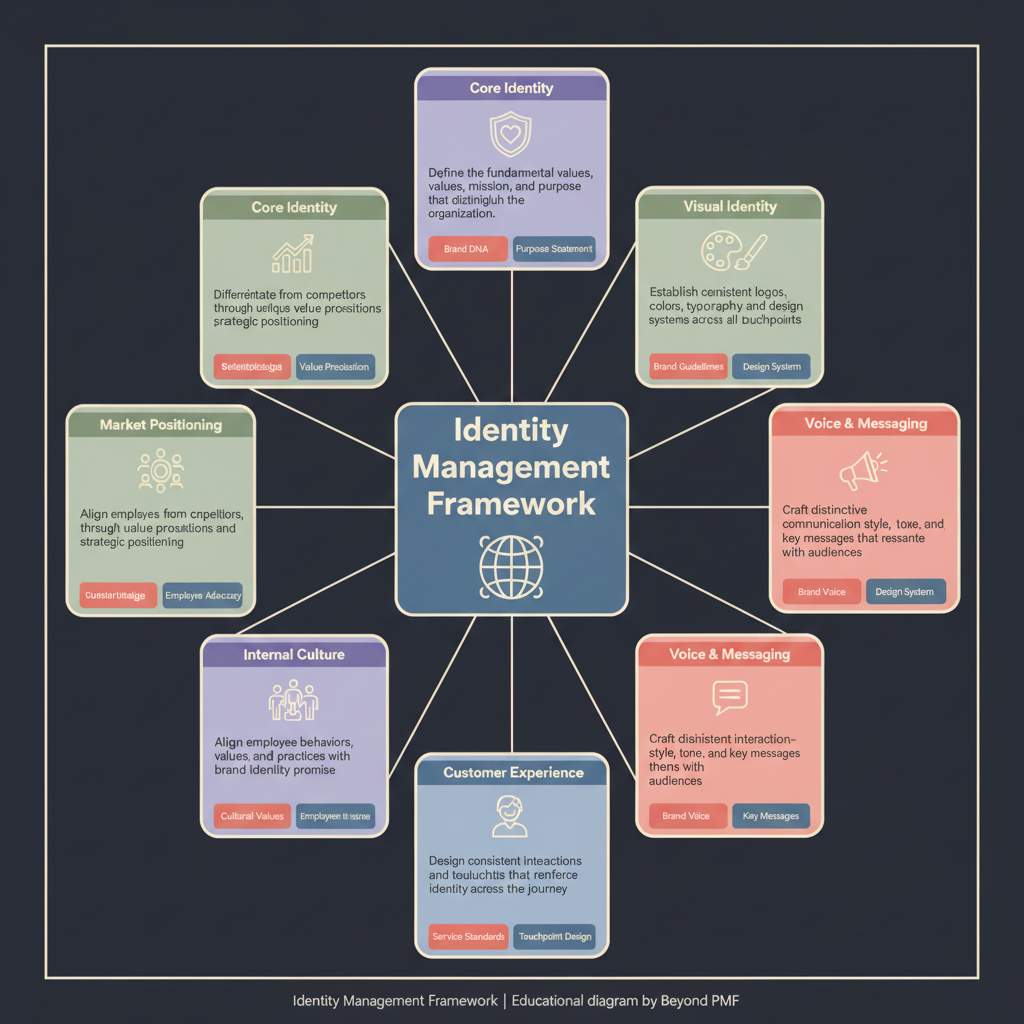
The Identity Management Framework is designed to manage user identities and their related access permissions within an organization. It includes processes for identifying, authenticating, and authorizing individuals or groups of people to have access to applications, systems, or networks by associating user rights and restrictions with established identities. This framework is crucial for enhancing security, ensuring compliance with regulations, and improving operational efficiency.

The Intellectual Property Framework is a structured approach that organizations use to identify, protect, and exploit their intellectual property (IP). This framework helps businesses to systematically evaluate their IP assets, secure appropriate legal protections, and leverage these assets for competitive advantage. The benefits include enhanced innovation, increased market share, and improved profitability through effective IP management.
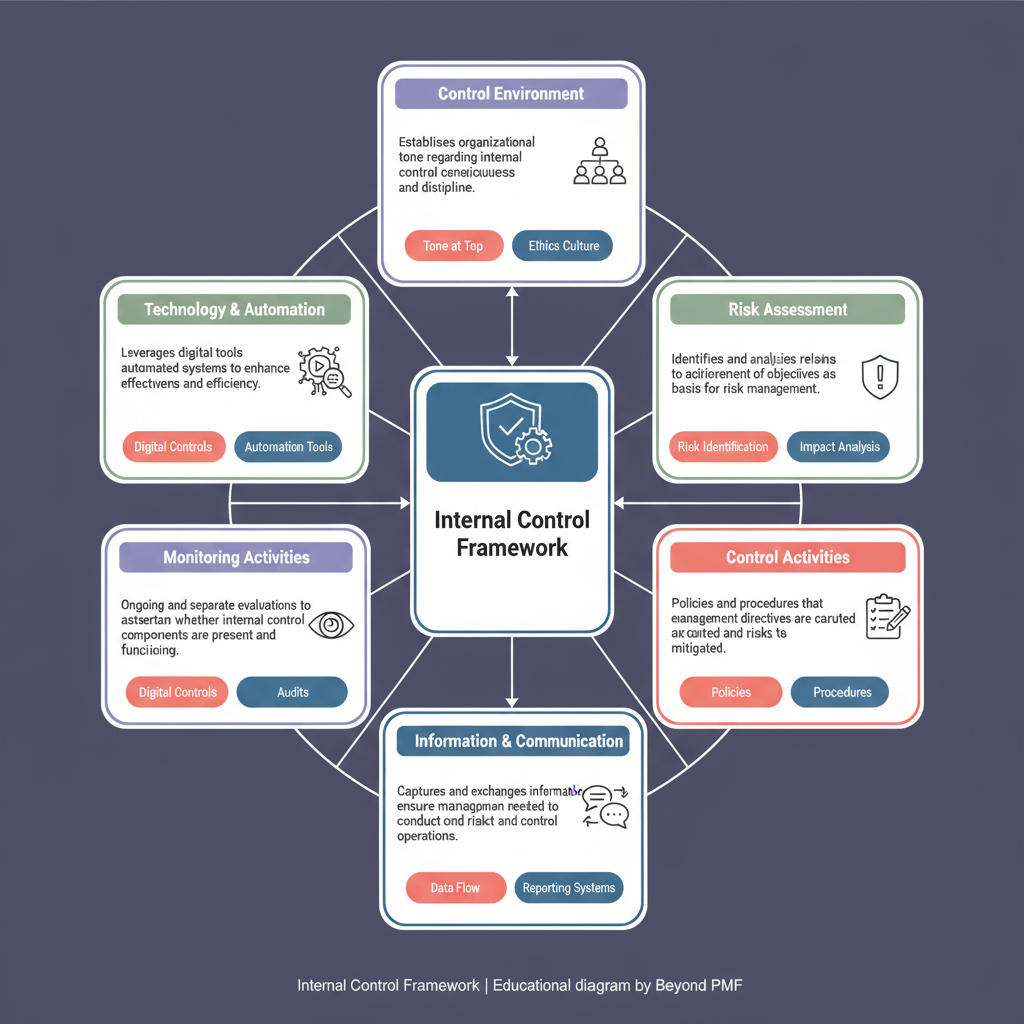
An Internal Control Framework (ICF) is a set of policies, procedures, and technologies designed to provide reasonable assurance regarding the achievement of an organization's objectives related to operations, reporting, and compliance. It helps organizations identify and mitigate risks, ensure the reliability of financial reporting, and comply with laws and regulations. The framework is crucial for fostering transparency, accountability, and efficiency in business operations.
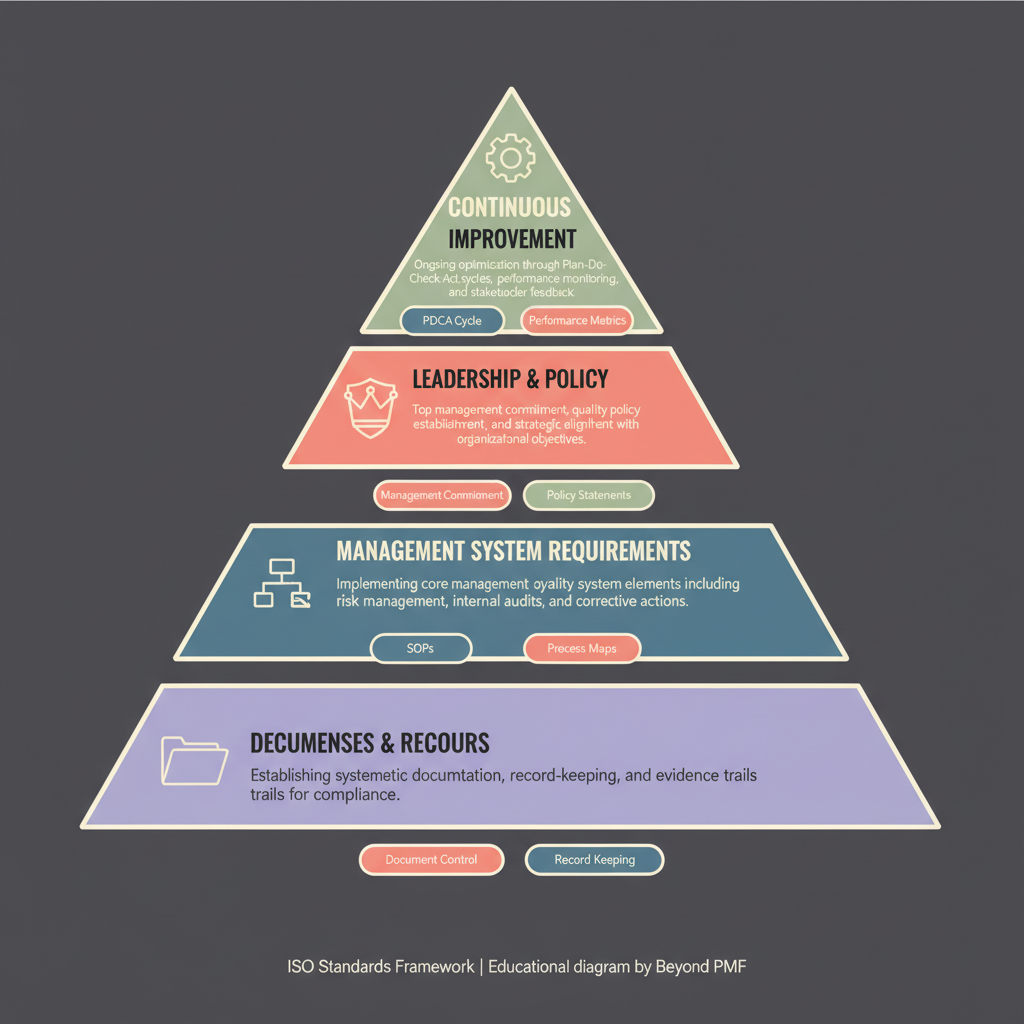
The ISO Standards Framework encompasses a series of international standards designed to help organizations ensure they meet the needs of stakeholders while meeting statutory and regulatory requirements related to a product or service. ISO standards cover various aspects of quality management, environmental management, information security, and more. They are used globally to ensure consistency, improve customer satisfaction, and facilitate international trade by creating a common language of quality standards.

The ITIL (Information Technology Infrastructure Library) Framework is a comprehensive set of best practices and guidelines designed to facilitate the effective management of IT services. It aims to improve efficiency and achieve predictable service levels. The framework's focus is on aligning IT processes and services with business objectives to help organizations manage risk, strengthen customer relations, establish cost-effective practices, and build a stable IT environment that allows for growth, scale, and change.
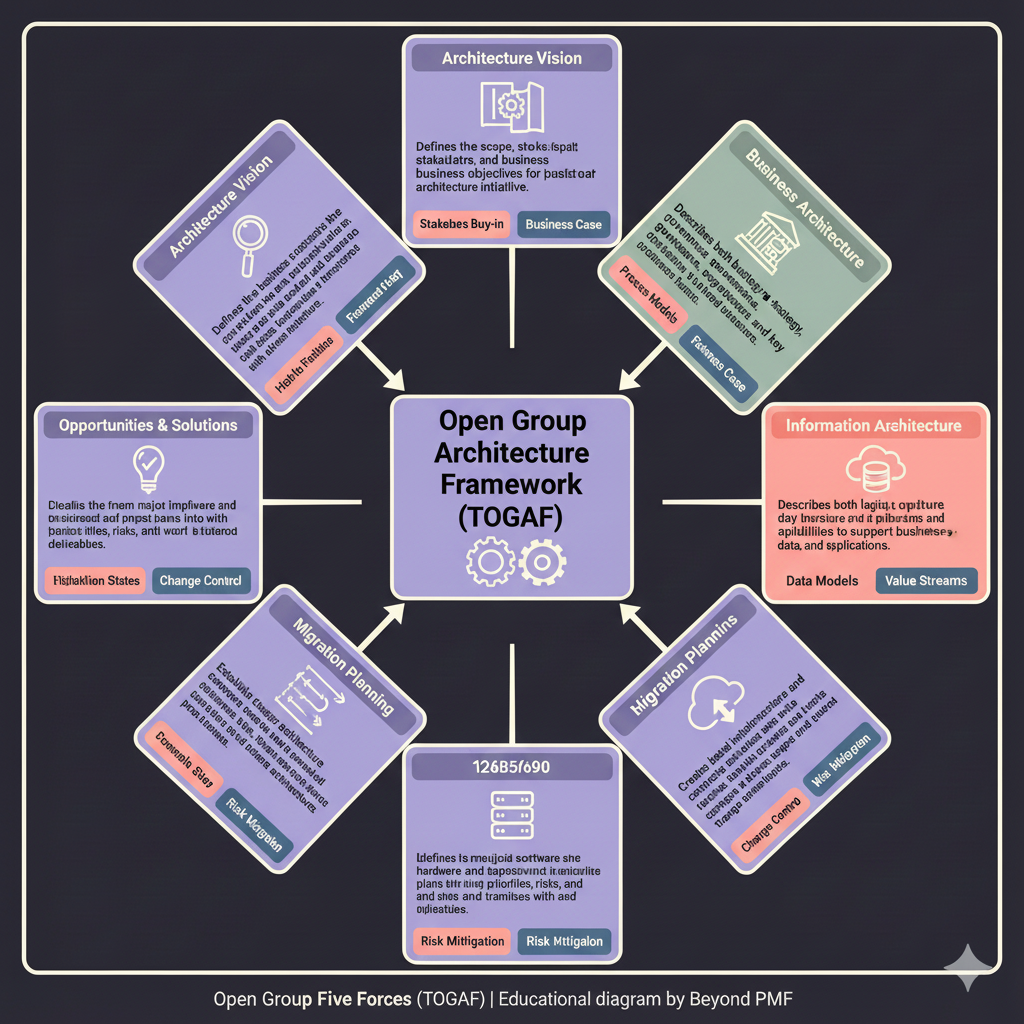
The Open Group Architecture Framework (TOGAF) is a framework for enterprise architecture that provides a comprehensive approach to the design, planning, implementation, and governance of an enterprise information architecture. TOGAF is designed to help organizations align IT goals with overall business goals, while helping to organize cross-departmental IT efforts. TOGAF's comprehensive approach improves efficiency, supports agility, and reduces costs by standardizing and simplifying the IT architecture process.

A Quality Management System (QMS) is a structured framework used by organizations to ensure that their products or services consistently meet customer requirements and that quality is consistently improved. It outlines the policies, procedures, and processes needed to provide optimal customer satisfaction and to manage quality across all operations. Implementing a QMS helps organizations streamline their operations, enhance efficiency, reduce waste, and ensure compliance with industry standards and regulations.
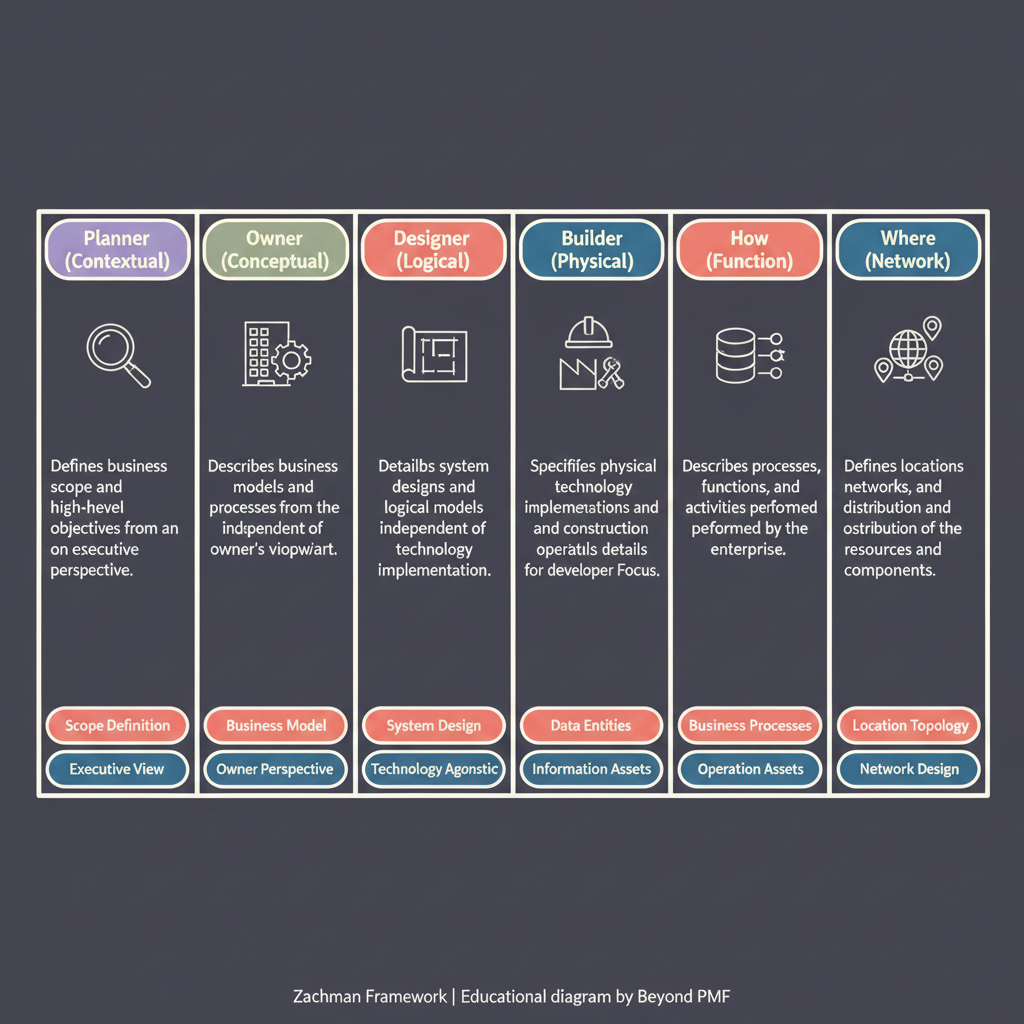
The Zachman Framework, developed by John Zachman, is a schema for organizing architectural artifacts (i.e., design documents, specifications, and models) that takes into account both who the artifact targets (e.g., business owner, developer) and what particular issue (e.g., data, functionality) is being addressed. The framework aims to provide a comprehensive view of the interrelationships among all elements of enterprise architecture, helping organizations to better understand the impact of changes and decisions. Its matrix structure allows for efficient analysis and adaptation, making it a valuable tool for businesses undergoing digital transformation or needing to align IT strategy with business goals.