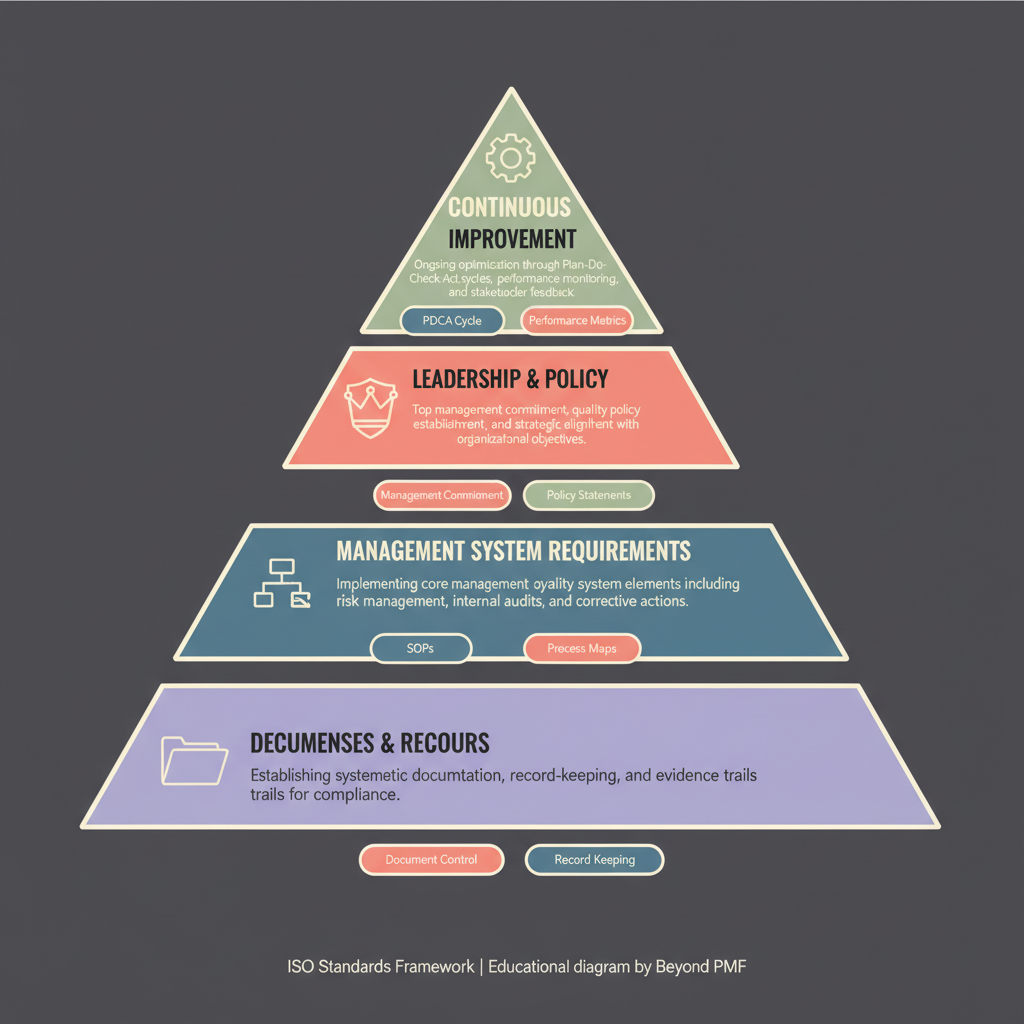
The ISO Standards Framework encompasses a series of international standards designed to help organizations ensure they meet the needs of stakeholders while meeting statutory and regulatory requirements related to a product or service. ISO standards cover various aspects of quality management, environmental management, information security, and more. They are used globally to ensure consistency, improve customer satisfaction, and facilitate international trade by creating a common language of quality standards.
Identify the specific ISO standard relevant to your organization's needs. | Conduct a gap analysis to compare current processes with ISO requirements. | Develop an implementation plan to address the discrepancies. | Train employees on the requirements and implications of the ISO standards. | Implement the necessary changes to meet the ISO standards. | Conduct internal audits to ensure ongoing compliance. | Obtain certification from an accredited ISO certification body.
Regularly review and update compliance measures | Engage all levels of the organization in training | Use experienced consultants for initial implementation
Enhances product or service quality | Increases customer satisfaction and trust | Facilitates international trade by ensuring compatibility and interoperability of standards
Can be costly and time-consuming to implement | Requires continuous monitoring and auditing | May be complex to integrate with existing processes
When aiming to improve organizational processes and efficiency | When seeking to expand into international markets
If the organization lacks resources to implement and maintain the standards | If the benefits do not justify the costs involved in the certification process