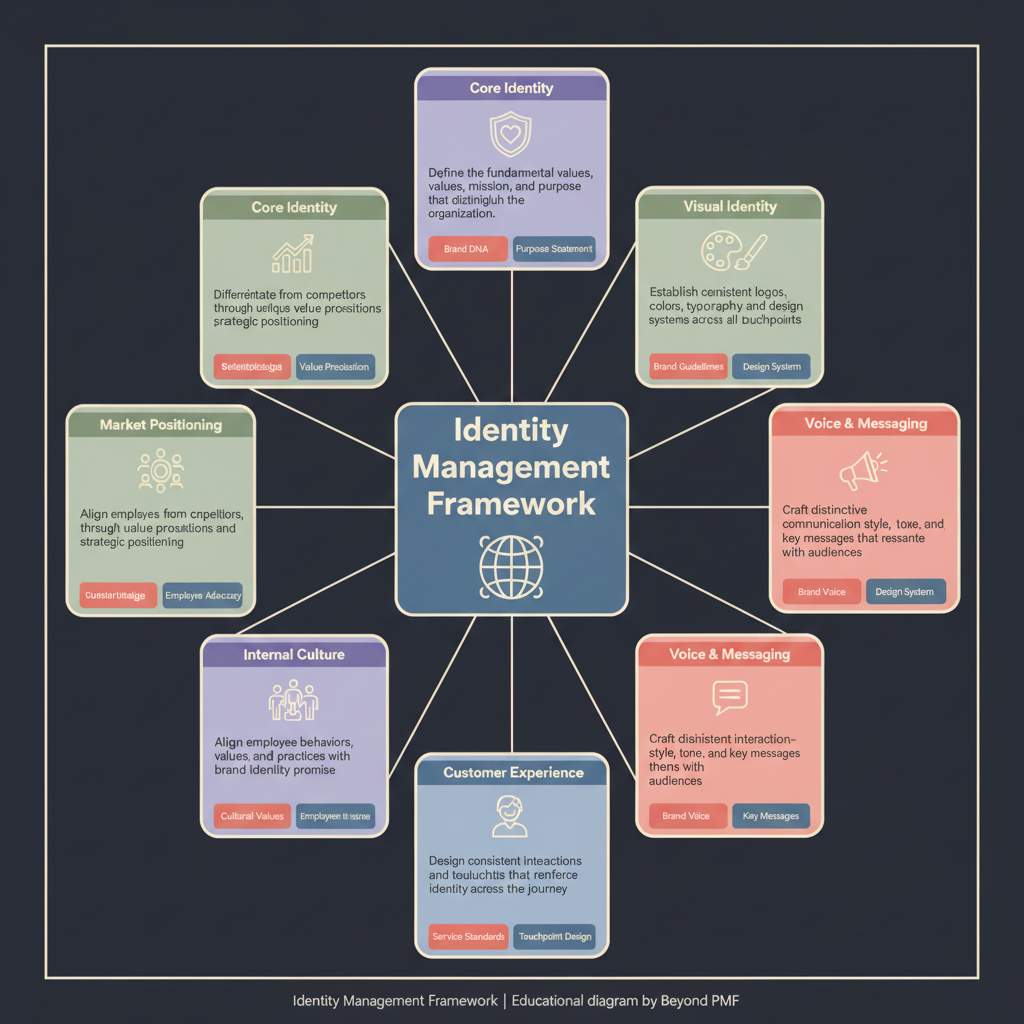
Identity Management Framework

https://ik.imagekit.io/beyondpmf/frameworks/identity-management-framework.png
The Identity Management Framework primarily addresses the operational friction of ensuring proper processes, governance, and workflows related to identity usage within computer systems. It focuses on the coordinated and controlled use of identities, which is essential for operational efficiency and security.

The Identity Management Framework is designed to manage user identities and their related access permissions within an organization. It includes processes for identifying, authenticating, and authorizing individuals or groups of people to have access to applications, systems, or networks by associating user rights and restrictions with established identities. This framework is crucial for enhancing security, ensuring compliance with regulations, and improving operational efficiency.

Steps / Detailed Description

Identify requirements: Determine the security, compliance, and business functionality needs for identity management. | Select tools and technologies: Choose appropriate identity management solutions that meet the identified requirements. | Implement policies: Develop and enforce identity management policies that include user registration, authentication, authorization, and auditing. | Integrate systems: Ensure that the identity management system integrates seamlessly with existing IT infrastructure. | Monitor and maintain: Continuously monitor the system for any unauthorized access or anomalies and update the system as necessary to address new security threats.

Best Practices

Regularly update and review access policies | Use multi-factor authentication for enhanced security | Ensure regular training for administrators and users

Pros

Enhanced security through controlled access and authentication | Improved compliance with regulatory requirements | Increased operational efficiency by automating identity management processes

Cons

Complexity in implementation and management | Potential for system integration issues | High initial setup and maintenance costs

When to Use

When managing access to information systems in large organizations | When regulatory compliance requires strict identity and access controls

When Not to Use

In very small organizations where manual identity management is feasible | When the cost and complexity outweigh the benefits

Related Frameworks

Lifecycle

Not tied to a specific lifecycle stage

Scope

Scope not defined

Maturity Level

Maturity level not specified

Time to Implement

2–4 Weeks
3–6 Months
1–2 Weeks
3–6 Months
1–2 Months
3–6 Months
1–2 Weeks
Less Than 1 Day
1–2 Weeks
Longer Than 6 Months
1–2 Weeks
Longer Than 6 Months
1–2 Weeks
3–6 Months
1–2 Weeks
1–2 Weeks
1–2 Weeks
1–2 Weeks
1–2 Days
1–2 Weeks
1–2 Weeks
1–2 Weeks
1–2 Weeks
1–2 Weeks
1–2 Weeks
3–6 Months
1–2 Weeks
1–2 Weeks
1–2 Weeks
3–6 Months
1–2 Weeks
1–2 Weeks
2–4 Weeks
1–2 Weeks
1–2 Days
1–2 Weeks
Longer Than 6 Months
3–6 Months
Longer Than 6 Months
1–2 Weeks
Longer Than 6 Months
3–6 Months
Less Than 1 Day
3–6 Months
1–2 Months
3–6 Months
Longer Than 6 Months
3–6 Months
Less Than 1 Day
1–2 Weeks
3–6 Months
3–6 Months
1–2 Weeks
3–6 Months
1–2 Weeks
1–2 Weeks
1–2 Days
1–2 Weeks
1–2 Months
Longer Than 6 Months
1–2 Weeks
Longer Than 6 Months
1–2 Weeks
3–6 Months
1–2 Weeks
Less Than 1 Day
1–2 Weeks
3–6 Months
1–2 Weeks
3–6 Months
1–2 Weeks
1–2 Weeks
Longer Than 6 Months
Less Than 1 Day
3–6 Months
Longer Than 6 Months
1–2 Months
1–2 Weeks
Longer Than 6 Months
1–2 Weeks
3–6 Months
1–2 Weeks
1–2 Weeks
3–6 Months
Less Than 1 Day
1–2 Weeks
1–2 Weeks
3–6 Months
3–6 Months
Less Than 1 Day
1–2 Weeks
Longer Than 6 Months
1–2 Months
1–2 Weeks
1–2 Weeks
1–2 Weeks
Longer Than 6 Months

Copyright Information

Autor:
Unknown
N/A
Publication:
Unknown