
Team collaboration frameworks offer practical methods to improve how teams coordinate, share context, and solve problems together. They reduce handoff friction and increase joint ownership of outcomes. These approaches are important in multi‑disciplinary product environments and distributed organizations. Use them to increase speed, trust, and execution quality.
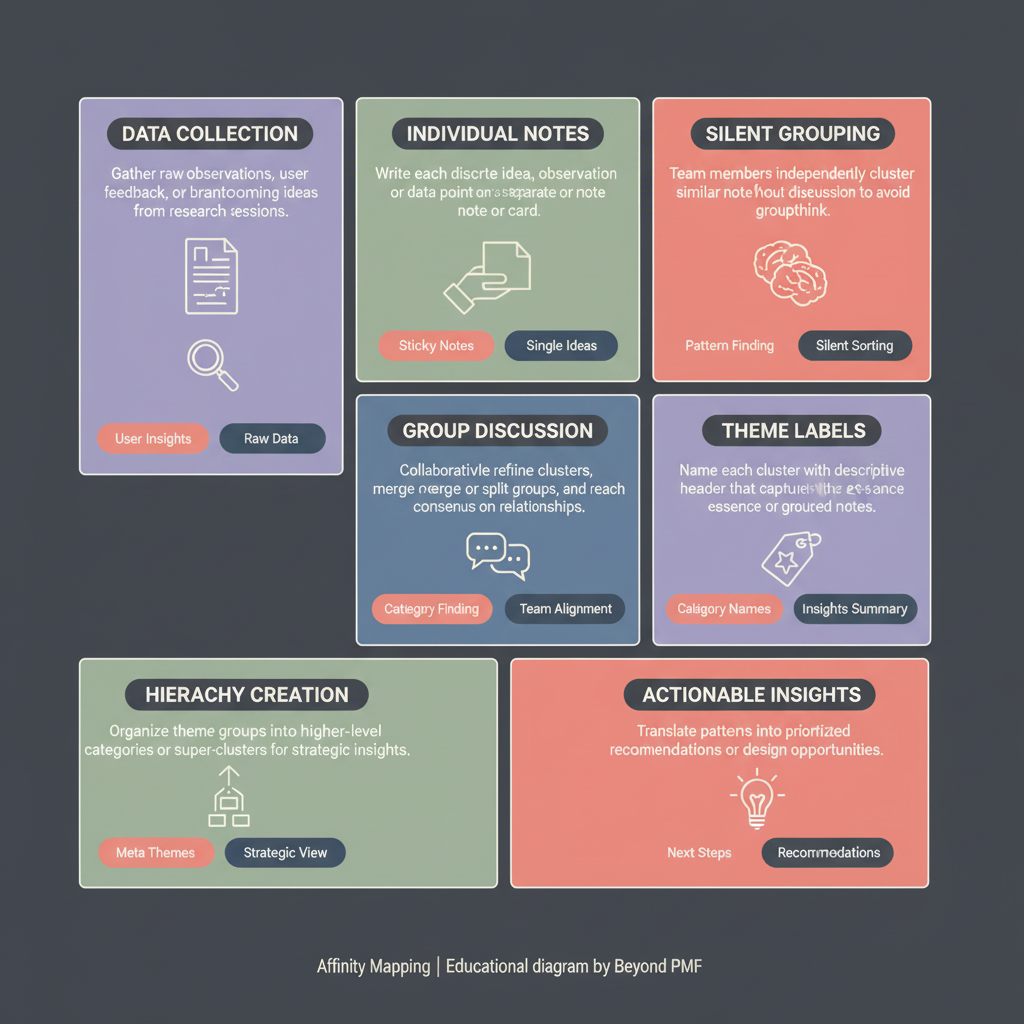
Affinity Mapping, also known as affinity diagramming, is a tool that helps teams to organize large amounts of data into clusters for analysis and insights. It is commonly used to capture and group ideas generated during brainstorming sessions. The process involves collecting various ideas, sorting them into related groups, and then synthesizing the information into actionable insights. This technique is particularly beneficial for identifying patterns and relationships in complex data, making it easier to address issues or make decisions.
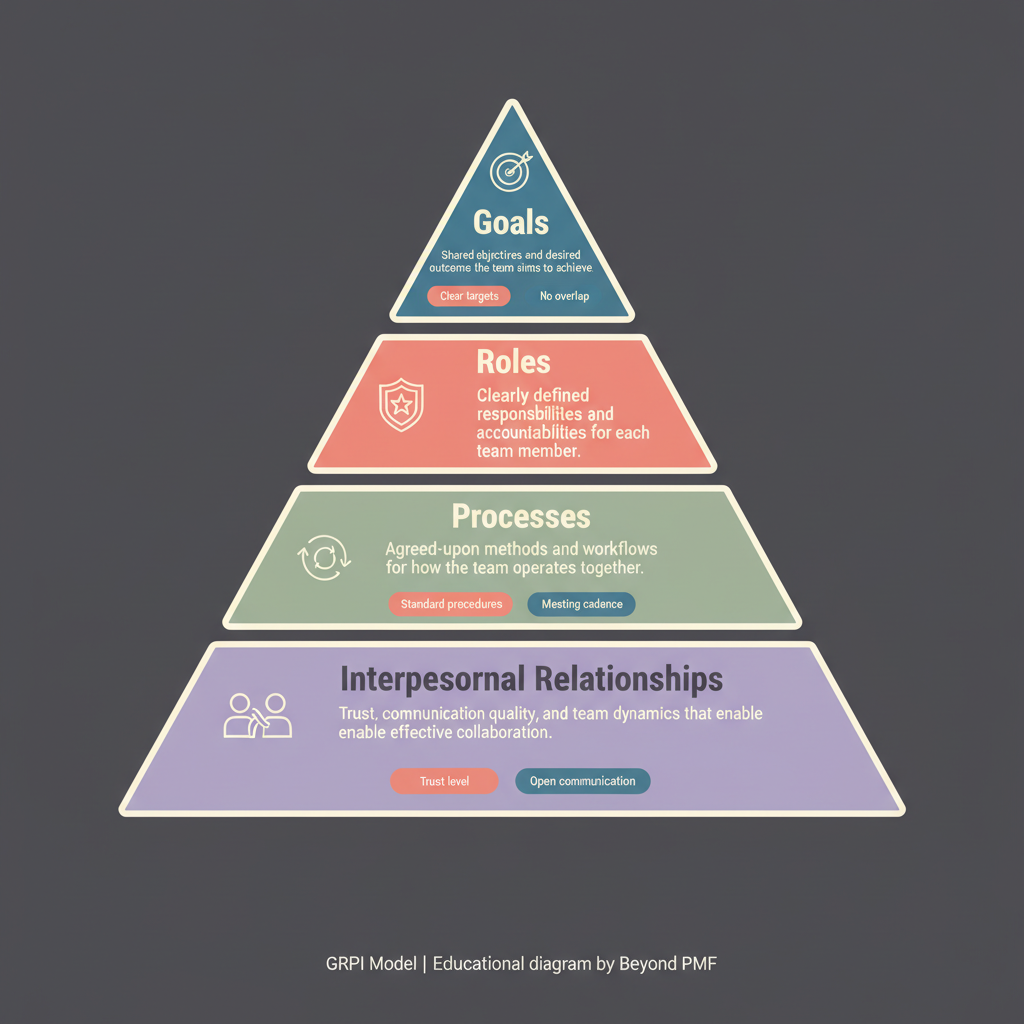
The GRPI Model is a framework used to diagnose and develop team effectiveness. It stands for Goals, Roles, Processes, and Interpersonal Relationships. By addressing these four components, the model helps teams clarify their objectives, understand each member's role, streamline processes, and foster positive relationships. This structured approach is beneficial for improving communication, efficiency, and overall team cohesion.
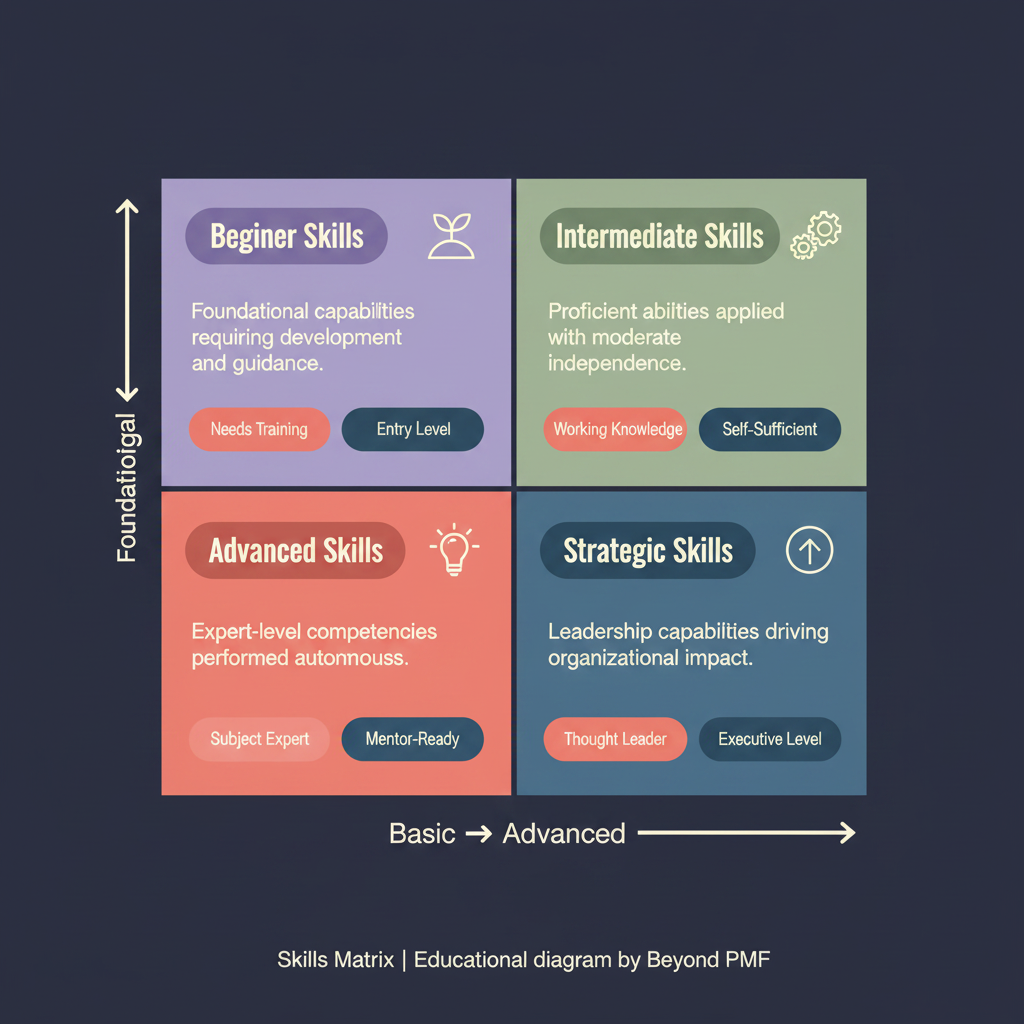
A Skills Matrix, also known as a competency matrix, is a grid that visually represents the skills and competencies of individuals within a team or organization. It helps managers and HR professionals assess the current skill levels, identify gaps, and plan for skill development. This framework is crucial for optimizing team performance, facilitating better project management, and enhancing strategic planning.
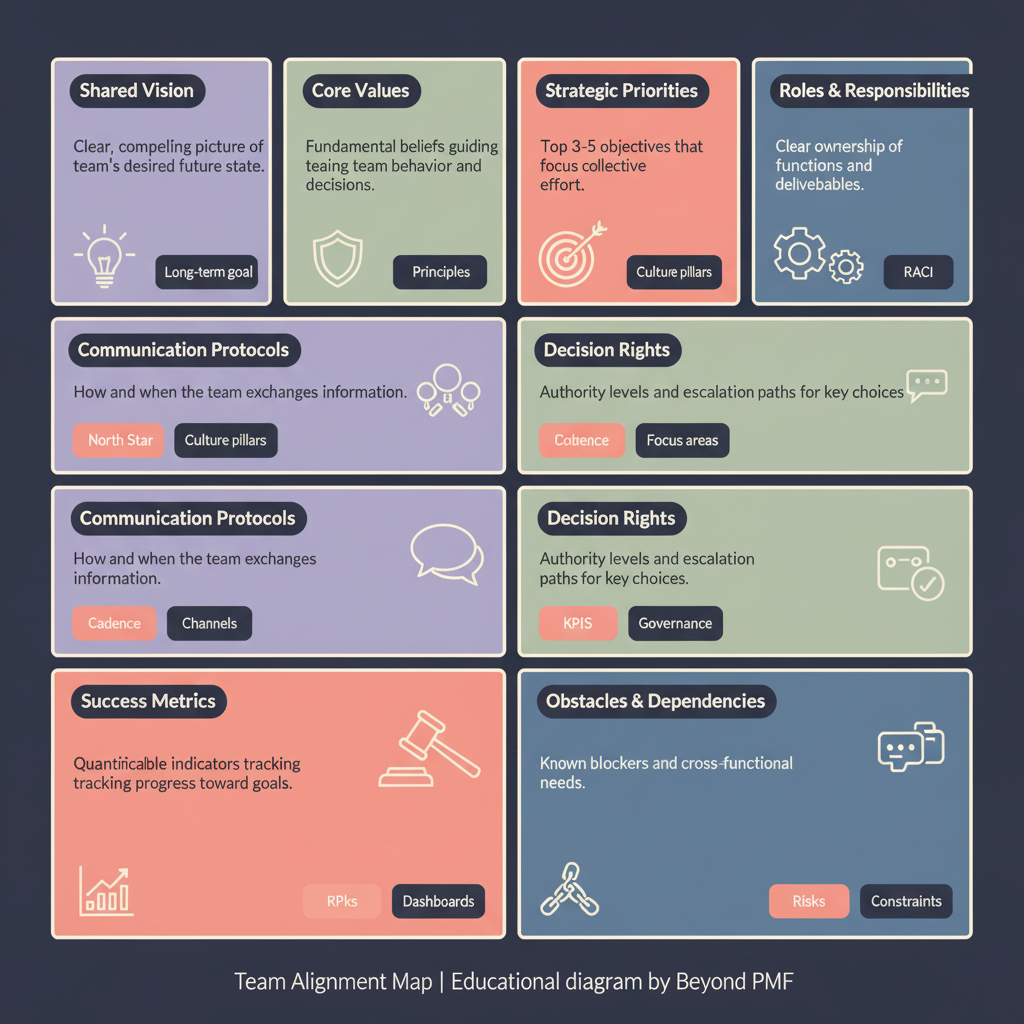
The Team Alignment Map (TAM) is a collaborative framework used to ensure all team members are aligned in terms of objectives, responsibilities, and the resources available for a project. It helps in visualizing the contributions of each team member and the dependencies between different tasks. This framework is particularly beneficial in complex projects where interdependencies and roles need to be clearly defined to avoid confusion and enhance productivity.
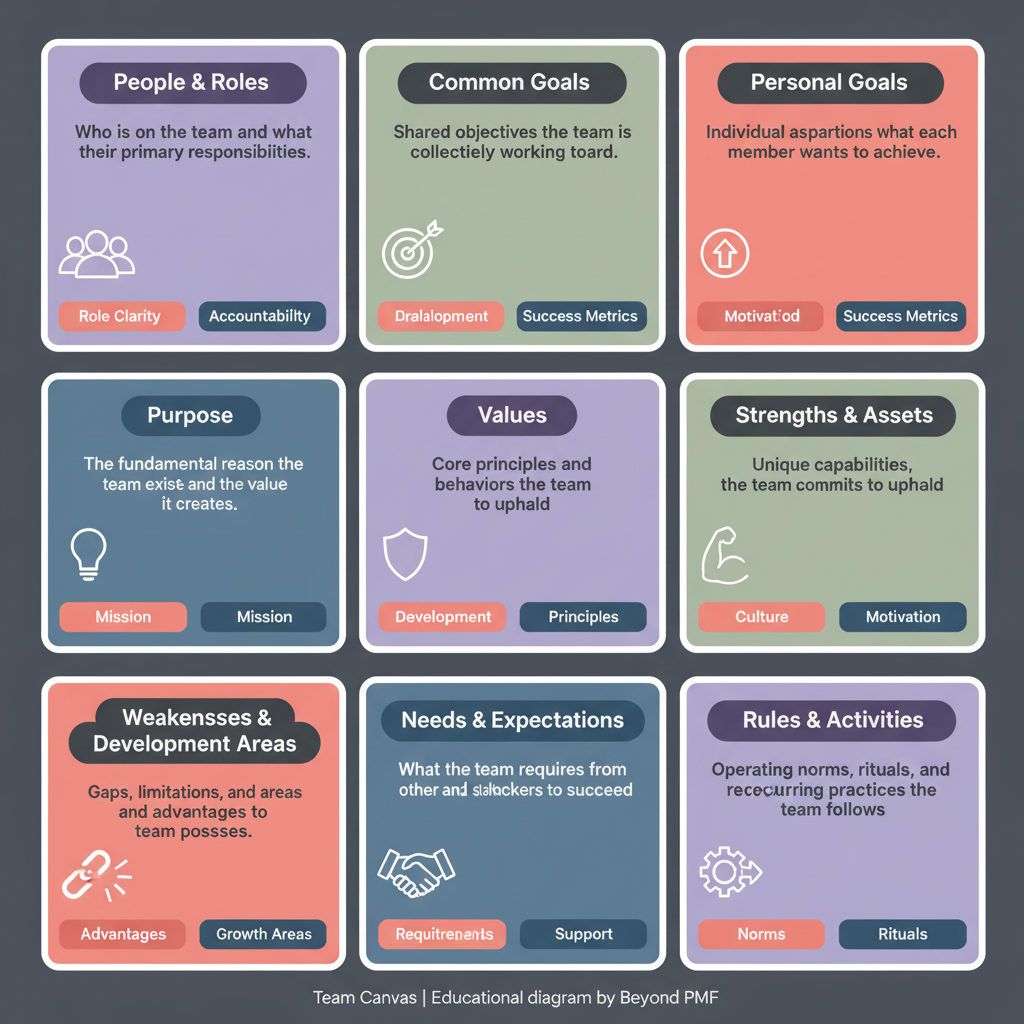
The Team Canvas is a framework designed to help teams align on their goals, roles, and values, enhancing collaboration and efficiency. It is used to facilitate discussions that clarify each team member's role, the team's objectives, and the expected behaviors within the group. This framework is beneficial as it promotes transparency, improves communication, and ensures that all team members are on the same page, which can lead to more effective teamwork and project success.
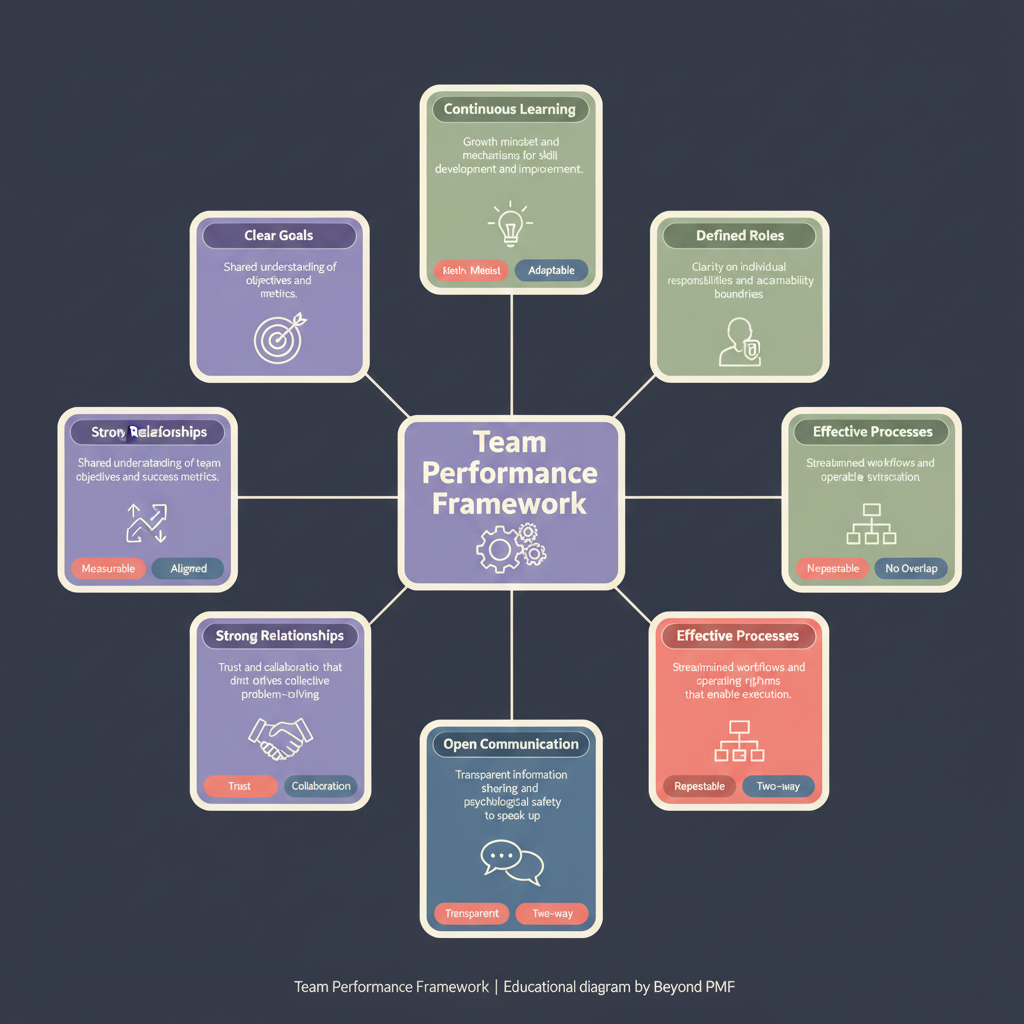
The Team Performance Framework is designed to assess, monitor, and improve the performance of teams in various organizational settings. It focuses on identifying key performance indicators, setting achievable goals, and implementing continuous feedback mechanisms. The framework helps organizations to align team objectives with overall business goals, fostering a culture of accountability and collaboration. Its benefits include improved team dynamics, enhanced productivity, and better alignment with strategic objectives.
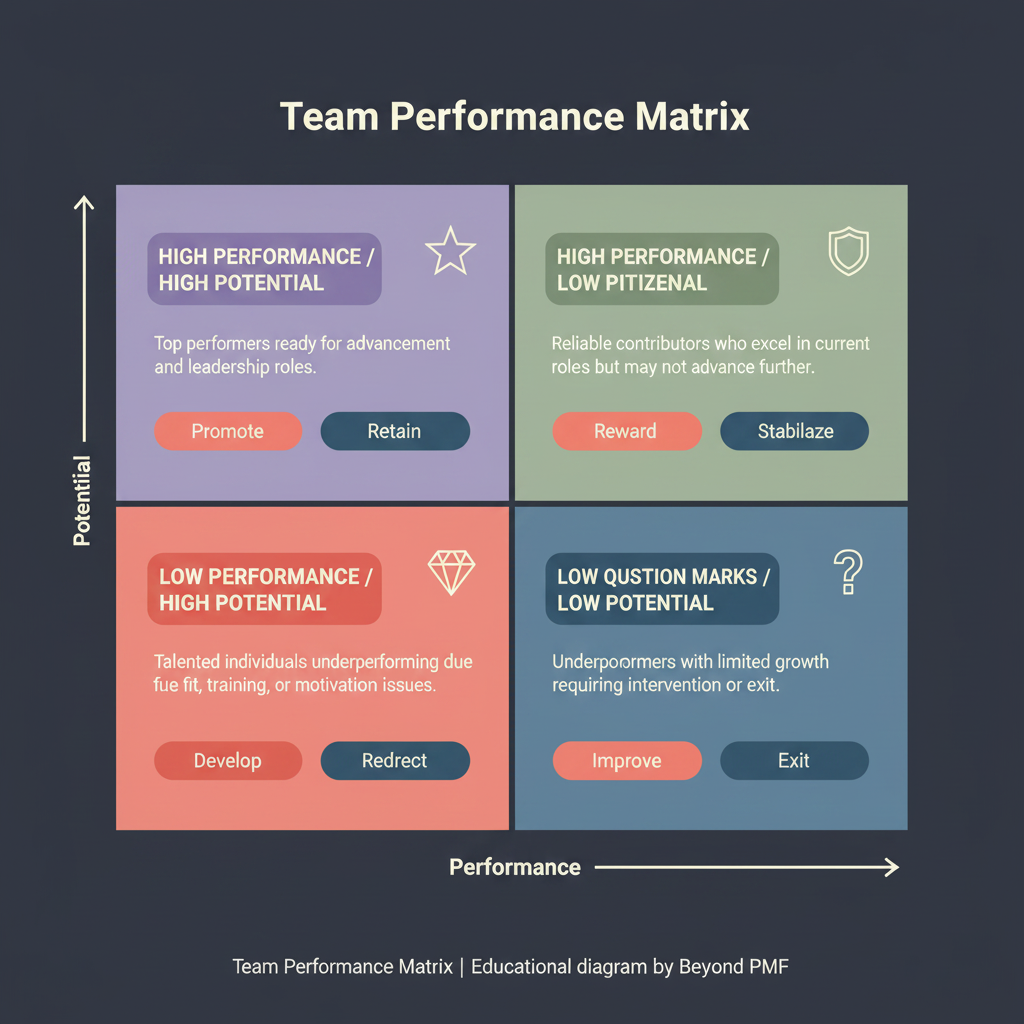
The Team Performance Matrix is a framework designed to evaluate the performance and dynamics of teams in a structured manner. It helps managers and leaders identify strengths, weaknesses, and areas for improvement within their teams. By mapping out performance against predefined criteria, the framework facilitates targeted interventions that can lead to better team cohesion, efficiency, and overall performance. The matrix is particularly useful in complex projects or environments where teamwork is crucial for success.
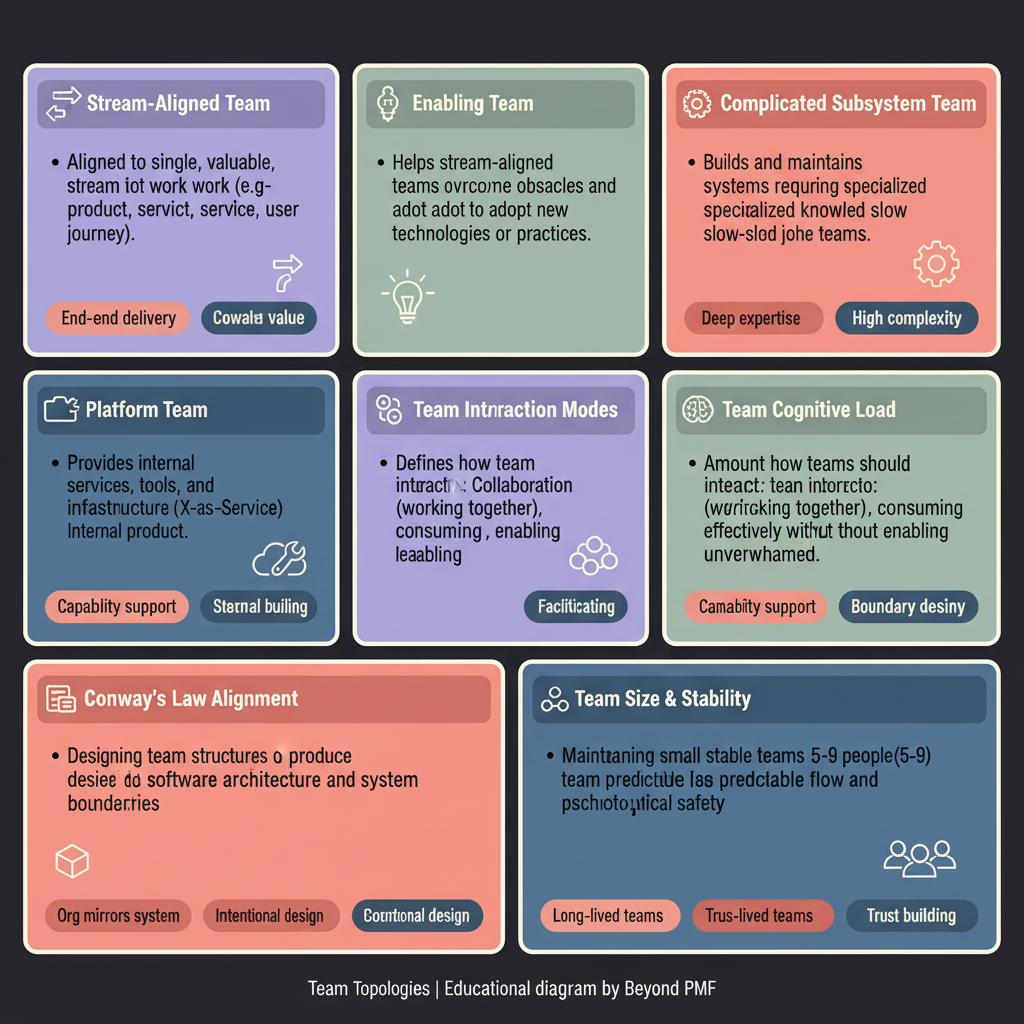
Team Topologies is a framework that provides a clear, adaptive model for organizing teams and their interactions. It focuses on streamlining communication and collaboration within an organization to enhance software delivery speed and quality. By defining four fundamental team types and three core interaction modes, Team Topologies helps organizations align their team structures with business goals, enabling faster adaptation to market changes and technological advancements.
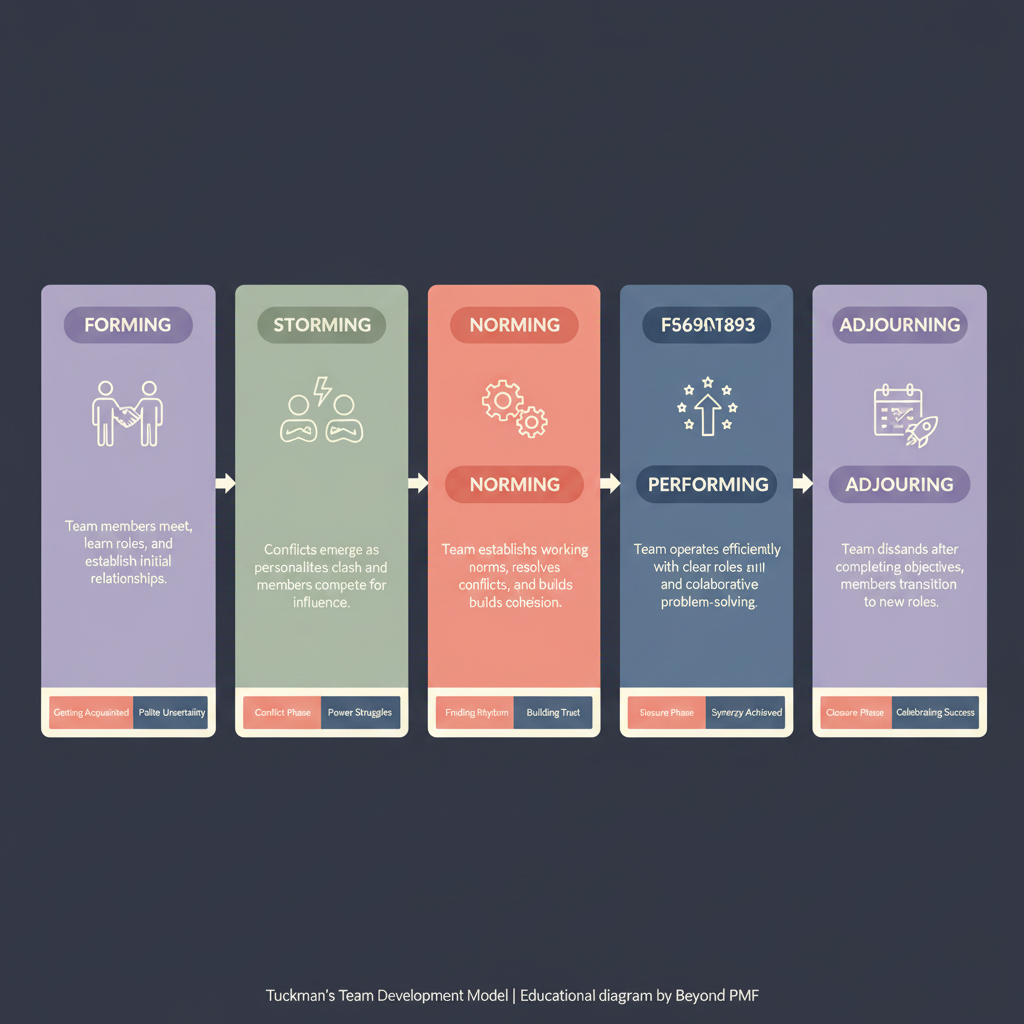
Tuckman's Team Development Model, developed by psychologist Bruce Tuckman in 1965, is a theory that describes four distinct stages for a team's path to high performance: forming, storming, norming, and performing. Each stage represents a phase of team development and is characterized by specific behaviors and challenges. The model is widely used to help team leaders manage team dynamics effectively, facilitating smoother transitions and enhancing team productivity.
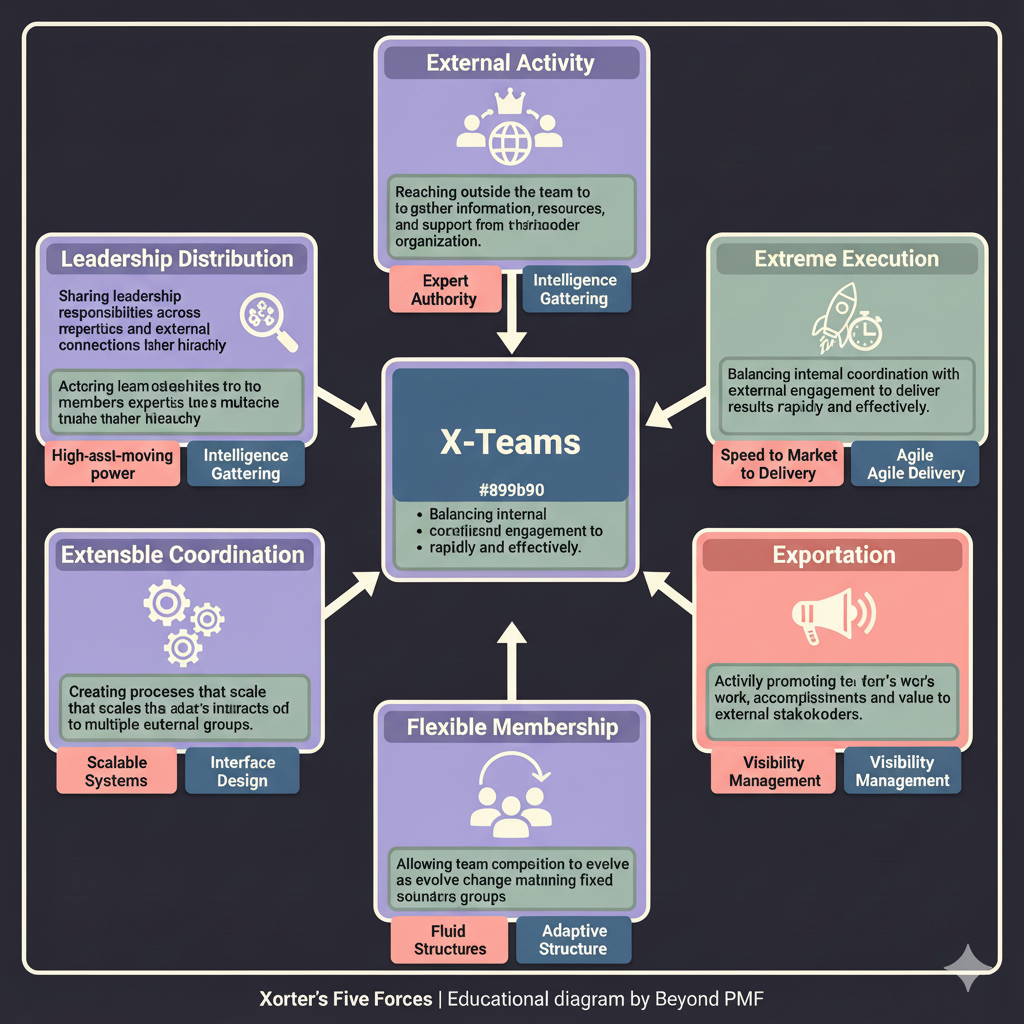
X-Teams is a business framework that emphasizes the importance of teams extending their boundaries to include external elements such as stakeholders, other departments, and even customers. This approach fosters innovation, accelerates information exchange, and enhances problem-solving capabilities. By integrating external insights and resources, X-Teams can adapt more quickly to changing environments and deliver superior results.