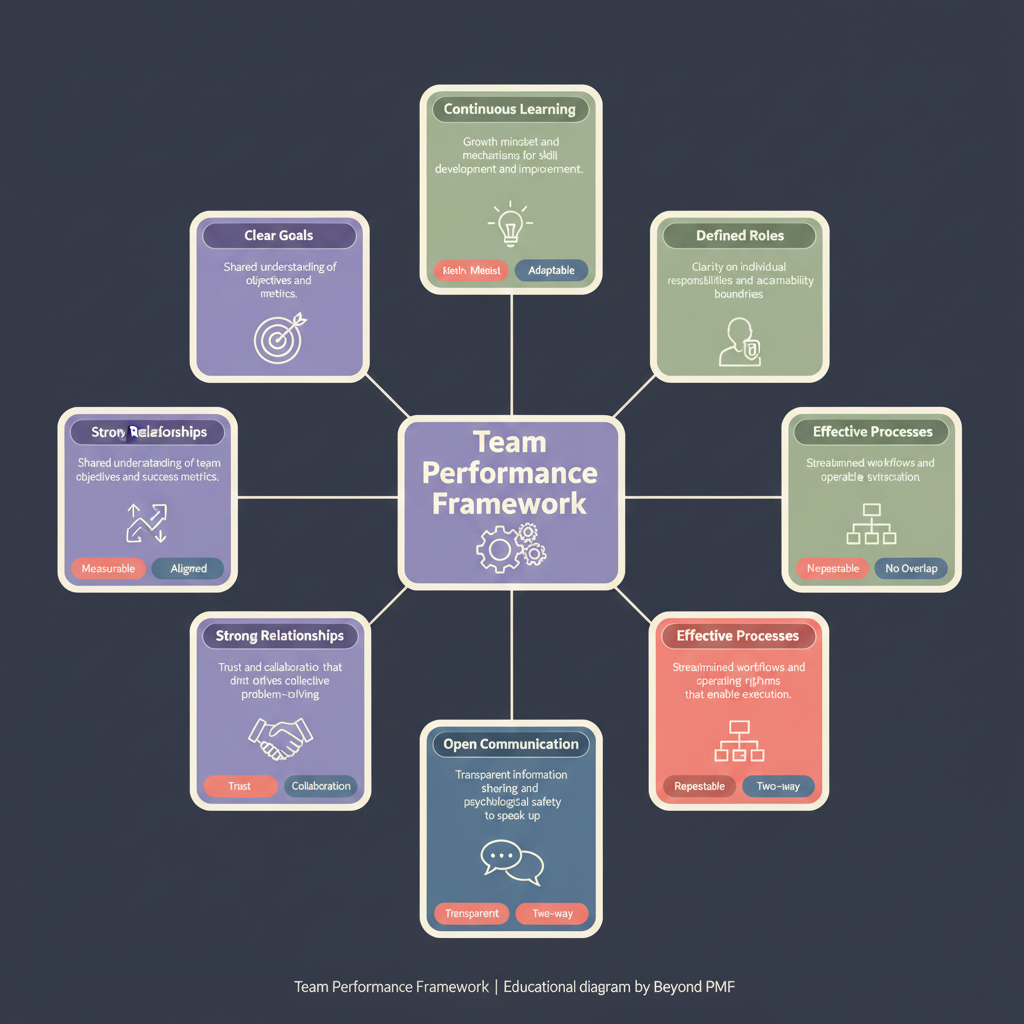
Team Performance Framework

https://ik.imagekit.io/beyondpmf/frameworks/team-performance-framework.png
The Team Performance Framework aims to improve team effectiveness and efficiency, which are directly related to how teams coordinate, manage workflows, and execute tasks. It addresses friction arising from poor processes, handovers, and overall orchestration within teams.

The Team Performance Framework is designed to assess, monitor, and improve the performance of teams in various organizational settings. It focuses on identifying key performance indicators, setting achievable goals, and implementing continuous feedback mechanisms. The framework helps organizations to align team objectives with overall business goals, fostering a culture of accountability and collaboration. Its benefits include improved team dynamics, enhanced productivity, and better alignment with strategic objectives.

Steps / Detailed Description

Define team objectives and align them with organizational goals. | Identify key performance indicators (KPIs) for each team member. | Implement regular performance reviews and feedback sessions. | Develop action plans based on performance data to address areas of improvement. | Monitor progress and adjust strategies as necessary to meet predefined goals.

Best Practices

Ensure clear communication of goals and expectations | Foster an environment of trust and open feedback | Regularly review and adjust the framework to fit the team's evolving needs

Pros

Enhances team productivity and efficiency | Promotes a culture of accountability and continuous improvement | Aligns team goals with organizational objectives

Cons

Can be time-consuming to implement and maintain | May lead to excessive focus on metrics over creativity | Requires strong buy-in from all team members to be effective

When to Use

When aiming to improve team cohesion and performance | During periods of organizational change or growth

When Not to Use

In very small teams where informal communication is more effective | When the team is under immediate stress or crisis

Related Frameworks

Lifecycle

Not tied to a specific lifecycle stage

Scope

Scope not defined

Maturity Level

Maturity level not specified

Time to Implement

2–4 Weeks
3–6 Months
1–2 Weeks
3–6 Months
1–2 Months
3–6 Months
1–2 Weeks
Less Than 1 Day
1–2 Weeks
Longer Than 6 Months
1–2 Weeks
Longer Than 6 Months
1–2 Weeks
3–6 Months
1–2 Weeks
1–2 Weeks
1–2 Weeks
1–2 Weeks
1–2 Days
1–2 Weeks
1–2 Weeks
1–2 Weeks
1–2 Weeks
1–2 Weeks
1–2 Weeks
3–6 Months
1–2 Weeks
1–2 Weeks
1–2 Weeks
3–6 Months
1–2 Weeks
1–2 Weeks
2–4 Weeks
1–2 Weeks
1–2 Days
1–2 Weeks
Longer Than 6 Months
3–6 Months
Longer Than 6 Months
1–2 Weeks
Longer Than 6 Months
3–6 Months
Less Than 1 Day
3–6 Months
1–2 Months
3–6 Months
Longer Than 6 Months
3–6 Months
Less Than 1 Day
1–2 Weeks
3–6 Months
3–6 Months
1–2 Weeks
3–6 Months
1–2 Weeks
1–2 Weeks
1–2 Days
1–2 Weeks
1–2 Months
Longer Than 6 Months
1–2 Weeks
Longer Than 6 Months
1–2 Weeks
3–6 Months
1–2 Weeks
Less Than 1 Day
1–2 Weeks
3–6 Months
1–2 Weeks
3–6 Months
1–2 Weeks
1–2 Weeks
Longer Than 6 Months
Less Than 1 Day
3–6 Months
Longer Than 6 Months
1–2 Months
1–2 Weeks
Longer Than 6 Months
1–2 Weeks
3–6 Months
1–2 Weeks
1–2 Weeks
3–6 Months
Less Than 1 Day
1–2 Weeks
1–2 Weeks
3–6 Months
3–6 Months
Less Than 1 Day
1–2 Weeks
Longer Than 6 Months
1–2 Months
1–2 Weeks
1–2 Weeks
1–2 Weeks
Longer Than 6 Months

Copyright Information

Autor:
Unknown
N/A
Publication:
Generic Business Tool