GRPI Model

https://ik.imagekit.io/beyondpmf/frameworks/grpi-model.png
The GRPI Model primarily addresses structural friction by clarifying roles, responsibilities, and team structure within a group. It helps to define individual contributions and ensure that the team is organized effectively to achieve its goals.

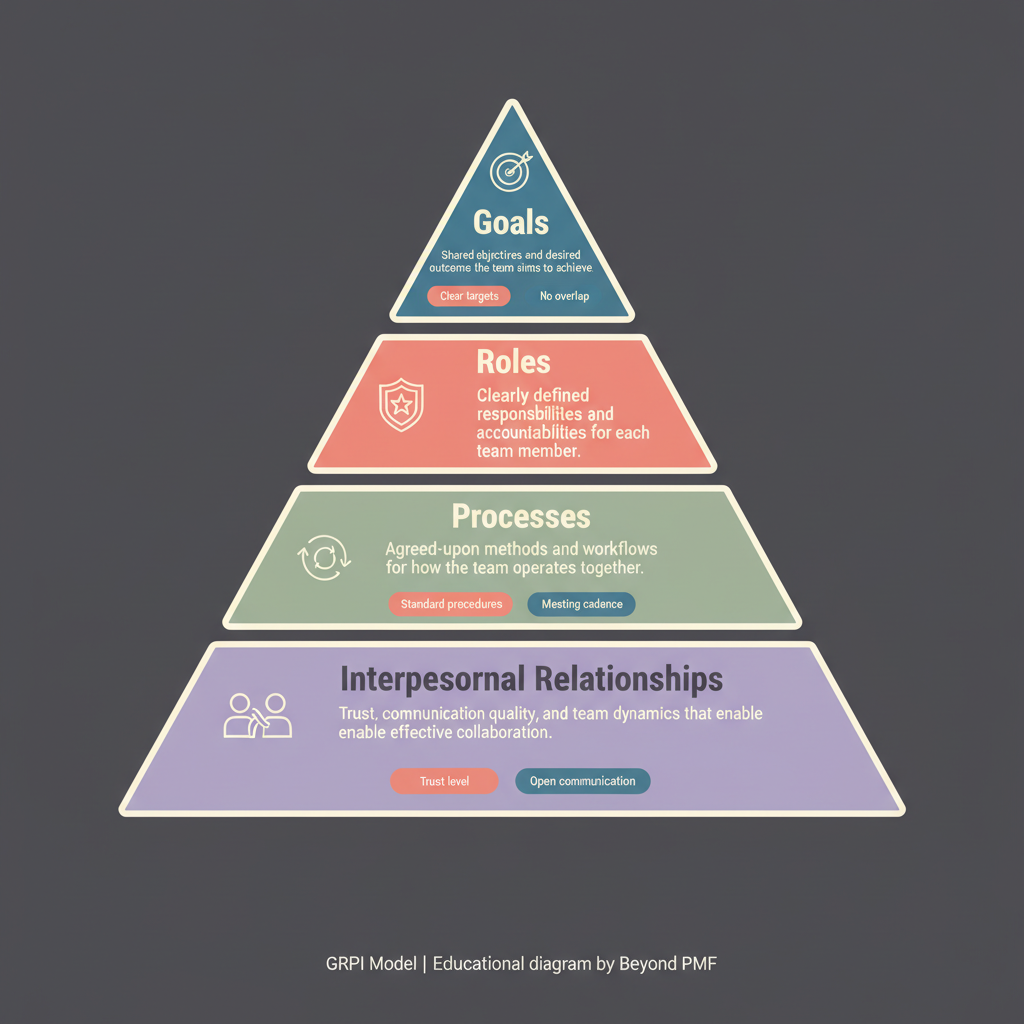
The GRPI Model is a framework used to diagnose and develop team effectiveness. It stands for Goals, Roles, Processes, and Interpersonal Relationships. By addressing these four components, the model helps teams clarify their objectives, understand each member's role, streamline processes, and foster positive relationships. This structured approach is beneficial for improving communication, efficiency, and overall team cohesion.

Steps / Detailed Description

Define clear Goals that align with the organization's objectives. | Establish Roles to clarify each team member's responsibilities and authority. | Develop efficient Processes that guide the team's workflow and decision-making. | Foster positive Interpersonal Relationships to enhance communication and resolve conflicts.

Best Practices

Regularly review and update the four components | Ensure all team members are involved in the development process | Use the model as a guide, not a strict rulebook

Pros

Improves team clarity and focus | Enhances communication and collaboration | Increases efficiency and effectiveness

Cons

May be overly simplistic for complex projects | Requires time and commitment to implement effectively | May not address all individual team member needs

When to Use

When forming a new team | When a team is underperforming

When Not to Use

In highly individualistic work settings | When quick, temporary team solutions are needed

Related Frameworks

Lifecycle

Not tied to a specific lifecycle stage

Scope

Scope not defined

Maturity Level

Maturity level not specified

Time to Implement

2–4 Weeks
3–6 Months
1–2 Weeks
3–6 Months
1–2 Months
3–6 Months
1–2 Weeks
Less Than 1 Day
1–2 Weeks
Longer Than 6 Months
1–2 Weeks
Longer Than 6 Months
1–2 Weeks
3–6 Months
1–2 Weeks
1–2 Weeks
1–2 Weeks
1–2 Weeks
1–2 Days
1–2 Weeks
1–2 Weeks
1–2 Weeks
1–2 Weeks
1–2 Weeks
1–2 Weeks
3–6 Months
1–2 Weeks
1–2 Weeks
1–2 Weeks
3–6 Months
1–2 Weeks
1–2 Weeks
2–4 Weeks
1–2 Weeks
1–2 Days
1–2 Weeks
Longer Than 6 Months
3–6 Months
Longer Than 6 Months
1–2 Weeks
Longer Than 6 Months
3–6 Months
Less Than 1 Day
3–6 Months
1–2 Months
3–6 Months
Longer Than 6 Months
3–6 Months
Less Than 1 Day
1–2 Weeks
3–6 Months
3–6 Months
1–2 Weeks
3–6 Months
1–2 Weeks
1–2 Weeks
1–2 Days
1–2 Weeks
1–2 Months
Longer Than 6 Months
1–2 Weeks
Longer Than 6 Months
1–2 Weeks
3–6 Months
1–2 Weeks
Less Than 1 Day
1–2 Weeks
3–6 Months
1–2 Weeks
3–6 Months
1–2 Weeks
1–2 Weeks
Longer Than 6 Months
Less Than 1 Day
3–6 Months
Longer Than 6 Months
1–2 Months
1–2 Weeks
Longer Than 6 Months
1–2 Weeks
3–6 Months
1–2 Weeks
1–2 Weeks
3–6 Months
Less Than 1 Day
1–2 Weeks
1–2 Weeks
3–6 Months
3–6 Months
Less Than 1 Day
1–2 Weeks
Longer Than 6 Months
1–2 Months
1–2 Weeks
1–2 Weeks
1–2 Weeks
Longer Than 6 Months

Copyright Information

Autor:
Richard Beckhard
1972
Publication:
Organizational Research and Development