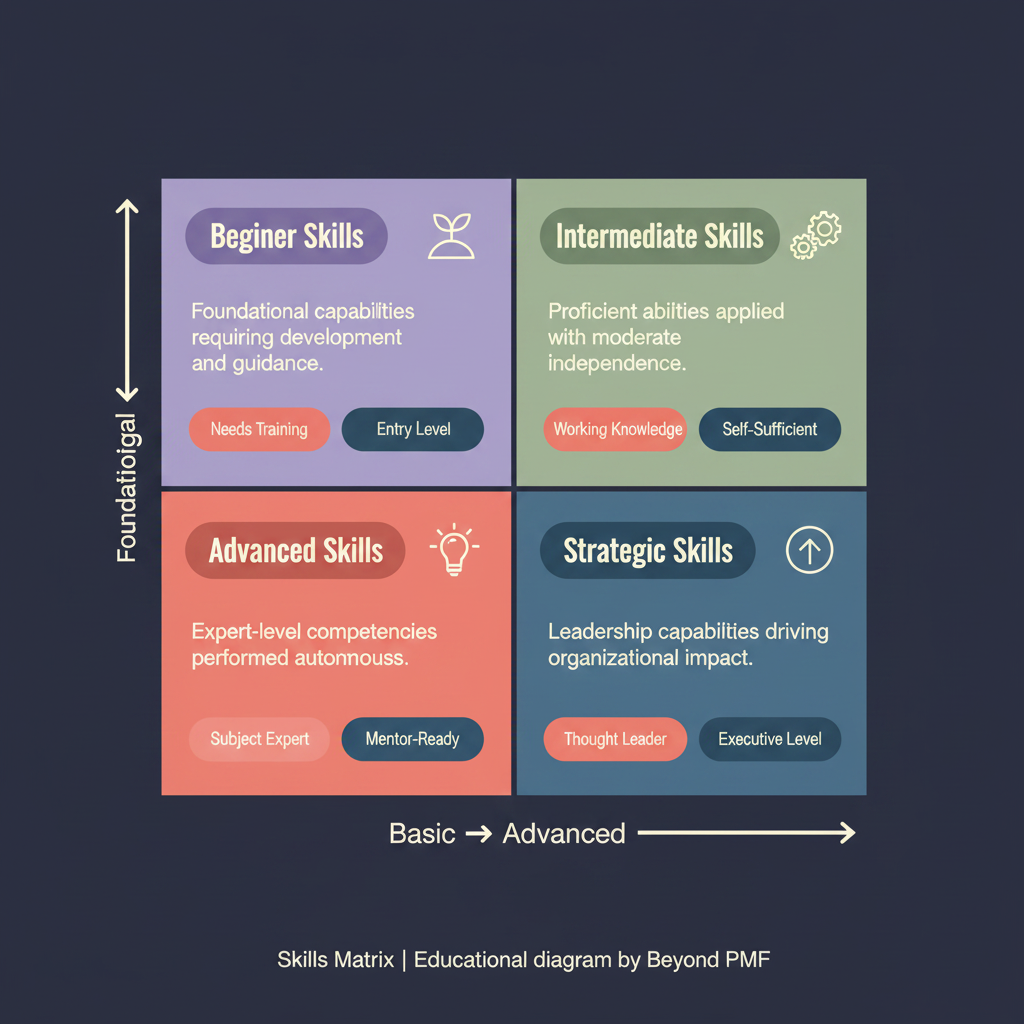
Skills Matrix

https://ik.imagekit.io/beyondpmf/frameworks/skills-matrix.png
The Skills Matrix primarily addresses operational friction by improving coordination and orchestration of skills within a team. It helps identify gaps and plan for training, leading to more efficient workflows and resource allocation.

A Skills Matrix, also known as a competency matrix, is a grid that visually represents the skills and competencies of individuals within a team or organization. It helps managers and HR professionals assess the current skill levels, identify gaps, and plan for skill development. This framework is crucial for optimizing team performance, facilitating better project management, and enhancing strategic planning.

Steps / Detailed Description

Identify the key skills required for each role within the organization. | Assess each team member's current skill level against these required skills. | Map the skills and competencies of each individual onto the matrix. | Analyze the matrix to identify skill gaps and areas of strength. | Develop training programs and initiatives to address the identified skill gaps. | Regularly update the matrix as skills improve or as new skills are required.

Best Practices

Regularly update the matrix to reflect current skills and requirements. | Involve employees in the assessment process to ensure accuracy and buy-in. | Use the matrix as a basis for career development discussions and planning.

Pros

Provides a clear visualization of team competencies. | Helps in identifying training needs and skill gaps. | Facilitates better team management and resource allocation.

Cons

Can be time-consuming to set up and maintain. | May not accurately reflect soft skills or adaptability. | Requires honest and accurate self-assessment from employees.

When to Use

When planning for team expansions or restructuring. | During annual reviews to assess training needs and performance.

When Not to Use

In very small teams where skill levels are already well-known. | When rapid changes in technology or market conditions make the matrix quickly outdated.

Related Frameworks

Scope

Scope not defined

Maturity Level

Maturity level not specified

Time to Implement

2–4 Weeks
3–6 Months
1–2 Weeks
3–6 Months
1–2 Months
3–6 Months
1–2 Weeks
Less Than 1 Day
1–2 Weeks
Longer Than 6 Months
1–2 Weeks
Longer Than 6 Months
1–2 Weeks
3–6 Months
1–2 Weeks
1–2 Weeks
1–2 Weeks
1–2 Weeks
1–2 Days
1–2 Weeks
1–2 Weeks
1–2 Weeks
1–2 Weeks
1–2 Weeks
1–2 Weeks
3–6 Months
1–2 Weeks
1–2 Weeks
1–2 Weeks
3–6 Months
1–2 Weeks
1–2 Weeks
2–4 Weeks
1–2 Weeks
1–2 Days
1–2 Weeks
Longer Than 6 Months
3–6 Months
Longer Than 6 Months
1–2 Weeks
Longer Than 6 Months
3–6 Months
Less Than 1 Day
3–6 Months
1–2 Months
3–6 Months
Longer Than 6 Months
3–6 Months
Less Than 1 Day
1–2 Weeks
3–6 Months
3–6 Months
1–2 Weeks
3–6 Months
1–2 Weeks
1–2 Weeks
1–2 Days
1–2 Weeks
1–2 Months
Longer Than 6 Months
1–2 Weeks
Longer Than 6 Months
1–2 Weeks
3–6 Months
1–2 Weeks
Less Than 1 Day
1–2 Weeks
3–6 Months
1–2 Weeks
3–6 Months
1–2 Weeks
1–2 Weeks
Longer Than 6 Months
Less Than 1 Day
3–6 Months
Longer Than 6 Months
1–2 Months
1–2 Weeks
Longer Than 6 Months
1–2 Weeks
3–6 Months
1–2 Weeks
1–2 Weeks
3–6 Months
Less Than 1 Day
1–2 Weeks
1–2 Weeks
3–6 Months
3–6 Months
Less Than 1 Day
1–2 Weeks
Longer Than 6 Months
1–2 Months
1–2 Weeks
1–2 Weeks
1–2 Weeks
Longer Than 6 Months

Copyright Information

Autor:
Public Domain
N/A
Publication:
Generic Business Tool