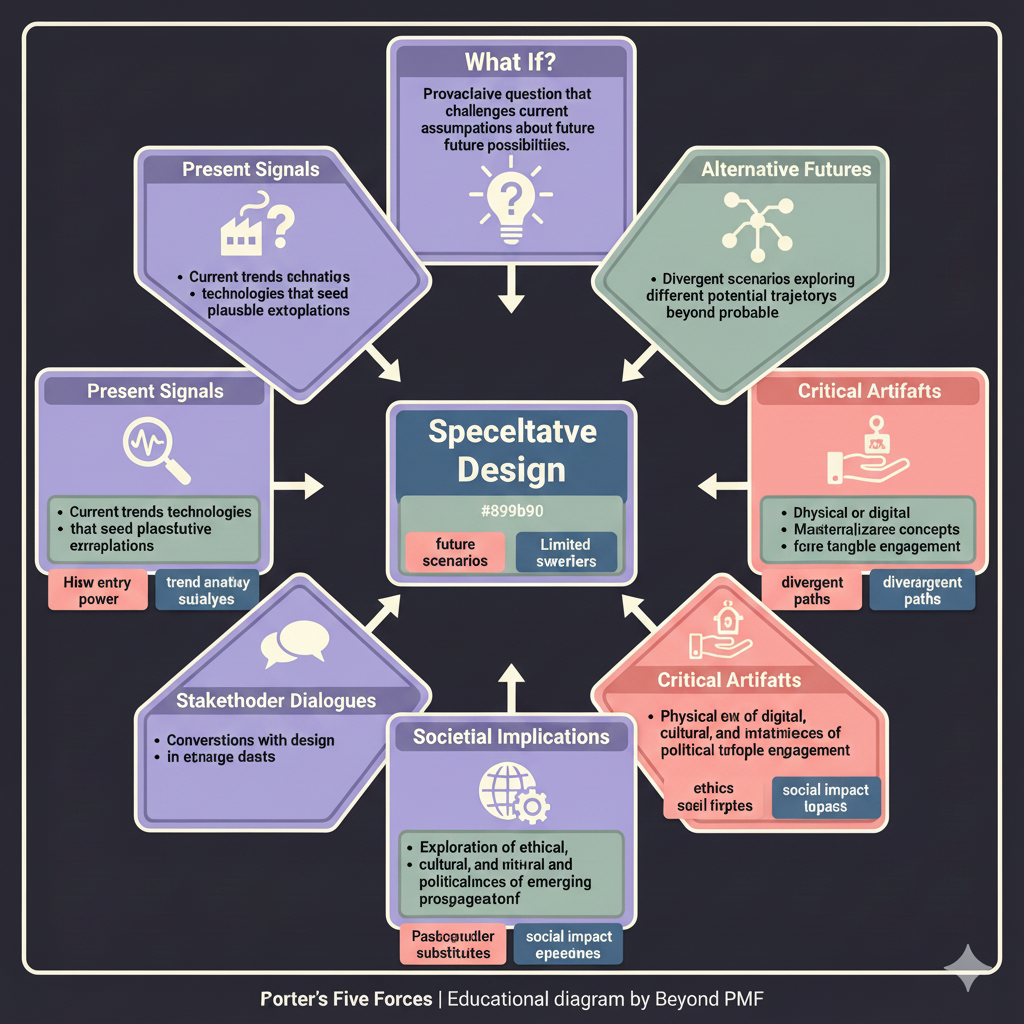
Speculative Design is a framework that encourages designers to think beyond conventional solutions and consider what could be, rather than what is. It is used to challenge assumptions and stimulate discussion about the social, cultural, and ethical implications of new technologies and behaviors. The approach is beneficial for sparking innovation and fostering a deeper understanding of how choices made today can impact the future.
Define the scope and purpose of the project, focusing on future possibilities and societal impacts. | Conduct thorough research to understand current trends, technologies, and socio-cultural dynamics. | Develop speculative scenarios that challenge current assumptions and explore future possibilities. | Create provocative designs or artifacts that embody these scenarios. | Present and discuss these artifacts with stakeholders to provoke debate and gather feedback.
Ensure a multidisciplinary approach to gather diverse perspectives | Keep scenarios grounded in plausible developments to maintain relevance | Engage stakeholders early and often to ensure the scenarios are meaningful
Encourages creative and critical thinking | Helps in understanding the broader impact of new technologies | Stimulates debate and discussion about future possibilities
Can be seen as impractical or too theoretical | Risk of misinterpretation or controversy | May not always lead to actionable solutions
When exploring the impact of emerging technologies | In the early stages of policy and strategy development
When immediate, practical solutions are required | In highly regulated industries where speculative ideas may be less applicable